
Blog

Best Used Volkswagen SUVs for Spartanburg Drivers Before Winter

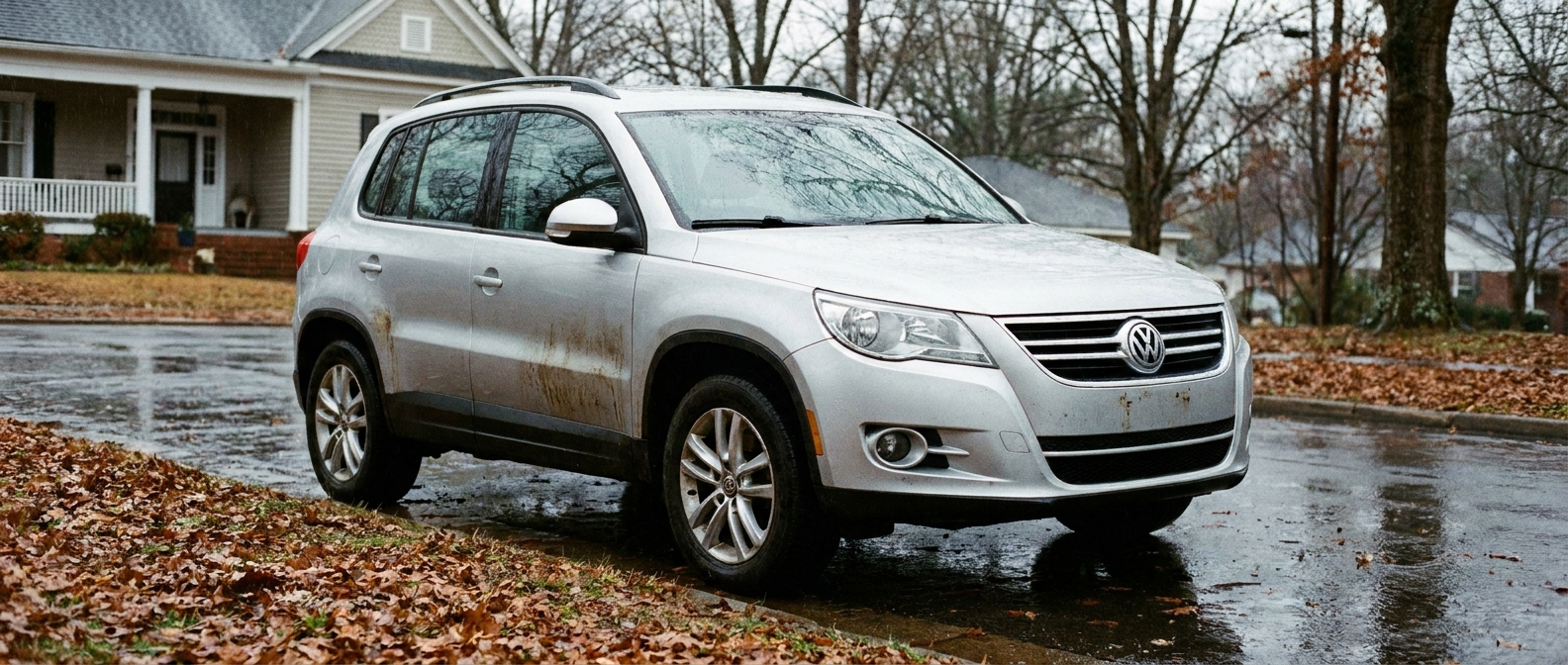
Used 2020 Volkswagen Tiguan on a wet Spartanburg street in autumn before winter weather arrives

Shopping a used Volkswagen SUV right now puts you ahead of where you might think. Wait until December to work out whether your next vehicle handles ice, and you're already behind. Spartanburg's winters move fast. The January 2026 ice storm left secondary roads glazed for days while I-85 stayed marginally passable, and any driver on a bald used SUV with an unresolved recall was in a tight spot. The Tiguan and the Atlas both make compelling used buys, but only in the right model years. Get the year wrong and you inherit someone else's headaches, recalls and all.

Browse our current used Volkswagen inventory

The short version
  • Sweet-spot Tiguans: 2019-2021. Bugs from the 2018 redesign launch were resolved, complaint volume dropped sharply, and the available 4MOTION all-wheel drive is exactly what Upstate roads demand in January.
  • Sweet-spot Atlas: 2020 and 2022-2023. The 2020 saw NHTSA complaints fall from 473 to just 27 versus the 2019 model year, a dramatic improvement on every measurable axis. The 2022-2023 models brought a sorted infotainment system and calmer powertrain.
  • Years to watch: 2018 Tiguan (a September 2026 NHTSA recall covers 85,713 of them for a corroding steering rack bolt. Verify the fix before you buy), 2018-2019 Atlas (highest complaint counts in the nameplate's history), and 2021 Atlas (17 recalls, including one for steering loss).
  • The honest tradeoff: Volkswagen SUVs ask for more attentive ownership than a Toyota or Honda equivalent. Buy a clean example from the right year range, confirm open recalls are cleared, and you get real German engineering feel at a used-market value that's hard to match.
  • Tip from our lot: 4MOTION all-wheel drive is available on mid-to-upper Tiguan and Atlas trims. Verify it's actually on the vehicle you're considering, not just listed as an option for that trim level.

Which Model Years Are the Tiguan Sweet Spot?

For most used Tiguan shoppers the sweet spot lands in the 2019 to 2021 range, because the 2018 redesign shipped with real first-year growing pains while the years right after it had those bugs resolved and the complaint volume down, which makes the slightly newer car the safer used buy. By 2019 the fixes were in. We'd point you there.

Model YearRatingNHTSA ComplaintsRecallsWhy It Matters
2018Watch out282 complaints14 recallsIncludes open 26V590 steering bolt recall (85,713 units). Transmission hesitation reported widely.
2019Sweet Spot189 complaints5 recallsBugs resolved; 5.0-star NHTSA crash rating. Software updated.
2020Sweet Spot139 complaints3 recallsFewest recalls of the 2018-2022 generation. Minor seat frame issue addressed.
2021Sweet Spot136 complaints5 recallsLow complaint volume; oil-leak TSB exists but manageable.
2022Watch out261 complaints5+ recallsMid-cycle refresh brought sensor and software bugs. Second-highest complaint count.
2023Solid49 complaints1 recallComplaints dropped substantially. Good choice if budget allows.

NHTSA complaint data puts the 2018 Tiguan at the top for owner complaints across the nameplate's second generation, at 282 total. The 2022 sits in second place with 261. Both years brought design changes that buyers paid for through the ownership cycle.

Our service team sees the 2018 Tiguans that come through, and the September 2026 NHTSA recall 26V590 is still fresh. It covers 85,713 model-year 2018 Tiguans built between March 2017 and June 2018, issued for a steering rack mounting bolt that can corrode and fracture. A corroding steering bolt is not a minor item. A used 2018 Tiguan could absolutely be a fine vehicle once that recall work is confirmed complete, though "once that recall's confirmed complete" is the operative phrase. Pull the VIN at NHTSA.gov before you make any offer.

Step up to the 2019 and the math changes, since it carries a 5.0-star overall NHTSA crash safety rating with five recalls and 189 owner complaints on record, a meaningful drop from the 2018's numbers. The 2019 through 2021 range is where we'd spend our own money on a used Tiguan, and for Upstate drivers that five-star crash result matters more than the raw complaint count because Spartanburg's winter mix of black ice and wet pavement puts real demands on braking.

Explore Tiguan options at Steve White Volkswagen Spartanburg

Which Atlas Years Should You Be Careful About?

The Atlas sorts into sharper extremes than the Tiguan, so be careful around two years in particular. Two model years stand out as high-risk, one stands out as a genuine standout, and the rest fall somewhere in between, which makes year selection matter even more here than it does on the Tiguan.

Model YearRatingNHTSA ComplaintsRecallsWhy It Matters
2018Avoid461 complaints16 recallsFirst-year teething: sunroof leaks, electrical gremlins, steering bolt recall (26V590).
2019Avoid473 complaints11 recallsWorst Atlas year on record. Timing chain wear, oil consumption, fuel system issues documented.
2020Sweet Spot27 complaints4 recallsSharpest reliability turnaround of any Atlas year. No powertrain-related recalls.
2021Watch out464 complaints17 recallsSteering loss recall (do-not-drive order issued for some). Complaints rebounded sharply.
2022Neutral178 complaints7 recallsComplaints fell from 2021 highs. One recall involved connecting rod bearings. Verify it's resolved.
2023Solid129 complaintsFewNotably cleaner record. Sorted infotainment.

NHTSA data shows the 2019 drew the most Atlas complaints of any model year in the nameplate's history, at 473 total, while the 2020 drew the fewest at just 27. That gap is no rounding difference. It marks a real engineering correction between consecutive model years. Whatever Volkswagen changed for the 2020 Atlas, complaints fell by an astounding 95% compared to the prior troubled editions, and the four recalls on the 2020 don't involve critical components like the powertrain.

The 2021 gets trickier. Just when it seemed Volkswagen had its Atlas problems resolved, the 2021 model arrived with another do-not-drive order and recall, this one involving the potential for a loss of steering. That recall can be remedied, and plenty of affected vehicles have had the work done. Verify it. Don't assume.

For three-row families in Spartanburg running the I-85 corridor daily, the 2020 Atlas is the clearest used recommendation we can make with a straight face. The 2022 and 2023 models also deserve serious consideration if your budget stretches there.

See Atlas listings at Steve White Volkswagen Spartanburg

Pros and Cons: Used Volkswagen SUV Ownership in Upstate SC

ProsCons
Genuine European driving feel at a used-market valueHigher ownership attentiveness required than Japanese brands
4MOTION AWD available on Tiguan and Atlas for winter traction4MOTION is a trim-level option, not standard. Verify before purchase
Solid NHTSA crash safety ratings on 2019-2023 Tiguan2018 Tiguan and 2018-2019 Atlas carry the most recall exposure
Spacious interiors, particularly the three-row Atlas2021 Atlas had 17 recalls, most of the generation
Strong used inventory in the Spartanburg-to-Greenville corridorConfirm recall clearance via VIN check on any 2018-2019 unit
EPA rates the 2026 Tiguan at up to 26 city/34 hwy MPG (FWD baseline)AWD versions trade some efficiency for winter capability

See What Your Current Vehicle Is Worth

Which Year Fits Which Buyer?

The right year comes down to how you actually drive, because the Tiguan and the Atlas serve different households and no single pick covers every Spartanburg driver, so the reliability data only earns its keep once you match it to the miles and the people you carry. Not every buyer wants the same thing. Start with your week.

Commuting the I-85 corridor 40 to 50 miles a day? Go with a 2020 or 2021 Tiguan with 4MOTION. The EPA rates front-wheel-drive Tiguan SE models at 25 city and 32 highway, while 4MOTION-equipped versions rate 22 city and up to 30 highway. You give up a little efficiency there for meaningful traction on the black ice Upstate secondary roads throw up when temperatures drop overnight after a rain. Your commute will thank you in February.

You're hauling a family and need three rows. The 2020 Atlas is the one to find. It owns the cleanest ownership record in the nameplate, the interior space is truly family-sized, and it rode out the second generation's early teething well. The 2022 makes a reasonable alternative if you want the updated infotainment, just confirm that connecting rod bearing recall is resolved before signing anything.

You're a first-time Volkswagen buyer keeping a tighter budget. A 2019 Tiguan makes a solid entry point. The complaint count sits well below the 2018, the five-star NHTSA crash rating is real, and the interior refinement will feel a step upmarket from most Japanese compact SUVs at the same price point. Inspect carefully, run the VIN, and have a pre-purchase inspection done by a technician who knows Volkswagen platforms.

You want the newest used model year you can find. The 2023 Atlas and 2023 Tiguan both reward the search. Complaint records have fallen sharply, recalls are minimal, and you sit close enough to current-generation specs that ownership feels nearly new. They aren't cheap, but they're as close as either nameplate gets to buying with confidence.

One honest note on all of this. A used Volkswagen SUV rewards attentive ownership more than a Toyota RAV4 or Honda CR-V equivalent. No knock there. The engineering feel is better on the German platform, especially at highway speeds and on the curved Upstate back roads. But it means keeping up with service intervals matters more, and buying from a dealer who can see the vehicle history on the same platform you'll service it on is worth something.

Schedule a pre-purchase inspection with our service team

Frequently Asked Questions

What's the most reliable used Volkswagen Tiguan model year to buy near Spartanburg?

The 2019 through 2021 Tiguan range offers the cleanest reliability record for the second-generation platform. The 2018 redesign introduced transmission and software issues that Volkswagen corrected by the 2019 model year, and complaint volume dropped meaningfully. For Spartanburg drivers preparing for winter, we'd prioritize any of those three years with 4MOTION all-wheel drive confirmed on the specific vehicle.

Is the 2018 Volkswagen Tiguan safe to buy used right now?

It can be, but verify the September 2026 NHTSA recall 26V590 before any purchase. That recall covers 85,713 model-year 2018 Tiguans for a steering rack mounting bolt that can corrode and fracture. The repair's free at a Volkswagen dealer, but you want written confirmation it was completed on that specific VIN. Check the status at NHTSA.gov using the vehicle identification number before you sign.

Which used Volkswagen Atlas year should Spartanburg families target?

The 2020 Atlas is the clearest recommendation. NHTSA complaint data shows it drew just 27 total owner complaints compared to 473 for the 2019 and 461 for the 2018, the sharpest reliability turnaround of any Atlas model year. The 2022 and 2023 models are also solid if budget allows. Families should avoid the 2018, 2019, and 2021 model years, which account for the bulk of the Atlas nameplate's recall and complaint history.
Steve White Volkswagen Spartanburg

2671 Reidville Rd, Spartanburg, SC 29301

(864) 585-2492

Recommended Posts

2026 Volkswagen Taos with open hatch loaded for errands on Reidville Road in Spartanburg SC

4 Best Volkswagen Vehicles for Errands on Reidville Road | Steve White VW

In this article How These Four Rank for the Reidville Road Run No. 1 - The Taos: Right-Sized for This Specific Corridor No. 2 - The Jetta: The Sleeper Pick for the Solo Errand Driver No. 3 - The Tiguan: When Your Errands Have a Passenger Manifest No. 4 - The Golf GTI: The Most Fun You'll Have Waiting at the Reidville/Blackstock Light The Bottom Line: Start With Your Cargo, Then Your Drive Drive this corridor on the regular and you already know the ranking criterion. A car here has to survive the Food Lion lot on Reidville, the CVS at the Blackstock intersection, and the I-26 Exit 22 merge home without costing you your afternoon or your patience. Our top pick for the widest range of errand runs is the 2026 Volkswagen Taos, a compact SUV that threads the needle between genuine cargo utility and 31 combined mpg on the FWD version. The widest range isn't you specifically, though, so read on. How These Four Rank for the Reidville Road Run Rank Pick Best For Standout Spec 1 Taos (FWD) Solo and small-family errand runners EPA-est. 31 mpg combined, 27.9 cu ft cargo seats up 2 Jetta Solo commuters who stop-and-go daily EPA-est. 34 mpg combined (S trim), parking-lot friendly footprint 3 Tiguan Families who fill the back regularly 33.8 cu ft seats up, 69.8 cu ft seats folded 4 Golf GTI Drivers who refuse to make the errand boring 241 hp, 27 mpg combined, hatch-back versatility One tradeoff the table can't fully capture is cargo versus city economy. The Taos beats the Tiguan on city fuel economy (the EPA rates the Taos FWD at 28 city versus 26 for the Tiguan S FWD), yet it gives up 5.9 cubic feet of cargo space behind the rear seats. Fill the car with a Costco run or anything that doesn't fold, and that gap starts to matter. No. 1 - The Taos: Right-Sized for This Specific Corridor The 2026 Volkswagen Taos earns the top spot because the Reidville Road corridor rewards exactly the trade-offs it makes, even though it asks you to give up some depth behind a loaded back seat. It fits. Not just in the parking lot, but in the use case. The EPA rates the FWD Taos at 28 city and 36 highway, landing at 31 combined. That city number matters more than the highway figure when your route is a string of traffic lights between the Oak Forest Plaza and the Arby's on Reidville. Under the hood, the 1.5-liter turbocharged engine produces 174 horsepower and 184 lb-ft of torque, runs on regular 87-octane, and pairs with an 8-speed automatic that makes stop-and-go feel less punishing than it sounds. Cargo is where the Taos makes its case for the top spot. The FWD version puts 27.9 cubic feet behind the rear seats and expands to 65.9 cubic feet with them folded. Two weeks of groceries, a big-box run, or a pickup from the hardware store all fit without drama. There's more room here than a footprint this size suggests, and it covers the kind of weekly load you might expect to need a Tiguan for. There is a genuine downside worth naming. Carry three adults in back and a full cargo load at the same time, and the Taos starts to feel like a compromise. The cargo depth behind a full second row is real, but it's not Tiguan territory. See Current Volkswagen Specials No. 2 - The Jetta: The Sleeper Pick for the Solo Errand Driver The 2026 Volkswagen Jetta doesn't look like an errand car, and that's exactly why it sneaks onto this list, pairing the best fuel economy of the four with a footprint that fits anywhere, as long as your cargo stays trunk-shaped. Looks can mislead. It runs errands with ease. The EPA rates the Jetta S at 29 city and 40 highway, with a combined figure of 34 mpg. No vehicle on this list beats that number, and it comes on regular fuel in a compact sedan you can slot into any parking spot on Blackstock Road without a second thought. The 1.5-liter turbocharged engine makes 158 horsepower paired to an 8-speed automatic, and the 12.8-gallon tank stretches to an estimated 435 miles of range before you're looking for a pump. Trunk space is the tradeoff. The Jetta is a sedan with a traditional trunk rather than a hatch, so you can't fold the rear seats flat the way you can in the Taos or the Golf GTI. Groceries and dry cleaning fit fine. A flat-pack from a home goods store might not. If your errands run to soft goods and smaller bags, the fuel economy advantage of the Jetta is real and the trunk limitation doesn't sting. If you regularly load awkwardly shaped cargo, it does. Sit at a light and the Jetta also feels like the most driver-focused car here. The seat, the steering, the general feel of the cabin all lean into a German compact philosophy that rewards the person behind the wheel. No surprise there. It's a Volkswagen. Buying caution: The Jetta GLI shares the Jetta nameplate but is a meaningfully different car, with a 2.0-liter turbocharged engine producing 228 horsepower. The EPA rates the GLI at 26 city and 36 highway. If you're shopping primarily on efficiency and errand practicality, the standard Jetta S or SE is the one. The GLI is for when the errand is the point. The EPA rates the 2026 Volkswagen Jetta S at 34 mpg combined on regular 87-octane fuel, the highest combined figure in this lineup. No. 3 - The Tiguan: When Your Errands Have a Passenger Manifest The 2026 Volkswagen Tiguan is the pick for drivers whose errands come with other people aboard, trading a little city economy for the most folded cargo room of the four. Think Costco runs with a partner, school pickups with gear, or any scenario where the cargo load competes with actual human passengers. For 2026 the Tiguan dropped its third row and went two-row only, which actually helps cargo. You get 33.8 cubic feet behind the rear seats and 69.8 cubic feet with them folded, a max number bigger than anything the Taos or the Jetta can offer. The standard 2.0-liter turbocharged engine produces 201 horsepower (the new SEL R-Line Turbo moves up to 268 hp), and the EPA rates the FWD Tiguan S at 26 city and 34 highway. Step up to the 4MOTION AWD version and that drops to 22 city and 30 highway, worth weighing for a vehicle you're using primarily for local errands on paved roads. The Reidville Road corridor is busy but not technically demanding. You don't need AWD to navigate the Food Lion lot. So for the errand use case, the FWD Tiguan S is the smarter daily-driver choice, and the combined mpg of the FWD Tiguan is reasonable for a compact SUV in this class. If Upstate weather ever tilts you toward AWD, that's a legitimate reason. But it costs you several mpg in city driving, and city driving is what this corridor is. No. 4 - The Golf GTI: The Most Fun You'll Have Waiting at the Reidville/Blackstock Light The 2026 Volkswagen Golf GTI lands fourth because it's a hot hatch first and an errand runner second, yet it stays usable enough day to day to earn the spot for a solo driver who wants some joy in the routine. This one's different in character from everything above it. That distinction matters. The 2.0-liter turbocharged engine in the Golf GTI produces 241 horsepower and 273 lb-ft of torque, paired to a 7-speed DSG dual-clutch automatic. The EPA rates it at 24 city and 32 highway, 27 combined. It isn't the efficiency leader here. But those numbers come on regular fuel, and for 241 horsepower, they represent real engineering efficiency. The hatchback body gives you 19.9 cubic feet of cargo behind the rear seats and 34.5 with them folded. Groceries fit. Costco does not. Here's the limitation worth stating plainly. The cargo space behind the seats of the Golf GTI is noticeably tighter than the Taos or the Tiguan. If cargo volume is your primary metric, the Golf GTI finishes fourth. But it's also the car that makes you look forward to the drive from Blackstock Road back down Reidville, and there's a strong argument for valuing that in a vehicle you use every single day. If you're a solo driver who runs light errands and wants the steering response and the sound and the feel of a performance compact, the Golf GTI isn't a compromise. It's a choice. The Bottom Line: Start With Your Cargo, Then Your Drive The Taos FWD is the right answer for the widest range of Spartanburg drivers running the Reidville Road loop. Useful cargo, honest fuel economy, right-sized footprint. We'd put it in front of you first. But if your weekly errand load genuinely lives in a sedan trunk, the combined mpg of the Jetta is hard to ignore. And if your errands come with passengers and a real cargo requirement, the folded cargo space of the Tiguan is the spec that changes the conversation. The Golf GTI is fourth on utility. It's first on everything else. Explore Volkswagen Financing Options Steve White Volkswagen Spartanburg 2671 Reidville Rd, Spartanburg, SC 29301 (864) 585-2492

Three certified pre-owned Volkswagen models lined up at a Spartanburg dealership with Blue Ridge foothills in the background

CPO Volkswagen in Spartanburg: Jetta, Tiguan, or Atlas?

In this article How Do These Three Models Actually Compare? What Makes the Jetta the Right CPO Choice for an I-85 Commuter? Does the CPO Tiguan Hold Up Well Enough for a Family SUV? Which Buyer Does the CPO Atlas Actually Fit? Which Certified Pre-Owned Volkswagen Fits Your Life? Certified Pre-Owned is having a moment in Spartanburg right now, and the question we hear on the lot isn't "should I buy CPO?" anymore. The question these days is which one. The Jetta, the Tiguan, and the Atlas all qualify under the Volkswagen program, and they're not interchangeable answers to the same question. The short version Daily I-85 commuter who wants German engineering without the new-car hit: a CPO Jetta (2022 or newer, 1.5-liter) is the pick. EPA-rated up to 40 mpg highway, low miles, factory-backed inspection. Couple or small family who wants AWD capability and a refined interior: a CPO Tiguan (2026 redesign or a well-documented 2022-2024) is the sweet spot. The 2025 generation brought a full powertrain and interior overhaul. Family of five or more, or anyone running the full I-26 to Charleston corridor regularly: a CPO Atlas. Seven seats, 269 horsepower, assembled in Chattanooga and sized for real family life. The honest tradeoff on every CPO: you pay a modest premium over a non-certified used vehicle, and Consumer Reports data shows CPO vehicles have about 14 percent fewer problems than their non-certified counterparts. That gap is what you're buying. Program basics that matter: every Volkswagen CPO vehicle must be within 6 model years and under 75,000 miles, pass a 100-plus-point dealer inspection, and carry a clean vehicle history report. Additional CPO program benefits are set by Volkswagen and worth reviewing with our team before you buy. Browse our current certified pre-owned inventory How Do These Three Models Actually Compare? All three wear the Volkswagen badge and sit under the same CPO program umbrella, so on paper they look like three versions of one decision, but in practice they solve three different problems, and the right one hangs almost entirely on how many seats you fill and how far you drive. Model Passenger capacity EPA combined MPG (representative CPO years) Cargo behind rear seats 4Motion AWD available Best CPO model years Jetta 5 Up to 33 mpg combined (2022-2023, EPA) 14.1 cu. ft. No 2022-2024 (1.5L engine) Tiguan 5 (7 optional) Up to 26 mpg combined (2022-2024, EPA) 26.5 cu. ft. (current gen) Yes (SE and above) 2022-2024 or 2025-2026 redesign Atlas 7 (6 with captain's chairs) Up to 23 mpg combined (FWD, EPA) 20.6 cu. ft. behind third row Yes (SE and above) 2024-2026 (post-refresh) The Jetta gives you the most miles per gallon and the most refined highway ride for the money. The Tiguan lands in the middle on nearly every axis. For raw headcount, the Atlas doesn't compromise. So that's the quick summary of where each one lands. Below is why each one earns it. What Makes the Jetta the Right CPO Choice for an I-85 Commuter? For a commuter grinding up and down Reidville Road or logging miles between Spartanburg and Greenville on I-85 four days a week, the CPO Jetta is the easy call on fuel and daily ride, with the one real catch being cargo, which we'll get to. The EPA rates the 2022 and 2023 Jetta (1.5-liter turbo, 6-speed automatic) at 29 mpg city and 40 mpg highway. A genuine 40 on the highway is a rarity in any segment. That number holds up. The engine-year split is worth knowing before you shop. The 2019-2021 Jetta ran a 1.4-liter turbo that drove the bulk of the generation's complaint history, including air bag recall NHTSA Campaign 22V553. In 2022 the car moved to a 1.5-liter turbo, and the reliability trajectory changed noticeably. The Auto Reliability Index scores the 2023 Jetta at 81 out of 100 (Excellent). A CPO Jetta from 2022 or later puts you in the cleaner half of that generation's ownership record. See available Jetta models at Steve White Volkswagen Spartanburg The tradeoff shows up in cargo. You get 14.1 cubic feet in the Jetta, and a sedan is a sedan. If you've got a car seat, a stroller, and weekend gear to haul, keep reading. Compare with the Jetta GLI for a sportier CPO option For Upstate commuters, the 2022-2023 CPO Jetta with the 1.5-liter engine hits the EPA's 40 mpg highway rating and enters a much cleaner reliability window than the pre-2022 1.4-liter cars. Does the CPO Tiguan Hold Up Well Enough for a Family SUV? Yes, a CPO Tiguan holds up as a family SUV, with the catch that the model year matters more here than on either other vehicle, because the generation you land in changes the engine, the interior, and the recall picture all at once. The Tiguan is the top-selling Volkswagen in the United States, and it's also the one that sparks the most nuanced CPO conversation on ownership forums. The 2025 Tiguan was a ground-up redesign. It brought a new fifth-generation EA888 2.0-liter engine producing 201 horsepower (up from 184), a completely rebuilt interior with a 12.9-inch touchscreen and a 10.25-inch Digital Cockpit Pro, and a lot more cargo room at 26.5 cubic feet behind the rear seats. Find a 2025 or 2026 Tiguan in CPO inventory, and you're in the generation to want. For 2022-2024 models, the picture's usable but calls for one check at the VIN level. NHTSA issued a recall (Campaign 25V854000) for 3,138 units of the 2025 Tiguan over a passenger occupant detection system wiring fault that could deactivate the front passenger air bag. On pre-2025 cars, confirm through NHTSA's public lookup that any open recalls show as remedied before you sign. A CPO inspection requires all open recalls to be addressed, so this should already be closed on any certified car. Confirming it still takes about 30 seconds. What our service team watches for: On the 2022-2024 Tiguan, the main owner-reported tech complaint pattern involves infotainment software lockups and wireless charging interruptions. Dealer updates can sort those out in software. A car that's had them addressed before certification shows a cleaner profile. The 4Motion AWD option comes on SE trim and above, which earns its keep if you run SC Highway 11 through the Cherokee Foothills in winter, or on the unpaved access roads out toward Croft State Park, if you head that way much. Which Buyer Does the CPO Atlas Actually Fit? Buyers who fill all three rows on a normal week are the Atlas crowd, since seven seats and a 269-horsepower 2.0-liter engine (standard across the 2024-2026 Atlas) put it in a different category than the other two, and that's before you factor in how it handles a loaded trip. It's built in Chattanooga and sized for a South Carolina family that uses all three rows. The 2024 model year is the right floor for a CPO Atlas search. Volkswagen refreshed the Atlas for 2024 with a new 10.3-inch digital gauge cluster, a 12-inch touchscreen, and a switch to an 8-speed Hyundai-sourced automatic transmission. They also trimmed the engine lineup to a single 2.0-liter turbo across all trims (the VR6 was retired), which is good news for used buyers, since there's no powertrain lottery by trim. The EPA rates the FWD 2026 Atlas at 20 city, 27 highway, 23 combined, and 4Motion AWD trims give up 1-2 mpg. Behind the third row you get 20.6 cubic feet of cargo, and that stretches to 96.6 cubic feet with all the rear seats folded. If you're loading up from a Spartanburg Costco run or packing for a Blue Ridge weekend, the room earns its keep. View CPO-eligible Atlas inventory at Steve White Volkswagen Spartanburg See What Your Current Vehicle Is Worth Which Certified Pre-Owned Volkswagen Fits Your Life? The right CPO Volkswagen comes down to seats and miles more than badge or trim, so the pick-by-need version below is matched to how you actually drive rather than how a brochure reads. Each bucket maps to a real week of commuting or hauling. You commute 30-plus miles each way and want to stretch a gallon of gas: CPO Jetta, 2022 or newer, 1.5-liter engine. Forty miles per gallon on the highway is a real number from the EPA, not a best-case scenario. You want a German SUV feel, AWD access, and a compact footprint that still fits a couple of car seats: CPO Tiguan, either a 2025-up redesign or a 2022-2024 with a clean NHTSA recall history and 4Motion. Your family has grown past five, or you're the designated road-trip driver in the family: CPO Atlas, 2024 or newer. One engine, lots of room, three rows. You're genuinely on the fence between Tiguan and Atlas: think about how often you actually fill the third row. Fill it twice a year, and the smaller cargo hold of the Tiguan and easier parking win the day-to-day. Fill it every weekend, and you'll miss those seats. The broader CPO picture's worth stating plainly. Consumer Reports survey data shows CPO vehicles have about 14 percent fewer problems than non-certified used cars. The gap matters. The Volkswagen program requires a 100-plus-point dealer inspection, a clean vehicle history report, and all open recalls addressed. Additional CPO program benefits, including roadside assistance, are defined by Volkswagen and worth reviewing with your dealer before you sign. Is CPO worth the modest premium over a non-certified equivalent? Our read is yes, especially if you're buying a model-year range that already has a known reliability profile and you want documented backup for the first years you own it. Frequently Asked Questions What years qualify for Volkswagen Certified Pre-Owned? A Volkswagen vehicle qualifies for CPO certification if it's within 6 model years of the current model year and has 75,000 miles or fewer on the odometer. As of late 2026, that means 2020 model year and newer vehicles are eligible. Each vehicle must also pass a 100-plus-point dealer inspection, carry a clean vehicle history report with no salvage, flood, or branded titles, and have all open recalls remedied before certification. Is a CPO Jetta or Tiguan a better value than buying non-certified used? Consumer Reports survey data shows CPO vehicles have about 14 percent fewer problems than non-certified used vehicles, and satisfaction rates run about 12 percent higher. The tradeoff is a modest price premium. For a Volkswagen specifically, that premium buys you the 100-plus-point inspection, program-included roadside assistance, and the documentation that all factory recalls have been completed. For Upstate SC buyers who need the vehicle to perform daily on I-85 or SC Highway 11 without surprises, the inspection and documentation make the arithmetic reasonable. Explore Financing Options for a Certified Pre-Owned Volkswagen Steve White Volkswagen Spartanburg 2671 Reidville Rd, Spartanburg, SC 29301 (864) 585-2492

2026 Volkswagen Tiguan on US-221 in Upstate South Carolina near Woodruff, autumn morning

Driving the Woodruff-Roebuck-Spartanburg Loop: Which Volkswagen Fits?

Three Upstate SC communities. One shared spine in US-221. And a surprisingly varied set of driving conditions depending on which direction you're heading. If you're running this loop regularly, whether it's the Woodruff stretch to Roebuck for school drop-off, the quick shot up US-221 into Spartanburg for work, or the longer return via I-26 West, not every Volkswagen on our lot fits every leg equally well. The 2026 Volkswagen Tiguan fits the broadest slice of this loop, and we'll walk through why. We'll also tell you when the Jetta or the Atlas makes more sense, since this particular triangle rewards specific things. Where Should You Be and When on This Route? The Woodruff-Roebuck-Spartanburg circuit runs on one shared spine in US-221, yet it behaves like three separate roads, so where you want to be comes down to the hour, and no single leg drives like the others. Treat it as three legs with three different characters. Leg Route Distance Road Character Timing Tip Woodruff to Roebuck US-221 North ~12 miles Two-lane rural, farm intersections, limited passing Leave by 7:15 a.m. to clear Woodruff-area school traffic Roebuck to Spartanburg US-221 North ~6 miles Widens to multi-lane, commuter stop-and-go near I-26 interchange Junction backs up 7:30-8:30 a.m. on weekdays Spartanburg back to Woodruff I-26 West, Exit 28 ~22 miles Open interstate, quickest return by far Afternoon rush thins by 5:45 p.m.; nothing beats it Treat that 12-mile Woodruff-to-Roebuck stretch on US-221 as the leg that defines which vehicle works for this commute. It runs as genuine two-lane rural highway. Narrow shoulders, farm driveways, and long stretches where you can't pass. A vehicle that feels settled at 55 mph without feeling oversized is a real advantage there. Then Roebuck opens the road up and the calculus shifts toward comfort and cargo. The Maneuvering and Fit Play, Vehicle by Vehicle Which model wins this loop comes down to who is in the car and what they're carrying, so we point different buyers toward different Volkswagen vehicles, and each pick carries a real tradeoff worth naming before you sign. No single trim is the clean answer for all three legs. For the daily US-221 commuter: the 2026 Volkswagen Jetta If your pattern is Woodruff to Spartanburg and back, mostly on US-221 with the I-26 return, the 2026 Volkswagen Jetta is the efficiency argument that holds up. The EPA rates it at 29 city and 40 highway on the standard 1.5-liter turbo. That 40-mpg highway figure is what matters on the 22-mile I-26 return leg. The narrower footprint of the Jetta feels planted rather than pinched on two-lane US-221, and you're not spending fuel on AWD hardware this route doesn't demand. The honest downside is the trunk. It holds 14.1 cubic feet, and if you're hauling anything beyond work bags and a grocery run, that becomes a real limitation fast. The Jetta is the right answer for solo commuters and couples. It's the wrong answer for families with gear. For the family doing the full circuit: the 2026 Volkswagen Tiguan The 2026 Volkswagen Tiguan fits the broadest range of this loop for a family, and the specs back that up. It carries 33.8 cubic feet of cargo with the rear seats up and expands to 69.8 cubic feet with the second row flat. The base 201-horsepower 2.0-liter turbo returns an EPA-estimated 26 city and 34 highway on front-wheel drive. The available 4MOTION AWD is there when you want it, and it earns its keep on the occasional wet November morning when US-221 gets slick before Spartanburg's road crews get out. The base engine pairs with front-wheel drive. The AWD is a separate trim choice. There's a tradeoff to hear clearly before you opt for AWD. The 4MOTION trims drop to an EPA-estimated 22 city and 30 highway. Over a year of daily Woodruff-to-Spartanburg runs, that gap adds up. Weigh it against how often you'd actually use the traction. From our team: The 2026 Tiguan added a new top trim (the SEL R-Line Turbo) with a 268-horsepower engine and standard 4MOTION AWD. On the I-26 leg, it's genuinely engaging. It's also a lot of engine for a 6-mile Roebuck run. Know the route before you size the powertrain. For the crew-hauler doing this loop with a full roster: the 2026 Volkswagen Atlas If you're running this circuit with a full back seat and third row in use, the 2026 Volkswagen Atlas is the only Volkswagen with three rows of genuinely usable adult seating. It offers 20.6 cubic feet of cargo behind the third row, or 96.6 cubic feet with both rear rows folded flat. The EPA rates the FWD Atlas at 20 city and 27 highway, the least efficient of these three on the I-26 return, and worth knowing before you commit. Parking note for Spartanburg: The Atlas measures 200.7 inches end to end. Surface lots around downtown Spartanburg handle it fine. Street parking near Wofford College is a different conversation. If parallel-parking narrow downtown streets is a daily part of your routine, that footprint deserves a real look before you decide. Go-Time Checklist Before You Run the Loop [ ] Tire pressure confirmed (US-221's rural stretches run sustained 55 mph; underinflated tires build heat on two-lane highway speeds) [ ] Fuel above a quarter tank before Woodruff (station density thins on US-221 north of town) [ ] Cargo secured and flat before the Woodruff-to-Roebuck leg (farm intersections mean occasional hard stops) [ ] IQ.DRIVE confirmed active (standard on all 2026 Volkswagen models; adaptive cruise makes the I-26 return noticeably easier) [ ] Navigation or audio set before leaving Woodruff (pull-off options are limited on two-lane US-221) [ ] If equipped with 4MOTION AWD: confirm the system is in Auto mode for mixed Upstate SC surface conditions See Current Volkswagen Offers We're on Reidville Road, which puts us right between Roebuck and Spartanburg on the same US-221 corridor. Browse our current inventory and sort by the model that fits your leg of the loop. The people here drive this commute. They can answer the specific questions about it. Come find us when you're ready. Explore Financing Options Steve White Volkswagen Spartanburg 2671 Reidville Rd, Spartanburg, SC 29301 (864) 585-2492