

Blog

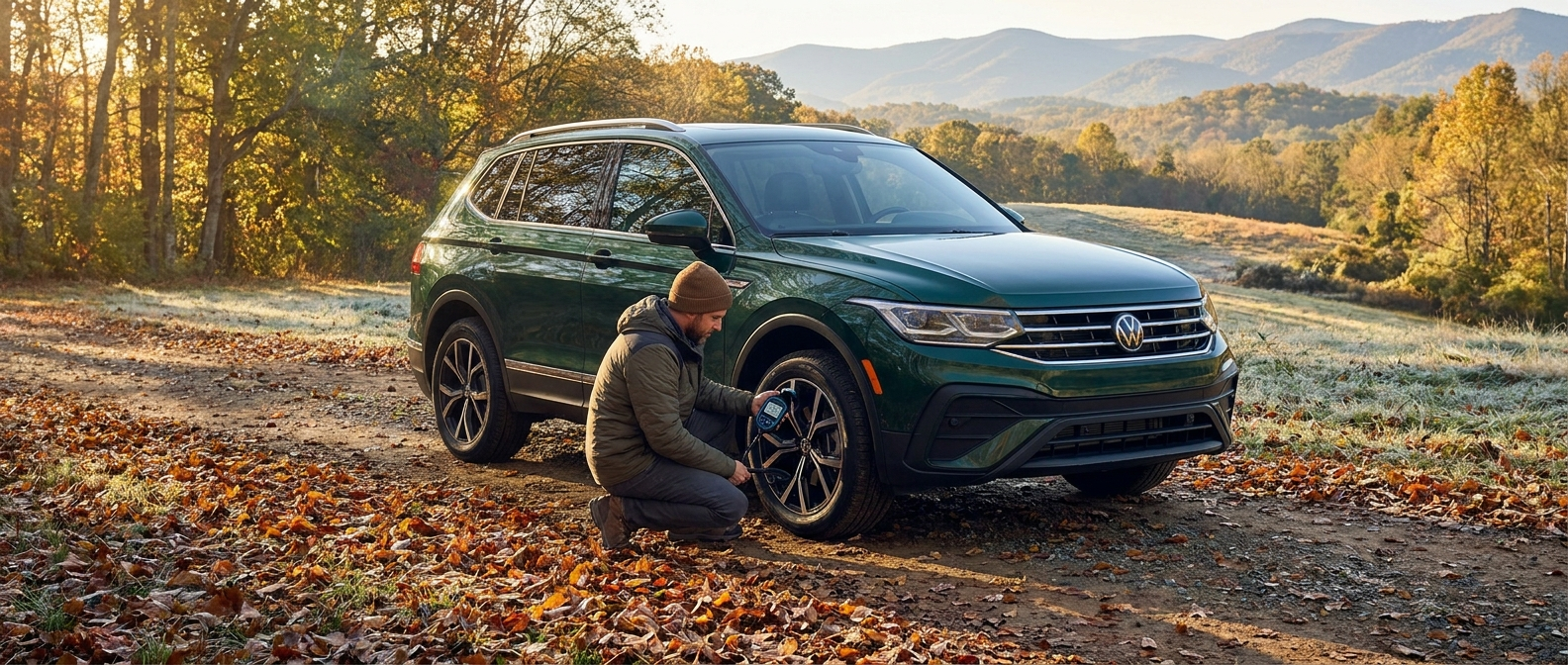
2026 Volkswagen Tiguan tire pressure check on a fall morning in Spartanburg County, SC

Fall Tire Tips for Volkswagen Drivers in Spartanburg County

Fall in Upstate SC is subtle. No ice, no real snow season, and the leaves are only just turning on SC Highway 11 through the Blue Ridge foothills. Subtle is exactly what makes this season tricky for tires. Spartanburg County overnight lows are already touching the upper 40s in October, and by November they'll average around 42 degrees Fahrenheit. Call it a 30-degree swing from our summer highs. Physics takes that swing and quietly steals 2-3 PSI from every tire on your Volkswagen, and no warning light appears on the dash to tell you. Most online guides skip that part entirely, and it's the part we watch play out every fall on the service drive at Steve White Volkswagen Spartanburg. Below, let's keep this to what actually matters, in plain terms. The short version Pressure first: Check PSI against your door-jamb placard (not the tire sidewall). Recommended cold inflation varies from 36 to 41 PSI depending on your Volkswagen model and trim. Tread reality: The legal minimum is 2/32 of an inch, but 4/32 is the threshold that gives you wet-road confidence in fall rain. A quarter works better than a penny for catching it in time. TPMS won't save you: The indirect TPMS system in Volkswagen vehicles triggers at roughly 25% below its stored baseline. A seasonal 2-3 PSI drop won't light the dash. Manual checks matter. Sidewall check: Five years of South Carolina summer heat accelerates rubber oxidation. Check for cracking before it becomes a roadside problem. Rotation timing: Fall is the right moment to rotate if you're within 1,000 miles of the interval, so wear is even before winter rain arrives. What actually matters when choosing fall tire care for your Volkswagen? Four variables do the heavy lifting in fall tire care for your Volkswagen, and they operate together as one system, so skipping any single one of them leaves the other three unable to fully cover the gap it opens before the winter rain arrives. Our service team runs this same checklist whenever a Volkswagen comes in. It's the starting point. Check Best For Key Spec Honest Tradeoff Cold inflation pressure Every Volkswagen, every fall Door-jamb placard (varies: 36 PSI on the 2026 Atlas and Jetta; 36-41 PSI on the 2026 Tiguan and Taos by trim) Specs differ more across the lineup than most drivers expect. One generic PSI covers none of them correctly. Tread depth (penny + quarter test) Anyone driving in fall rain 4/32" for wet roads; 2/32" is the NHTSA legal floor Penny test only catches 2/32". A quarter reveals the safer 4/32" threshold while you still have time to act. Sidewall integrity Vehicles with tires over 4-5 years old Visual check: no cracks, bulges, or embedded objects on all four tires plus the spare South Carolina summer heat and UV exposure accelerate rubber oxidation. A tire that passes tread depth can still have compromised sidewall structure. TPMS reset status After any inflation adjustment The indirect TPMS system in Volkswagen vehicles reads wheel-speed differentials via the ABS sensors. It needs a manual reset after you inflate The TPMS warning threshold is roughly 25% below the stored baseline. That's well below where a 2-3 PSI fall drop lands. A yellow TPMS light in fall means you're already well behind. The Tiguan and the Atlas both run the indirect TPMS design shared across Volkswagen vehicles. Your door placard's PSI changes with trim and tire size, and the system itself doesn't know what your target pressure is. It only knows when rotation rates diverge enough to flag a problem. So trust the gauge, not the light. Cold inflation pressure: why your door jamb is the only number that matters Your door-jamb placard is the one number worth trusting for cold inflation pressure, because the figure molded into the tire sidewall is simply the maximum the casing can safely hold, and that ceiling sits well above the target Volkswagen set for your specific car. Plenty of shops default to 32 or 35 PSI across makes because it's convenient, and that's exactly where underinflation sneaks in. On 2026 Volkswagen vehicles, the spread runs wider than you'd guess: 2026 Atlas: 36 PSI front and rear across all trims 2026 Tiguan: ranges from 36 to 41 PSI depending on trim and tire size (the 2026 Tiguan SEL runs 36 PSI on its 235/55R18 tires; the Comfortline 4Motion runs 41 PSI on 215/65R17s) 2026 Taos: 36 to 41 PSI depending on trim 2026 Jetta: 36 PSI Those differences matter. An Atlas inflated to the Tiguan Comfortline's 41 PSI spec will show accelerated center-tread wear. A Tiguan filled to a generic 35 PSI default runs underinflated, which generates heat through sidewall flexion, the mechanism behind tire failure well before you'd ever notice an outcome. The door-jamb placard is the only source of the correct PSI for your exact Volkswagen. The tire sidewall shows the maximum the tire can hold. They're not the same number, and treating them as interchangeable is one of the easiest tire-pressure mistakes to make. Fall timing matters here because of the Spartanburg temperature swing. Tire pressure drops about 1 PSI for every 10-degree Fahrenheit decrease in temperature, per established physics. Spartanburg County overnight lows in October average around 47 degrees Fahrenheit, set against summer highs that hit 90 degrees Fahrenheit back in July. A tire you inflated correctly in July can reach a cold October morning reading 2-3 PSI low. On the I-85 corridor, where wet pavement and highway speeds combine in fall rain, that loss isn't trivial. Timing the check correctly: Always check pressure cold, before you drive or after the car's been parked at least three hours. Tires warm up as you drive, and they'll read artificially high. A cold reading against your door-jamb number is your only accurate comparison. Check pressure cold, fill to your placard spec, then reset the TPMS system so it relearns the new baseline. The reset procedure varies a little by model year. Our service team can walk you through it, or we'll handle the reset during a fall inspection. You'll want a few habits in mind as you work through the checklist: Keep a quality digital gauge in the door pocket. Pencil gauges drift and read low. A digital gauge accurate to 0.5 PSI is inexpensive, and it'll take the guesswork out. Check pressure in the morning before the day's first drive, well before any errands. The spare needs pressure too (it's easy to forget until the morning you actually need it). Rotate tires at the same time if you're within about 1,000 miles of your interval. Uneven wear heading into the rainy months means uneven traction across the four corners. If your TPMS light does come on after filling, drive a few miles at normal speed. Indirect systems often need a short reset drive before they'll clear the light. Match your tire gear to how you actually drive in Upstate SC The fall equipment question worth weighing in Spartanburg County rarely comes down to dedicated winter tires, and it has far more to do with whether the all-seasons already on your car still grip the way they used to. Both deserve a look, but the second one matters more in our climate. That's where we'd start. South Carolina doesn't demand dedicated winter tires the way the mountain states do. All-season tires still have a lifespan measured in tread depth as much as in miles, and fall is when the rubber on summer-driven vehicles reveals the cumulative wear of the hotter months. The Jetta and Taos are common daily drivers in Upstate SC, and both run all-season equipment from the factory. If your tread sits at or near 4/32 of an inch, you're entering the range where wet stopping distances start to lengthen in fall rain, even before the tread reaches the legal floor. NHTSA sets the replacement floor at 2/32 of an inch, which you can check with the penny test. Insert a penny into the tread groove with Lincoln's head pointing down and toward you. If you can see the top of his head, you're at or below the legal minimum. For fall prep, the quarter test does more for you. Insert a quarter the same way, and if you can see the top of Washington's head, you're at 4/32 of an inch or less. That's the wet-road warning zone. The honest tradeoff is simple enough. All-season tires in good condition handle Upstate SC fall and winter conditions well. Once tread drops below 4/32, replacing before the new year isn't really optional, and the question becomes timing. Do it now, or accept reduced wet-road grip until you do. Frequently Asked Questions Does the TPMS in Volkswagen vehicles light up when tires lose pressure in fall? Not necessarily. The indirect TPMS system in Volkswagen vehicles monitors wheel-speed differentials through the ABS sensors rather than reading actual PSI. It flags a warning when one or more wheels spin at a noticeably different rate, which typically happens at roughly 25% below the stored pressure baseline. A 2-3 PSI drop from overnight fall temperatures falls well short of that threshold, which means your tires can be meaningfully underinflated on a cold Spartanburg morning without a single warning light appearing. That's why we recommend a manual check with a gauge every time the overnight temperatures drop significantly, rather than waiting for the TPMS to flag it. What's the difference between the penny test and the quarter test for tread depth? Both use coins as tread depth gauges. The penny test checks for the NHTSA legal minimum of 2/32 of an inch. Insert a penny with Lincoln's head pointing down, and if you can see the top of his head, the tire is at or below the legal floor and should be replaced. The quarter test checks the more useful safety threshold of 4/32 of an inch. Insert a quarter the same way, and if you can see Washington's head, you're in the range where wet-road stopping distances begin to lengthen noticeably. For fall driving in Spartanburg County, the quarter test is the more practical check, because it catches the wear zone before you've already hit the legal minimum. Schedule a Fall Tire Inspection Steve White Volkswagen Spartanburg 2671 Reidville Rd, Spartanburg, SC 29301 (864) 585-2492

Read More
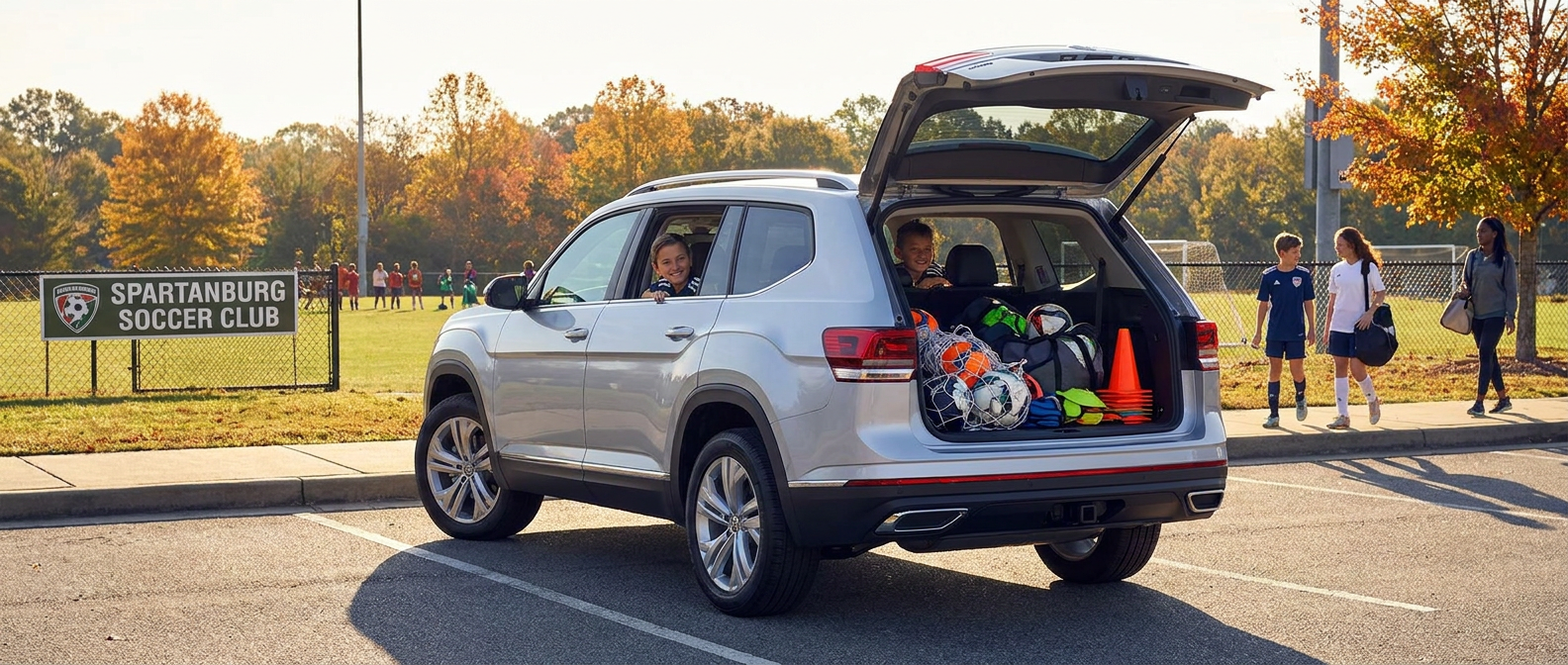
2026 Volkswagen Atlas rear hatch open with soccer gear at a Spartanburg SC soccer field

3 Best Volkswagen Models for Busy Spartanburg Parents

In this article How These Three Rank for School-Run and Soccer-Field Duty The Atlas: Built for the Full Carpool Load The Atlas Cross Sport: More Cargo, Same Engine, Five Seats The Tiguan: The Right Pick When Space Isn't the Priority Which One Is Actually Right for Your Family? One spec worth correcting before you build a carpool shortlist is the old idea that the Tiguan offers a third row. It used to. The 2026 Tiguan does not. If you're pricing out carpool runs on Reidville Road and you haven't looked at the current lineup closely, that single detail reshapes this decision. Our top pick for most Upstate SC families running a genuine carpool is the 2026 Volkswagen Atlas. It seats seven, hauls 20.6 cubic feet of cargo with everyone aboard, and tows up to 5,000 pounds when soccer weekend becomes a camping weekend. That said, it's not the right fit for every driveway or every family. So here's the straight version. How These Three Rank for School-Run and Soccer-Field Duty We ranked these three on the four measures that decide a school-pickup-and-practice vehicle, meaning passenger count, cargo behind the last row, fuel efficiency, and the one feature each does best, so you'll see where each one wins and where it asks you to give something up. Rank Model Best For Seats Cargo (all seats up) EPA Combined MPG 1 Atlas Full carpool (6-7 passengers) 7 20.6 cu ft 23 mpg (FWD) 2 Atlas Cross Sport Family of 5 + gear 5 40.3 cu ft Up to 23 mpg 3 Tiguan One family, tight spaces 5 33.8 cu ft 26 mpg combined *EPA fuel economy figures per fueleconomy.gov for the 2026 model year.* The Atlas: Built for the Full Carpool Load Seven seats make the Atlas the carpool pick, and it backs that up with 20.6 cubic feet of cargo behind the third row and a tow rating up to 5,000 pounds, though you trade away some ease of parking to get all of it. If you're the parent driving five kids home from Dorman or Spartanburg High after a Tuesday practice, it's the only Volkswagen that fits them all. Volkswagen lists the 2026 Atlas cargo hold at 20.6 cubic feet behind the third row with everyone seated. That doesn't sound like much until you realize it swallows a soccer bag, a folded lawn chair, and a cooler without anyone losing a seat. Fold the third row and you're at 55.5 cubic feet; fold both rear rows and you reach 96.6 cubic feet of flat cargo space. The 2.0-liter TSI engine puts out 269 horsepower and 273 lb-ft of torque, which means merging onto I-85 with six passengers doesn't feel like a prayer. It feels like a car. The tradeoff is size. Parking it in a tight pickup line at a Spartanburg elementary school takes a bit more attention than a compact crossover does. With 4MOTION all-wheel drive (standard on most trims above the base SE), the EPA rates fuel economy at 20 city / 26 highway for the SE 4MOTION. That's real-world math worth knowing on a school run. Buying caution: If your household consistently carries five or fewer people and rarely hauls more gear than two soccer bags, you may be paying for third-row capacity you'll fold down and never use. The Atlas Cross Sport gives you more cargo per seat for a two-row family. The Atlas Cross Sport: More Cargo, Same Engine, Five Seats The Cross Sport is the cargo pick for a two-row family, dedicating all its rear volume to the trunk for 40.3 cubic feet behind the second row against 20.6 in the three-row Atlas, and that extra room costs you the seventh seat you can't add back. Close to twice the space with every seat full is what you gain. The 2026 Atlas Cross Sport shares the 2.0-liter TSI engine of the Atlas rated at 269 horsepower and 273 lb-ft of torque, along with the same 4MOTION AWD option. You'll notice the roofline sits a bit lower and the silhouette looks sportier. Maximum cargo expands to 77.6 cubic feet when the rear seats fold down, and Volkswagen quotes that figure on their official site. A seventh passenger won't fit, and that's the trade you're making. But if your carpool caps at your two kids plus two friends, and you're tired of complaints about a cramped trunk, the Cross Sport is the vehicle your Saturday mornings have been waiting for, trunk and all. Pros / Cons for the Atlas Cross Sport Pros Cons 40.3 cu ft cargo with seats up (vs 20.6 in the Atlas) Only 5 seats. No carpool of 7 Same 269 hp engine as the full Atlas Lower roofline means slightly reduced headroom for tall rear passengers Sportier exterior profile Missing the pass-through console of the Atlas for long cargo items 4MOTION AWD available for wet Upstate SC mornings Slightly less total max cargo than full-size competitors See Current Volkswagen Specials The Tiguan: The Right Pick When Space Isn't the Priority The 2026 Volkswagen Tiguan is the right call when space isn't your priority, a five-seat, two-row SUV built to park easier and ride more refined day to day, with one catch worth stating plainly, the optional third row disappeared in the 2025 redesign. For families who remember the old three-row Tiguan, we'll be direct, that version is gone from the current lineup. What replaced it works better for the family that doesn't need that row. Volkswagen boosted the cargo area to 33.8 cubic feet behind the second row (up from the cramped configuration of the previous generation). The rear-seat legroom is 40.2 inches, which matches the front-row legroom exactly. Kids have actual room. The 12.9-inch touchscreen and IQ.DRIVE driver assistance suite are standard across every 2026 Tiguan trim. Carbuzz confirms the EPA fuel economy at 23 city / 30 highway / 26 combined mpg for the base 2.0-liter (201 horsepower) configuration. For a family of four that drives a lot of highway miles between Greenville and Spartanburg, that fuel-efficiency edge is meaningful, and you'll feel it in real driving. The limit is five seats. If a neighbor's kid ever needs a ride, someone's getting left behind. For families whose carpool duty is light and whose priority is a more maneuverable daily driver, the Tiguan earns its place on this list. For everyone else, step up to the Atlas or the Cross Sport. Explore financing options at Steve White Volkswagen Which One Is Actually Right for Your Family? The Atlas wins when carpool size is the variable in play, since it seats seven, keeps real cargo behind all of them, and tows gear on the weekends, with the bulk costing you a bit in tight parking lots. You'll recognize it as the Volkswagen built for the family whose Saturday turns up a third kid who needed a ride. Go with the Atlas Cross Sport when you're consistently a family of five and you want more usable trunk space than the three-row Atlas delivers with its last row up. Same power, more cargo per seat, cleaner roofline. The Tiguan wins when your family of four values fuel efficiency and a vehicle that fits more comfortably in tighter spaces. It's a refinement upgrade from a compact crossover, not a carpool solution. We're at Steve White Volkswagen on Reidville Road, and we've watched this decision hinge on the fall carpool season more than anything else. The regret that's easy to land in is buying the smaller vehicle and then wishing for more seats at the first school-year carpool request. Buy for the life you actually live in October, not the one you're temporarily living in July. Value Your Trade-In Steve White Volkswagen Spartanburg 2671 Reidville Rd, Spartanburg, SC 29301 (864) 585-2492
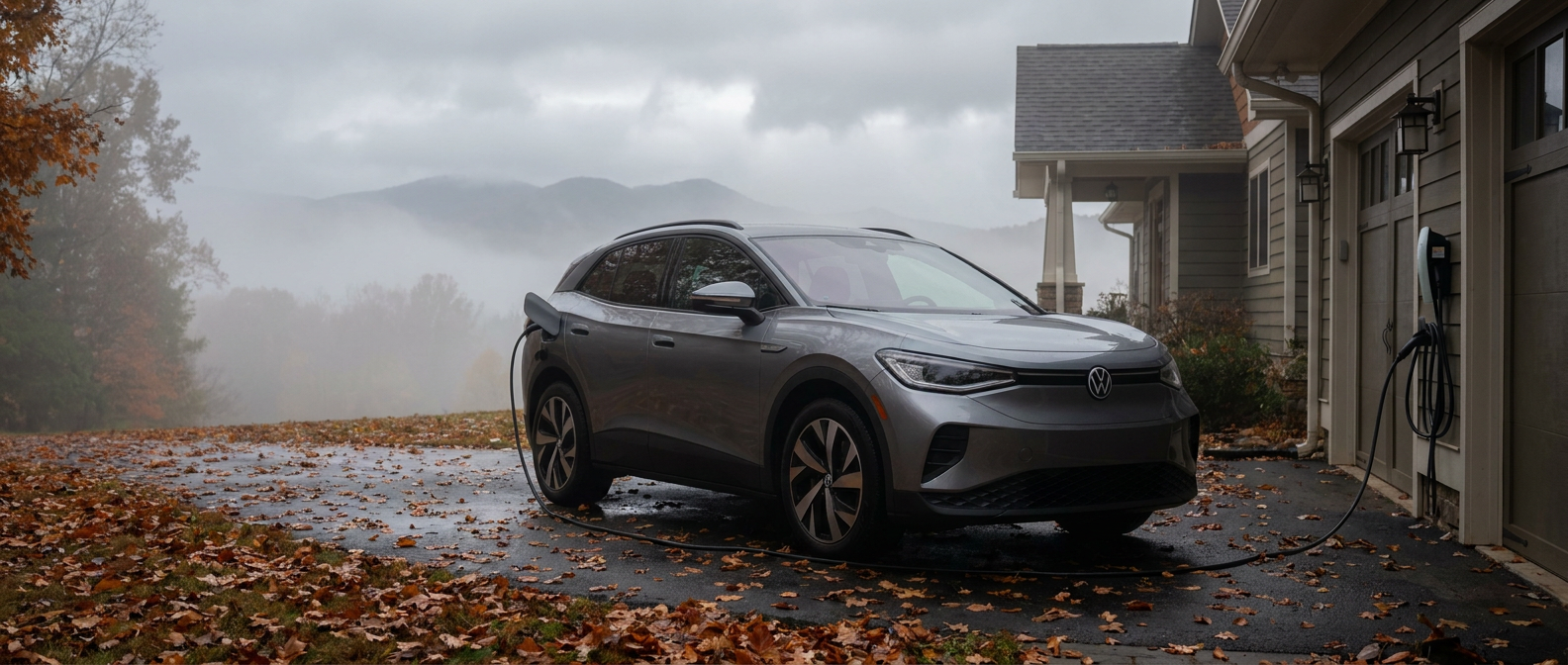
2026 Volkswagen ID.4 on a cool autumn morning in Spartanburg, South Carolina, with Blue Ridge foothills in the background

Volkswagen ID.4 Cool-Weather Commuting Guide for Spartanburg Drivers

Spartanburg's cool season sits closer to an EV range sweet spot than to an EV range problem, and that's the bottom line for ID.4 drivers here. The hardest cold-weather penalty on the ID.4 kicks in below freezing. Our winters mostly don't go there. Plan the charge right, and a cool Upstate SC commute becomes one of the better real-world cases for this car. That said, there's a real tradeoff. We'll name it plainly. Where Do You Charge and When? Charge at home on Level 2 overnight and you'll cover almost any Upstate SC commute before you back out of the driveway, with the Tesla Supercharger at Winchester Place standing by for the long days when a daily top-up isn't enough. Get the timing right and the rest is just driving. Spartanburg's cool season runs from late November through late February, with average daily highs in the mid-50s Fahrenheit and overnight lows that typically sit in the mid-30s. The EPA rates the 2026 Volkswagen ID.4 Pro at 291 miles of range under ideal conditions. Real-world driving data at sustained temperatures in the 40-55 degree Fahrenheit range, which is where Spartanburg spends most of its cool months, points to about a 10% efficiency reduction at those temps. A 10% dip isn't anywhere near the 25-35% loss that occurs below 32 degrees Fahrenheit. Spartanburg's average January low is around 34 degrees Fahrenheit. Deep cold snaps happen, but extended hard freezes stay the exception, not the rhythm. The table below maps out the practical charge decision you'll make as an Upstate SC commuter. Scenario Charge location Timing Realistic range at departure Key move Daily I-85 or I-26 commute, under 60 mi round trip Home Level 2 (240V) Overnight, 7-8 hours 240-270 mi Schedule charge to finish near your alarm, not midnight Long day: Spartanburg to Greenville and back with errands Home Level 2; Supercharger as backup Top up at home; fast charge only if under 100 mi remaining Full day covered comfortably Tesla Supercharger at Winchester Place, 8 stalls, 24/7, off I-26 Cold snap forecast below 35 degrees Fahrenheit Home Level 2 with app preconditioning Precondition 20-30 min before departure Recovers roughly 10-15 mi vs a cold-soaked battery Battery warms on grid power, not your driving range Road trip: Charlotte, Asheville, or the coast Home full charge night before Charge to 90%; plan one fast-charge stop 260-plus miles usable; one 30-min stop handles most trips NACS port is standard on the 2026 ID.4 The 2026 Volkswagen ID.4 ships with a NACS charge port as standard equipment, so the Tesla Supercharger network in Spartanburg opens to you as a native connector. You'll find 8 stalls at 2100 Winchester Place off I-26, rated up to 250 kW. No adapter negotiation. The DC fast charge rate of the ID.4 tops out at 175 kW, so on a 250 kW stall it charges at its full capability, about 10% to 80% in about 30 minutes. The Honest Tradeoff, and How It Plays Out Here The one genuine tradeoff on the Pro and Pro S is the resistive cabin heater, which pulls more energy from the battery in the cold than a heat pump would, yet even on Spartanburg's hardest freezing mornings you'll still have plenty of range left for a normal commute. Look at the mechanism for a second. The 2026 Volkswagen ID.4 Pro and Pro S use a resistive cabin heater rather than a heat pump (the heat pump is available on the Pro S Plus trim). Resistive heating warms the cabin quickly but it draws more energy from the battery than a heat pump does. On a 50 degree Fahrenheit morning, the hit to a 50-mile round-trip commute is modest, and you'll barely feel it. On a 28 degree Fahrenheit morning after the car has cold-soaked overnight, plan on around a 20% range reduction. At 291 EPA miles, that still leaves well over 230 miles available on the hardest mornings Spartanburg typically sees. Translate that to an actual commute. A 60-mile daily round trip uses about 20% of the battery in normal conditions. Add the coldest realistic reduction and you're at about 25% consumed for the day. A lot of margin. We pay closer attention to this math when a driver covers 120-plus miles daily, or when home charging is Level 1 only. A standard wall outlet adds about 4-5 miles per hour of charge, which works for short commutes with discipline. A Level 2 home setup makes the calculation comfortable and routine. The Tiguan is the Volkswagen that Upstate commuters compare against the ID.4 most often at this budget range. It brings AWD, a familiar gas powertrain, and a wide refueling network, so it's a legitimate alternative. The Taos comes up too, especially for solo drivers who want a smaller footprint and lower ownership cost. We're not going to pretend one answer fits everyone. The ID.4 wins on energy cost per mile and on the daily-commute experience once charging is dialed in. But both the Tiguan and the Taos earn a real conversation if your charging situation is uncertain. The 2026 Volkswagen ID.4 is a compact SUV with 30.3 cubic feet of cargo space behind the rear seats. It'll hold a full week of groceries, a set of commuter gear, or a weekend bag for two. Not a van. Right-sized for the dual-income Spartanburg household running the I-85 corridor daily. Charging reality check. At the Winchester Place Supercharger, the ID.4 charges at its own 175 kW maximum. Plan a 30-minute stop and you're back on the road with well over 150 miles added. That covers Spartanburg to Greenville and back twice over. Daily charge discipline. Set your regular daily charge ceiling to 80% in the app. Volkswagen and battery engineers broadly recommend this for long-term battery health, bumping to 90% the night before a longer drive. Set it once and you're done for the season. Your Pre-Season Upstate SC EV Commute Checklist Run through this list well before November and your cool-season charging routine will hold steady through February, provided you handle the one item that's easy to skip, which is measuring your own actual round-trip commute mileage instead of estimating it. Do that part first. Book a pre-season service check to confirm your charging connections are clean and the battery's thermal management is operating normally. [ ] Set a scheduled departure charge in the Volkswagen ID.4 app, targeting 80% and finishing near your alarm time [ ] Enable battery preconditioning in the app for any morning forecast below 40 degrees Fahrenheit, which warms the battery on grid power before you unplug rather than on your range [ ] Save the Winchester Place Tesla Supercharger off I-26 as a fast-charge location in your app [ ] Know your actual round-trip commute mileage. Not an estimate. The real number, from your driveway to your destination and back. [ ] Set your regular daily charge ceiling to 80%, then bump it to 90% the night before a trip over 150 miles round trip [ ] On cold mornings, use the heated front seats before running the cabin heater at full blast. It costs less energy and warms you just as fast. [ ] Plan your first cold morning as a data run, not a stress test. Drive the commute, check how much range you actually used, and calibrate from there. One pattern we stand behind: an EV commute turns frustrating mainly when the car runs on Level 1 charging and the margin gets estimated instead of measured. The ID.4 on a proper Level 2 home setup removes that variable entirely. The commute becomes genuinely routine once that's handled. That version of the car earns its keep. Talk through the financing options at Steve White Volkswagen before you settle on a trim level; it's worth doing early. The step from Pro to Pro S brings the heated steering wheel and enhanced IQ.DRIVE driver-assist features. On a dark, cool I-85 commute in January, that heated wheel is less of a luxury than it sounds on a spec sheet. You'll enjoy the drive this winter. *By the Steve White Volkswagen Team | October 2026* See Current Volkswagen ID.4 Offers Steve White Volkswagen Spartanburg 2671 Reidville Rd, Spartanburg, SC 29301 (864) 585-2492
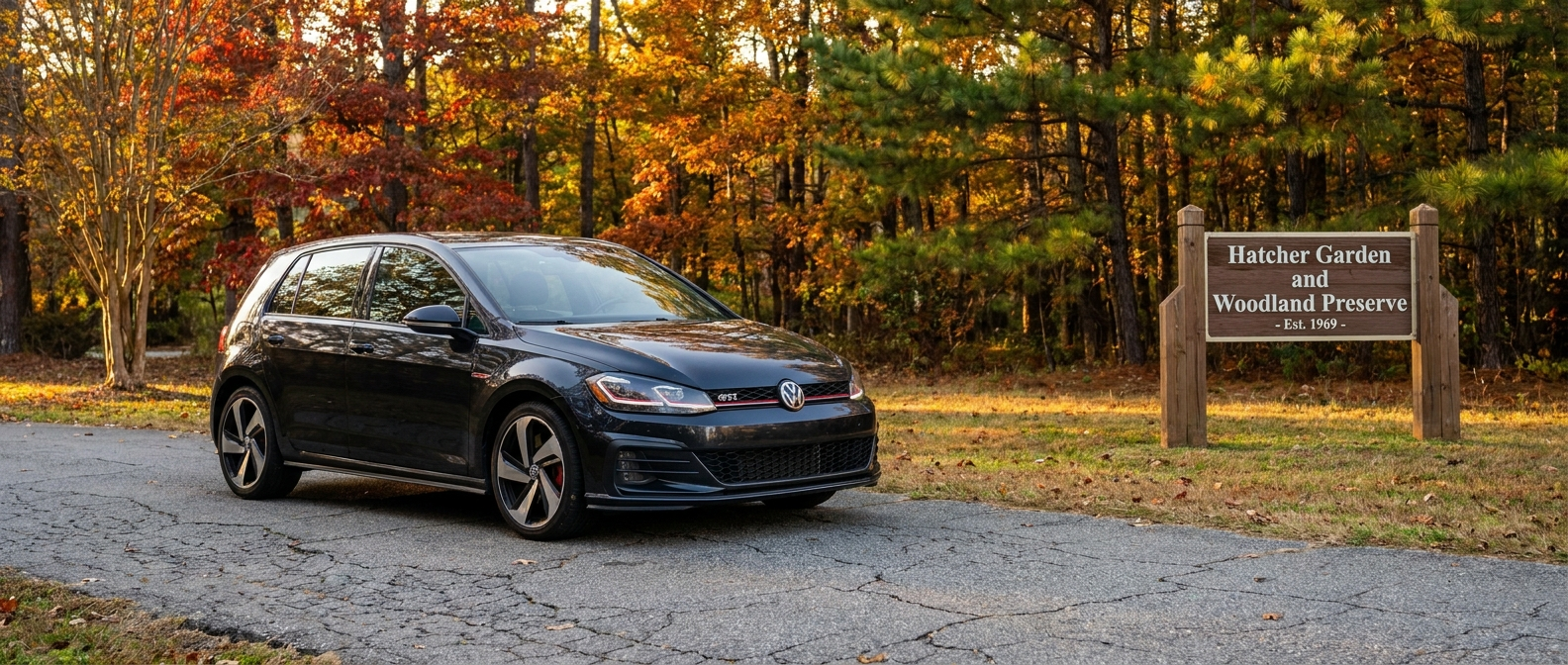
2021 Volkswagen Golf GTI in black parked at Hatcher Garden Spartanburg SC during fall foliage season

Used Volkswagen Model Years for Fall Photoshoots at Hatcher Garden

If you've been weighing a used Volkswagen in Upstate SC, here's a detail most buying guides skip. Some model years carry more baggage than the trunk can hold, and the wrong one spends October in a service bay instead of on the paved loop at browse our pre-owned Volkswagen inventory. At Steve White Volkswagen Spartanburg, we watch these cars come and go every season. A Golf GTI that rolls in looking immaculate but wearing a complaint-heavy 2017 build date is a different story from a clean 2020 or 2021 at the same asking figure. Fall is the one season when Spartanburg's light turns genuinely special, and Hatcher Garden's mix of conifer evergreens and turning hardwoods rewards a camera and a well-chosen car. So let's sort out which years to target, which to leave on the lot, and why. The short version Golf GTI sweet spot: 2020 and 2021 (Mk7.5 generation, fewest NHTSA complaints across the tracked decade) Jetta sweet spot: 2021-2023 (seventh-generation stability after the 2019 model's documented transmission and reliability issues) Tiguan sweet spot: 2022-2024 (second-generation refinement; the 2018 carried the highest single-year recall count for the nameplate) Years to watch across all three: 2017-2019 Golf GTI (high complaint volume); 2018-2019 Tiguan (13 NHTSA recall campaigns each year); 2019 Jetta (NHTSA recall 23V604, ignition switch) Hatcher Garden is free, open dawn to dusk, and the fall palette peaks in mid-to-late October. Right now is the window Which model years are the sweet spot for a used Golf GTI? The 2020 and 2021 Golf GTI are the years we steer drivers toward first, since NHTSA's own complaint database shows the 2020 drew the fewest owner complaints of any Golf GTI year tracked across the 2016-2026 decade, with the 2021 a close second behind it. Both belong to the Mk7.5 generation, which Volkswagen facelifted in 2018 with revised LED taillights, a wider digital instrument cluster option, and the same turbocharged 2.0-liter EA888 engine, a proven unit with a longer service history than the Mk8 that replaced it for 2022. That matters at Hatcher Garden for a practical reason. The one-mile paved loop at the garden works beautifully as a low-speed photo approach. You drive up, park along the edge, and the conifer collection's 200-plus species hand you an evergreen backdrop while the surrounding hardwoods turn amber and rust. A 2020 or 2021 GTI in Tornado Red or Deep Black Pearl reads sharply against that mix. The Mk7.5 also sits lower than a crossover, a proportional stance that keeps the garden's gazebo, stone bridges, and waterfall in the background rather than cropped out. Model Year Generation NHTSA Complaint Signal What to Look For 2016-2017 Mk7 Highest complaint volume (232 in 2017 alone per NHTSA) Engine and electrical complaints; approach cautiously 2018-2019 Mk7.5 Moderate; 2019 carries ignition switch recall 23V604 Confirm recall completed via VIN before purchase 2020-2021 Mk7.5 Cleanest years in the decade per NHTSA data Sweet spot: settled platform, resolved recalls 2022 Mk8 Second-highest complaint volume in tracked range New platform growing pains; wait for used prices to reflect risk 2023-2024 Mk8 Lower than 2022; Mk8 maturing Solid if budget allows; confirm no open campaigns The 2022 Golf GTI is the one year we'd slow down on. It logged the second-highest complaint count in the decade per NHTSA data, reflecting the Mk8's first year in the US market. New-generation launches do that. It's not necessarily a deal-breaker long term, but for a used buyer who wants the most settled version of the car, 2020 or 2021 is the cleaner call today. See Current Volkswagen Offers Which years should you watch out for on the Tiguan and Jetta? The 2018 Tiguan is the year to watch most closely, because NHTSA records show that model year generated the highest single-year recall count in the Tiguan nameplate's history, a recall density heavy enough to slow a used purchase down no matter how clean the car looks sitting on the lot. The 2019 Tiguan carried 13 NHTSA recall campaigns of its own, covering airbags, fuel systems, structural concerns, and suspension. Skip both if cleaner options at similar mileage sit nearby. The Tiguan in its 2022-2024 range is a different vehicle in terms of resolved complexity. By then the second generation had found its footing, recall counts dropped noticeably against the 2018-2019 cluster, and the interior refinements from the 2021 refresh carried into those years. For fall photoshoots, the proportions of the Tiguan work better than you'd expect in a compact SUV. Wide enough to anchor a frame against Hatcher Garden's pond and gazebo, it never overwhelms the scene the way a three-row would. For the Jetta, NHTSA issued recall 23V604 covering 2019 and 2020 Jetta vehicles with ignition switches manufactured between September 2018 and December 2019. A used 2019 Jetta isn't automatically a pass, but confirm via VIN that the campaign was closed out. The seventh-generation Jetta launched for 2019, and the first year of a new generation (this is common across the industry) almost always surfaces in the complaint record. The 2021 and newer Jetta is where the platform settled. Browse the Jetta lineup if the sedan proportion is what you're after. At Hatcher Garden the low roofline of a sedan actually reads well against the canopy paths and wooden bridges. It doesn't fight the scene. Per NHTSA records, the recall count of the 2018 Tiguan represents the highest single-year figure for that nameplate across its tracked history, a meaningful signal when comparing 2018 versus 2022-2024 used examples at similar asking figures. What should a buyer actually look for by year? By this point the photoshoot framing stops being cute and turns genuinely useful, since the Volkswagen vehicles that hold their looks at a place like Hatcher Garden tend to be the well-maintained ones, not simply the ones wearing a strong model year. A 2020 GTI that skipped oil changes is not the same car as a 2020 GTI with full service records. The model-year data tells you where to start the search. The VIN check and service history close it. Here's how we'd match the year to the buyer: Used Golf GTI buyer who wants the driving experience with the cleanest history: Target 2020 or 2021. The EA888 engine responds well to regular maintenance, and the Mk7.5 platform is well understood by independent shops and by our service team if you want Volkswagen-trained hands on it going forward. Compact SUV buyer who wants Tiguan practicality without early-generation headaches: Target 2022 or 2023. You'll pay a modest premium over a 2018, but the 2018 carries a recall history that the 2022 doesn't. That gap shows up on resale, too. Sedan buyer drawn to the value proposition of the German engineering of the Jetta: The 2021 and 2022 Jetta is the settled version of the seventh generation. Avoid the 2019 unless the ignition-switch recall is confirmed resolved. From 2021 on, it's a more straightforward used buy. All three fit the Hatcher Garden context, each for its own reason. The GTI reads athletic against the garden's stone-and-wood bridge details. The width of a Tiguan pairs well with the broader pond overlooks, and the clean sedan lines of the Jetta work in the dappled shade of the conifer paths. Our pre-owned inventory changes regularly, so if you're shopping this fall window, now is the practical moment to look. Frequently Asked Questions Which used Volkswagen Golf GTI years have the cleanest NHTSA complaint record? The 2020 and 2021 Golf GTI drew the fewest owner complaints of any years tracked across the 2016-2026 range per NHTSA complaint data. Both belong to the Mk7.5 generation and represent the most complaint-settled version of the platform in the used market today. Is the 2018 Volkswagen Tiguan a good used buy? The 2018 Tiguan is one we approach cautiously. Per NHTSA records, it generated the highest single-year recall count across the Tiguan nameplate's tracked history. If you're comparing a 2018 against a 2022-2024 example at similar mileage, the 2022 carries a meaningfully shorter recall history and is the cleaner starting point. Is Hatcher Garden actually a practical photoshoot location for a used car outing in fall? Yes, in a real and specific way. Hatcher Garden and Woodland Preserve is free, open dawn to dusk every day of the year, and features a one-mile paved loop with ponds, waterfalls, stone and wooden bridges, a gazebo, and a conifer collection of more than 200 species. In mid-to-late October the surrounding hardwoods turn while the conifers stay green, which gives you layered color rather than a one-note backdrop. Parking is on-site and unrestricted. Value Your Trade-In Steve White Volkswagen Spartanburg 2671 Reidville Rd, Spartanburg, SC 29301 (864) 585-2492
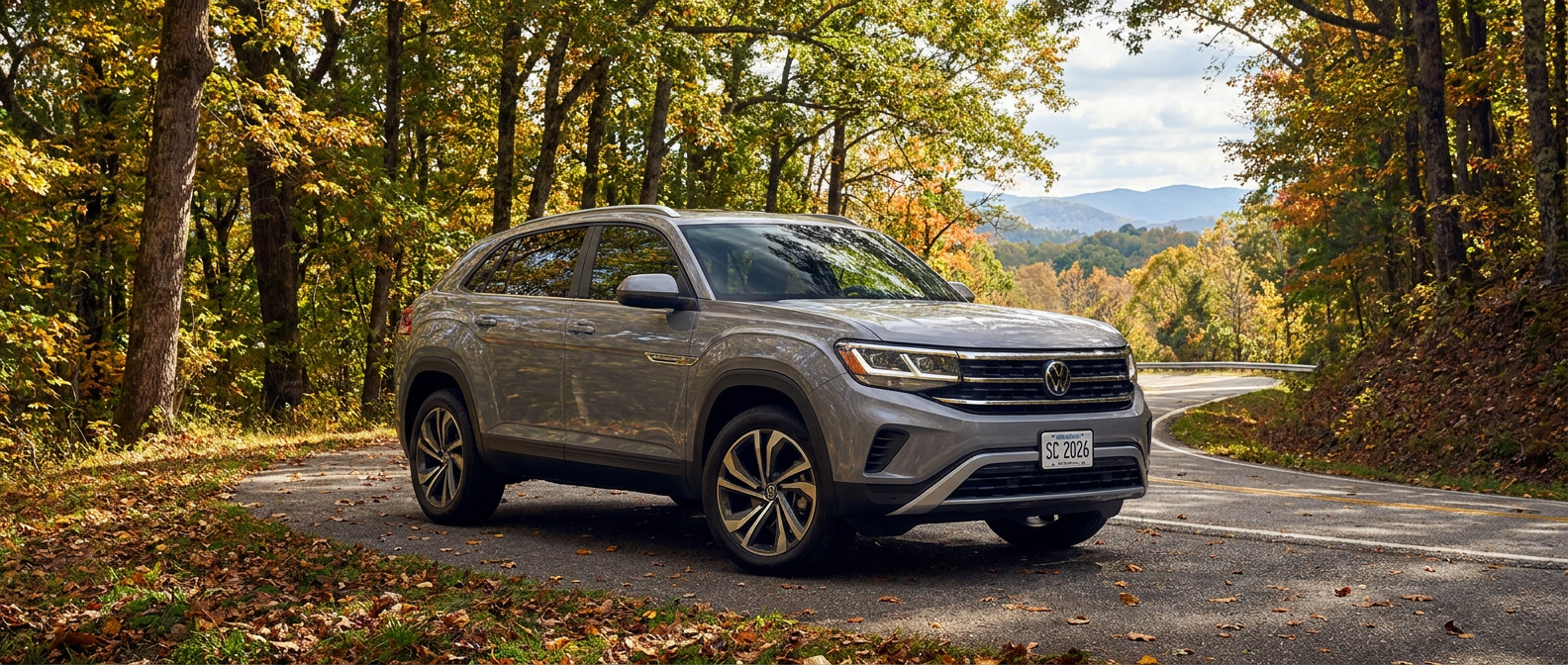
2026 Volkswagen Atlas Cross Sport on an Upstate South Carolina road near Spartanburg with Blue Ridge foothills in the background

Volkswagen Atlas Cross Sport vs. Jeep Grand Cherokee L: Spartanburg's Honest Verdict

In this article What's the Real Difference Between These Two SUVs? Does Cargo Space Actually Affect a Spartanburg Family? The I-85 Commute and School-Run Reality SC Highway 11 and Weekend Capability So Which Should You Pick? Start with the short version. If your family is five people and you drive I-85 most mornings, the 2026 Volkswagen Atlas Cross Sport is the cleaner call. Need a real third row, or need to tow more than 5,000 pounds? The Grand Cherokee L earns it. Almost every other difference between these two comes down to which of those situations describes you. The short version The 2026 Volkswagen Atlas Cross Sport is a two-row SUV with 40.3 cu ft of cargo behind the rear seats, an IIHS Top Safety Pick+ rating, and 23 mpg combined (FWD, EPA-estimated) for Upstate SC daily drivers who don't need a third row. The 2026 Jeep Grand Cherokee L seats six or seven and tows up to 6,200 lbs when properly equipped; it's the right tool if that third bench or that tow rating gets real use. The catch with the Grand Cherokee L: with all three rows occupied, usable cargo drops to 17.2 cu ft. The Atlas Cross Sport starts at 40.3 cu ft, always. Rear legroom in the Atlas Cross Sport (40.4 inches per Volkswagen specs) beats the Grand Cherokee L's second row (39.4 inches) on a stat that matters every carpool day. Both are capable AWD SUVs for Upstate SC weather; only the Jeep has genuine low-range 4x4 and available air suspension for technical off-road use. What's the Real Difference Between These Two SUVs? On paper these two look like the same shopping decision, but they solve different problems, so the answer depends on whether a third row earns its keep, with the Atlas Cross Sport playing the two-row, five-passenger refinement card and the Grand Cherokee L stretching into three rows for families who need the bench. The 2026 Volkswagen Atlas Cross Sport is the one you buy when you want European driving refinement, a genuinely usable cargo floor, and no interest in paying for a row of seats that collects sports gear nine months out of the year. The Grand Cherokee L goes the other way. It's a stretched, three-row version of an established Jeep nameplate, built for the family that needs that back bench even when it's only half full on the school run. Everything else flows from that split. Spec 2026 Volkswagen Atlas Cross Sport 2026 Jeep Grand Cherokee L Rows / max seating 2 rows / 5 passengers 3 rows / 6-7 passengers Cargo behind last row 40.3 cu ft 17.2 cu ft Maximum cargo (all rows folded) 77.6 cu ft 84.6 cu ft Row 2 legroom 40.4 in 39.4 in Max towing (properly equipped) 5,000 lbs 6,200 lbs EPA combined MPG 23 mpg FWD / 21 mpg 4MOTION 22-23 mpg (2.0L Hurricane turbo) IIHS 2026 safety award Top Safety Pick+ No TSP+ for 2026 Base engine output 2.0L turbo: 269 hp / 273 lb-ft 3.6L V6: 293 hp (std.) The Grand Cherokee L's maximum cargo figure of 84.6 cu ft sounds impressive, and it is, right up until you notice it only exists with both rear rows folded flat. Load the family in and you're down to 17.2 cubic feet behind the third row, roughly two checked bags. The Atlas Cross Sport gives you 40.3 cubic feet behind the rear seats. No folding required. The single deciding factor comes down to use. If the third row gets real use, take the Grand Cherokee L. If it doesn't, you're giving up 23 cubic feet of daily cargo space for a bench that folds away. Does Cargo Space Actually Affect a Spartanburg Family? Yes, and more than the raw spec gap alone suggests, because the cargo you can actually reach on a daily basis matters far more than a headline maximum figure you only unlock by folding away a row of seats you paid good money for. Picture a real Saturday. You're heading out to Croft State Park for the afternoon, and you need a cooler, a couple of folding chairs, a backpack, maybe a bike rack on the hitch. In the Atlas Cross Sport, that's a straightforward load with room to spare. In the Grand Cherokee L with passengers in the third row, you're rearranging the pile or leaving something behind. The 40.3 cubic feet behind the rear seats of the Atlas Cross Sport (a figure Volkswagen publishes) sits on a flat, low load floor with no step-up over a folded bench. Groceries, a dog crate, gear bags, a stroller, they all slide in without a production. Browse our current Volkswagen inventory on Reidville Road to see which Atlas Cross Sport trims and 4MOTION configurations are on the lot right now. On towing, the Jeep simply wins, and we'll give it that. The Grand Cherokee L reaches 6,200 pounds when properly equipped with the Trailer-Tow Package, a number Jeep lists in its published specifications. The Atlas Cross Sport tops out at 5,000 pounds on SE with Technology trim and above (base SE trims without the hitch package are rated for 2,000 lbs, so trim level matters here). For a midsize camper, a fishing boat, or a utility trailer, the Atlas Cross Sport handles it fine. For anything heavier, or if towing is a weekly obligation, the Grand Cherokee L is the right tool. The I-85 Commute and School-Run Reality For the daily grind of commuting and carpool, the Atlas Cross Sport is the one you'll want under you on a rainy Tuesday, though the Grand Cherokee L counters with more available power if straight-line speed ranks higher than easy parking for you. A fair question before you buy is which one you'd rather pilot through an Upstate downpour, and our answer leans hard toward the Volkswagen. So which do you want on a soggy Tuesday morning? The Atlas Cross Sport, and it isn't close for us. The 2.0-liter turbocharged four-cylinder of Volkswagen delivers 269 horsepower and 273 lb-ft of torque through an eight-speed automatic, and Volkswagen tunes it for composure over drama. On the I-85 corridor between Spartanburg and Greenville, that planted, settled feel earns its keep over 30 miles of interstate with everyone else's morning traffic. We'd take it every time. The Grand Cherokee L can be had with a 2.0-liter Hurricane turbocharged four that Jeep lists at 324 horsepower, which is quick by any measure. But it also stretches to 204.9 inches in overall length, about 9.4 inches longer than the Atlas Cross Sport. In parking lots, tight turns, and the school drop-off line, that extra length is something you learn to manage, and never quite stop noticing. "The 2026 Volkswagen Atlas Cross Sport earned the IIHS Top Safety Pick+ designation, meeting updated requirements for crash protection, standard headlight performance across all trim levels, and pedestrian front crash prevention." . Insurance Institute for Highway Safety, 2026 ratings cycle Top Safety Pick+ is the institute's highest award. The 2026 Grand Cherokee L didn't earn that designation in the same cycle. For a family with kids riding in back, that distinction is worth knowing before you sign anything. Explore financing options when you're ready to move from comparing to deciding. SC Highway 11 and Weekend Capability For the kind of weekend driving the Upstate serves up, the Atlas Cross Sport with available 4MOTION covers the ground, and the Grand Cherokee L only pulls meaningfully ahead when its genuine trail hardware gets used instead of just admired in the driveway. The Cherokee Foothills Scenic Highway runs 100 miles along the Blue Ridge, and it's paved every inch of it. We don't say that to wave off the Grand Cherokee L's off-road hardware, which is the real deal. Its available Quadra-Trac 4x4 system and optional air suspension are honest advantages on technical terrain, and if you actually use them, they earn their keep. For the conditions a typical Upstate year throws down, 4MOTION all-wheel drive is plenty. Fall and winter mornings in Upstate SC, the occasional unpaved state park access road, the rain-slicked on-ramps of I-26 heading toward the coast, 4MOTION handles all of it. The Atlas Cross Sport doesn't do rock crawling. Then again, neither does most of the driving a Grand Cherokee L ever sees. See Current Volkswagen Offers So Which Should You Pick? For most five-person households around Spartanburg, the Atlas Cross Sport is the pick, but the Grand Cherokee L becomes the smarter buy the moment a third row and a bigger tow rating move from nice-to-have into weekly use, so the choice really tracks your actual life, not the brochure. Here's how the two buyer profiles sort out. The 2026 Volkswagen Atlas Cross Sport fits you better if: Your household is five people and you want maximum usable cargo every single day You drive I-85 or I-26 regularly and want a composed, efficient driver (23 mpg combined, FWD, EPA-rated) Safety certification matters in your decision (IIHS Top Safety Pick+ for 2026) You want rear-seat legroom that accommodates adults and car seats without compromise (40.4 inches, per Volkswagen specs) European-engineered driving feel is part of the appeal The 2026 Jeep Grand Cherokee L fits you better if: You need a third row that functions as a real seat, not a folding shelf You tow regularly above 5,000 pounds and need the 6,200-lb rating Trail-capable 4x4 hardware is something you actually use, not aspirational The available 324-hp Hurricane engine or off-road-focused trims are a genuine priority We'll say it plainly. For most five-person families in Spartanburg and the Greenville area, the Atlas Cross Sport is the match. The Grand Cherokee L is a capable vehicle, and it fully justifies itself when the third row and the tow rating see regular use. If they don't, you're trading away 23 cubic feet of daily cargo and a better IIHS rating for capability you'll rarely touch. Come drive the Atlas Cross Sport on Reidville Road. If you still want to compare in person, we're glad to help you work through it. Frequently Asked Questions Does the Atlas Cross Sport come in a three-row version? No. The Atlas Cross Sport comes strictly as a two-row, five-passenger SUV. If you need three rows from the Volkswagen lineup, the standard Volkswagen Atlas seats up to seven passengers across three rows, with 20.6 cubic feet of cargo behind the third row (a figure Volkswagen publishes). The Atlas Cross Sport trades that third bench for a much bigger everyday cargo floor, 40.3 cubic feet behind the rear seats, always accessible. How does towing capacity compare between the Atlas Cross Sport and the Grand Cherokee L? The 2026 Volkswagen Atlas Cross Sport tows up to 5,000 pounds with the factory trailer hitch fitted (available on SE with Technology trim and above, which Volkswagen lists in its specs). The base SE trim without the hitch option is rated for 2,000 pounds, so trim selection matters. The 2026 Jeep Grand Cherokee L reaches 6,200 pounds when properly equipped with the Trailer-Tow Package, according to Jeep's published specifications. For most trailering needs around Upstate SC, the Atlas Cross Sport has you covered. For heavier, consistent towing loads above 5,000 pounds, the Grand Cherokee L is the correct choice. Value Your Trade-In Steve White Volkswagen Spartanburg 2671 Reidville Rd, Spartanburg, SC 29301 (864) 585-2492
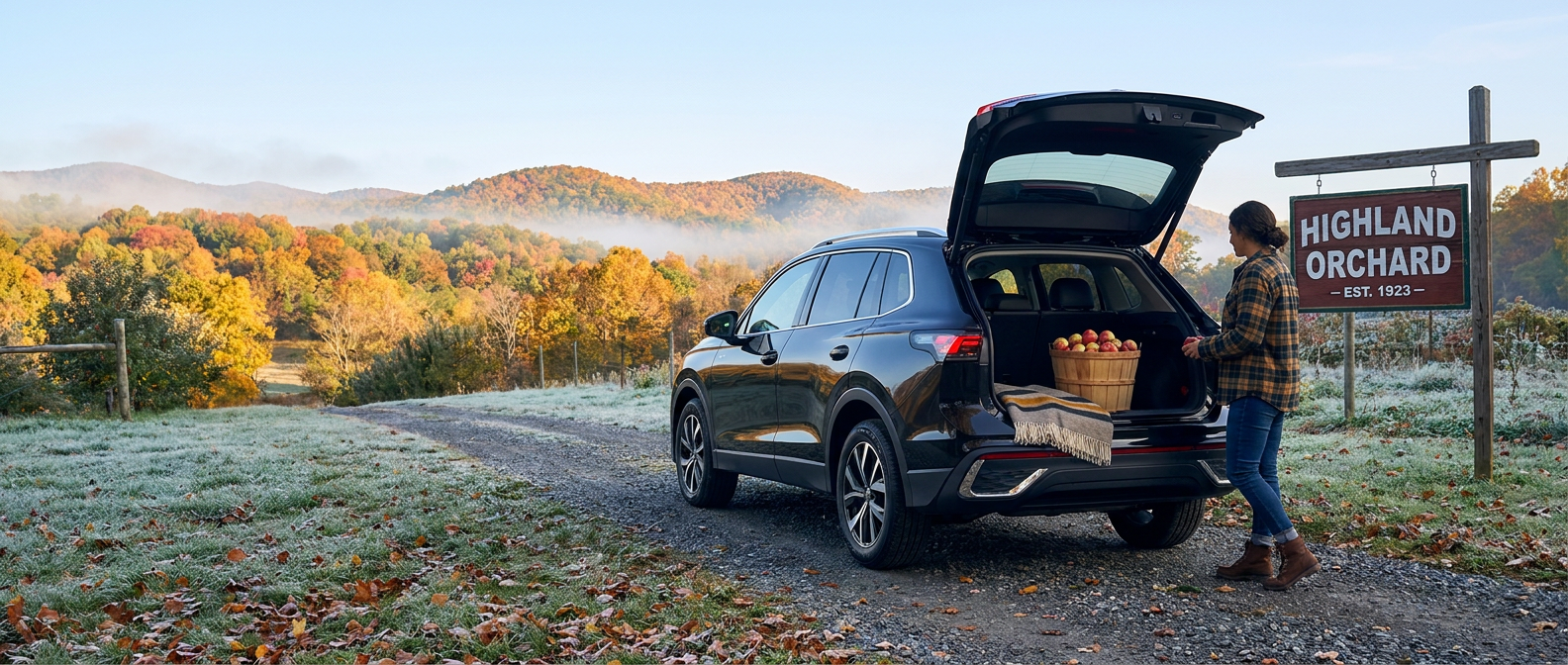
2026 Volkswagen Tiguan with open hatch at a Hendersonville, NC apple orchard on a fall morning

How to Set Up Your Volkswagen for a Hendersonville Apple Country Run

Henderson County, North Carolina, grows roughly 80 percent of the state's apples, and right now, in early October, every orchard from Jeter Mountain Farm to Sky Top is open for u-pick. The drive from Spartanburg runs about 48 miles via I-26, so you're in the mountains in under an hour. Simple enough on paper. It gets more complicated once you factor in a packed cargo area, a gravel orchard lot, the elevation change on the I-26 ascent, and the real chance you'll come back with three full bushel bags, muddy shoes, and a wagon-ride-damp child in row two. We'll show you how to set up whichever Volkswagen you're driving so the run stays fun both ways. The single most important setup decision for this trip: configure your cargo area before you leave, not in the orchard parking lot. Every model handles the haul, but each needs a different approach. The 2026 Volkswagen Tiguan is where we'd start for this trip, and the section below explains exactly why. But the setup steps apply across the lineup. Let's go through them. What You Need Before You Start Before you back out of the driveway, you'll want your cargo secured and your tires checked, because the I-26 corridor climbs into the Blue Ridge foothills as you leave Spartanburg County, and the grade asks real work from your engine going up and your brakes coming down. The driving itself isn't technical. This isn't Tail of the Dragon, just a comfortable mountain commute. Get the cargo secured at home, well before the climb past Landrum. Simple as that. Pack this list in the car before you leave Spartanburg. Item Why It Matters on This Run Cargo mat or trunk liner Gravel lots and u-pick boxes leave marks; protect the load floor Seat protector (row two) Mud and damp jackets; the rear seats of the Tiguan are not magic Reusable shopping bags Most orchards charge a small day-use fee and supply baskets, but you'll want bags for the drive home Phone charged to at least 80% Cell coverage in Henderson County's orchard roads can drop Tire pressure check The climb and descent cycle puts modest extra heat into sidewalls On the Tiguan and 2026 Volkswagen Atlas, also check that the rear cargo cover is latched. A loose parcel shelf rattles on every mountain curve, and you'll have 48 miles of them on the way home. Five Steps to Configure Any Volkswagen for Apple Country Run through five steps in order the morning you leave, and the vehicle side of this trip takes care of itself, whether you're in a two-seat-focused Golf GTI or a seven-seat Atlas with the family aboard. Run through them the morning you leave. Step 1: Match the model to your group size (before you book the orchard). Jeter Mountain Farm now requires timed reservations, and their fall season runs Thursday through Sunday, September through November 1, with a 3:30 p.m. u-pick cutoff. The orchard gives a basket to up to four people per booking unit. So if you're going with five or more, you're already thinking about a vehicle with real room. The 2026 Volkswagen Atlas carries seven passengers and, per Volkswagen, delivers up to 96.6 cubic feet of cargo space with the rear seats folded. You'll want that figure when everyone piles out at the orchard and you fold row three for the haul home. If you only need five seats, the 2026 Volkswagen Tiguan carries 33.8 cubic feet with the rear seats up, enough for two to three bushel bags plus gear, and opens to 69.8 cubic feet with the rear bench folded flat. The 2026 Volkswagen Golf GTI runs on a different calculation. Ground clearance on the Golf GTI is 4.7 inches minimum per KBB, an honest and usable amount, though two full apple baskets plus a case of cider and a pair of muddy boots will fill it. Of the three, the GTI has the least cargo room. No way around it. Bring only one other person, load smart, and the GTI is genuinely the most enjoyable car on the I-26 ascent. The EPA rates it at 32 mpg highway, which also means the 48-mile run barely dents the tank. Step 2: Configure the cargo floor before you back out of the driveway. On the Tiguan, fold the rear seats in a 60/40 split rather than fully flat when you have a passenger in row two. You'll free up roughly 45 cubic feet of usable space (a solid middle ground) while keeping the seat beside the cargo area open for jackets and bags. On the Atlas, fold only row three if your group is five, which leaves row two for passengers and keeps the third-row floor as a flat staging area for boxes. Tip: The step that's easy to skip. Lay the cargo mat textured-side up, not smooth-side up. The ribbed surface keeps apple bushel bags from sliding forward on the I-26 descent. Three seconds at home saves a cracked cider jug at the bottom of the grade. Step 3: Protect the second row. Orchard mud is fine, soft, and completely invisible until it dries on the seat fabric of the Tiguan in the shape of a boot. Seat protectors or old moving blankets on row two cost nothing and take thirty seconds to place. On the Atlas, the third row sits low to the ground and tracks mud easily. A wipe-down mat or a folded tarp under small kids in row three keeps it clean. Step 4: Plan your fuel stop for the correct direction. The Atlas carries the 2.0-liter turbocharged engine of Volkswagen, rated at 269 horsepower and 273 lb-ft of torque, and the EPA estimates 20 city and 27 highway for FWD trims. You won't be towing, so you're well within comfortable range on a 48-mile run each way. The Golf GTI pulls from a 13.2-gallon tank with 32 mpg highway efficiency, so the round trip from Spartanburg doesn't need a stop at all under normal conditions. Our team has noticed one thing worth passing along. If you're pushing to a second orchard after Jeter Mountain, add a stop on US-74 eastbound rather than trying to make it back to Spartanburg on fumes. The climb home from Hendersonville on I-26 costs a few more miles per gallon than flat highway driving. The drop is small. You'll feel it if you're low. Step 5: Know the orchard lot before you arrive. Jeter Mountain and several other Henderson County orchards use gravel or compacted-dirt farm lanes for parking. Nothing about them requires AWD or elevated clearance. Drivers bring sedans there constantly. What matters is that the ground clearance of the Golf GTI means you'll want to take farm-lane potholes at walking pace. The AWD ground clearance of the Tiguan is 7.0 inches, which gives genuine composure on those same lanes. The Atlas sits at 7.1 inches maximum clearance and stays the most relaxed of the three on uneven farm surfaces. Browse our current Volkswagen inventory to confirm which model and trim is available on our lot before your trip weekend. See Current Volkswagen Offers Insider note: If you're combining the orchard run with a stop at Sky Top Orchard, note that Sky Top requires reservations for u-pick specifically. Arrive without one and you're limited to the farm market. Both Jeter Mountain and Sky Top recommend checking their social feeds the morning of your visit for crop availability updates. A Quick Recap You Can Read at the Door Review this condensed version in thirty seconds before you leave Reidville Road, and you'll have the whole setup locked, whether you're loading a Tiguan for a family of five or squeezing two people and light bags into the Golf GTI. Model locked? Tiguan for a family of five with cargo; Atlas for six or seven; Golf GTI for two with light bags and a focus on the drive itself. Cargo floor configured? Split-fold rear seats, cargo mat ribbed-side up, and any loose items bagged. Row two protected? Seat covers or blankets down before kids or dogs get in. Fuel topped off? The round trip is comfortable in any model, but plan for a small efficiency drop on the mountain grades. Reservation confirmed? Jeter Mountain and Sky Top require advance booking; check crop availability the morning of. The run to Hendersonville is one of the better excuses Upstate SC hands you for a weekend in a Volkswagen. Forty-eight miles of I-26 with a load of Honeycrisps on the way back is about as good as October gets from Spartanburg. Take fifteen minutes with the checklist above and the vehicle side of the trip will take care of itself. Frequently Asked Questions Which Volkswagen model fits the most apple-picking cargo? The 2026 Volkswagen Atlas offers the largest load capacity, reaching 96.6 cubic feet of cargo space with both rear rows folded. For a smaller group that still needs meaningful cargo room, the 2026 Volkswagen Tiguan delivers 33.8 cubic feet with the rear seat up and 69.8 cubic feet with it folded flat, so it's the most versatile choice for a typical orchard run. Is AWD necessary for the drive to Hendersonville's apple orchards? No, AWD isn't required. The route via I-26 is paved highway, and the orchard parking areas at Jeter Mountain and similar Henderson County farms are gravel or compacted dirt, not technical terrain. That said, the 4MOTION AWD option on the Tiguan does raise ground clearance to 7.0 inches versus 6.6 inches on FWD trims, which adds a small margin of composure on uneven farm lanes. If you're going in dry October weather, either drivetrain handles the trip without issue. Value Your Trade Before You Upgrade Steve White Volkswagen Spartanburg 2671 Reidville Rd, Spartanburg, SC 29301 (864) 585-2492
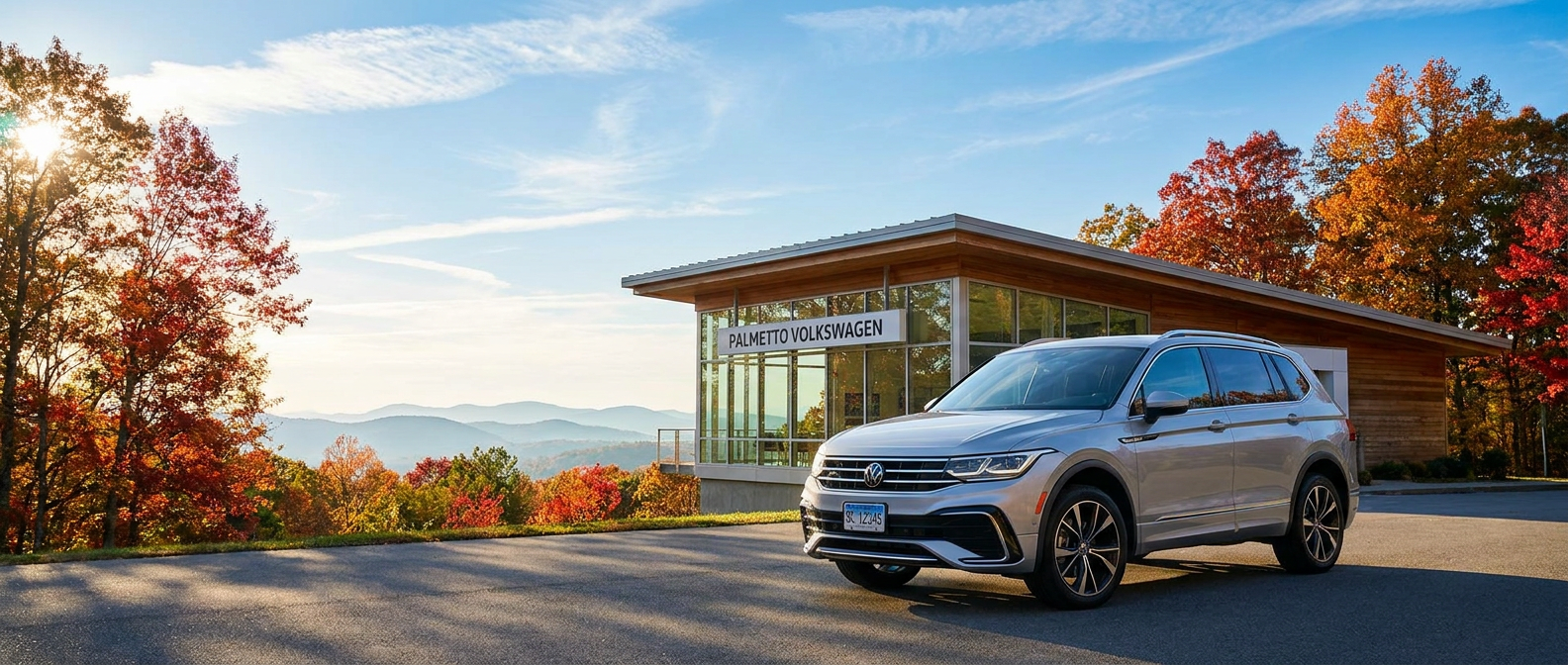
2026 Volkswagen Tiguan certified pre-owned at a Spartanburg, SC dealership with Blue Ridge foothills in background

How to Buy a Certified Pre-Owned Volkswagen in Spartanburg

Most drivers know certified pre-owned means some kind of inspection and some kind of factory backing. What they don't know, until they're sitting at the signing desk, is which documents to actually look at, what the inspection really covered, and which questions to ask before they nod and sign. Follow these steps and you'll have the answers before you get to that desk. A certified pre-owned Volkswagen comes with factory-backed coverage, but the exact terms depend on the model year and the specific vehicle. Volkswagen publishes the current program terms, so ask the selling dealer to walk you through them for the exact VIN you're considering, and get them in writing. Ready to see what's available right now? Browse our current certified pre-owned selection and then work through the steps below before you commit to anything. What Should You Have Ready Before You Walk In? Showing up prepared cuts the visit in half. Here's the short list of what to gather, and why each one matters. Item Why It Matters What to Confirm Budget range (no figure needed, just a comfort zone) Anchors your trim conversation N/A Desired model year window CPO eligibility has model-year limits Ask which years qualify today Mileage ceiling in mind CPO eligibility has mileage limits too Ask the current program limit Financing pre-approval or trade-in value Speeds up the process N/A List of must-have features Focuses the walkaround N/A Questions about coverage for this VIN The detail most buyers skip Current program terms, in writing That last row is the one to hold onto. We'll come back to it in Step 4. The Six Steps to Buying a Certified Pre-Owned Volkswagen Work through these in order. Skipping ahead to the test drive before you've checked the paperwork is the single most common shortcut that costs buyers time later. Step 1: Confirm CPO eligibility for the specific vehicle Not every used Volkswagen on a lot is a certified pre-owned vehicle. The program sets model-year and mileage limits, so ask the team member to confirm the car falls inside both before you invest time in a walkaround. If it does, it has been (or is about to be) put through a multi-point inspection by a Volkswagen-certified technician using genuine Volkswagen parts. That inspection covers engine performance, transmission, brakes, suspension, electrical systems, and the full exterior and interior. It's not a visual once-over. Step 2: Pull the CARFAX and read the inspection report Volkswagen requires a clean CARFAX Vehicle History Report for every CPO candidate. No airbag deployment, no total-loss designation, no structural damage, fire damage, flood damage, or mold reported. Ask for the physical CPO inspection checklist, not just a verbal confirmation. Look at the dates, the odometer reading at the time of inspection, and check that every checkbox has a clear pass or a documented repair. Blank sections are a conversation to have before you move on. A certified Tiguan or certified Atlas that passed the inspection will have a completed report you can review page by page. If a dealer can't produce it, that's useful information too. Step 3: Do a methodical walkaround, not a quick lap Start at the front driver-side corner and walk the car in a slow circle. Check that tires match in brand and tread depth side-to-side. Mismatched wear can point to an alignment or suspension issue that the inspection addressed (or should have). Look at panel gaps and paint color consistency from panel to panel. Moisture inside headlight lenses, fresh undercoating on the undercarriage, or panels that don't quite line up are worth asking about directly. Inside, start the car and let the dash warning lights cycle. They should illuminate briefly, then go dark. Test every screen, every HVAC zone, every power feature. Connectivity and driver-assist systems get checked during the inspection, but you want to verify them in person. On the road, the Volkswagen inspection specifically covers what it calls "overall road feel," meaning no abnormal driving response or noise. Hold the steering wheel lightly at highway speed on a road like I-85 to feel for any pull. Step 4: Ask how the factory-backed coverage applies to this exact car Here's the part worth slowing down for. Coverage on a certified Volkswagen isn't one-size-fits-all. How it applies depends on the model year, the original in-service date, and how the car has been driven since. Two Tiguans on the same lot can be in very different spots. So don't settle for "it's certified, you're covered." The practical question to ask is: "Can you walk me through the current program terms as they apply to this specific VIN?" Get the answer in writing, and check it against what Volkswagen publishes for its certified pre-owned program. A good team member will be glad you asked. Step 5: Confirm the included benefits, and what isn't included Certified Volkswagen vehicles come with extra ownership benefits on top of the inspection, such as roadside assistance. Ask the dealer to list exactly which benefits apply to the car you're looking at and for how long, and see the owner's literature for the complete terms. What isn't included: free scheduled maintenance. Oil changes, wiper blades, and routine service are on you. That's a straightforward trade-off worth knowing upfront. Step 6: Review financing options before you agree to anything Explore financing options before the desk conversation starts, not during it. Getting pre-approved puts you in a much cleaner position to focus on the vehicle itself rather than making two decisions at the same time. If you have a vehicle to trade, know its approximate value going in. What our team sees at the inspection stage: When a Volkswagen comes in as a CPO candidate, the certification check requires that all outstanding recalls and factory campaigns are completed before the car can be certified. That means any open safety recall has to be resolved using genuine Volkswagen parts before the badge goes on. Ask the selling dealer to confirm this is reflected in the CARFAX and the inspection report. It should show up in both. Your Print-and-Go Checklist Before You Sign Run through this at the dealership. Every item has a corresponding document you should have already seen. [ ] VIN confirmed on the CARFAX report (no airbag deployment, no structural/flood/fire damage, no total-loss history) [ ] Odometer reading at inspection matches current mileage progression [ ] CPO inspection checklist reviewed page by page, no blank sections [ ] All recalls and factory campaigns shown as completed [ ] Program terms for this VIN explained and provided in writing [ ] Included benefits (like roadside assistance) listed for this car [ ] Trade-in value settled before final numbers Get Pre-Approved for Financing Buying a certified pre-owned Volkswagen in Spartanburg doesn't have to be a leap of faith. The program has real structure: a verified inspection, a clean history requirement, completed recalls, and factory backing. Work the steps, read the documents, and by the time you're at the signing desk you'll already know what you're getting. Frequently Asked Questions What makes a used Volkswagen "certified pre-owned"? A certified pre-owned Volkswagen has to fall within the program's model-year and mileage limits, pass a clean CARFAX Vehicle History Report review, and clear a multi-point inspection by a Volkswagen-certified technician. All open recalls and factory campaigns must be completed before certification. Ask the dealer to show you the inspection report and the CARFAX for the specific vehicle. What happens if something fails the Volkswagen CPO inspection? Any component that doesn't meet Volkswagen standards must be repaired or replaced using genuine Volkswagen parts before the vehicle can receive its CPO certification. Tires, for example, must match the original factory size, safety rating, and speed rating. Vehicles with modifications, or those that show evidence of airbag deployment, flood damage, structural damage, or an odometer discrepancy, are disqualified from the program entirely. The inspection report and CARFAX should both reflect what was found and what was corrected. Value Your Trade-In Steve White Volkswagen Spartanburg 2671 Reidville Rd, Spartanburg, SC 29301 (864) 585-2492
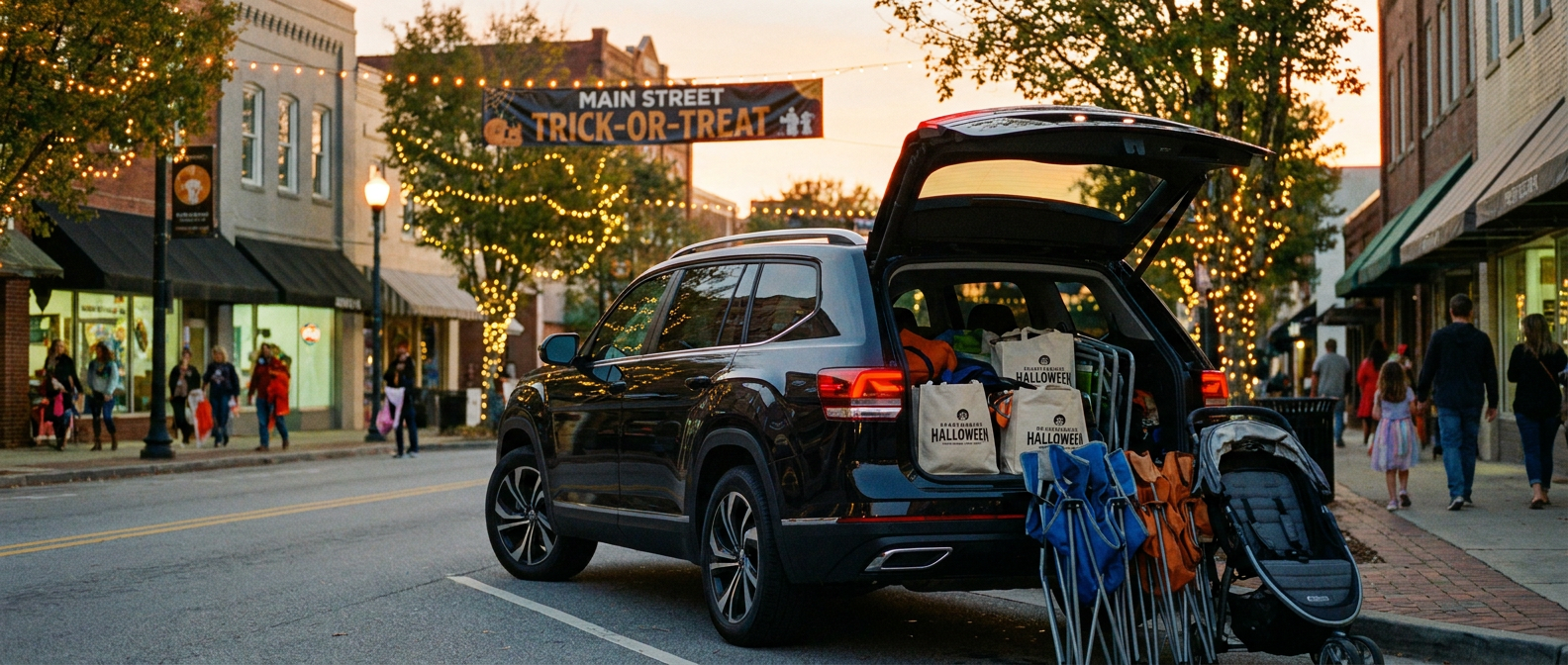
2026 Volkswagen Atlas with liftgate open packed with Halloween event gear in downtown Spartanburg SC at dusk

Hauling Halloween Gear to Spartanburg Events in Your Volkswagen

Most drivers know certified pre-owned means some kind of inspection and some kind of factory backing. What they don't know, until they're sitting at the signing desk, is which documents to actually look at, what the inspection really covered, and which questions to ask before they nod and sign. Follow these steps and you'll have the answers before you get to that desk. A certified pre-owned Volkswagen comes with factory-backed coverage, but the exact terms depend on the model year and the specific vehicle. Volkswagen publishes the current program terms, so ask the selling dealer to walk you through them for the exact VIN you're considering, and get them in writing. Ready to see what's available right now? Browse our current certified pre-owned selection and then work through the steps below before you commit to anything. What Should You Have Ready Before You Walk In? Showing up prepared cuts the visit in half. Here's the short list of what to gather, and why each one matters. Item Why It Matters What to Confirm Budget range (no figure needed, just a comfort zone) Anchors your trim conversation N/A Desired model year window CPO eligibility has model-year limits Ask which years qualify today Mileage ceiling in mind CPO eligibility has mileage limits too Ask the current program limit Financing pre-approval or trade-in value Speeds up the process N/A List of must-have features Focuses the walkaround N/A Questions about coverage for this VIN The detail most buyers skip Current program terms, in writing That last row is the one to hold onto. We'll come back to it in Step 4. The Six Steps to Buying a Certified Pre-Owned Volkswagen Work through these in order. Skipping ahead to the test drive before you've checked the paperwork is the single most common shortcut that costs buyers time later. Step 1: Confirm CPO eligibility for the specific vehicle Not every used Volkswagen on a lot is a certified pre-owned vehicle. The program sets model-year and mileage limits, so ask the team member to confirm the car falls inside both before you invest time in a walkaround. If it does, it has been (or is about to be) put through a multi-point inspection by a Volkswagen-certified technician using genuine Volkswagen parts. That inspection covers engine performance, transmission, brakes, suspension, electrical systems, and the full exterior and interior. It's not a visual once-over. Step 2: Pull the CARFAX and read the inspection report Volkswagen requires a clean CARFAX Vehicle History Report for every CPO candidate. No airbag deployment, no total-loss designation, no structural damage, fire damage, flood damage, or mold reported. Ask for the physical CPO inspection checklist, not just a verbal confirmation. Look at the dates, the odometer reading at the time of inspection, and check that every checkbox has a clear pass or a documented repair. Blank sections are a conversation to have before you move on. A certified Tiguan or certified Atlas that passed the inspection will have a completed report you can review page by page. If a dealer can't produce it, that's useful information too. Step 3: Do a methodical walkaround, not a quick lap Start at the front driver-side corner and walk the car in a slow circle. Check that tires match in brand and tread depth side-to-side. Mismatched wear can point to an alignment or suspension issue that the inspection addressed (or should have). Look at panel gaps and paint color consistency from panel to panel. Moisture inside headlight lenses, fresh undercoating on the undercarriage, or panels that don't quite line up are worth asking about directly. Inside, start the car and let the dash warning lights cycle. They should illuminate briefly, then go dark. Test every screen, every HVAC zone, every power feature. Connectivity and driver-assist systems get checked during the inspection, but you want to verify them in person. On the road, the Volkswagen inspection specifically covers what it calls "overall road feel," meaning no abnormal driving response or noise. Hold the steering wheel lightly at highway speed on a road like I-85 to feel for any pull. Step 4: Ask how the factory-backed coverage applies to this exact car Here's the part worth slowing down for. Coverage on a certified Volkswagen isn't one-size-fits-all. How it applies depends on the model year, the original in-service date, and how the car has been driven since. Two Tiguans on the same lot can be in very different spots. So don't settle for "it's certified, you're covered." The practical question to ask is: "Can you walk me through the current program terms as they apply to this specific VIN?" Get the answer in writing, and check it against what Volkswagen publishes for its certified pre-owned program. A good team member will be glad you asked. Step 5: Confirm the included benefits, and what isn't included Certified Volkswagen vehicles come with extra ownership benefits on top of the inspection, such as roadside assistance. Ask the dealer to list exactly which benefits apply to the car you're looking at and for how long, and see the owner's literature for the complete terms. What isn't included: free scheduled maintenance. Oil changes, wiper blades, and routine service are on you. That's a straightforward trade-off worth knowing upfront. Step 6: Review financing options before you agree to anything Explore financing options before the desk conversation starts, not during it. Getting pre-approved puts you in a much cleaner position to focus on the vehicle itself rather than making two decisions at the same time. If you have a vehicle to trade, know its approximate value going in. What our team sees at the inspection stage: When a Volkswagen comes in as a CPO candidate, the certification check requires that all outstanding recalls and factory campaigns are completed before the car can be certified. That means any open safety recall has to be resolved using genuine Volkswagen parts before the badge goes on. Ask the selling dealer to confirm this is reflected in the CARFAX and the inspection report. It should show up in both. Your Print-and-Go Checklist Before You Sign Run through this at the dealership. Every item has a corresponding document you should have already seen. [ ] VIN confirmed on the CARFAX report (no airbag deployment, no structural/flood/fire damage, no total-loss history) [ ] Odometer reading at inspection matches current mileage progression [ ] CPO inspection checklist reviewed page by page, no blank sections [ ] All recalls and factory campaigns shown as completed [ ] Program terms for this VIN explained and provided in writing [ ] Included benefits (like roadside assistance) listed for this car [ ] Trade-in value settled before final numbers Get Pre-Approved for Financing Buying a certified pre-owned Volkswagen in Spartanburg doesn't have to be a leap of faith. The program has real structure: a verified inspection, a clean history requirement, completed recalls, and factory backing. Work the steps, read the documents, and by the time you're at the signing desk you'll already know what you're getting. Frequently Asked Questions What makes a used Volkswagen "certified pre-owned"? A certified pre-owned Volkswagen has to fall within the program's model-year and mileage limits, pass a clean CARFAX Vehicle History Report review, and clear a multi-point inspection by a Volkswagen-certified technician. All open recalls and factory campaigns must be completed before certification. Ask the dealer to show you the inspection report and the CARFAX for the specific vehicle. What happens if something fails the Volkswagen CPO inspection? Any component that doesn't meet Volkswagen standards must be repaired or replaced using genuine Volkswagen parts before the vehicle can receive its CPO certification. Tires, for example, must match the original factory size, safety rating, and speed rating. Vehicles with modifications, or those that show evidence of airbag deployment, flood damage, structural damage, or an odometer discrepancy, are disqualified from the program entirely. The inspection report and CARFAX should both reflect what was found and what was corrected. Value Your Trade-In Steve White Volkswagen Spartanburg 2671 Reidville Rd, Spartanburg, SC 29301 (864) 585-2492
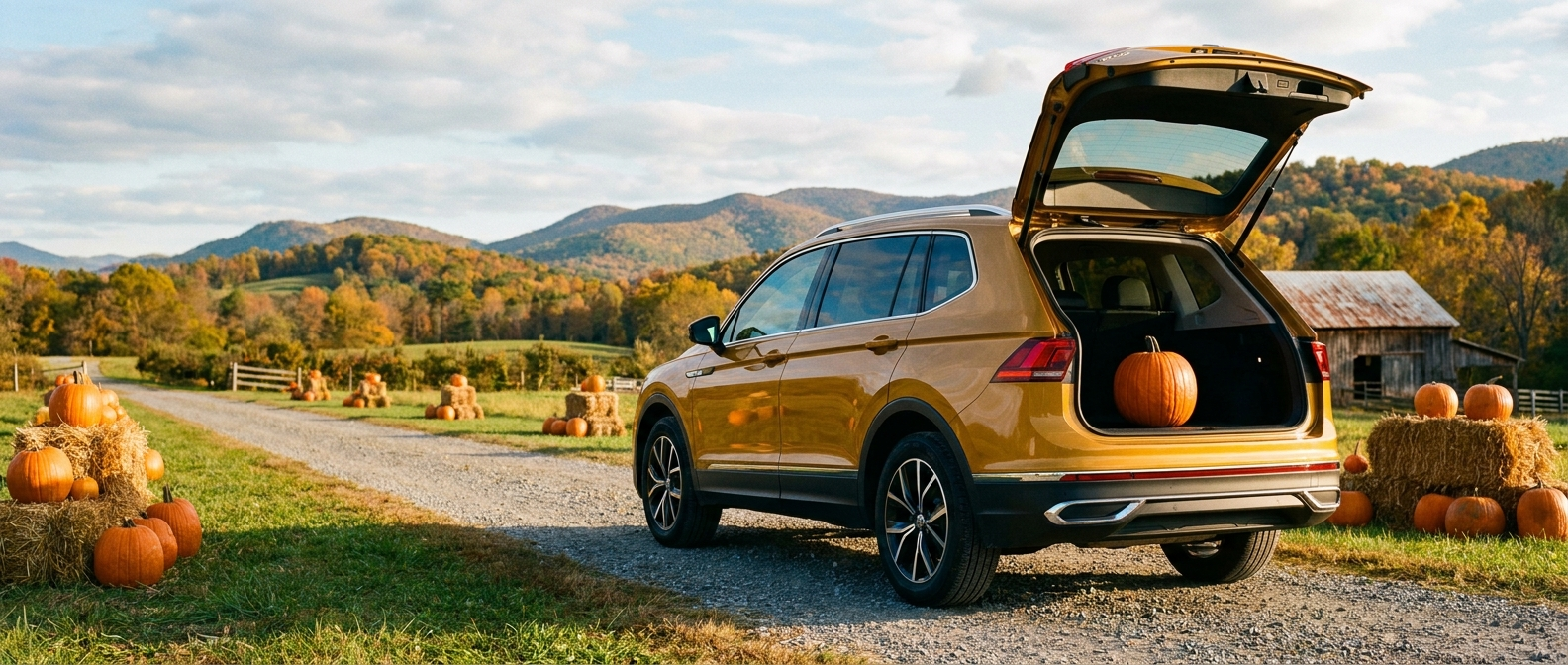
2026 Volkswagen Tiguan parked at a pumpkin patch farm lane in Upstate South Carolina with Blue Ridge foothills in the background

Why the Volkswagen Tiguan Fits Spartanburg Families Headed to the Pumpkin Patch

Yes, it fits. The 2026 Volkswagen Atlas swallows the stroller, the folding chairs, the costume bags, and the candy reserves in one trip. The Tiguan handles the lighter nights just as cleanly. Which setup you need comes down to the Spartanburg event you're heading to and how many people are riding along, and that's exactly what we'll walk through here. Will It Fit? The Cargo Configurations You Actually Need Halloween event packing isn't a "throw it in the back" job, and the right answer swings from night to night depending on whether you're hauling a full family kit or just a couple of adults and a tote. Both Volkswagen haulers clear the common loads, but which one fits better changes with the event you pick. Spartanburg's downtown calendar this October runs from the Chuck or Treat event at Fifth Third Park on October 28 to the Crimes & Criminals Walking Tour departing Denny's Plaza on October 30 and 31. Some nights you'll need a stroller, a full costume change bag, a camp chair, and a cooler. Other nights it's a couple of adults and a tote. Match the vehicle to the night. Here's how the two primary Volkswagen cargo haulers stack up against real Upstate SC Halloween loads. The dimensions are confirmed by the published specifications of Volkswagen. Load or Item 2026 Atlas Config 2026 Tiguan Config Fits? Notes Folding camping chairs (2) + candy haul bag Behind third row: 20.6 cu ft Behind rear seats: 33.8 cu ft Both fit; Tiguan has more usable depth in this config Double stroller (collapsed) + 2 bags Third row folded (one side), second row occupied Rear seats folded 60/40 (one side) Both fit; Atlas 55.5 cu ft with full third row down Full family load: stroller + 4 costume bags + 2 chairs + cooler Both rear rows folded: 96.6 cu ft Rear seats fully folded: 69.8 cu ft Atlas wins here; Tiguan is tight but workable with a soft cooler Decorations for a trunk-or-treat setup (bins, lights, signage) Both rows folded: 96.6 cu ft, low load floor Rear folded: 69.8 cu ft Atlas handles it flat; Tiguan fits if bins are under 30 inches tall Single passenger night out (costumes in bags) Any config; 20.6 cu ft behind row 3 plenty 33.8 cu ft standard; more than enough Tiguan is the smarter vehicle for this night Volkswagen lists the 2026 Atlas at 20.6 cubic feet behind the third row, 55.5 cubic feet with the third row folded, and 96.6 cubic feet maximum with both rear rows down. The 2026 Tiguan comes in at 33.8 cubic feet behind the rear seats and 69.8 cubic feet with the 60/40 split rear bench folded flat. How to Load It for a Spartanburg Halloween Night Getting the gear in cleanly is its own small project, and the order you do it in matters more than the raw cubic feet when you're staging a full family load for Fifth Third Park or the Walnut Grove Plantation event. Here's the sequence our team runs, step by step. Fold first, load second. On the Atlas, press the third-row 50/50 fold tabs before you start staging gear. On the Tiguan, drop the 60/40 rear bench. A flat floor means nothing rolls, nothing tips, and you won't lose a bag of candy to the wheel well. Heaviest items go in first, against the seatback. The cooler or the decoration bins go against the folded seatback. That anchors the load and keeps lighter items from shifting when you brake on Reidville Road heading into downtown. Stroller goes in on its side, last. A collapsed double stroller in the Atlas with the third row down slides in on its side and takes up roughly a third of the 55.5-cubic-foot zone. The Tiguan with seats folded manages it the same way, though you're working in a slightly tighter footprint. Soft bags on top, costume accessories in a tote. Wings, wands, and hats crush in hard luggage. A large canvas tote sits on top of everything, accessible from the liftgate without unpacking the whole load. Use the Atlas liftgate clearance. The 2026 Atlas stands 70.4 inches tall. That matters at event parking areas where a low overhead clearance would stop the power liftgate mid-cycle. Most downtown Spartanburg surface lots and the Fifth Third Park lot are open-air, so you're clear. Browse our current Volkswagen inventory to check which Atlas and Tiguan trims are on the lot right now. Cargo tip: The rear seats of the Tiguan fold in a 60/40 split, so you can carry one rear passenger and still open up the left two-thirds of the cargo floor for a stroller and bags. On a night when your family's six people across two vehicles, that split can save you a separate run. What about the Neewollah celebration at Croft State Park? This annual Halloween event runs with bounce houses, hayrides, and face painting on Spartanburg's south side, and the access road to the park asks for a little more ground clearance than a parking structure. The Atlas carries 6.3 inches of ground clearance per the published specs of Volkswagen. Manageable. Not a lifted truck, but not a lowered sedan either. See Current Volkswagen Offers Choosing the Right Volkswagen for the Night For two or three adults heading to an evening walking event like the Crimes & Criminals tour downtown, the Tiguan is the smarter pick, though the Atlas still works if you'd rather have the extra room along. It parks in tighter spots, it's nimble on Morgan Square, and 33.8 cubic feet swallows a couple of costume bags and folding chairs with no drama at all. The Atlas earns its keep when the whole family's going to Chuck or Treat at Fifth Third Park and you're playing trunk-or-treat host. Seven seats, 96.6 cubic feet of maximum cargo when you need it, and a low load floor that lets you slide a full decoration bin in without lifting it above your waist. It fits the whole group on the way home too, candy included. Think through the night before you grab keys, because we've seen drivers underestimate both scenarios. A couple who borrowed an Atlas for a two-person night out appreciated the space but found downtown parking took some patience given the 200.7-inch length. A family that sized down to a Tiguan for a full trunk-or-treat run had to leave the pop-up canopy at home. The Tiguan can't match the Atlas on a full decoration kit, full stop. Neither's a disaster, but knowing ahead saves you the re-pack in a dark parking lot. Explore the 2026 Atlas if you're running the full family Halloween operation. Take a closer look at the 2026 Tiguan if your evenings lean toward lighter loads and tighter parking. Both are on Reidville Road. Job done. The specs are verified, the event scenarios are real, and the right Volkswagen is the one matched to the actual night you're planning. Value Your Trade-In Steve White Volkswagen Spartanburg 2671 Reidville Rd, Spartanburg, SC 29301 (864) 585-2492
2026 Volkswagen Jetta driving on a wet Reidville Road corridor in Spartanburg SC on an overcast October morning

Which Volkswagen Is Best for Your Reidville Road Commute?

In this article Why Does the Tiguan Actually Fit Upstate SC Fall Trips? Cargo Is Where the Tiguan Earns Its Keep for This Kind of Day 4MOTION AWD on SC-11 in October: Worth Choosing? The Drive There Is Half the Point Every October in Upstate South Carolina, families load up and head out to places like Strawberry Hill USA on SC Highway 11 or Stewart Farms over in Enoree, running the corn maze, the hayride, and hauling home a half-dozen pumpkins of questionable size. The roads getting there are two-lane, often gravel at the end, and you pull in next to pickup trucks with mud on the wheel wells. We get that. The Tiguan isn't a truck, and we won't pretend otherwise. Think of it instead as a compact SUV that loads your whole family, handles a gravel farm lane without drama, and gives you 33.8 cubic feet of dedicated cargo space behind the rear seats before you fold a single thing down. You've got enough there for a stroller, two daypacks, muddy boots, and a reasonable pumpkin haul on the way back. For the specific kind of fall day Spartanburg families actually take, it fits the job better than most alternatives its size. See what 2026 Volkswagen Tiguan models we have available at Steve White Volkswagen Spartanburg to find the trim that fits your fall routine. The 2026 Volkswagen Tiguan has 33.8 cubic feet of cargo space (seats up) and available 4MOTION all-wheel drive that make it a practical, comfortable fit for Upstate SC pumpkin patch day trips. Honest about its limits on deep mud, genuinely strong on gravel lanes, family cargo, and the SC-11 foothills drive getting there. Why Does the Tiguan Actually Fit Upstate SC Fall Trips? The Tiguan fits these trips because the actual conditions are foothills pavement and a short stretch of farm-lane gravel, not genuine off-road, and a loaded compact SUV with available all-wheel drive is built squarely for that, though it won't pretend to tackle deep ruts or rock crawling. Farms like Strawberry Hill USA sit right along SC Highway 11, the Cherokee Foothills National Scenic Highway. Getting there from Spartanburg means winding through foothills terrain. Nothing extreme, just curves, grades, and a transition from pavement to gravel at the farm entrance. Whether the Tiguan can handle "off-road" isn't the point. What matters is how it handles a loaded cabin with kids in back, farm-lane gravel, and an October afternoon that could be dry and bright or drizzly and slick. Below is how the 2026 Tiguan lines up against each of those conditions. Upstate SC Condition / Use Tiguan Feature That Handles It Why It Matters Here Gravel farm lanes at Strawberry Hill and Stewart Farms Available 4MOTION all-wheel drive; 7.0 in ground clearance (4MOTION trims) Distributes torque when loose gravel shifts traction; 7-inch clearance clears most rutted farm entrances without scraping SC-11 foothills curves on the way out 2.0L turbocharged engine, 201 hp, 8-speed automatic Confident power delivery through grades and curves; the turbo's 221 lb-ft of torque (4MOTION) arrives low in the rev range Full family plus gear: stroller, backpacks, boots 33.8 cu ft cargo (seats up) / 69.8 cu ft seats folded; 60/40 split rear bench Stroller and boots load without folding the bench; fold one rear section for longer items, keep one adult in back Wet October afternoon parking in a muddy field 4MOTION AWD with electronic differential lock adaptation Prevents the wheel-spin that strands FWD crossovers on soft grass Tired kids on the drive home (dark, winding SC-11) IQ.DRIVE driver assistance technology Lane keeping, adaptive cruise, front assist. Reduces driver fatigue on the foothills return Post-trip fuel stop before getting back to Spartanburg EPA-rated 22 city / 30 highway mpg (4MOTION); 29 combined (FWD S trim) Upstate round-trip stays comfortably within one tank; 15.6-gallon tank on 4MOTION models The ground clearance figure deserves one note. The 4MOTION trims measure 7.0 inches, and the FWD-only trims sit at 6.6 inches. Both handle gravel and grass parking without issue. Neither is built for deep mud or rocky two-track trails. The farms on SC-11 and the Enoree area don't ask for that, and a cleared farm lane is exactly where the Tiguan is at home. Cargo Is Where the Tiguan Earns Its Keep for This Kind of Day Cargo earns the Tiguan its keep for this kind of day because Volkswagen lists 33.8 cubic feet behind the rear seats with all five seats in use, enough for a stroller, boots, and a day's pumpkin haul, though that figure sits in a competitive compact-SUV range rather than leading the class outright. The shape of the space matters as much as the number. The load floor sits low and nearly flat, and the rear bench splits 60/40. A full-size stroller fits without folding it down. Behind it you've still got room for two or three medium pumpkins and the day's haul. How much does folding the bench actually open up? Fold it entirely flat and you're looking at 69.8 cubic feet, a figure Volkswagen verifies, with a flat load surface that reaches the front seatbacks. Save that setup for the return trip, when you've picked up five pumpkins, a bag of cider donuts, and one gourd that nobody asked for but everyone insisted on. Browse our current new inventory to see which trim levels and colors we have in stock right now. We'd also point out what the 2026 Tiguan doesn't try to be. Its towing rating with 4MOTION AWD is 1,800 pounds. Capable, though not the number you'd see on a full-size hauler. For what Spartanburg families ask of it, from Reidville Road to the SC-11 corridor to the farm entrance and back, that doesn't limit anything. A small utility trailer for a single weekend haul is within spec. A loaded boat is not. Local detail: Strawberry Hill USA, located at 3097 Highway 11 West in Chesnee, runs its 2026 fall season from September 26 through November 1, with hayrides, Spartanburg County's largest corn maze, and a pumpkin patch open daily. It sits directly on SC Highway 11, the Cherokee Foothills National Scenic Highway, which makes the drive itself a genuine Blue Ridge foothills run rather than just an errand. See Current Volkswagen New Car Offers 4MOTION AWD on SC-11 in October: Worth Choosing? For a family making foothills drives or farm runs a regular fall habit, 4MOTION is worth choosing because all-wheel traction steadies the car on wet SC-11 grades, but for a once-a-year pumpkin outing on flat gravel, the front-wheel-drive Tiguan handles the day without complaint. The case for 4MOTION on the foothills run is specific. SC Highway 11 climbs and curves through the Blue Ridge foothills, and October afternoons in the Upstate can turn drizzly fast, so a wet surface plus grades leans on all-wheel traction. The EPA rates the 4MOTION Tiguan at 22 city / 30 highway mpg, while the FWD S trim reaches 26 city / 34 highway. Over a year of commuting on I-85, that gap adds up. Our take is that the step up to 4MOTION makes sense for drivers who want it as a year-round capability rather than for a single October afternoon. Treat it as a considered tradeoff rather than a default pick. The 2026 SEL R-Line Turbo comes with 4MOTION standard and upgrades the engine to 268 horsepower. You feel that as a noticeable step up in pull through Upstate grades. For a family that wants the foothills drive to feel unhurried and the cargo bay to stay full without the engine straining, it's the trim worth a look. Next step: Pull up the Tiguan inventory page and filter by drivetrain, where the 4MOTION variants show as a separate option in the trim list. If you'd like to put one on actual Upstate roads before pumpkin season ends, our team on Reidville Road can set up a drive this week. The Drive There Is Half the Point The drive out is genuinely half the point here, since SC Highway 11 from Spartanburg toward Chesnee becomes a real fall color run every October, the sort of road you take slow enough for everyone to watch the Blue Ridge roll by. SC-11 isn't a commute road. The cabin stays quiet at highway speeds, the panoramic sunroof on higher trims opens up the Blue Ridge view without wind noise drowning out conversation, and the rear seats offer 40.2 inches of legroom (matching the front row exactly), so the kids aren't cramped through the curves. The Tiguan suits this kind of outing because it carries the family without driving like a full-size SUV in a crowded farm lot. At 184.4 inches overall length, it slots into a grass-field parking area without eating two spaces. A smaller detail, but one you notice at 11 a.m. on a Saturday when Stewart Farms is busy and the lot is unpaved. Explore financing options for the 2026 Tiguan before your visit. We can often turn around a pre-approval the same day so you know exactly where you stand before you come in. To put it plainly, the Tiguan isn't the choice for buyers who need a third row, serious towing, or genuine off-road clearance. It's the choice for a Spartanburg couple or small family who want German engineering, a quieter cabin, confident grip on Upstate foothills roads, and enough cargo flexibility to come home with a full pumpkin haul without reorganizing the whole vehicle. The buyer is specific. For that buyer, it fits. *By the Steve White Volkswagen Spartanburg Team | October 2026* Get Pre-Approved for Your 2026 Tiguan Steve White Volkswagen Spartanburg 2671 Reidville Rd, Spartanburg, SC 29301 (864) 585-2492
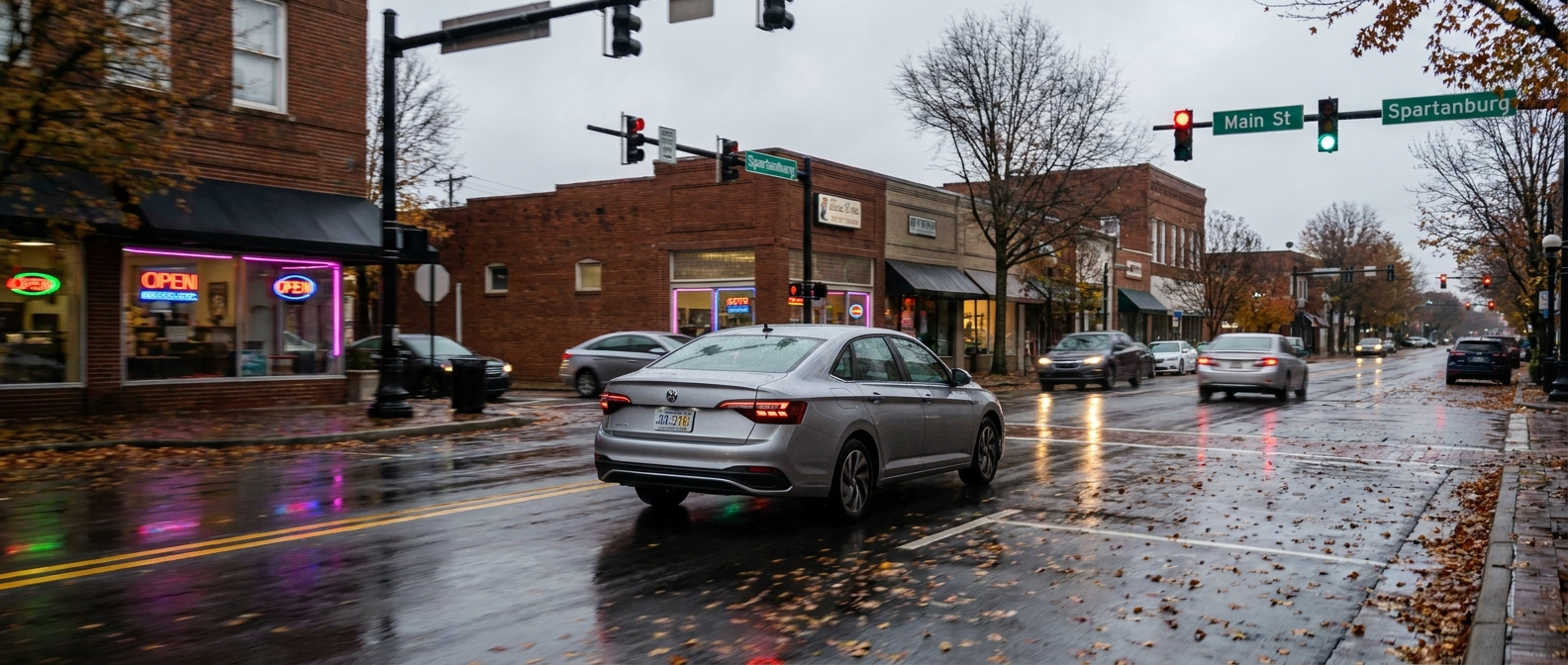
2026 Volkswagen Atlas rear cargo area open with pumpkins and festival gear at a Spartanburg County fall fairgrounds

2026 Volkswagen Atlas for Fall Festivals in Spartanburg County

In this article What Does a Full Festival Day Actually Ask of the Atlas? How Far Will the Tank Really Take You on a Festival Loop? Where Does the Cargo Actually Go? Plan the October Loop This Way The short answer is it'll go farther than any single weekend can use up. The 2026 Atlas carries seven people, tows 5,000 pounds when properly equipped, and holds 55.5 cubic feet of cargo the moment you fold the third row. You won't test that gap until you're standing in a grass lot at the Piedmont Interstate Fair, trying to fit four pumpkins, a stroller, and a diaper bag behind three rows of people. the 2026 Volkswagen Atlas is built around three rows that actually work for adults, and luggage is a bonus. Let's walk through what that means for a real Upstate SC October. What Does a Full Festival Day Actually Ask of the Atlas? A full festival day asks quite a lot of any three-row, and in Spartanburg County the demands run specific, from grass or gravel parking lots to walking distances that drain a toddler by noon, cargo loads that grow as the day goes on (those pumpkins don't shrink), and a 40-to-60-minute drive radius connecting Spartanburg to the Blue Ridge foothills. Spartanburg County runs its fall festivals from early October through mid-November. Festival Stop Drive from Spartanburg Key Cargo / Seat Need Atlas Fit Spartanburg International Festival (Oct 3, downtown) 10 min Stroller, snacks, 3 adults + 2 kids 3rd row folds flat; 20.6 cu ft with all rows up Piedmont Interstate Fair (Oct 13-18, Fairgrounds Rd) 12 min Full 7-seat load, grass lot parking 4MOTION AWD handles wet grass; 33.7 in 3rd-row legroom Pumpkintown Fall Festival (Oct 10, Pickens County) ~55 min via SC Hwy 11 Pumpkin haul on the way home 55.5 cu ft with 3rd row folded Stewart Farms (Enoree, Hwy 92, Fri-Sun through Nov) ~35 min Wagon ride gear, muddy boots, corn maze crowd All-season tires standard on SE; 4MOTION optional Use that table as your planning tool. Each stop wants something a little different, and the Atlas handles all four without you having to reconfigure much. No dramatic rebuild between stops. See what Atlas configurations we have in stock at Steve White Volkswagen How Far Will the Tank Really Take You on a Festival Loop? Far enough that a full festival loop won't have you hunting for a gas station, though the exact range depends on which Atlas you drive, since the 2026 model runs an 18.6-gallon fuel tank and the EPA rates the FWD SE at 23 mpg combined against the AWD 4MOTION SE at 21 mpg combined. A realistic full-tank range lands somewhere between 385 and 430 miles depending on trim and driving style, with Upstate SC's rolling two-lane backroads (think SC Hwy 11 toward Pumpkintown) landing closer to the highway number than the city number. A Spartanburg-to-Pumpkintown round trip on SC Hwy 11 runs roughly 110 miles. Add Stewart Farms and the Piedmont Fair in the same weekend and you're looking at 160 to 200 miles of driving. The 18.6-gallon tank covers that in one fill-up. No gas-station hunting on a Pickens County two-lane. Fuel tip: The 2026 Atlas takes regular unleaded, not premium. On a full festival weekend, that's a genuine convenience when every station near a rural fairground is a convenience store. Where Does the Cargo Actually Go? Keep the Atlas road-ready year-round with a pre-season service check Cargo is where the Atlas earns its keep on a festival day, and the amount you get swings hard depending on how you fold the rows. With all three rows in use, you've got 20.6 cubic feet behind the third row. A folded umbrella stroller, a small cooler, and a bag of kettle corn fit. Not much more than that. Fold the third row and you jump to 55.5 cubic feet, which is the configuration for the pumpkin run at Stewart Farms or the Pumpkintown Festival. Picture two adults, three kids across rows one and two, and the whole cargo floor open for whatever the kids talked you into. In the 2026 Atlas the third row folds completely flat, which matters when you're loading in a field and can't afford gymnastics. The 2026 Atlas also gives you 37.6 inches of second-row legroom and 33.7 inches in the third row. Those aren't theoretical numbers. A six-foot adult fits in that third row for a 55-minute drive on SC Hwy 11 to Pumpkintown without audible complaints. Compact three-row SUVs can't match that, since their back row really is only for kids. Prefer a two-row setup? The Volkswagen Tiguan is worth a look if your family runs five or fewer [ ] Fill the tank before leaving Reidville Road (the Atlas takes regular unleaded) [ ] Confirm third-row seating vs cargo config the night before based on headcount [ ] Pack a small bin for third-row snacks and festival purchases. It slides under the seat [ ] Check the festival parking surface. The Piedmont Interstate Fair uses a grass lot, so budget extra time if rain hit the week before [ ] Bring a blanket for Stewart Farms wagon rides. October evenings in Enoree get into the low 50s [ ] If you're hauling pumpkins home, fold the third row before you arrive, not after Plan the October Loop This Way The most efficient festival circuit from Spartanburg opens with the Spartanburg International Festival on October 3 (10 minutes downtown, no highway needed), then pivots to the Pumpkintown Fall Festival on October 10 (an SC Hwy 11 run that's worth the drive through the foothills on its own), and closes with the Piedmont Interstate Fair between October 13 and 18 at 575 Fairgrounds Road. Drop in Stewart Farms on a Friday or Saturday evening through November for the corn maze, once the crowds thin. The 2026 Atlas does carry one real tradeoff. It's a big vehicle. At 200.7 inches long, parking downtown on Morgan Square during the International Festival takes patience. We tell folks to park a block over on a side street and walk, stroller and all. With kids in tow and a stroller in back, you still come out ahead on comfort against a smaller SUV. See Current Volkswagen Atlas Offers Does trim choice actually matter for October parking? For one specific reason it does, and that's grass and gravel lots after rain. Spartanburg County gets its share of October afternoon showers, and a fairgrounds lot that felt firm at noon can be soft by 3 p.m. The ground gives. The 4MOTION system distributes torque between front and rear axles continuously, which means pulling out of a wet grass lot is a non-event. The FWD SE handles dry lots without complaint. Know your weather before you pick your trim. On our lot on Reidville Road, our team points to one feature for this exact drive. The IQ.DRIVE driver-assistance suite, which includes adaptive cruise and lane-keeping, earns its keep on the two-lane SC Hwy 11 leg of the Pumpkintown run. You get it on every 2026 Atlas trim, even the base one. You'll feel the difference across 55 minutes of Blue Ridge foothills driving versus 55 minutes of I-85. Frequently Asked Questions Is the third row of the 2026 Volkswagen Atlas big enough for adults on a long drive? The third row of the 2026 Atlas gives you 33.7 inches of legroom, per Volkswagen specifications. A typical adult fits for a drive under an hour, which covers most Upstate SC festival destinations from Spartanburg. It's genuinely usable for more than the nominal third rows you find elsewhere, even if it's not quite a luxury seat. Does the 2026 Atlas handle wet grass festival parking lots? The 4MOTION all-wheel-drive system, available on Atlas SE and higher trims, splits torque between the front and rear axles and handles soft or wet surfaces well. The base SE trim is front-wheel drive, and it manages firm gravel or dry grass without any trouble. If your October calendar includes the Piedmont Interstate Fair or Stewart Farms after a rainy stretch, you'll want the 4MOTION trim. How much cargo space does the Atlas have with all seven seats in use? With all three rows occupied, the 2026 Atlas gives you 20.6 cubic feet of cargo behind the third row. Fold the third row and that'll grow to 55.5 cubic feet. Fold both the second and third rows and the EPA lists 96.6 cubic feet total. For a typical festival day with a stroller, a cooler, and room for pumpkins on the way home, folding just the third row is the move. Value Your Current Vehicle Toward an Atlas Steve White Volkswagen Spartanburg 2671 Reidville Rd, Spartanburg, SC 29301 (864) 585-2492
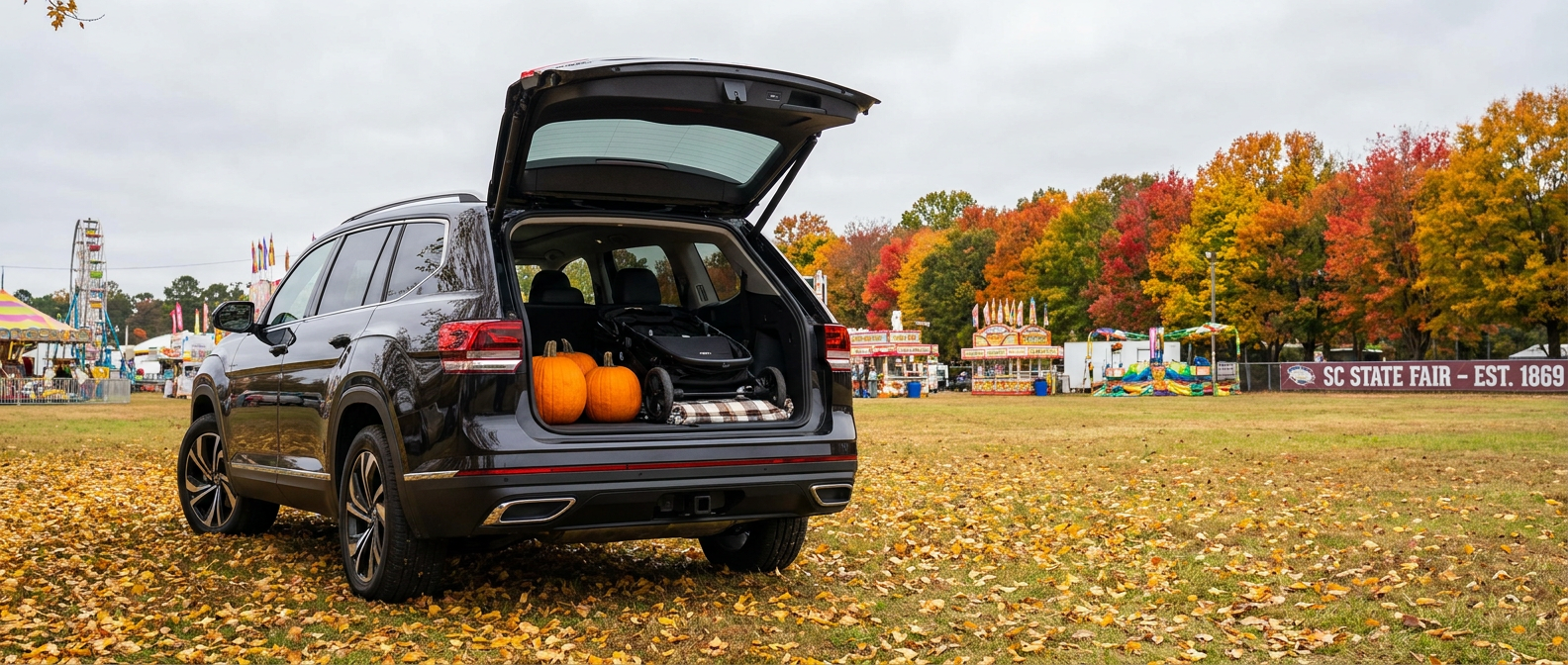
2026 Volkswagen Golf GTI on a Blue Ridge mountain overlook during peak October fall foliage near Asheville

4 Volkswagen Models for October Road Trips to Asheville | Steve White VW Spartanburg

In this article The Quick Ranking: Which Volkswagen Fits Which Asheville Trip 1. Golf GTI: The One That Makes the Grade Disappear 2. Tiguan: The Efficient One That Surprises People 3. Atlas Cross Sport: Built for the Gear-Heavy Couple 4. Atlas: When the Whole Family is Coming Asheville's fall color peaks in mid-October, and from our lot on Reidville Road you're exactly 70 miles and about one hour and ten minutes from downtown Asheville via I-26. The drive isn't long. It isn't a casual one either, because the last stretch westbound drops roughly 2,000 feet off the Blue Ridge Escarpment in under ten miles, with steep grades and tight curves that make the car you're in genuinely matter. The right Volkswagen for this trip depends entirely on who's going and what you're bringing. Are two people after a spirited mountain run? The answer differs from a family of five with a packed cargo area. We'll give you the ranking up front, then break down the reasoning pick by pick. Our top pick for the typical two-person version of this run is the 2026 Golf GTI. It's the most fun on the mountain grade, carries enough gear for two, and returns EPA-estimated 32 mpg on the highway. More on why below. The Quick Ranking: Which Volkswagen Fits Which Asheville Trip Rank Model Best For Standout Spec 1 Golf GTI Two-person spirited October run 241 hp, 32 mpg hwy, DSG 2 Tiguan Efficient couple or solo driver Up to 34 mpg hwy (FWD S-trim) 3 Atlas Cross Sport Active couple with serious gear 40.3 cu ft behind the seat, AWD 4 Atlas Full family of 5-7 55.5 cu ft (3rd row flat), 5,000-lb tow 1. Golf GTI: The One That Makes the Grade Disappear We'd choose the GTI for ourselves, and we'll be direct about why. The 2026 Golf GTI puts 241 horsepower and 273 lb-ft of torque through a 7-speed DSG dual-clutch transmission. On that descending grade west of Landrum, where I-26 drops steeply before flattening into Buncombe County, the DSG's engine-braking behavior lets you scrub speed deliberately without riding the brakes. The grade just softens. You don't notice that kind of detail until you notice it. The EPA rates the 2026 Golf GTI at 24 city / 32 highway / 27 combined mpg. On a run that's mostly highway, the 32-mpg figure is the one that counts. The 13.2-gallon tank means you won't stop for fuel on a round trip under most conditions. Plan it as one tank. The honest tradeoff is cargo space, which comes to 19.9 cubic feet with the rear seats up. Count on it being comfortable for a weekend bag and a camera bag for two. It is not comfortable for two people plus a dog crate plus hiking gear plus a cooler. If that's your packing list, scroll to pick three. For the two-person October leaf-peeping run, though, the GTI is the most rewarding Volkswagen on this road. Note for GTI shoppers: The 2026 Golf GTI no longer offers a manual transmission. The 7-speed DSG is the only gearbox. It's genuinely good, but if the stick shift was your reason for wanting a GTI, you'll want to know that before you get here. 2. Tiguan: The Efficient One That Surprises People The 2026 Tiguan is the model we probably undersell in casual conversations, and that's a mistake. The S trim with front-wheel drive is EPA-rated at 26 city / 34 highway / 29 combined mpg. The best highway figure of any non-electric Volkswagen we carry, and it matters on a trip that's mostly 70-mph interstate. The 201-horsepower 2.0T won't thrill you the way the GTI does. That isn't what it's for. What it does well is carry two or three people in genuine Volkswagen interior comfort, eat miles without drama, and park easily in Asheville's tighter downtown blocks near the River Arts District. It seats five and offers 37.5 cubic feet of cargo behind the second row, and the 15.6-gallon tank gives you real range. Range anxiety never enters it. One real consideration with the Tiguan on this route involves all-wheel drive. If you opt for 4Motion AWD (available on most trims), the EPA highway rating drops to around 30 mpg. Still excellent. For a dry October run on I-26, FWD handles fine. But if the forecast shows rain or early fog on the Escarpment, the AWD option is worth serious thought. See October Specials at Steve White Volkswagen 3. Atlas Cross Sport: Built for the Gear-Heavy Couple The 2026 Atlas Cross Sport surprises people when they open the back. Forty-point-three cubic feet sits behind the second row with seats up. Fold that row flat and you're at 77.6 cubic feet. In a two-row SUV that still looks like a fastback coupe from the outside, the number is a genuinely useful one. With bikes on a rack and gear inside, or gear entirely inside because you're also doing a night or two, this matters for a certain kind of Asheville trip. The space delivers. That 2.0T makes the same 269 horsepower as the Atlas, and 4Motion AWD is available across most of the lineup. The EPA combined rating comes in at 23 mpg FWD and 22 mpg with AWD, which is workable math for a 140-mile round trip. The honest note here is that the Cross Sport rides the same long wheelbase as the Atlas, just without the third row. That makes it bigger than it sometimes reads in photos. Asheville's parking garages vary in clearance. Not a dealbreaker, but worth knowing before you add a roof rack. Buying caution: Don't let the October timing push you into a model that doesn't fit your everyday life. This is a 70-mile road trip. You'll drive this vehicle for years after peak leaf season. Choose for your real weekly needs first, then confirm it handles the Asheville run. What to actually check before you drive up the mountain: Tire inflation (mountain grades amplify handling differences between a correctly inflated tire and a soft one) Fluid levels, especially if the vehicle is overdue for a check-in Charge your phone and download an offline map for the stretch between Landrum and Asheville where cell service is inconsistent Check the NCDOT road conditions site before heading out in October, when early fog on the Escarpment grade is common 4. Atlas: When the Whole Family is Coming The 2026 Atlas is the straightforward answer when headcount exceeds four or tow weight matters. It seats up to seven across three rows, carries 20.6 cubic feet of cargo with all seats up, and opens to 55.5 cubic feet with the third row folded flat. The same 269-horsepower 2.0T drives it, matched to a proper 18.6-gallon fuel tank and a 5,000-pound tow rating when properly equipped. The family math adds up. On the Asheville run specifically, the Atlas earns its place on two dimensions. First, seven seats make the extended-family trip actually possible, not a contortion exercise. Second, that 18.6-gallon tank at EPA-estimated 27 mpg highway (FWD) works out to over 400 miles of range, so you're not hunting for a gas station on the drive back through Landrum. The tradeoff is efficiency relative to the Tiguan. The Atlas with 4Motion AWD comes in at approximately 19 city / 26 highway. Over a 140-mile round trip that's marginal fuel cost, not a meaningful deterrent. If you're a couple using Atlas seats mainly as furniture storage, the Cross Sport is a sharper choice. Five people or more, and the Atlas is the answer. We'd point families toward the SE with Technology or higher trim, specifically because 4Motion AWD becomes available and the Escarpment descent is steep enough that AWD adds composure on a rainy October afternoon. See What Your Current Vehicle Is Worth Steve White Volkswagen Spartanburg 2671 Reidville Rd, Spartanburg, SC 29301 (864) 585-2492
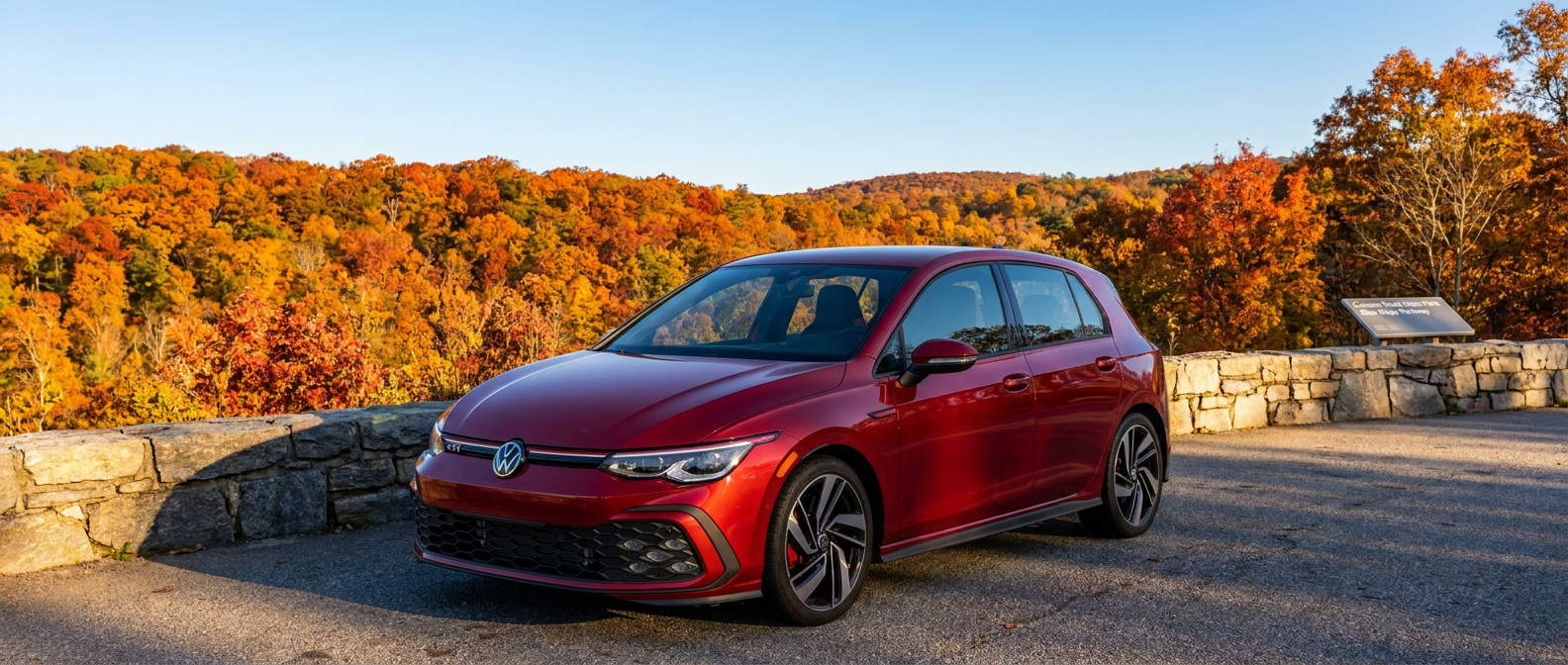
2026 Volkswagen ID.4 charging at a downtown Spartanburg municipal parking garage

Why the Volkswagen ID.4 Works for Daily Driving Near Downtown Spartanburg

In this article How Do D Mode and B Mode Actually Work? Which Mode Do You Actually Need Here? Charging Around Downtown Spartanburg What This Means for Your Next Vehicle Yes, and we'd call it one of the better fits we carry for drivers running downtown-and-back routes across Upstate SC. That answer comes with a nuance a lot of reviews skip. The ID.4 isn't a "set it and forget it" EV. It has two distinct drive modes that behave very differently, and knowing which one to use where turns a competent electric SUV into something genuinely efficient on the specific roads around here. Browse the Volkswagen ID.4 and ID. Buzz lineup at Steve White Volkswagen Spartanburg The D mode of the 2026 Volkswagen ID.4 coasts like a traditional car (best for I-85 corridor speed); its B mode recovers energy through stronger regeneration (best for stop-and-go through downtown Spartanburg). Choosing the right mode for each stretch of your commute is the one skill that separates a good ownership experience from a great one. How Do D Mode and B Mode Actually Work? D mode and B mode split the driving between coasting and stronger regeneration, and the short of it is that the ID.4 skips true one-pedal driving, so lifting off the accelerator in D mode won't drag the car to a stop the way it would in some rival EVs. Instead, the powertrain prioritizes coasting. According to the own engineering documentation of Volkswagen, coasting takes priority in D mode because converting kinetic energy back into electricity always involves losses, and on a sustained highway stretch, letting the vehicle roll freely preserves more range than constant regeneration. Switch the shifter to B mode and the behavior changes. Lifting off the throttle now applies meaningful regenerative resistance, and the motor of Volkswagen recovers energy in most moderate braking situations, transitioning to friction brakes only when harder stops demand it. You'll still touch the brake pedal to reach a full stop. Otherwise, B mode handles the rest. D Mode (Drive) B Mode (Brake) How it works Motor coasts on lift-off; regen activates through the brake pedal Stronger regen on lift-off; friction brakes for final stop only Best for Highway segments (I-85 corridor, sustained speed) Stop-and-go (downtown signals, Reidville Road traffic) Energy behavior Preserves momentum; fewer conversion losses at speed Recaptures more energy in deceleration-heavy driving Driver feel Familiar to gas-car drivers Light "engine braking" pull on lift-off Spartanburg use case The 30-mile I-85 run toward Greenville or Anderson The last mile through downtown to a parking garage The EPA rates the 2026 ID.4 at 113 MPGe combined for the rear-wheel-drive version and 102 MPGe combined for the all-wheel-drive. Those numbers assume a blend of city and highway conditions. In Spartanburg, where a typical commute mixes a corridor sprint on I-85 with slower downtown blocks, you'll want D mode on the highway and B mode once you exit. One trip, both efficiency numbers. Which Mode Do You Actually Need Here? Which mode you actually need comes down to the stretch of road in front of you, so you'll run B mode through town and D mode on the corridor, and Spartanburg's layout makes that split easy to feel on a normal commute. Reidville Road, where our store sits, feeds directly into the downtown grid in under 10 minutes. The last stretch runs signals, turns, and the occasional backup at peak hours, which is B mode territory. Every deceleration into a red light becomes a small deposit back into the battery rather than heat thrown off by friction brakes. See how the Taos and other Volkswagen models compare for Upstate commuting The longer corridor sections are a different story. If your drive involves any sustained I-85 mileage between Spartanburg and Greenville (around 30 miles), you'll want D mode as the default. Aggressive regen on a 70-mph highway stretch costs more energy through conversion than it returns, and coasting between gradual speed changes is the more efficient physics here. One thing we notice at the counter is that drivers coming from gas cars tend to start in D mode and stay there. The habit makes complete sense. D mode mimics what a traditional automatic transmission does, and the 2026 ID.4 in D mode still recovers energy whenever you actually press the brake. Staying in D mode doesn't waste range; it just leaves a little efficiency on the table in dense urban conditions where B mode would net you measurably more energy back. View our current 2026 Volkswagen ID.4 inventory Upstate Charging Terms Worth Knowing Term What it means Level 2 charging 240-volt AC charging; the 2026 ID.4 accepts up to 11 kW, adding roughly 25-30 miles per hour of charge DC fast charging Direct-current charging; the 2026 ID.4 supports up to 175 kW, taking the battery from 10% to 80% in roughly 28 minutes MPGe Miles per gallon equivalent; the EPA's standardized way to compare EV efficiency against gasoline vehicles Eco Assistance The onboard system of the ID.4; it reads navigation data and prompts you to lift off the accelerator ahead of slowdowns to maximize regen Charging Around Downtown Spartanburg Charging around downtown is easier than the range-anxiety headlines suggest, and for a Spartanburg daily driver the concern shrinks fast once you look at the actual numbers, though it does hinge a little on whether you've got a plug at home. Range anxiety is a reasonable starting concern for any EV buyer, so let's put numbers to it. See Current Volkswagen ID.4 Offers The EPA-rated range of the 2026 ID.4 is 291 miles on the rear-wheel-drive version (263 miles on the all-wheel-drive). The average round-trip commute into and out of downtown Spartanburg is a fraction of that. You're not managing range on a daily basis so much as managing a charging routine. The city keeps it simple. The City of Spartanburg operates public electric vehicle charging stations across downtown parking lots and garages. So an ID.4 driver who parks downtown through the workday can top off while the car sits. The 2026 ID.4 handles Level 2 charging at up to 11 kW, which translates to about 25-30 miles of range added per hour at a Level 2 station. That's enough that a full eight-hour workday of parking adds solid margin on top of whatever you've brought from home. For road trips or longer Upstate runs on I-26 toward the coast or I-85 toward Atlanta, Spartanburg has public DC fast charging options accessible off both major corridors. The 2026 ID.4 accepts DC fast charging at up to 175 kW, and the own figures of Volkswagen put a 10-to-80 percent charge at approximately 28 minutes at a compatible high-speed station. That's a coffee stop. The tradeoff worth naming is simple enough. If you don't have a Level 2 charger at home, you're relying on the charging infrastructure for more of your daily top-ups. That works in Spartanburg, but it does ask for a little more planning than plugging in at your own house each evening. It's a fair consideration, not a dealbreaker, and it's worth knowing before you commit. Explore financing options for the Volkswagen ID.4 What This Means for Your Next Vehicle The 2026 Volkswagen ID.4 earns its place as a Spartanburg daily driver through a specific set of advantages, though they won't do the work for you: range that exceeds any realistic round-trip commute in the Upstate, a drive-mode system that rewards learning even slightly, and a local charging network that fills gaps for drivers without home charging. The 30-minute DC fast charge window means the I-85 and I-26 corridors to other Upstate cities stay practical. What it is not is a vehicle that asks nothing of you. Knowing when to use B mode is a small habit with a measurable payoff. Understanding the charging network rather than guessing at it removes the anxiety that comes with a new EV. We'll walk through both of those at delivery, because we think the ownership experience is better when drivers leave the lot with a real handle on the technology instead of just a key fob and a hope. If you're driving a daily route that touches downtown Spartanburg at any point, the architecture of the ID.4 is built for exactly that pattern. Come see what we have on the lot. We'll walk you through both modes on your test drive so you leave with a clear picture of how the car fits your specific route. Frequently Asked Questions Does the 2026 Volkswagen ID.4 have one-pedal driving? Not in the traditional sense. The ID.4 doesn't decelerate to a complete stop on lift-off alone. In B mode, the regenerative braking is strong enough to handle most moderate slowdowns without touching the friction brake pedal, though you'll still apply the brake to reach a full stop. For Spartanburg drivers, B mode in downtown conditions is the closest thing to one-pedal behavior and a useful efficiency tool on stop-and-go streets. How long does it take to charge the 2026 Volkswagen ID.4 from 10% to 80%? At a DC fast charger rated for the maximum 175 kW input of the ID.4, Volkswagen estimates approximately 28 minutes to go from 10% to 80% battery. On a Level 2 home or public charger at 11 kW, you're looking at around eight hours for a complete empty-to-full charge, which fits an overnight home routine or a full workday parked at a public downtown station. Get Pre-Approved for the Volkswagen ID.4 Steve White Volkswagen Spartanburg 2671 Reidville Rd, Spartanburg, SC 29301 (864) 585-2492
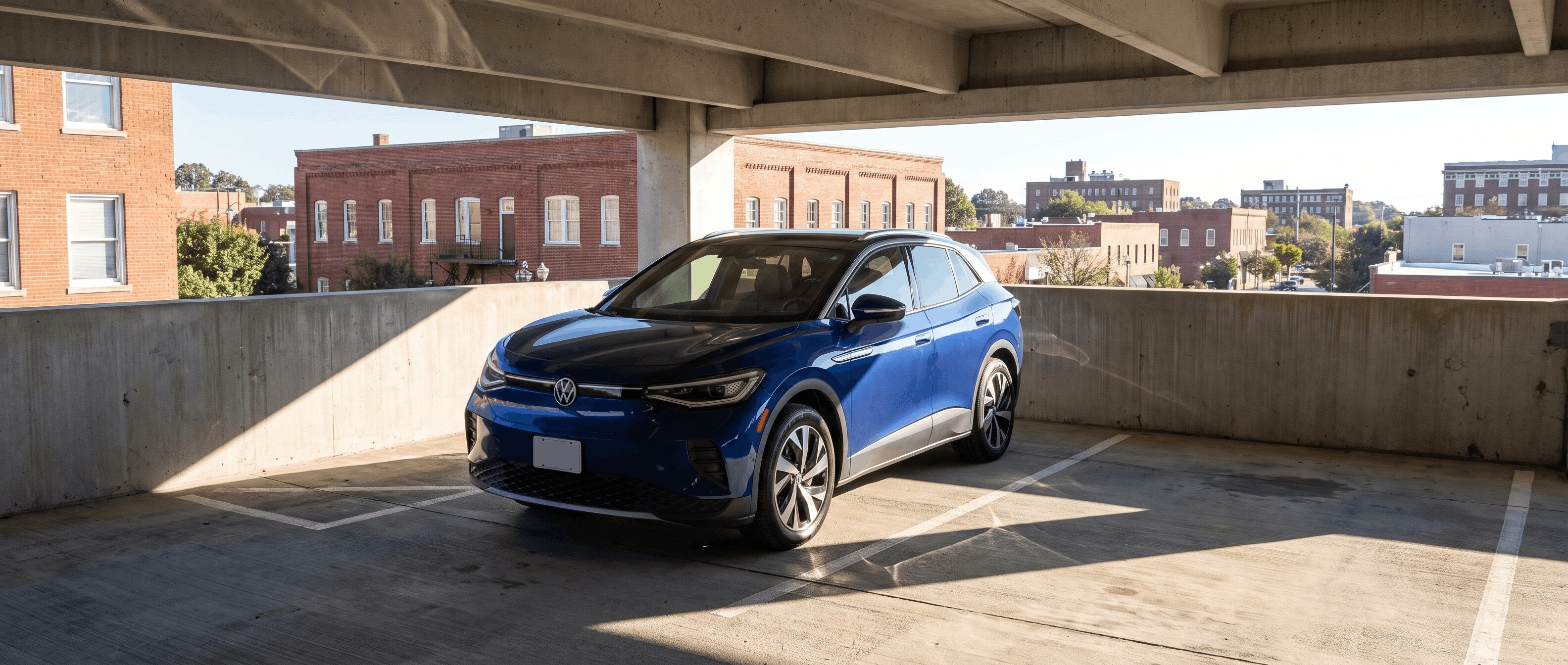
Contact Us

Fill out this form below and we'll contact you shortly
*Required Fields