
Henderson County, North Carolina, grows roughly 80 percent of the state's apples, and right now, in early October, every orchard from Jeter Mountain Farm to Sky Top is open for u-pick. The drive from Spartanburg runs about 48 miles via I-26, so you're in the mountains in under an hour. Simple enough on paper. It gets more complicated once you factor in a packed cargo area, a gravel orchard lot, the elevation change on the I-26 ascent, and the real chance you'll come back with three full bushel bags, muddy shoes, and a wagon-ride-damp child in row two. We'll show you how to set up whichever Volkswagen you're driving so the run stays fun both ways.
The 2026 Volkswagen Tiguan is where we'd start for this trip, and the section below explains exactly why. But the setup steps apply across the lineup. Let's go through them.
What You Need Before You Start
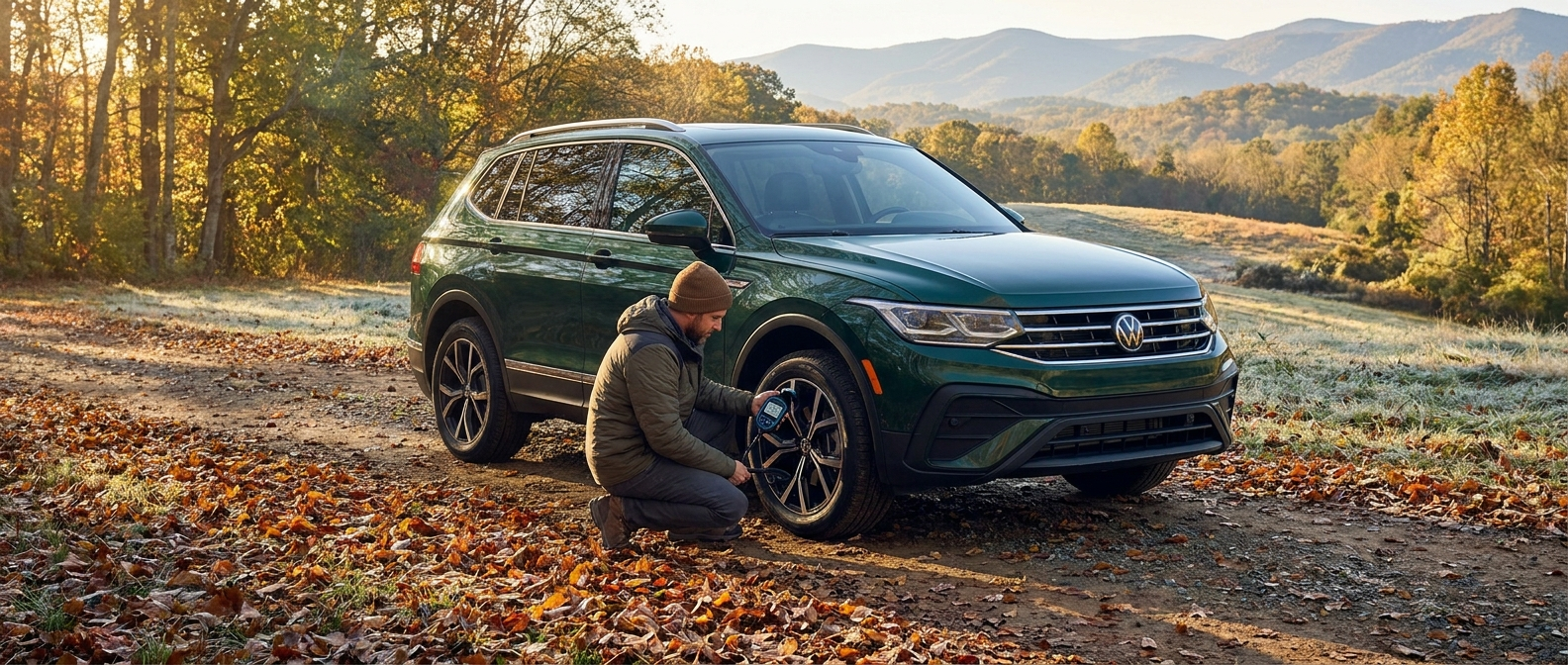
Before you back out of the driveway, you'll want your cargo secured and your tires checked, because the I-26 corridor climbs into the Blue Ridge foothills as you leave Spartanburg County, and the grade asks real work from your engine going up and your brakes coming down. The driving itself isn't technical. This isn't Tail of the Dragon, just a comfortable mountain commute. Get the cargo secured at home, well before the climb past Landrum. Simple as that.
Pack this list in the car before you leave Spartanburg.
| Item | Why It Matters on This Run |
|---|---|
| Cargo mat or trunk liner | Gravel lots and u-pick boxes leave marks; protect the load floor |
| Seat protector (row two) | Mud and damp jackets; the rear seats of the Tiguan are not magic |
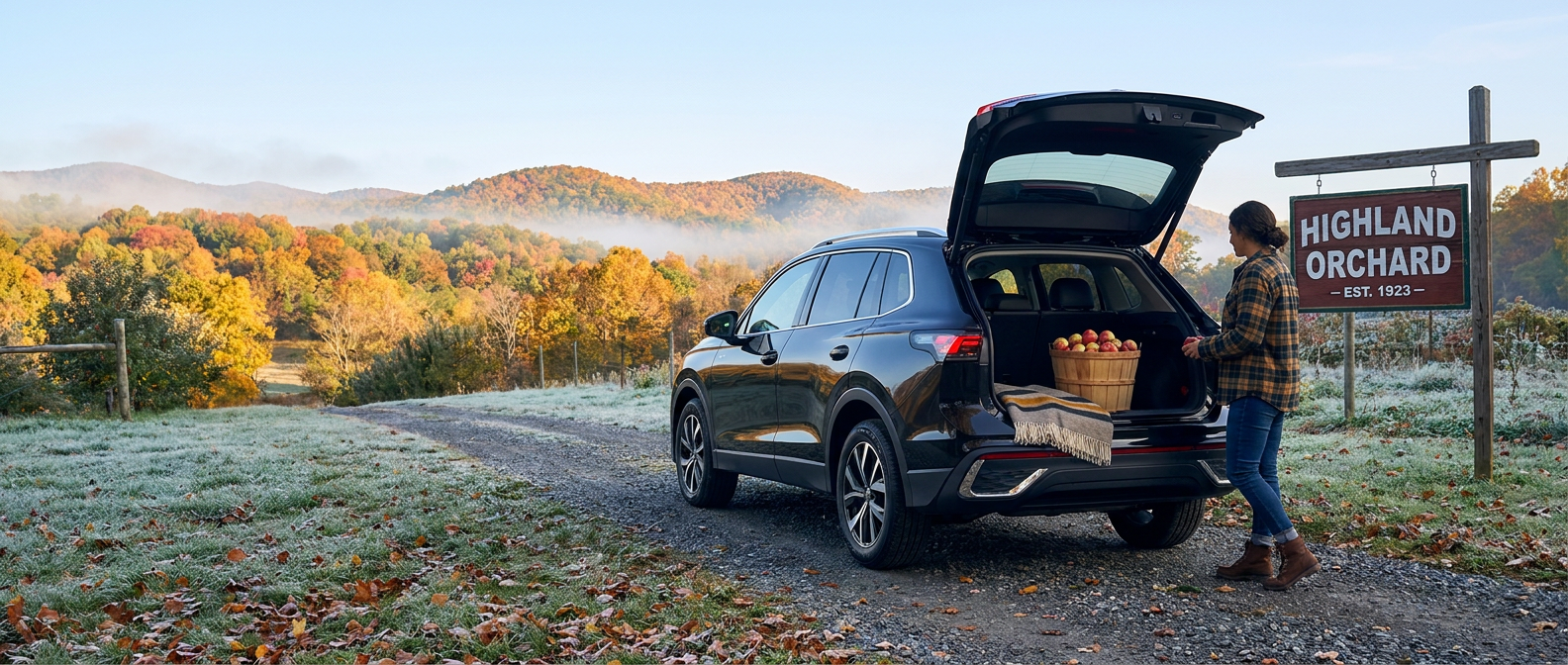
| Reusable shopping bags | Most orchards charge a small day-use fee and supply baskets, but you'll want bags for the drive home |
| Phone charged to at least 80% | Cell coverage in Henderson County's orchard roads can drop |
| Tire pressure check | The climb and descent cycle puts modest extra heat into sidewalls |
On the Tiguan and 2026 Volkswagen Atlas, also check that the rear cargo cover is latched. A loose parcel shelf rattles on every mountain curve, and you'll have 48 miles of them on the way home.
Five Steps to Configure Any Volkswagen for Apple Country
Run through five steps in order the morning you leave, and the vehicle side of this trip takes care of itself, whether you're in a two-seat-focused Golf GTI or a seven-seat Atlas with the family aboard. Run through them the morning you leave.
Step 1: Match the model to your group size (before you book the orchard).
Jeter Mountain Farm now requires timed reservations, and their fall season runs Thursday through Sunday, September through November 1, with a 3:30 p.m. u-pick cutoff. The orchard gives a basket to up to four people per booking unit. So if you're going with five or more, you're already thinking about a vehicle with real room.
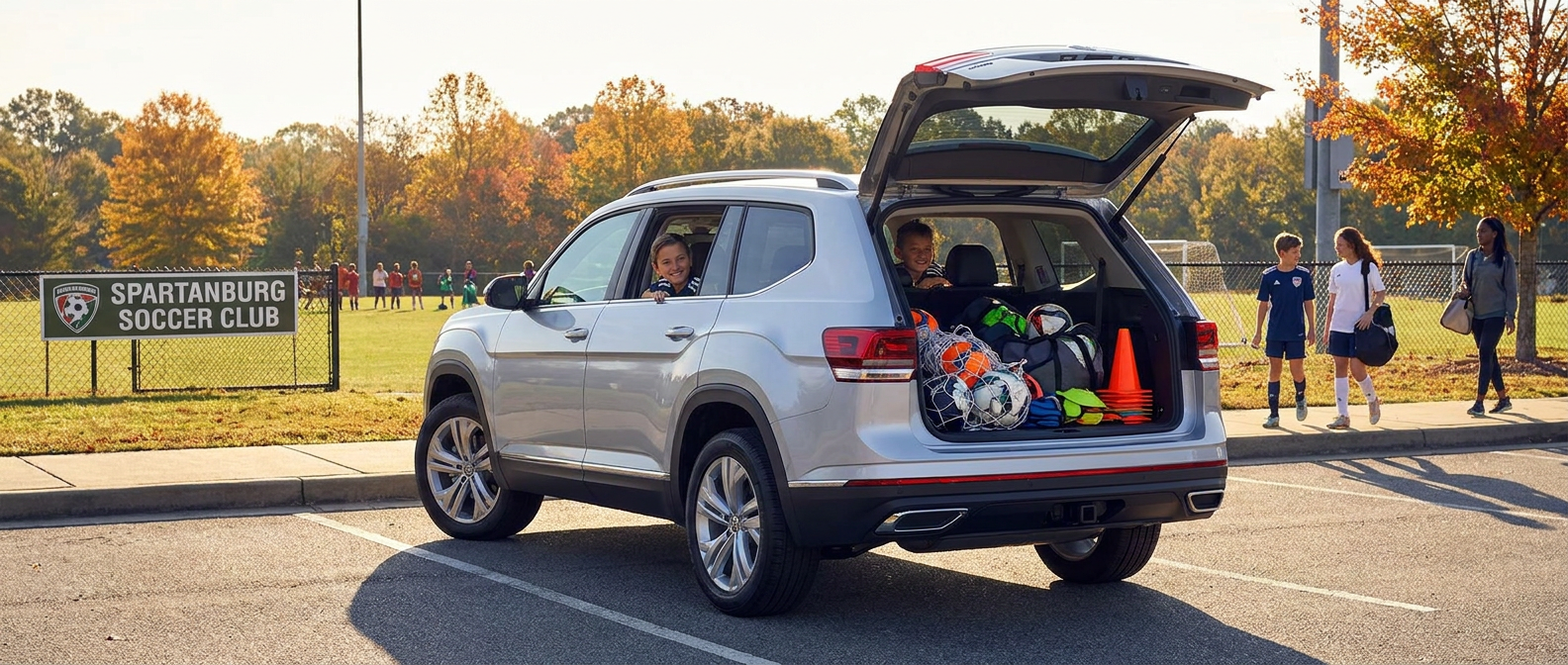
The 2026 Volkswagen Atlas carries seven passengers and, per Volkswagen, delivers up to 96.6 cubic feet of cargo space with the rear seats folded. You'll want that figure when everyone piles out at the orchard and you fold row three for the haul home. If you only need five seats, the 2026 Volkswagen Tiguan carries 33.8 cubic feet with the rear seats up, enough for two to three bushel bags plus gear, and opens to 69.8 cubic feet with the rear bench folded flat.
The 2026 Volkswagen Golf GTI runs on a different calculation. Ground clearance on the Golf GTI is 4.7 inches minimum per KBB, an honest and usable amount, though two full apple baskets plus a case of cider and a pair of muddy boots will fill it. Of the three, the GTI has the least cargo room. No way around it. Bring only one other person, load smart, and the GTI is genuinely the most enjoyable car on the I-26 ascent. The EPA rates it at 32 mpg highway, which also means the 48-mile run barely dents the tank.
Step 2: Configure the cargo floor before you back out of the driveway.
On the Tiguan, fold the rear seats in a 60/40 split rather than fully flat when you have a passenger in row two. You'll free up roughly 45 cubic feet of usable space (a solid middle ground) while keeping the seat beside the cargo area open for jackets and bags. On the Atlas, fold only row three if your group is five, which leaves row two for passengers and keeps the third-row floor as a flat staging area for boxes.
Step 3: Protect the second row.
Orchard mud is fine, soft, and completely invisible until it dries on the seat fabric of the Tiguan in the shape of a boot. Seat protectors or old moving blankets on row two cost nothing and take thirty seconds to place.
On the Atlas, the third row sits low to the ground and tracks mud easily. A wipe-down mat or a folded tarp under small kids in row three keeps it clean.
Step 4: Plan your fuel stop for the correct direction.
The Atlas carries the 2.0-liter turbocharged engine of Volkswagen, rated at 269 horsepower and 273 lb-ft of torque, and the EPA estimates 20 city and 27 highway for FWD trims. You won't be towing, so you're well within comfortable range on a 48-mile run each way. The Golf GTI pulls from a 13.2-gallon tank with 32 mpg highway efficiency, so the round trip from Spartanburg doesn't need a stop at all under normal conditions.
Our team has noticed one thing worth passing along. If you're pushing to a second orchard after Jeter Mountain, add a stop on US-74 eastbound rather than trying to make it back to Spartanburg on fumes. The climb home from Hendersonville on I-26 costs a few more miles per gallon than flat highway driving. The drop is small. You'll feel it if you're low.
Step 5: Know the orchard lot before you arrive.
Jeter Mountain and several other Henderson County orchards use gravel or compacted-dirt farm lanes for parking. Nothing about them requires AWD or elevated clearance. Drivers bring sedans there constantly. What matters is that the ground clearance of the Golf GTI means you'll want to take farm-lane potholes at walking pace. The AWD ground clearance of the Tiguan is 7.0 inches, which gives genuine composure on those same lanes. The Atlas sits at 7.1 inches maximum clearance and stays the most relaxed of the three on uneven farm surfaces.
Browse our current Volkswagen inventory to confirm which model and trim is available on our lot before your trip weekend.
A Quick Recap You Can Read at the Door
Review this condensed version in thirty seconds before you leave Reidville Road, and you'll have the whole setup locked, whether you're loading a Tiguan for a family of five or squeezing two people and light bags into the Golf GTI.
- Model locked? Tiguan for a family of five with cargo; Atlas for six or seven; Golf GTI for two with light bags and a focus on the drive itself.
- Cargo floor configured? Split-fold rear seats, cargo mat ribbed-side up, and any loose items bagged.
- Row two protected? Seat covers or blankets down before kids or dogs get in.
- Fuel topped off? The round trip is comfortable in any model, but plan for a small efficiency drop on the mountain grades.
- Reservation confirmed? Jeter Mountain and Sky Top require advance booking; check crop availability the morning of.
The run to Hendersonville is one of the better excuses Upstate SC hands you for a weekend in a Volkswagen. Forty-eight miles of I-26 with a load of Honeycrisps on the way back is about as good as October gets from Spartanburg. Take fifteen minutes with the checklist above and the vehicle side of the trip will take care of itself.
Frequently Asked Questions
Which Volkswagen model fits the most apple-picking cargo?
The 2026 Volkswagen Atlas offers the largest load capacity, reaching 96.6 cubic feet of cargo space with both rear rows folded. For a smaller group that still needs meaningful cargo room, the 2026 Volkswagen Tiguan delivers 33.8 cubic feet with the rear seat up and 69.8 cubic feet with it folded flat, so it's the most versatile choice for a typical orchard run.
Is AWD necessary for the drive to Hendersonville's apple orchards?
No, AWD isn't required. The route via I-26 is paved highway, and the orchard parking areas at Jeter Mountain and similar Henderson County farms are gravel or compacted dirt, not technical terrain. That said, the 4MOTION AWD option on the Tiguan does raise ground clearance to 7.0 inches versus 6.6 inches on FWD trims, which adds a small margin of composure on uneven farm lanes. If you're going in dry October weather, either drivetrain handles the trip without issue.