
Blog

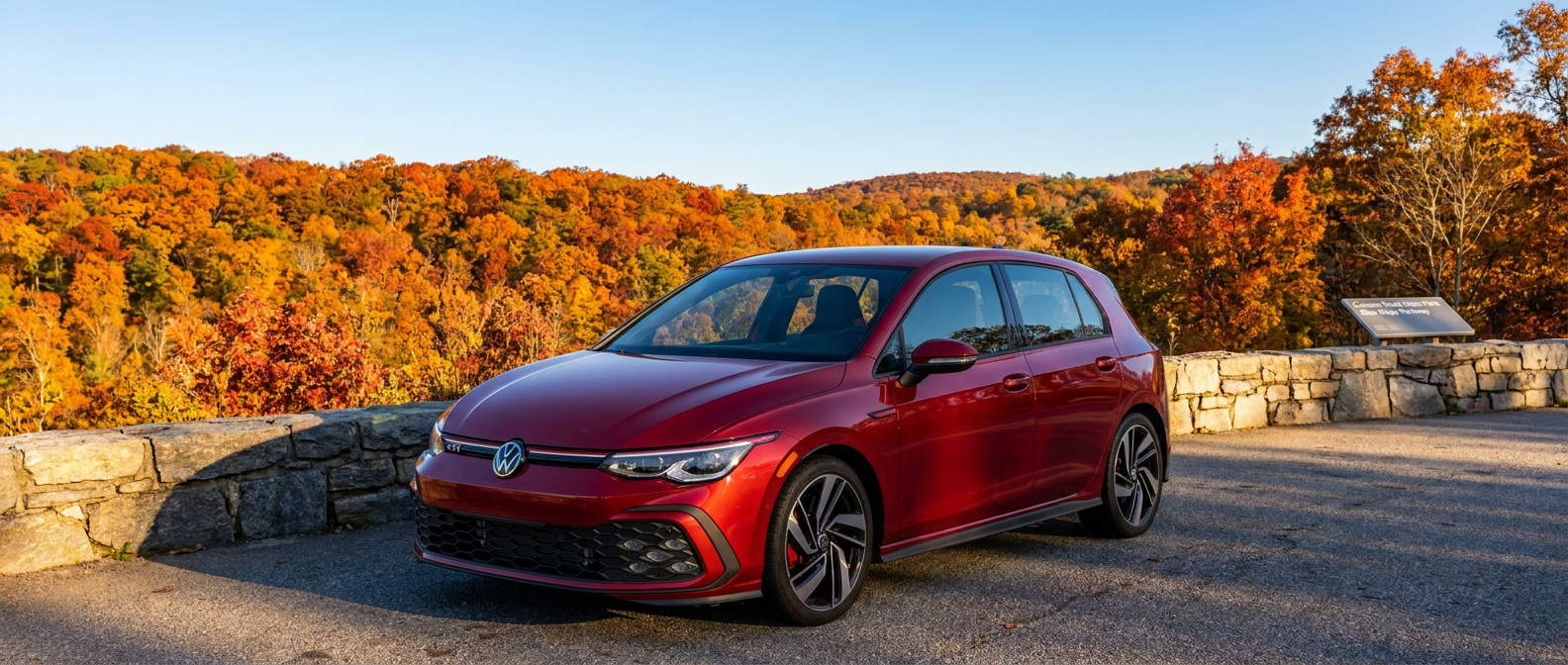
2026 Volkswagen Tiguan in a Spartanburg SC parking lot near WestGate Mall

Your Volkswagen Fit Checklist for Drivers Near WestGate and Spartanburg Regional

The route between WestGate Mall on West Blackstock Road and Spartanburg Medical Center on East Wood Street sounds simple. In practice it's anything but. You're navigating one of the busiest commercial corridors in Upstate South Carolina, swapping between a sprawling surface lot and a multi-deck hospital parking structure, and doing it regularly. Browse our current Volkswagen inventory to see what's on the lot right now, but read this first. The right model for this particular driving life isn't just the one you like. The one that clears the checklist below is what you're after. What Goes on the Checklist? Five questions decide which Volkswagen fits your WestGate-to-Spartanburg-Regional life, and working through each one before you set foot in a showroom saves you a test drive spent chasing the wrong car. Work through each one honestly. The Checklist Parking geometry (does the car fit the Spartanburg Regional structured deck and the WestGate surface lot without white-knuckle maneuvering?) Commute fuel economy (will the EPA highway rating hold up across your I-85 or I-26 corridor run?) Cargo room for your actual load (weekly Costco haul, scrubs bag plus lunch bag, or full family gear?) Passenger count (is a second or third row a real need, or are you paying for space you never use?) AWD or FWD (Upstate SC winters bring ice events on I-85 that the forecast calls wrong; how risk-averse are you?) So that's it. Five filters. Every Volkswagen in our lineup clears at least three of them. None clears all five the same way. What each one does and doesn't do comes next. The Reasoning Behind Each Item The Volkswagen Jetta is the answer when fuel economy and parking ease matter most and you're driving solo or with a single passenger, though it asks you to give up real cargo depth to get there. The Volkswagen Jetta earns an EPA rating of 29 city / 40 highway mpg with the 1.5-liter turbo and eight-speed automatic. That highway number is the highest in the Volkswagen lineup. On a daily run down I-26 from the WestGate corridor toward downtown Spartanburg, or a longer haul on I-85 toward Greenville or Anderson, you'll feel that efficiency every fill-up. The downside is straightforward. The trunk's a sedan trunk. Your Costco run will fill it, and add a stroller and it's genuinely tight. Step up to The Volkswagen Taos when you need an SUV footprint without committing to a larger vehicle. The 2026 Taos earns an EPA-estimated 28 city / 36 highway mpg (FWD), only marginally below the Jetta, and its compact dimensions slot it into the Spartanburg Regional parking deck without the anxiety a full-size SUV creates. The real tradeoff is cargo depth behind the second row. It's smaller than it looks. If you're a Costco-plus-Target-on-the-same-trip driver, the Taos works. If you're loading pediatric gear for three kids, the Atlas is the correct answer. For drivers who want a compact SUV that feels substantial, The Volkswagen Tiguan is where a lot of our team's conversations land. The 2026 Tiguan's base 2.0L turbo delivers 201 horsepower, and the EPA rates FWD models at up to 26 city / 34 highway mpg. The rebuilt 2026 body is noticeably quieter inside than the previous generation, which matters on a long I-85 stretch. There's no third row here. Volkswagen made that call deliberately, and if three rows are non-negotiable, keep reading. The Volkswagen Atlas is the answer if three rows are the actual requirement. The EPA rates The Volkswagen Atlas FWD at 20 city / 27 highway mpg. That number stands, no dressing it up. You trade efficiency for the ability to carry seven people, and for a lot of Spartanburg families with school-aged kids, that trade makes complete sense on the weekend even if the daily commute is solo. The Atlas is a long vehicle. In the structured decks at Spartanburg Medical Center, tight pull-in angles are real, so know your comfort level with that before you commit. A note from our team: Spartanburg's ice events tend to hit the I-85 corridor in January and February. AWD is available on both the Tiguan and Atlas, and FWD handles most Upstate SC winters just fine. But if your shift starts at 5 a.m. and the overnight forecast was "partly cloudy," 4MOTION gives you a margin that matters on an on-ramp. Item-by-Item: What Each Model Delivers Checklist Item Jetta Taos Tiguan Atlas Parking ease (tight decks) Excellent Very Good Good Challenging EPA highway mpg 40 36 34 (FWD) 27 (FWD) Cargo room (practical) Moderate Good Better Best Passenger count 5 5 5 7 AWD available No Yes Yes Yes The Volkswagen Golf GTI earns a separate mention because it doesn't fit the matrix above. It isn't an SUV, and it won't carry a family's weekend gear. But if you're a Spartanburg Regional nurse practitioner whose shift ends at 7 p.m. and the drive home on I-85 is where you decompress, the 2026 Golf GTI's 241-horsepower 2.0-liter turbo and 24 city / 32 highway mpg make a real case. German engineering's hot-hatch formula hands you a genuine driver's car that still costs you nothing extra to fill. That's the GTI's pitch, and it's an honest one. See Current Volkswagen Offers A Print-and-Go Recap Before You Visit Bring this list to the showroom, because the answers you already have will make the conversation with our team at Steve White Volkswagen Spartanburg on Reidville Road faster and sharper than starting from scratch. We'll walk you through each question in person. Parking geometry: If you use a structured deck regularly (Spartanburg Regional, hospital campus), the Jetta and Taos are the easiest choices. The Tiguan is manageable. The Atlas requires confidence. Commute economy: I-26 and I-85 corridor drivers who prioritize fuel cost should look at the Jetta first (EPA-estimated 40 highway mpg), then the Taos (EPA-estimated 36 highway mpg). Cargo reality: Weekend Costco runs and family gear point toward the Tiguan or Atlas. Solo or couple's daily driving fits the Jetta or Taos without compromise. Passenger count: Three rows are only on the Atlas. Every other Volkswagen in the lineup seats five. AWD availability: Available on the Taos, Tiguan, and Atlas. Not available on the Jetta or Golf GTI. The Golf GTI: Only for drivers who genuinely value the driving experience on a daily commute. Not a family hauler. No pretense about what it is. Come in with your checklist answers and we'll find your car. That's really how it works. Frequently Asked Questions Which Volkswagen is easiest to park in Spartanburg Regional's hospital campus decks? The 2026 Volkswagen Jetta and the 2026 Volkswagen Taos are the most manageable choices for structured parking decks. Both carry compact overall dimensions that handle tight pull-in angles without difficulty. The 2026 Volkswagen Tiguan is a step larger but still workable for most drivers. The 2026 Volkswagen Atlas is noticeably long and wide and can feel challenging in multi-deck hospital structures with tight turning radii. Is a Volkswagen good for daily commuting on the I-26 or I-85 corridor near Spartanburg? Yes, and the efficiency gap across models is real. The EPA rates the 2026 Volkswagen Jetta at 40 highway mpg, making it the most fuel-efficient option in the lineup for corridor driving. The 2026 Volkswagen Taos follows at an EPA-estimated 36 highway mpg. Both the Tiguan and Atlas deliver lower highway ratings but add cargo space and, on AWD trims, extra all-weather traction for the ice events that periodically hit the I-85 corridor in Upstate South Carolina. Explore Financing Options Steve White Volkswagen Spartanburg 2671 Reidville Rd, Spartanburg, SC 29301 (864) 585-2492

Read More
2026 Volkswagen Atlas Cross Sport parked at a Blue Ridge foothills trailhead in Spartanburg, SC, rear cargo area open on a summer morning

When the Kids Leave, the Car Should Fit the Life You Actually Have Now

In this article Why Does the Atlas Cross Sport Fit Here? The Cargo Math Is the Honest Case for This Vehicle The Honest Tradeoff: This Isn't the Right Call for Everyone The Powertrain Fits an Upstate Driving Pattern The third row earned its keep back when you needed it. These days you fold it flat to load a bike, and you do that more and more while the row sits empty between errands. If that sounds like your week, you're driving the wrong vehicle. We see it plenty here at Steve White Volkswagen Spartanburg. Couples and empty nesters who've outgrown the logic of a seven-seat SUV, but aren't ready to give up the space, the confidence, or the feel of a real Volkswagen. The 2026 Atlas Cross Sport fits that moment exactly. The 2026 Volkswagen Atlas Cross Sport gives Spartanburg empty nesters full-size cargo capability and a refined two-row cabin without the family-hauler proportions (the right-sizing move when your regular passengers are now a partner, weekend gear, and maybe a dog). Why Does the Atlas Cross Sport Fit Here? Spartanburg puts you about 90 minutes from the Blue Ridge and roughly as far from the coast on I-26, and both of those runs are the kind that actually happen now that your calendar isn't locked around school schedules, so the fair question is whether your vehicle was built for the life you have or the one you used to have. Those trips aren't theoretical anymore. They're the weekend now. Spartanburg Condition or Use The Feature That Handles It Why It Matters Here Blue Ridge foothills runs on SC Highway 11 4Motion AWD with Snow and Off-Road drive modes Handles fall and winter surface changes on the Cherokee Foothills Scenic Highway I-26 coast run to Charleston EPA-rated 27 mpg highway (FWD) / 26 mpg (AWD) A full tank comfortably covers the corridor with room to spare Croft State Park gear hauls (bikes, kayaks, camping) 40.3 cu.ft. cargo behind rear seats; 77.6 cu.ft. with seats folded Carries two full-size bikes or a weekend's worth of gear without a trailer Pulling a small camper or utility trailer Up to 5,000 lbs braked towing capacity (SE with Technology and above) Handles enclosed trailers and lighter campers (a real number from Volkswagen, not an asterisk) Long drives without fatigue Heated and ventilated front seats standard across all trims Matters on a three-hour run on a South Carolina August afternoon Daily Spartanburg driving without losing the luxury feel 12-inch floating touchscreen and 10.25-inch Digital Cockpit Pro standard Cabin tech that holds its own against what you'd find in vehicles costing significantly more The Cargo Math Is the Honest Case for This Vehicle The Cross Sport carries more cargo in its two-row layout than most seven-seaters manage with the third row still up, and that's the quiet fact the brochure tends to skip. Volkswagen rates the 2026 Atlas Cross Sport at 40.3 cubic feet behind the rear seats and 77.6 cubic feet with the second row folded. That 40.3 number sits behind two people, not a third row of seat hardware eating into space you'd rather use. The geometry does real work. The load floor sits flat once the seats fold. Browse our current Atlas Cross Sport inventory to see which trims are in stock (the SEL and above add a panoramic sunroof and leather seating, the configuration for buyers who've done their time in cloth-and-plastic family vehicles and want something that feels earned). Drivers who come in after years in three-row SUVs often tell us the Cross Sport's second row surprises them. With no third row eating into the packaging, Volkswagen slid that seat rearward. Legroom in the second row measures 40.4 inches, generous enough for adults, grandkids included. When the grandkids visit, the back seat's genuinely comfortable for them too. You keep the utility. You just stop pretending it's a daily need. Tip: If you plan to run SC Highway 11 regularly in the fall, the Snow drive mode and 4Motion AWD are worth selecting at the time of purchase. AWD becomes standard from the SEL trim upward, so you won't need to add it as an option. Next step: Our team on Reidville Road can walk you through the trim comparison in person. The jump from SE with Technology to SEL is where the features that matter at this stage (leather, panoramic sunroof, seat memory) tend to consolidate. Worth 20 minutes of your time before you decide. The Honest Tradeoff: This Isn't the Right Call for Everyone If you regularly seat six or seven adults for extended trips, holiday travel, carpooling a group, or a reunion where everyone rides together, the three-row Volkswagen Atlas is the better vehicle, and we'd rather tell you that plainly than let you find out on your own. It exists for exactly that use case. The Cross Sport swaps that third row for a sloping roofline, a sleeker silhouette, and a cabin that puts more of the emphasis on the front two seats. Volkswagen designed it that way on purpose. The tradeoff pays off when your regular load is two people and gear instead of a full seating chart. Spartanburg hands you plenty of reasons to put that cargo space to work. Croft State Park's 7,054 acres of trails and lakes sit about ten minutes south of town. The Blue Ridge Mountain foothills are visible from here on a clear morning. Those drives happen in a Cross Sport better than they happen in something you bought for a family configuration you no longer need. The Powertrain Fits an Upstate Driving Pattern The 2026 Atlas Cross Sport runs a turbocharged 2.0-liter four-cylinder making 269 horsepower and 273 lb-ft of torque through an eight-speed automatic, and that's a genuine mid-size powertrain with no small-SUV engine hiding under a big badge, which shows up more on Upstate grades than the spec sheet lets on. The torque number matters for Upstate drivers because the I-85 corridor between Spartanburg and Greenville has enough grade variation and merge situations that you'll want power on tap before you fully press the pedal, not three seconds after. EPA ratings put the FWD version at 20 city and 27 highway. The AWD models (SE and SE with Technology AWD) come in at 20 city and 26 highway. On a run from Spartanburg to Charleston on I-26, 27 highway mpg in an SUV this size is a real number. Drive Mode Select is standard on all trims and gives you Eco, Comfort, Sport, Custom, and Snow settings. Explore financing options before your visit. Knowing your numbers before you walk in saves time, and it tends to make the conversation a calmer one. The SEL adds 4Motion AWD as standard, the configuration worth having when you're thinking about fall runs through the foothills. See Current Volkswagen Atlas Cross Sport Offers Steve White Volkswagen Spartanburg 2671 Reidville Rd, Spartanburg, SC 29301 (864) 585-2492

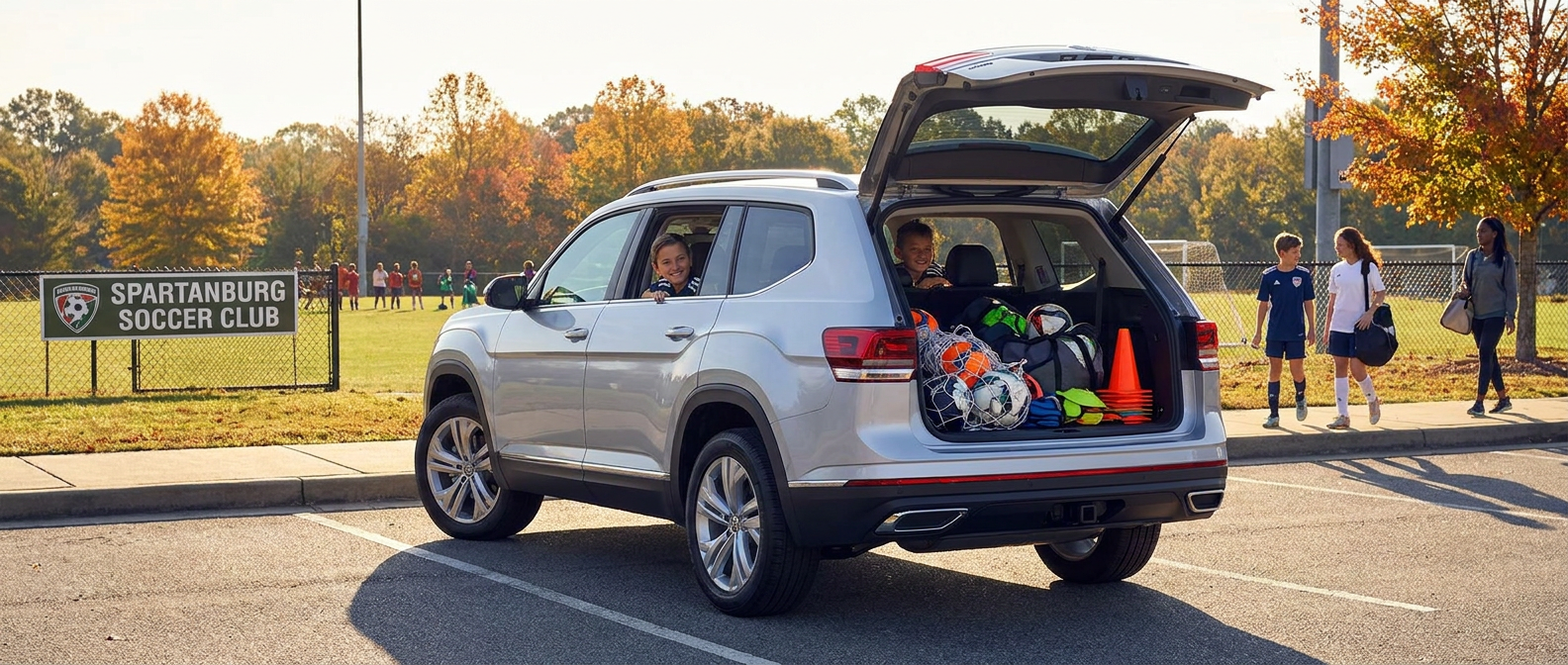
2026 Volkswagen Atlas with open liftgate at a Spartanburg-area youth baseball complex, loaded with sports gear

4 Volkswagen Vehicles That Make Practice Night at Tyger River Park Actually Work

In this article The Ranking at a Glance 1. Volkswagen Atlas: The Tyger River Park Workhorse 2. Volkswagen Tiguan: The Smart Compact for Smaller Families 3. Volkswagen ID. Buzz: Electric, Sliding Doors, and More Space Than It Looks 4. Volkswagen Taos: The Fuel-Efficient Answer for the One-Athlete Family Which One Actually Fits Your Family? If you've driven out to Tyger River Park on a Tuesday evening, you already know the drill. Thirteen fields spread across 137 acres means the lots fill faster than the first inning ends, gear bags seem to multiply on their own, and an Upstate South Carolina afternoon storm can turn the grassy overflow lot into something that demands more traction than a typical family SUV expects to find. So the vehicle you show up in matters. We measured the 2026 Volkswagen lineup against what Spartanburg practice-night parents actually deal with, and here's where we landed. The 2026 Volkswagen Atlas is the clearest fit for a multi-kid family hauling full loads, though three other models earn a serious look depending on your squad size. The Ranking at a Glance Here's how the Volkswagen lineup stacks up against the specific demands of a Tyger River Park practice routine, weighing cargo room, passenger count, fuel efficiency, and the parking reality of a 137-acre regional complex. Rank Model Best For Standout Spec 1 Atlas Multi-kid families, full gear loads 96.6 cu ft max cargo, 7 seats, tows up to 5,000 lb 2 Tiguan Small families wanting German efficiency EPA-est. 26/34 mpg city/hwy (FWD), 69.8 cu ft folded 3 ID. Buzz EV-ready parents who value sliding doors EPA-est. 234 miles range, 145.5 cu ft max cargo 4 Taos Solo-athlete households watching fuel costs EPA-est. 28/36 mpg city/hwy (FWD), 65.9 cu ft folded 1. Volkswagen Atlas: The Tyger River Park Workhorse The Atlas answers the practice-night problem better than anything else Volkswagen builds, giving you three rows, seven seats, and cargo room that makes a pickup feel modest, though you pay for all that capability with the largest footprint on this list once the lots tighten up. Behind the third row, the 2026 Atlas carries 20.6 cubic feet according to Volkswagen. You'll fit a full equipment bag and a cooler back there without touching the seats. Fold that row down and you're at 55.5 cubic feet. Clear both rear rows and the maximum reaches 96.6 cubic feet. Those numbers stop feeling abstract the first time you load four kids' worth of gear after a late tournament game. Under the hood, the 2026 Atlas runs a 2.0-liter TSI engine making 269 horsepower and 273 lb-ft of torque through an eight-speed automatic, and Volkswagen offers 4Motion all-wheel drive on every trim. On SE with Technology trim and above, it's rated to tow up to 5,000 pounds with the standard hitch, which helps if a tournament weekend ever involves a camper or utility trailer, and the EPA rates FWD models at 20 city and 27 highway. The one catch is size. As the largest vehicle on this list, the Atlas shows it in the tighter lots, and Tyger River's busiest tournament days pack the rows. Get there before the overflow starts and think about where you park. You gain maximum family capability and give up a little parking-lot agility. For a family of five or more with two kids in different sports, we think that's exactly the right trade. Browse the Atlas at Steve White Volkswagen Spartanburg 2. Volkswagen Tiguan: The Smart Compact for Smaller Families The Tiguan is the pick when you want genuine German engineering in something that still parks like a normal car on a crowded Tuesday, and the trade is capacity, since it seats five across two rows instead of the seven the Atlas gives you. Five seats, two rows, and a cargo layout that surprises people. Behind the rear seats, you'll find 33.8 cubic feet, per Volkswagen. Fold those seats nearly flat and the space opens to 69.8 cubic feet. You'll fit a bat bag, a folding camp chair, and still have room left over. Fuel economy is where the Tiguan earns points on this list. The EPA estimates the 2026 Tiguan FWD at 26 city and 34 highway. If your practice nights mean repeated Reidville Road runs, that efficiency compounds quickly. The top SEL R-Line Turbo trim pushes output to 268 horsepower, and 4Motion all-wheel drive is available across the lineup. Wet grass and damp asphalt in a lot that's overflowed onto a field? Upstate's summer storm season is real. Asking about 4Motion when you configure your trim is worth a few minutes of that conversation. We'll be direct about the seating. The 2026 Tiguan is a five-passenger vehicle. Volkswagen removed the optional third row in the recent redesign, trading that seat for better rear legroom and a more refined interior. If you regularly fill seven seats, the Tiguan isn't your vehicle. For a family of four, or parents with one athlete and a sibling in tow, it's sharp and composed in a way that makes the post-practice drive home feel less like work. See the 2026 Tiguan lineup 3. Volkswagen ID. Buzz: Electric, Sliding Doors, and More Space Than It Looks The ID. Buzz earns its spot here for more than the retro looks, since it's a three-row, six- or seven-seat hauler whose sliding rear doors solve a real problem at a packed regional complex, though it asks something of you in return that a gas model won't. Pull into a crowded row at Tyger River, and those sliding doors mean zero worry about flinging a panel into the next driver's vehicle. That's a genuine daily benefit, not a novelty. The 2025 ID. Buzz carries an EPA-estimated 234 miles of range on the rear-wheel-drive version, powered by a 91 kWh battery. Behind the third row you get 18.6 cubic feet, a bit tighter than the Atlas. Fold the third row and that opens to 75.5 cubic feet. Clear both rear rows and Volkswagen's maximum cargo figure reaches 145.5 cubic feet. The interior also includes a sliding center console (Volkswagen calls it the Buzz Box) that moves between the front seats and can be removed entirely to create a walk-through path from the driver's position to the second row. With younger kids, that walk-through isn't a gimmick. You'll use it. The tradeoff is worth weighing before the retro shape wins you over. The ID. Buzz makes the most practical sense when you can charge at home. Spartanburg's public charging is growing, but building a practice-night routine around public chargers adds friction to an already busy schedule. If you can plug in overnight, those runs to Dillard Road won't cost you a drop of gas. If home charging isn't in place yet, answer that question first before this vehicle makes sense. See Current Volkswagen Specials Buying Caution: 4Motion all-wheel drive is available across most of this Volkswagen lineup, but it isn't always standard on the trim you're eyeing. On the 2026 Atlas, it's standard on upper trims and available on the SE. On the 2026 Tiguan and Taos, it's available throughout but standard only at the top trim. Upstate South Carolina's July and August storm season creates legitimately slick parking conditions at outdoor sports facilities. Confirm the specific trim's drivetrain before you finalize any decision. The 2026 Atlas is the only vehicle in the Volkswagen lineup rated to tow up to 5,000 pounds, seat seven passengers, and deliver up to 96.6 cubic feet of maximum cargo volume. No other model in this lineup reaches that combination. 4. Volkswagen Taos: The Fuel-Efficient Answer for the One-Athlete Family The Taos is the answer when the operation is smaller, built for the one-athlete, one-gear-bag, twice-a-week trip to Tyger River, and it wins this list on fuel economy, though the tradeoff you accept is that it carries no tow rating at all. The EPA rates the Taos FWD at 28 city and 36 highway, the strongest gasoline fuel economy in this lineup. Behind the rear seats you have 27.9 cubic feet, per Volkswagen. Fold those seats and the space opens to 65.9 cubic feet. You'll fit a full equipment bag and a backpack without any creative loading required. Under the hood, the Taos runs a 1.5-liter turbocharged four-cylinder making 174 horsepower and 184 lb-ft of torque through an eight-speed automatic. Four Motion AWD is available, standard only on the top SEL trim. One thing to flag plainly is the tow rating. The Taos carries no tow rating, so if any part of your plan involves pulling a trailer, look at the Tiguan or Atlas instead. For the practice-night-only parent who isn't towing anything and wants a lighter fuel budget, that limitation is completely irrelevant. The Taos is the right-sized tool for the right-sized job. It parks easily, feels composed on the highway section of I-85, and still carries the German engineering quality that makes Volkswagen worth choosing over a generic compact crossover. If one player, one bag, and 36 mpg on the way home sounds like your Tuesday, this is your pick. View the 2026 Taos at Steve White Volkswagen Spartanburg Which One Actually Fits Your Family? The right call comes down to how many seats you fill and how much you haul, so match the vehicle to the job rather than the badge. Multi-kid families filling all three rows and loading a trunk's worth of gear? That's an Atlas situation. Full stop. Small family of four who wants to minimize fuel stops and still load comfortably? The Tiguan is sharper and more practical than it looks on paper. You have home charging set up, one or two kids, and you'd rather stop paying for gasoline entirely? The ID. Buzz earns that conversation in person. One athlete, straightforward gear, tightest fuel budget in the group? The Taos does the job cleanly. Our team at Steve White Volkswagen Spartanburg on Reidville Road can put you in any of these and let you feel the actual difference before you decide. The right answer depends on how many seats you're filling, how much you're hauling, and whether a plug-in makes sense for where you park at home. We'd rather you leave in the vehicle that fits your Tuesday nights than the one that sounds impressive in a ranking table. By the Steve White Volkswagen Spartanburg Team | August 2026 Value Your Current Vehicle Steve White Volkswagen Spartanburg 2671 Reidville Rd, Spartanburg, SC 29301 (864) 585-2492

2026 Volkswagen Tiguan cargo area organized for back-to-school in Spartanburg SC

Your 2026 Volkswagen Tiguan Is Already Organized for School. It Just Needs a System

In this article What Do Those Specs Actually Mean for a School-Run Driver? Building Zones: The Only Organization Framework That Survives Week Two The One Real Tradeoff to Know Before You Build Your System Who the 2026 Tiguan Is Actually Built For in Upstate SC The 2026 Volkswagen Tiguan ships with four 45-watt USB-C ports, 33.8 cubic feet of cargo space behind the rear seats, and 40.2 inches of rear legroom on both rows. Volkswagen lists those figures on its official Tiguan page. Whether the cabin can handle a Spartanburg school year isn't really in doubt. It can. What's worth asking is whether you've built a system to use what's already sitting there. The 2026 Volkswagen Tiguan gives every Upstate SC school-run driver four 45-watt USB-C fast-charge ports and 33.8 cubic feet of boot space. That's enough room for a structured zone-based organization system that survives the whole school year. Browse the 2026 Volkswagen Tiguan at Steve White Volkswagen Spartanburg and come in to walk the interior before the school year gets into full swing. What Do Those Specs Actually Mean for a School-Run Driver? For a school-run driver, these numbers matter more than they look on paper, but only when you know where they turn up in daily life. The cargo figure sets your backpack layout, the legroom figure sets your seat-back gear, and the port count decides who charges what on the ride to practice. Tiguan Feature Verified Spec What It Means for School Runs Cargo space (seats up) 33.8 cu ft Fits 3 full-size backpacks upright with room for a grocery run after pickup Cargo space (rear seats folded) 69.8 cu ft Instrument cases, science fair boards, sports equipment fit on a flat floor that loads cleanly Rear legroom 40.2 in (both rows) Enough room for a seat-back organizer without kneecapping whoever's behind the driver USB-C ports 4 standard (45W fast charge, front and rear) Two rear charge-only ports are actually in the cabin for passengers with no cable wars Rear-seat configuration 60/40 split fold Lets you carry one kid's cello and two other kids at the same time Infotainment 12.9-in screen, wireless App-Connect Navigation syncs to your phone wirelessly with no fumbling at carpool IQ.DRIVE safety suite Standard (adaptive cruise, lane assist, blind spot monitor) Matters on that long I-85 stretch to after-school activities EPA fuel economy (FWD) 26 city / 34 highway / 29 combined One fewer stop at the pump during a week already packed with pickups *Cargo and legroom figures per Volkswagen. EPA fuel economy ratings per fueleconomy.gov for the 2026 Tiguan S FWD.* One detail from the spec table is easy to miss. The rear charge ports are charge-only, so they draw a little less power than the full-speed front ports. For tablets and phones that just need a top-off between school and practice, that works fine. For a laptop that came home with five percent battery, plug it into one of the front USB-C ports instead. Building Zones: The Only Organization Framework That Survives Week Two A zone-based framework is the one that survives past week two of school, and the reason most systems collapse is almost always the same one. There's no zone logic. Everything goes everywhere, and within ten days the seat-back pocket turns into a trash bag and the trunk becomes a sports graveyard. The Tiguan's geometry makes a three-zone system work in ways a shorter, narrower cabin can't. Families who need three rows may want to look at the 2026 Volkswagen Atlas, but the Tiguan's two-row layout gives you a cleaner zone separation if you have one to three kids. Zone 1: The Cargo Deck (33.8 cu ft) A collapsible trunk organizer with rigid dividers anchors this zone. Two or three compartments hold one backpack each, upright, so they don't tip and spill. The third compartment runs for overflow, whether that's a gym bag, lacrosse gear, or whatever Monday brings. One detail we've noticed on the lot (the Tiguan's cargo floor sits low and the liftgate opening is wide, so backpacks slide in rather than being lifted over a high sill). Handy at the end of a long Tuesday, that. Zone 2: The Rear Seat (40.2 in of legroom per row) The Tiguan's legroom number earns its keep back here. A seat-back organizer (the over-the-headrest style with a tablet sleeve and cup holders) fits on both front seatbacks without pressing into a rear passenger's knees, because there's room to spare. Route one rear USB-C cable through the organizer's port sleeve so the tablet pocket becomes a charging sleeve. Done. No cable draped across somebody's lunch box. Zone 3: The Front Cabin Keep the front for the driver. The 15-watt wireless charging pad handles the driver's phone (no cable, no fumbling) while the 12.9-inch screen runs the route wirelessly through the connected phone. The front USB-C ports are for adult devices that need serious power fast. *"Wireless App-Connect and a 15W wireless charging pad are standard, and four USB-C ports across the cabin feature 45-watt fast charging."* (Volkswagen of America, 2026 Tiguan press kit) See Current Volkswagen Specials The One Real Tradeoff to Know Before You Build Your System The one tradeoff worth knowing is that the Tiguan is a compact SUV, and that's both its strength and its ceiling. It fits in the school carpool lane, it parks at USC Upstate without a ten-minute search, and it reaches the EPA's estimated 29 combined mpg on a FWD trim when you're not running full cargo weight. But 33.8 cubic feet with the seats up isn't enormous. It's competitive for the class. It isn't an Atlas. If you have three kids in three different sports with equipment that doesn't fold (hockey bags, a bass guitar, a set of lacrosse sticks) and you need all of that behind the rear seat simultaneously, the Tiguan is going to make you choose. The 60/40 fold solves a lot of it, but you'll be dropping one seat-back and losing a passenger slot. The Tiguan fits perfectly for one to three kids, backpacks plus one equipment bag, a grocery run on the way home, and a driver who doesn't want to spend extra gas money on a three-row SUV they only fill on soccer weekends. The I-85 corridor from Spartanburg toward Greenville is forty miles of highway at speed, and the Tiguan's EPA highway rating of 34 mpg (FWD) does real work there. Browse pre-owned Volkswagen inventory if a lightly used Tiguan fits your budget better than a new one. Who the 2026 Tiguan Is Actually Built For in Upstate SC The 2026 Tiguan is built for the Spartanburg school-year driver who runs one to two kids between multiple stops, commutes any stretch of I-85 or I-26, and wants a cabin that feels thought-through rather than cavernous and overwhelming. Compact, efficient, and German-engineered in ways that show in the details. The zone-based system described above isn't a workaround. It's what the interior was designed to support. The one group we'd steer a different direction is the family of five with three kids in separate after-school programs, all needing pickup in a tight window, carrying equipment for each. That household probably needs an Atlas with its 96.6 cubic feet of maximum cargo space and three-row seating for seven. No shame in that. Both live on our lot on Reidville Road, and we'll tell you honestly which one fits the week you're actually living. If the Tiguan is your car, put the system in now. Do it before the school year turns your cargo deck into a lost-and-found. Frequently Asked Questions Is the 2026 Volkswagen Tiguan large enough for a family with multiple kids? The 2026 Volkswagen Tiguan offers 33.8 cubic feet of cargo space with the rear seats up and 69.8 cubic feet with them folded, along with 40.2 inches of rear legroom. For one to three children with standard school gear, that's genuinely comfortable. Families carrying large equipment for multiple kids simultaneously may find the 60/40 split rear seat helps but occasionally creates a tradeoff between passenger seating and cargo. Families needing three rows consistently should consider the 2026 Volkswagen Atlas instead. Does the 2026 Volkswagen Tiguan charge devices in the back seat? Yes. Volkswagen includes four USB-C ports standard across all 2026 Tiguan trim levels, each rated at 45 watts of fast charging. Two of those ports are in the rear cabin for passenger use (charge-only function). A 15-watt wireless charging pad is also standard in the front for compatible smartphones. There are no USB-A ports (all four are USB-C, so bring the right cables or adapters for older devices). Schedule a Pre-School-Year Service Check Steve White Volkswagen Spartanburg 2671 Reidville Rd, Spartanburg, SC 29301 (864) 585-2492

2026 Volkswagen Jetta parked near Little River Roasting Co. Fretwell district, Spartanburg SC, summer morning

4 Volkswagen Models That Earn the Coffee Stop at Little River Roasting Co.

In this article How Do They Actually Compare for the Spartanburg Commute? Does the Jetta or Taos Win on Fuel for a Daily Spartanburg Run? What Does the Tiguan Add, and Is the Golf GTI Actually Livable Every Day? Which Volkswagen Belongs in the Fretwell Lot? There are mornings when the only thing between you and a functional day is a good cup of coffee and a car that doesn't make the drive feel like a chore. If you're working your way through Spartanburg toward the Little River Roasting coffee shop at Fretwell (101 Fretwell Street, right off the Mary Black Foundation Rail Trail), what's parked in that spot matters more than you'd think. Across the 2026 lineup, Volkswagen gives you four distinctly different answers to the commuter question, and they're not interchangeable. The most fuel-efficient model sacrifices the SUV height your Upstate mornings sometimes demand. Pick the one with the most fun and you subtract cargo space. Get this pick wrong and you've bought the wrong tradeoff for your actual life. Our team lives on Reidville Road. Sorting this out is what we do. The 2026 Jetta is the MPG champion. Read on to see where each model actually belongs. The short version Fuel-first commuter: The 2026 Jetta's EPA-estimated 40 mpg highway is the strongest number in the non-electric lineup. Pick it if you're logging serious I-85 miles daily. SUV versatility without a big fuel penalty: The 2026 Taos FWD earns an EPA-estimated 31 combined mpg and gives you genuine SUV ride height and cargo flexibility. Family-sized commuter: The 2026 Tiguan fits more people and gear, with a bold new 268-hp top trim for drivers who want it all. The driver's choice: The 2026 Golf GTI puts 241 horsepower through a 7-speed DSG. It commutes daily. It's genuinely fun. You won't confuse it with the other three. The honest verdict: Your pick depends on what you're carrying, not just what you're driving toward. How Do They Actually Compare for the Spartanburg Commute? The matrix below cuts through the brochure, and every number is verified against EPA and Volkswagen's own published data for the 2026 model year, so you can compare fuel, cargo, and power without the marketing gloss. Highway MPG is where the spread between models is most visible, which matters if your Spartanburg morning involves any stretch of I-85 or the I-26 corridor. Model Engine / Power EPA Combined MPG Cargo (cu ft, seats up) Best for 2026 Jetta 1.5L turbo / 158 hp 33 (S trim) Trunk sedan Fuel-economy-first commuter 2026 Taos FWD 1.5L turbo / 174 hp 31 ~27.9 SUV utility, efficient daily 2026 Tiguan FWD 2.0L turbo / 201 hp (base trims) 28-29 37.6 Families, flexible cargo needs 2026 Golf GTI 2.0L turbo / 241 hp 27 19.9 (34.5 folded) Driving enthusiasts, daily fun The Jetta leads on combined MPG at an EPA-estimated 33, and its highway rating of 40 mpg (S trim) is class-competitive for a non-hybrid. The GTI sits at the bottom of the efficiency table at 27 combined, though 241 horsepower is a reasonable explanation for that. What the table can't show you is which tradeoff hurts you least, and that's what the next three sections handle. Does the Jetta or Taos Win on Fuel for a Daily Spartanburg Run? On raw fuel economy, the Jetta wins across the lineup, and it isn't close, but the right answer for you depends on whether you can live with a sedan when your Upstate mornings sometimes call for the height and cargo of an SUV. The EPA rates the 2026 Jetta at 29 city / 40 highway in the base S trim, running on regular 87-octane, which makes it the most efficient non-electric model in the 2026 Volkswagen lineup. For a driver who's pulling onto I-85 southbound toward Greenville five mornings a week and stopping at Little River on the way back, that 40-highway number adds up over twelve months. But the tradeoff is one we lay out plainly. The Jetta is a sedan. You get a trunk rather than a hatchback, and taller Upstate drivers notice the roofline. If you're carrying gear from Croft State Park on the weekends or need the SUV height for a dog in the back, the Jetta simply isn't the right answer regardless of what it does at the pump. The 2026 Taos earns its place right there. The EPA rates it at 28 city / 36 highway / 31 combined in FWD form, which is a legitimate efficiency number for a compact SUV. It runs the same 87-octane regular gasoline. You get SUV ride height, a proper rear cargo area, and standard wireless charging. You give up roughly 2 combined MPG versus the Jetta. For most Spartanburg families who want the utility without sacrificing too much at the pump, that's the right tradeoff. We've noticed something on the lot. Drive the two back to back, and the gap at the pump feels smaller than the spec sheet suggests. Worth a test drive. See Current Volkswagen Offers What Does the Tiguan Add, and Is the Golf GTI Actually Livable Every Day? The 2026 Tiguan adds room and family flexibility while giving up a little fuel economy, and the Golf GTI is livable every day as long as you accept it drinks a bit more than the others. Its base trims carry an EPA combined of around 28-29 mpg in FWD form, which trails the Taos. What it gives you is a larger interior, 37.6 cubic feet of cargo space with the rear seats up, and for 2026, Volkswagen added a genuinely significant top-trim option. The SEL R-Line Turbo gets a new fifth-generation EA888 engine producing 268 horsepower. That's 67 more hp than every other AWD Tiguan trim. For a Spartanburg family who needs real cargo capacity alongside an available AWD system for the occasional mountain run on SC Highway 11, the Tiguan is the model to look at. Room wins here. The 2026 Golf GTI is the outlier in this comparison in every good way. Volkswagen rates it at 241 horsepower and 273 lb-ft of torque from a 2.0L turbocharged four-cylinder, running through a 7-speed DSG. The OEM lists its 0-to-60 at 6.0 seconds. It does 27 combined per the EPA. Cargo is 19.9 cubic feet with seats up. It has a 12.9-inch touchscreen and real physical steering-wheel buttons (a detail Volkswagen addressed in direct response to owner feedback). It is a four-door hatchback. It will carry your weekend gear to Little River and back. The downside is real. If your commute involves sustained stop-and-go on Reidville Road and nothing else, the GTI's performance character is wasted, and the Jetta or Taos handles that scenario with less fuel. But if you've been thinking "I want a car that's genuinely fun to drive and still practical enough for Tuesday," the GTI makes that argument better than anything else in this lineup. Nothing else comes close. The 2026 Tiguan's new SEL R-Line Turbo produces 268 horsepower from its fifth-generation EA888 engine, making it the most powerful non-GTI Volkswagen in the Spartanburg lineup. Team note: In our experience, the choice between the Taos and the Tiguan usually comes down to one question. Do you need a third row or not? The Tiguan offers that option. The Taos does not. If your answer is "not now, but maybe," the Tiguan is the one to sit in. Which Volkswagen Belongs in the Fretwell Lot? The right Volkswagen for the Fretwell lot depends entirely on what you're hauling and how you drive, so we'll break the pick down by need, plain and direct. You're an I-85 commuter who counts every fill-up. The 2026 Jetta is your car. Its EPA-estimated 40 mpg highway puts it in hybrid company without the hybrid complexity or cost. German-engineered, comfortable, unpretentious. You accept that it's a sedan, and that's fine. You want SUV utility with the smallest fuel hit. The 2026 Taos FWD's 31 combined EPA rating makes it the efficient-SUV argument in this lineup. It's the model we'd point toward the Upstate SC driver who stops at Fretwell most mornings, carries a dog or cargo on the weekends, and wants standard wireless charging without sacrificing the whole tank. Your household has four-plus people and cargo to match. The 2026 Tiguan. More interior space, more flexibility, and that new 268-hp top trim if you want it. The fuel economy is the price of admission for the extra capability. You want a car that makes the drive worth waking up for. The 2026 Golf GTI. No apologies for the lower MPG. It earns them. If you've ever thought a commute car should feel like something, this is your answer. Our full 2026 Volkswagen inventory is at 2671 Reidville Road. Come in any weekday between 9 and 7, or Saturday between 9 and 6. Frequently Asked Questions Which 2026 Volkswagen gets the best gas mileage for a Spartanburg commuter? The 2026 Jetta leads the non-electric lineup with an EPA-estimated 29 city / 40 highway / 33 combined mpg in the base S trim, running on regular 87-octane gasoline. If highway miles dominate your Spartanburg-area commute, particularly the I-85 corridor to Greenville, that 40 mpg highway figure is the strongest number in the gas-powered Volkswagen lineup. The 2026 Taos FWD comes in at a close EPA-estimated 31 combined, which is a genuinely competitive result for a compact SUV. Is the 2026 Golf GTI practical enough for a daily Spartanburg commute? Yes, with a clear-eyed understanding of the tradeoff. The 2026 Golf GTI is a four-door hatchback with 19.9 cubic feet of cargo space with rear seats up (and 34.5 cubic feet folded), a 12.9-inch touchscreen, and Volkswagen's IQ.Drive driver assistance suite standard. It produces 241 horsepower and 273 lb-ft of torque through a 7-speed DSG. Its EPA combined rating is 27 mpg, which trails the Jetta and Taos. Drivers who prioritize fuel economy will find a better answer in the Jetta. Drivers who want the commute itself to be rewarding will find the GTI hard to put down. Explore Financing Options Steve White Volkswagen Spartanburg 2671 Reidville Rd, Spartanburg, SC 29301 (864) 585-2492

A 2026 Volkswagen Tiguan in silver parked on a scenic overlook along SC Highway 11 with the Blue Ridge foothills visible in the background, late-summer afternoon light

Volkswagen Tiguan vs. Honda Pilot: Which One Is Right for Your Spartanburg Household?

In this article Which Vehicle Actually Fits How Your Family Lives? Does the Tiguan Have Enough Room, and Is the Pilot Worth the Fuel Cost? Which SUV Is Safer on Upstate SC Roads? What Makes the Tiguan the Right Call for Many Spartanburg Drivers? For most Spartanburg households, the answer really comes down to one question. How many rows do you actually need? The 2026 Volkswagen Tiguan is a refined, fuel-efficient five-passenger compact SUV built for couples and two-kid families who want a European driving feel on I-85. The 2026 Honda Pilot is a three-row, eight-seat midsize hauler that outpulls and out-tows the Tiguan at almost every turn. They aren't really the same vehicle fighting for the same buyer. Which Vehicle Actually Fits How Your Family Lives? These two SUVs get cross-shopped constantly, yet they don't belong in the same class, and the split is simple. One seats five and sips fuel, the other seats up to eight and tows real weight, so the right fit depends far less on badge preference than on how many bodies and how much trailer you move. Volkswagen dropped the Tiguan's optional third row when it redesigned the SUV for 2025, so it now seats five, period. The Pilot still carries up to eight passengers, with a stowable center seat on higher trims that turns the second row into a wide two-person bench or a walk-through aisle to the third row. If your household includes three kids, or you regularly carpool Wofford College students on game days, the Pilot handles that with room to spare. The Tiguan does not. Where the Tiguan hits back is on the daily drive. The EPA rates the 2026 Tiguan S with front-wheel drive at 26 city / 34 highway / 29 combined. The 2026 Pilot with its V6 comes in at 19 city / 27 highway / 22 combined for 2WD. Call it a seven-mile-per-gallon combined gap. On a daily Spartanburg-to-Greenville run on I-85, that difference isn't abstract. It shows up at every fill-up. Decision Factor 2026 Volkswagen Tiguan 2026 Honda Pilot Seating 5 passengers Up to 8 passengers EPA Combined MPG (base/2WD) 29 mpg (S FWD) 22 mpg (2WD) Cargo behind rear seats 33.8 cu ft 18.6 cu ft (behind 3rd row) Max cargo (seats folded) 69.8 cu ft Up to 111.8 cu ft Standard engine 201 hp turbo 2.0L 4-cyl 285 hp 3.5L V6 Max tow rating 1,800 lbs (AWD) 5,000 lbs (AWD) AWD system 4MOTION (optional on most trims) i-VTM4 AWD (available) IIHS safety award Did not earn TSP (2026) IIHS Top Safety Pick+ (2025-26) Rows 2 3 The Tiguan takes the daily-driver column. The Pilot takes the family-capacity and towing columns. Neither answer is wrong, and the right one depends on your household. Browse our current Volkswagen Tiguan inventory Does the Tiguan Have Enough Room, and Is the Pilot Worth the Fuel Cost? Yes on both counts, with a catch on each side. The Tiguan holds more everyday cargo than its footprint suggests, and the Pilot's extra capacity is genuinely useful, yet the Pilot pays for that space at the pump, so whether the fuel cost is worth it hinges entirely on how often you fill those three rows. On cargo, the Tiguan is more capable than it looks. With the rear seats upright, Volkswagen lists 33.8 cubic feet of cargo volume. Fold those seats and you get 69.8 cubic feet. Folded flat, it comfortably swallows a family weekend's gear for a run down I-26 toward the coast, or a full load for a Saturday at Croft State Park without any creative packing. The Pilot's raw cargo maximum is larger (up to 111.8 cubic feet with both rows folded), but if you're using that third row often for passengers, the usable space behind seat row three is just 18.6 cubic feet, which is noticeably tighter than the Tiguan's everyday 33.8. The Pilot's fuel figure is the tradeoff worth naming plainly. At 19 city / 27 highway for 2WD per EPA 2026 ratings, it drinks more than any two-row compact in this conversation. If Spartanburg's summer heat keeps your AC running full blast from Reidville Road to downtown and back, those city miles will trend toward the lower end. The Tiguan's 26 city EPA figure is a genuine daily-driver advantage in stop-and-go. For a Spartanburg household with two children or fewer, the 2026 Volkswagen Tiguan delivers a more refined daily experience and meaningfully better fuel economy than the Pilot. Add a third row of regular passengers or a boat trailer, and the Pilot earns its place. Towing is where the Pilot earns back every mile. Honda lists the 2026 Pilot AWD at a maximum 5,000 pounds of towing capacity. The Tiguan AWD tops out at 1,800 pounds. If you're pulling a small camper, a bass boat, or a utility trailer up toward the Blue Ridge on SC Highway 11 on a long weekend, those aren't interchangeable numbers. Pros Cons Volkswagen Tiguan 29 mpg combined (S FWD, EPA-rated) Only 5 seats; no third row 33.8 cu ft everyday cargo (seats up) 1,800-lb tow limit (AWD) 4MOTION AWD optional on most trims Moderate overlap IIHS rating is Poor 201 hp turbocharged engine, 8-speed auto Smaller interior vs midsize rivals German-tuned ride quality, 15" touchscreen on SEL Honda Pilot Up to 8 seats, stowable 2nd-row center 19/27 EPA mpg (2WD); 19/25 AWD 5,000-lb tow capacity (AWD, Honda-listed) Larger footprint; harder to park IIHS Top Safety Pick+ (2025-26) V6 runs on regular fuel but uses more of it Up to 111.8 cu ft cargo (seats folded) Heavier, less driver-focused feel See Current Volkswagen Specials Which SUV Is Safer on Upstate SC Roads? On crash-test structure the Pilot has the clearer edge, though the Tiguan isn't unsafe and brings strong standard driver aids. The Pilot holds the current IIHS award and the Tiguan doesn't, yet both cars post Good scores on several tests, so the gap sits in one specific place worth understanding before you sign anything. IIHS testing rated the 2026 Volkswagen Tiguan Good on the small overlap front test and Good on the updated side crash test. But it earned a Poor rating on the moderate overlap front test, and that Poor score is what kept it off the IIHS Top Safety Pick list for 2026. The Pilot, by contrast, holds IIHS Top Safety Pick+ status for the 2025-26 model years, with Good ratings across the small overlap front, updated moderate overlap front, and updated side tests. For a family hauling kids on busy Upstate SC corridors, that's a real difference worth weighing. Explore financing options at Steve White Volkswagen The Tiguan does come standard with Volkswagen's IQ.DRIVE suite, which bundles active blind-spot monitoring and lane assist across all trim levels. On I-85, where merge points come fast, those aids earn their keep every day. But on the structural crash-test score parents weigh hardest, the Pilot wins. What Makes the Tiguan the Right Call for Many Spartanburg Drivers? For a two-adult household with one or two kids and more commuting than towing, the Tiguan fits better than its spec sheet suggests, and that's the call we'd make with you on the lot. It won't out-haul the Pilot, but it doesn't need to for that buyer. Interior quality punches above its segment. The 15-inch touchscreen on the SEL R-Line Turbo trim, the walnut wood trim, and the massaging front seats are features that would cost more on most competitors. Its 4MOTION AWD system handles the occasional slick morning on I-85 with confidence, and the turbo 2.0-liter engine responds in a way that feels intentional, not numb. The Pilot is the right vehicle if your household genuinely fills three rows, or if you're pulling anything heavier than 1,800 pounds. We're not going to pretend otherwise. But for the couple or the two-kid family in Spartanburg who wants a vehicle with a genuinely European feel and fuel economy that doesn't sting at the pump, the Tiguan is a more precise match than the Pilot's sheer size makes necessary. Need three rows from a Volkswagen? The Volkswagen Atlas seats up to seven. Come talk to us. We can show you both seat configurations, walk you through the 4MOTION AWD option, and help you figure out which household your household actually is. Frequently Asked Questions Is the 2026 Volkswagen Tiguan big enough for a family? The 2026 Volkswagen Tiguan seats five passengers and offers 33.8 cubic feet of cargo space with the rear seats up, expanding to 69.8 cubic feet with them folded. It's a genuinely comfortable fit for two adults and one or two children. Families who regularly need a third row of seating will find the Tiguan too small; those buyers should consider the Volkswagen Atlas, which seats up to seven, or the Honda Pilot. Does the 2026 Honda Pilot really get bad gas mileage? The 2026 Pilot's fuel economy is below average for the SUV segment. The EPA rates the 2026 Pilot at 19 city / 27 highway / 22 combined for 2WD trims and 19 city / 25 highway / 21 combined for non-TrailSport AWD trims. Those figures are lower than the 2026 Volkswagen Tiguan's EPA-rated 26 city / 34 highway / 29 combined (S FWD trim). The trade-off is that the Pilot carries eight passengers and tows up to 5,000 pounds. If your household uses all that capacity, the fuel cost is a reasonable tax. If it doesn't, you're paying for more truck than you need. Which one is safer: the 2026 Tiguan or the 2026 Honda Pilot? Per IIHS testing, the 2026 Honda Pilot holds a Top Safety Pick+ rating, earning Good scores in the small overlap front, updated moderate overlap front, and updated side crash tests. The 2026 Volkswagen Tiguan earned Good ratings in the small overlap front and updated side tests but received a Poor rating in the moderate overlap front test, which kept it off the IIHS award list for 2026. Both vehicles include standard driver-assistance technology. Safety-focused buyers should weigh the Pilot's stronger crash-test record, particularly for families carrying passengers in all rows. Value Your Trade-In Today Steve White Volkswagen Spartanburg 2671 Reidville Rd, Spartanburg, SC 29301 (864) 585-2492

2026 Volkswagen Tiguan on SC Highway 11 with Blue Ridge foothills in the background

The Upstate Family Loop: Which Volkswagen Fits the Chesnee-Inman-Spartanburg Run

In this article What's the Plan at a Glance? The Atlas: Built for the Whole Crew, Not Just Most of Them The Route from Spartanburg to Inman and Chesnee Choosing the Right Model for How You Actually Travel Getting the Trip Right Three models cover this run, and which one fits your family comes down almost entirely to how many rows you actually fill, nothing more. We've built this guide to make that call easier, using the real 2026 specs and the roads themselves between Spartanburg, Inman, and Chesnee. Late August in Upstate South Carolina runs humid and busy. Sports practices, back-to-school errands, and weekend day trips all pile up at once. If your family is running the triangle between Spartanburg, Inman (about 12 miles up US-176), and Chesnee (another 18 miles northeast, where SC Highway 11 begins its run along the Blue Ridge foothills), you'll want a vehicle that handles short hops with full cargo and longer legs with comfortable people. Those are two genuinely different asks. The Volkswagen Atlas handles both, and so might the Tiguan, depending on how many you're seating. What's the Plan at a Glance? Stop What to Do Best Time Parking Spartanburg (Steve White Volkswagen, Reidville Rd) Start with a test drive; confirm fit for your family's gear Weekday morning Ample lot on Reidville Rd Inman, SC Explore the small-town main street; lunch stop Late morning Street parking, town center SC Highway 11 / Chesnee area Scenic foothills drive; pick-your-own orchards in season Late morning to early afternoon Pull-offs along SC-11 Croft State Park, Spartanburg Lake swim, trails, picnic return Afternoon Day-use lot (small fee) The Atlas: Built for the Whole Crew, Not Just Most of Them Seven seats sound generous until they don't, and what matters is whether the third row works for your specific passengers, which on the 2026 Atlas it truly does. Volkswagen lists 33.7 inches of third-row legroom, and the EPA rates the FWD Atlas at 20 city / 27 highway / 23 mpg combined. That's meaningful for a vehicle this size, especially on a loop that mixes town streets in Inman with the cruise along SC-11 toward Chesnee. Check the second-row bench before you commit to any of these. The 2026 Atlas bench is wide enough to fit three child safety seats across (Volkswagen's own fitment data confirms this), a detail that's easy to miss until you've already picked a different vehicle. The car-seat question matters as much as the seat count. The Atlas Cross Sport is worth a look if you're certain you'll never use row three. It fits five adults and opens to 77.6 cubic feet of cargo with the second row folded, per Volkswagen's listed specs. More cargo room than the three-row version because the third-row mechanism isn't there. Local note: SC Highway 11 near Chesnee puts you on the Cherokee Foothills Scenic Highway, a two-lane that rewards composed handling. The Atlas's turbocharged 2.0-liter (269 horsepower, 273 lb-ft of torque per Volkswagen) doesn't feel strained on the gentle grades heading toward the foothills, and the standard adaptive front-lighting system makes dusk returns more confident. The Route from Spartanburg to Inman and Chesnee Inman sits about 12 miles from central Spartanburg via US-176, a short run on paper, but load it up with a full family and luggage and you'll feel the gap between an SUV designed for the job and one designed around it. From Inman, Chesnee is another 18 miles northeast, and SC-11 picks up right there, heading into the foothills. Mixed like that, the surfaces make a reasonable real-world test. Shorter town segments, a main road stretch, and an optional scenic two-lane. The Tiguan handles all of it well. The EPA rates the 2026 Tiguan with front-wheel drive at 26 city / 34 highway / 29 mpg combined, which is genuinely efficient for a family SUV. The tradeoff is real. You get five seats, not seven, and there's 26.5 cubic feet of cargo behind the rear seats (versus the Atlas's 55.5 behind its second row). If your family is two adults and two kids, or two adults and one with a rear-facing infant seat, the Tiguan works beautifully for this route. Honest answer, it's a sharper, more fuel-efficient drive when you don't need the extra row. The Tiguan's 4MOTION AWD is available and adds roughly 7.3 inches of ground clearance (up from 6.6 inches FWD) for wet-weather confidence The 2026 Tiguan's standard IQ.DRIVE suite includes adaptive cruise and automatic emergency braking on every trim The Atlas's second-row seat uses a single-hand lever to slide and tip forward, making third-row access fast for kids The Atlas Cross Sport skips the third row entirely and gets 40.3 cubic feet of cargo with seats up All three models run on regular unleaded, no premium fuel required Choosing the Right Model for How You Actually Travel The Atlas Cross Sport lands between the other two in a way that trips buyers up, since it runs the same 269-horsepower engine as the full Atlas and several trims come standard with a 5,000-pound tow rating per Volkswagen's specs, yet it seats only five. If your family weekend includes a small trailer with bikes or a kayak rack, you'll want that tow number. But five seats is the ceiling, no third row on offer. We'd give anyone standing on our lot the same tradeoff. If you have three kids or frequently carry grandparents or another adult passenger, the full Atlas with the third row is worth the commitment in size. The Cross Sport wins when two kids and camping gear are your consistent load, because 77.6 cubic feet of cargo is a lot of space for a family that travels light on seats. On Reidville Road we walk families through this exact calculation, and the Upstate climate adds one variable that's worth naming. Late-summer humidity and August thunderstorms make 4MOTION AWD worth considering on any of these three vehicles, not just for winter. Wet two-lane roads near Chesnee ask more of traction control than dry pavement does. See Current Volkswagen Offers Getting the Trip Right All three models are on our lot on Reidville Road in Spartanburg, and you'll read the differences more clearly from behind the wheel than off any spec sheet, so a short loop tells you more than a comparison chart ever will, no exaggeration. The Tiguan's cabin feels tighter and more nimble. On SC-11, the Atlas carries a presence that matches the scale of the foothills around it. The Cross Sport lands right in the middle, with cargo versatility that's easy to underrate until your first longer trip. A visit that starts at the dealership, then heads up US-176 toward Inman and swings northeast on SC-11 toward Chesnee, is one of the better ways to understand what each of these does. Croft State Park makes a natural endpoint if you'd like to stretch the loop. The route does the convincing. We just get the conversation started. Browse our current Volkswagen inventory and see what's in stock. We're on Reidville Road, Monday through Friday 9 to 7, Saturdays 9 to 6. Explore Financing Options Steve White Volkswagen Spartanburg 2671 Reidville Rd, Spartanburg, SC 29301 (864) 585-2492

2026 Volkswagen ID.4 on an Upstate South Carolina highway with Blue Ridge foothills in the background

Hauling Your Daily Life in the 2026 Volkswagen ID.4: An Upstate Commuter's Reality Check

In this article Will It Cover My Commute? The Numbers That Actually Matter How to Load the ID.4 for Your Real Routine The 2026 Charging Upgrade That Actually Matters for Upstate Drivers The Honest Tradeoffs, and Where the ID.4 Still Makes Sense If your daily drive runs along I-85 between Spartanburg and Greenville, the 2026 Volkswagen ID.4 soaks up that commute without touching a quarter of its EPA-estimated range. Below is the honest breakdown of what works, what's genuinely limited, and why this model year shifts the math for Upstate drivers. Browse our current Volkswagen inventory Will It Cover My Commute? The Numbers That Actually Matter Yes, and by a wide margin on most Upstate routes, because the 2026 Volkswagen ID.4 Pro (rear-wheel drive) earns an EPA-estimated 291 miles of range on its 82 kWh battery, while the AWD trims rate at 263 miles. The Spartanburg-to-Greenville corridor runs roughly 30 miles each direction. A 60-mile round trip eats about 21 percent of the Pro's rated range at a steady highway pace. Plenty stays in reserve. What matters more than the headline number is what fits inside it. The table below maps real Upstate commute scenarios against verified 2026 ID.4 specs, so you can see exactly where your daily life lands. Daily-Driver Scenario Relevant Spec (2026 ID.4) Does It Fit? Spartanburg to Greenville round trip (~60 mi) 291 mi EPA range (RWD Pro) Uses ~21% of rated range; 79% in reserve Spartanburg to Anderson and back (~90 mi) 291 mi EPA range Uses ~31%; no charging stop needed Grocery run + weekend gear in the cargo area 30.3 cu ft behind rear seats Yes; comparable to a mid-size SUV hold Folding tables, full Costco haul, bulk cargo 64.2 cu ft seats folded (60/40 split) Yes; flat load floor, wide liftgate Long narrow gear with rear passengers (Pro S) Ski pass-through on Pro S trim Fits paddleboards or ski bags; outboard seats still usable Full overnight top-up at home on Level 2 11 kW onboard charger; ~7.5-8 hrs Arrives full every morning if plugged in at bedtime Quick charge at Supercharger near I-26 175 kW DC fast; 10-80% in ~30 min Yes; NACS Supercharger confirmed near I-26 west of Spartanburg Light trailer (kayak, utility, small boat) 2,700 lb tow rating (AWD trims) Yes on AWD trims only; not for heavier loads The EPA rates the RWD 2026 Volkswagen ID.4 Pro at 291 miles. Volkswagen lists the onboard Level 2 charger at 11 kW. A full top-up runs roughly 7.5 to 8 hours. Plug in before bed, and you wake up to a full battery. For most Upstate commute weeks, that's the entire charging story. How to Load the ID.4 for Your Real Routine Loading the ID.4 for a real week goes smoother than the raw spec suggests, since 30.3 cubic feet behind the rear seats swallows a full grocery haul, a sports bag, and a folding stroller without anyone playing luggage Tetris at the liftgate. Fold those rear seats flat and you jump to 64.2 cubic feet, enough for a set of golf clubs, a full-size cooler, and whatever an Upstate weekend throws together on short notice. Explore financing options for the ID.4 A few things worth knowing before you settle on a trim: The 2026 Volkswagen ID.4 doesn't have a front trunk (frunk), a real difference from some competitors. You're working with one cargo zone, so plan where your valuables go, glovebox included. The 60/40 split rear seats fold to a flat load floor with no raised hump. Long items slide straight in from the liftgate. Pro S trims add a ski pass-through in the rear seatback, so you can carry long narrow items (paddleboard bags, fishing rod cases, ski poles) while still seating two adults in the outboard rear positions. On select trims, the liftgate opens hands-free with a foot-kick sensor under the rear bumper. You'll appreciate it when you're carrying four bags from a Reidville Road errand run and can't free a hand. A note from our team: Stand at the ID.4's liftgate next to a comparable gas-powered compact crossover, and the wider opening and flatter load floor make real-world loading noticeably less awkward. None of that shows up on a spec sheet, though you'll feel it the first time you load a week's worth of gear. The 2026 Charging Upgrade That Actually Matters for Upstate Drivers The 2026 charging change is the single upgrade that reshapes daily-driver math around here, and while most reviews skim right past it, Upstate South Carolina drivers get a real payoff from the new port standard lining up with fast chargers already sitting along the routes you use. That deserves a slower read for this market. Every ID.4 in the lineup now carries the standardized NACS (North American Charging Standard) port for 2026, which opens access to Tesla Supercharger locations designated as NACS Partner Sites. A Supercharger sits confirmed near I-26 on the west side of Spartanburg. The I-85 corridor through the Upstate also meets the federal NEVI 50-mile fast-charging station standard, so fast chargers show up at regular intervals along the routes most Spartanburg commuters lean on. Volkswagen puts the DC fast-charge rate at 175 kW, enough to move the battery from 10 to 80 percent in about 30 minutes. Call it a lunch stop. For a daily driver, though, home charging handles the commute week on its own, and the Supercharger network turns into a backstop you're glad exists, more than one you're leaning on. Here's a print-and-go checklist for making the 2026 ID.4 work as your primary vehicle in Upstate SC: Plug in every night at home using the included 2-in-1 ZEV3 Mobile EV Charging Cable (now standard on all 2026 trims) Set scheduled charging in the ID.4's infotainment so it tops off by your departure time Locate the two nearest NACS Supercharger stations on your regular commute corridors before your first road trip If you plan to tow a kayak trailer or utility trailer, confirm you're on an AWD trim (2,700 lb rating) Test the hands-free liftgate on the lot before settling on a trim level. It's a small detail that adds up over years of daily use. Find out what your current vehicle is worth Explore Your Financing Options The Honest Tradeoffs, and Where the ID.4 Still Makes Sense The 2026 Volkswagen ID.4 isn't the most engaging thing to drive, and Volkswagen tuned it for composure over enthusiasm, so if you want a car that rewards you for carving a corner on SC Highway 11 through the Cherokee Foothills, you'll want to look at other options. What the ID.4 does well is soak up 50 miles of interstate in near-silence, seat five adults without squeezing anyone, and arrive fully charged each morning because you plugged it in the night before. The no-frunk limitation is genuine. Its touchscreen-dependent interior takes some getting used to. And the 2026 model year no longer qualifies for the federal EV tax credit, a real financial variable that belongs in your conversation with our team before you sign anything. Where this car fits is a specific profile. You're driving 40 to 90 miles a day on I-85 or I-26, you've got a charging spot at home or at work, and you want the lower-maintenance case for an electric drivetrain alongside German interior quality and genuine cargo versatility. If that matches you, the 2026 Volkswagen ID.4 is the right tool for the job. The range covers the commute with room to spare, the cargo handles the real load, and the NACS network closes the infrastructure gap that made earlier Volkswagen EVs harder to recommend for this market. Job done. Schedule a service appointment By the Steve White Volkswagen Spartanburg Team | August 2026 Value Your Trade-In Steve White Volkswagen Spartanburg 2671 Reidville Rd, Spartanburg, SC 29301 (864) 585-2492
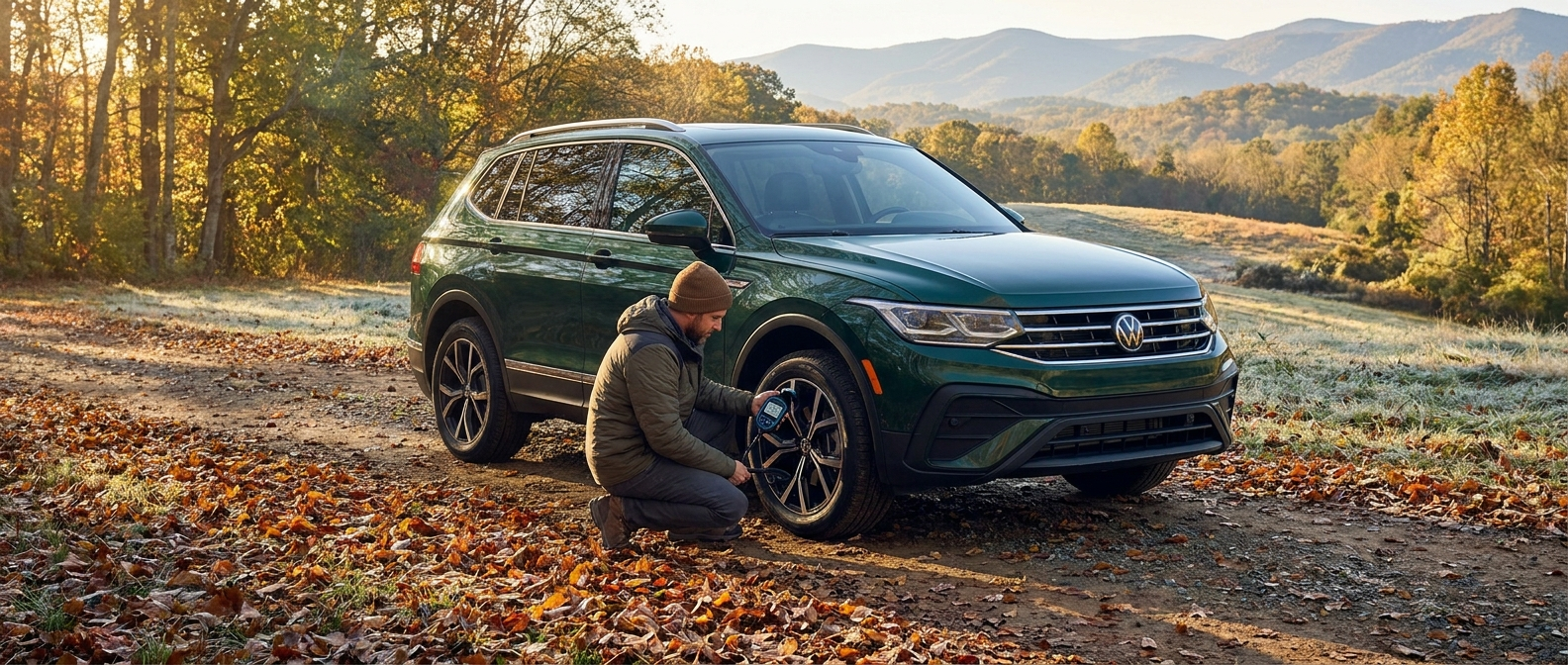
2026 Volkswagen Jetta entering a downtown Spartanburg SC parking garage

Your Downtown Spartanburg Parking Playbook for Volkswagen Drivers

The old free lot between Daniel Morgan and Spring is gone. Permanently. The City of Spartanburg closed it in January 2026 for the hotel and office development remaking that entire block, and several other surface spaces vanished with the city-county government complex construction that followed. Downtown parking hasn't gotten harder overall (more than 3,300 spaces remain in five city garages), but it's gotten different. Muscle memory from two years ago will send you straight into a dead end. So here's the updated playbook, written for drivers in Volkswagen vehicles, so you reach your office meeting, your lunch, or your afternoon appointment without the circular searching that turns a 10-minute trip into 40. The 2026 Volkswagen Jetta is the benchmark we start with for a reason. It carries the smallest footprint in the lineup and the tightest turning circle, which matters the moment you enter a garage ramp. Where Do You Park, and When? Downtown Spartanburg runs five active city garages right now, and the honest answer is that all of them will hold your Volkswagen, but which one you target depends on your destination and your arrival time, because the morning window genuinely decides whether you roll in clean or circle for a spot. The City of Spartanburg operates all five. The garage you want and the hour you show up work together, so read the table with both in mind. Garage Spaces Best for (offices/destinations) Arrive by Fit note Kennedy St. Garage 750 Montgomery Building, Downtown Library, East Main offices 8:30 AM Ample clearance; standard ramp angles; Jetta, Taos, Tiguan all fine St. John St. Garage 750 USC Upstate Johnson College of Business, Courthouse area 8:45 AM Large capacity; less foot-traffic pressure mid-morning Dunbar St. Garage 650 East Main Street restaurants and offices, Rockers Brewing area 8:15 AM Adjacent to East Main corridor; fills faster on event evenings Magnolia St. Garage 554 Morgan Square, Chapman Cultural Center, Barnet Park offices 8:00 AM Smallest garage; closest to Morgan Square; fills first on busy days Fifth Third Park Garage 655 North end offices, Hub City Spartanburgers games Free on non-game days Free on non-game weekdays; Slider shuttle serves it on event nights The city offers free two-hour parking in all garages, and everything's free after 5 PM and all weekend. Pull a ticket even during free hours (the kiosks require it). Automated payment kiosks take debit or credit at exit. The honest tradeoff: the garages closest to Morgan Square (Magnolia) fill earliest on busy weekday mornings. If your office sits within three blocks of Morgan Square and you're arriving after 8:30 AM, Magnolia's a coin flip. Kennedy or St. John are the safer bets at that hour. Both are easy walks. The Maneuvering and Fit Play Your Volkswagen earns its keep the moment you hit a garage ramp, because Downtown Spartanburg's structures were built for contemporary vehicle sizes, yet the ramp radius and column clearances still reward a driver who isn't wrestling something the size of a living room around the spiral. The margins are small, but you feel every inch of them. The 2026 Jetta's numbers run the friendliest in the lineup for tight garage geometry. It measures 186.5 inches long, 70.8 inches wide (body only, mirrors folded), with a turning circle that Volkswagen specs at 35.8 feet. That turning circle is what matters at the top of a spiral ramp where the painted lane narrows. The Jetta rounds the bend in one clean arc where a larger vehicle needs corrections. You feel it. Shorter than the Jetta by a real margin, the 2026 Taos measures 175.9 inches versus 186.5, which surprises drivers every time they hear it. It's wider at 72.5 inches body-only, but it still fits the standard 8.5-foot stall with room to open a door properly. What it gives up to the Jetta is the lower roofline. The Taos stands 64.5 inches tall, so low-clearance garages are worth a check before you enter. The five city garages aren't an issue, though some private structures near East Main run tighter. At 184.4 inches long and 73 inches wide, the 2026 Tiguan slots comfortably into standard stalls, though you'll notice the extra bulk on the tighter spiral levels. Nothing prevents parking. The vehicle just asks a little more patience from the driver. The Golf GTI lives between the Jetta and the Taos in everyday feel, with similar sedan-class dimensions that make downtown parking genuinely easy. Insider tip: Fold your mirrors before entering a spiral ramp, not after. At the top of the Magnolia or Kennedy garage ramps, passing oncoming vehicles gets tight enough that 9 inches of folded mirror is worth the three seconds it takes at street level. Garage etiquette note: End-of-row stalls next to the elevator core fill last and empty fastest. If you're running behind and the lower levels look full, head straight to the top floor. Downtown Spartanburg's garages feed cameras into a real-time Parking Command Center (connected to Spartanburg PD's Real Time Crime Center), so the top floor stays watched, well-lit, and often empty by 9 AM. Browse our current inventory to see which trims are on the lot today. Next step: The City of Spartanburg's Sparkle City Slider shuttle runs 11 AM to 3 PM and 5:30 to 9:30 PM Monday through Saturday, picking up at Kennedy and Dunbar garages (among others) and circling the downtown core. If your office schedule means arriving after 9 AM, parking at Kennedy and catching the shuttle is a real option, not a compromise. Your Pre-Trip Checklist Before You Head Downtown Get the prep right before you leave, and the rest is just enjoying the drive down I-85 into the city, so run this short list at the kitchen table instead of learning it the hard way from a cone parked in front of your usual lot. Check the City of Spartanburg's interactive parking map before you go (cityofspartanburg.org). Active construction closures are listed there, and they change. What was open on your last visit might have a cone in front of it today. Aim for Kennedy St. or St. John St. if you're arriving between 8:30 and 9 AM. They hold 750 spaces each and consistently have availability at that hour. Target Magnolia St. only if you're arriving by 8 AM. 554 spaces, closest to Morgan Square, and it fills first. Know the valet option. The city offers complimentary valet service at the corner of Dunbar and Magnolia streets. Pull up, hand off, and walk. No hunting required. Fold your mirrors at street level, not on the ramp. Pull a ticket at the kiosk even if you plan to stay under two hours. You'll need it on exit. If it's a Spartanburgers game night, the Fifth Third Park garage is the paid-parking option. Shuttle service runs that evening. The other garages stay free. Give yourself the full walk. All five garages sit within a comfortable walk of downtown office buildings. "A block farther" in Spartanburg isn't a problem. Schedule a service visit before a hot August commute cycle, because South Carolina in August is a stress test for any cooling system. See Current Volkswagen Specials Downtown Spartanburg is mid-transformation right now, and the parking that comes out the other side (including the incoming 1,000-space garage next to the new city-county government complex) is going to be dramatically better. For now, go in with the right garage target, the right arrival time, and a Volkswagen that fits the geometry. That's the play. Go enjoy it. Value Your Trade-In Steve White Volkswagen Spartanburg 2671 Reidville Rd, Spartanburg, SC 29301 (864) 585-2492
2026 Volkswagen Taos driving on a wet Upstate South Carolina highway in summer rain near Duncan and Lyman

Taos FWD vs. 4MOTION AWD: What Duncan and Lyman Drivers Should Know

A fair question to settle before you pick a Taos has nothing to do with paint or trim. It comes down to one thing, whether you actually need the AWD. Good question, and the answer tends to catch folks off guard. For a lot of Upstate SC drivers, you probably don't need it. Still, "probably" is carrying real weight in that sentence, and the nuance pays off before you decide. For Duncan and Lyman commuters, the Taos FWD earns an EPA-estimated 31 combined MPG and holds 27.9 cubic feet of cargo (genuinely strong numbers). Add 4MOTION if your week regularly includes wet I-85 on-ramps, gravel access roads, or loaded weekend trips to Lyman Lake where launch traction matters. Browse the 2026 Volkswagen Taos lineup at Steve White Volkswagen Spartanburg How Does Volkswagen's 4MOTION All-Wheel Drive Actually Work? Volkswagen's 4MOTION isn't a traditional always-on all-wheel-drive setup, and that surprises plenty of Taos shoppers, because the car runs on its front wheels most of the time and only routes power to the rear when the road actually asks for it, which reshapes your FWD-versus-AWD decision more than you'd think. Most shoppers picture it backwards. Under the skin, the 2026 Taos 4MOTION uses an electronically controlled torque-coupling clutch. Cruise on dry pavement and the car behaves essentially like a front-wheel-drive vehicle. The moment its sensors catch wheel slip or a spike in traction demand, the system pushes up to 50 percent of available torque rearward in milliseconds. You never flip a switch. It reads the road for you. All of that behavior is why the FWD-versus-AWD choice gets more nuanced than a simple "more is better" framing. The system is reactive and efficient by design, not a permanent drag on your fuel economy. Here the two configurations line up across the specs that matter most for an Upstate SC daily driver. Spec FWD (1.5T, 8-speed auto) 4MOTION AWD (1.5T, 8-speed auto) EPA fuel economy 28 city / 36 hwy / 31 combined 25 city / 33 hwy / 28 combined Fuel tank capacity 13.2 gallons 14.5 gallons Est. combined range ~409 miles ~406 miles Cargo (seats up) 27.9 cu ft 24.9 cu ft Cargo (seats folded) 65.9 cu ft 60.2 cu ft NHTSA overall safety 4 out of 5 stars 4 out of 5 stars NHTSA rollover resistance 5 stars (17.4% rollover risk) 5 stars (14.7% rollover risk) 4MOTION standard? No Yes (SEL) or available (S, SE, SE Black) Trims offering 4MOTION N/A S, SE, SE Black, SEL A few numbers stand out here. Both configurations earn 4 stars overall, per the NHTSA's testing of the 2026 Taos. The AWD model shows a lower rollover risk percentage, which tracks with the lower center of gravity the added hardware brings. The cargo difference (3 fewer cubic feet with seats up, about 5.7 fewer with seats folded) is worth weighing if you're tight on hauling space. The gap is small but real. Which Drivetrain Do Duncan and Lyman Drivers Actually Need? For most Upstate driving, the FWD Taos covers you fine, and only a few habits (wet-weather merging, gravel launches, hauling a full load) tip the scale toward 4MOTION, so the answer leans less on where you live and more on how and what you haul in a given week. Upstate South Carolina isn't a Snowbelt market. Duncan and Lyman don't get the sustained ice and snow that would push AWD from nice-to-have into necessary. Our winter arrives in short, sharp bursts rather than months of frozen road. If snow were the only argument for 4MOTION, we'd steer you toward the FWD and the savings. Snow just isn't the deciding factor here. What Upstate SC does have is summer. Summer here brings heavy, fast-moving thunderstorms that can dump serious rain on I-85 inside a few minutes. Merge onto a wet on-ramp near Duncan at highway speed with groceries or gear in back, and that reactive rear-torque engagement is doing genuine work. Worth a thought too are the regular runs along SC Highway 292 between Duncan and Lyman, which crosses the Middle Tyger River and can throw surface-water drainage quirks at you in a downpour. The 4MOTION system responds fast, calibrated for that split-second of lost grip, not for deep mud. The FWD Taos makes great sense for a solo commuter or a couple running the I-85 corridor into Greenville or Spartanburg, parking in structured lots, and leaning on fuel efficiency plus maximum cargo flexibility. The EPA rates FWD at 28 city / 36 highway, which is strong for a non-hybrid compact SUV. Keep all 27.9 cubic feet behind the rear seat, and you've got real utility. Flip to 4MOTION when your household adds a new driver, when you tow a kayak trailer or bikes to Lyman Lake on gravel launch-area roads, or when you just want more confidence in the wet with the system working quietly in the background. Range between the two is basically a wash (409 miles FWD vs. 406 miles AWD, per the EPA estimates), even though combined MPG runs 3 points lower for AWD, because the AWD model carries a larger 14.5-gallon tank. One limitation is worth stating plainly. The 2026 Taos carries no tow rating, per Volkswagen. Need to pull a boat trailer to the lake? The Volkswagen Tiguan steps up with a 1,800-pound tow capacity and is worth a conversation. And if you really need third-row seating for a bigger family, the full Volkswagen inventory on our lot includes the Atlas, which sits in a different category entirely. Driver profile Better fit Daily I-85 commuter, dry roads prioritized FWD (better MPG, more cargo room) Household with a newer driver, wet I-85 driving 4MOTION (reactive traction confidence) Weekend trips to Lyman Lake, gravel access 4MOTION (predictive torque transfer on loose surfaces) Budget-focused first Volkswagen buyer FWD (meaningful combined MPG advantage) Needs towing capability Consider Tiguan (not Taos) See Current Volkswagen Taos Offers Quick Glossary: Taos Tech Terms Explained Term What it means in plain language 4MOTION Volkswagen's branded all-wheel-drive system; uses a torque-coupling clutch to send power rearward on demand Torque coupling The electronically controlled clutch mechanism that decides, in milliseconds, how much power goes to the rear axle IQ.Drive Volkswagen's suite of standard driver-assistance tech on all 2026 Taos trims: adaptive cruise, lane-centering, emergency braking, blind-spot monitoring 8-speed automatic The transmission used on all 2026 Taos trims, FWD and AWD alike, a change from the 7-speed dual-clutch used on earlier AWD Taos models What This Means When You're Ready to Move on a Taos When you come in undecided, our take is that the 2026 Taos is a seriously capable compact SUV either way, so the real decision is the drivetrain, and it costs you something in both directions, more cargo and city MPG with FWD, or traction that reacts before you feel the slip with 4MOTION. Choose FWD and you gain 3 cubic feet of cargo and stronger city MPG (handy if you load up every weekend). Choose 4MOTION and you get traction that reacts before you feel the slip, which counts for more on wet South Carolina asphalt than it would in a drier climate. Plenty stays the same between the two. Both carry the 1.5-liter turbo making 174 horsepower and 184 pound-feet of torque, the standard IQ.Drive safety suite on every trim, the digital cockpit, and the 4-star NHTSA overall safety rating. The Taos earns that rating no matter which axle is doing the work. Where our team leans comes down to your commute. If you're on I-85 most mornings between Duncan and Spartanburg and you want a compact SUV that won't rattle you in an August downpour, 4MOTION is worth the conversation. If you're a solo driver mostly on dry roads with a tight budget, the FWD's fuel-efficiency case is real and worth a serious look. Come in and we'll put both in the same conversation, no pressure. Explore financing options at Steve White Volkswagen Spartanburg By the Steve White Volkswagen Spartanburg Team | August 2026 Frequently Asked Questions Does the 2026 Volkswagen Taos 4MOTION stay in AWD all the time? No. The 4MOTION system in the 2026 Taos operates primarily in front-wheel drive under normal cruising conditions. The electronically controlled torque-coupling clutch engages the rear axle automatically when sensors detect wheel slip or a demand for additional traction, distributing up to 50 percent of torque rearward. You don't activate it manually (it works in the background without any input from the driver). Is the FWD Taos a meaningful step down in safety compared to the 4MOTION model? Not in the crash-test data. Per NHTSA testing, both the FWD and 4MOTION versions of the 2026 Taos earn the same overall 4-star safety rating. Both also earn 5 stars for rollover resistance, though the AWD model shows a slightly lower rollover risk percentage (14.7 percent versus 17.4 percent for FWD), likely due to the additional weight of the AWD hardware lowering the center of gravity. The standard IQ.Drive safety suite (including forward collision warning, automatic emergency braking, and blind-spot monitoring) comes on every Taos trim regardless of drivetrain. What's the real-world fuel economy difference between FWD and 4MOTION? The EPA estimates 31 combined MPG for FWD and 28 combined for 4MOTION, a 3-point difference. However, the AWD model carries a larger 14.5-gallon fuel tank compared to the FWD's 13.2 gallons, so the estimated range (409 miles FWD vs. 406 miles AWD) is nearly identical in practice. FAQ: Does the 2026 Volkswagen Taos 4MOTION stay in AWD all the time? No. The 4MOTION system in the 2026 Taos operates primarily in front-wheel drive under normal cruising conditions. The electronically controlled torque-coupling clutch engages the rear axle automatically when sensors detect wheel slip or a demand for additional traction, distributing up to 50 percent of torque rearward. You don't activate it manually (it works in the background without any input from the driver). Is the FWD Taos a meaningful step down in safety compared to the 4MOTION model? Not in the crash-test data. Per NHTSA testing, both the FWD and 4MOTION versions of the 2026 Taos earn the same overall 4-star safety rating. Both also earn 5 stars for rollover resistance, though the AWD model shows a slightly lower rollover risk percentage (14.7 percent versus 17.4 percent for FWD), likely due to the additional weight of the AWD hardware lowering the center of gravity. The standard IQ.Drive safety suite (including forward collision warning, automatic emergency braking, and blind-spot monitoring) comes on every Taos trim regardless of drivetrain. What's the real-world fuel economy difference between FWD and 4MOTION? The EPA estimates 31 combined MPG for FWD and 28 combined for 4MOTION, a 3-point difference. However, the AWD model carries a larger 14.5-gallon fuel tank compared to the FWD's 13.2 gallons, so the estimated range (409 miles FWD vs. 406 miles AWD) is nearly identical in practice. Get Pre-Approved for Your 2026 Taos Steve White Volkswagen Spartanburg 2671 Reidville Rd, Spartanburg, SC 29301 (864) 585-2492
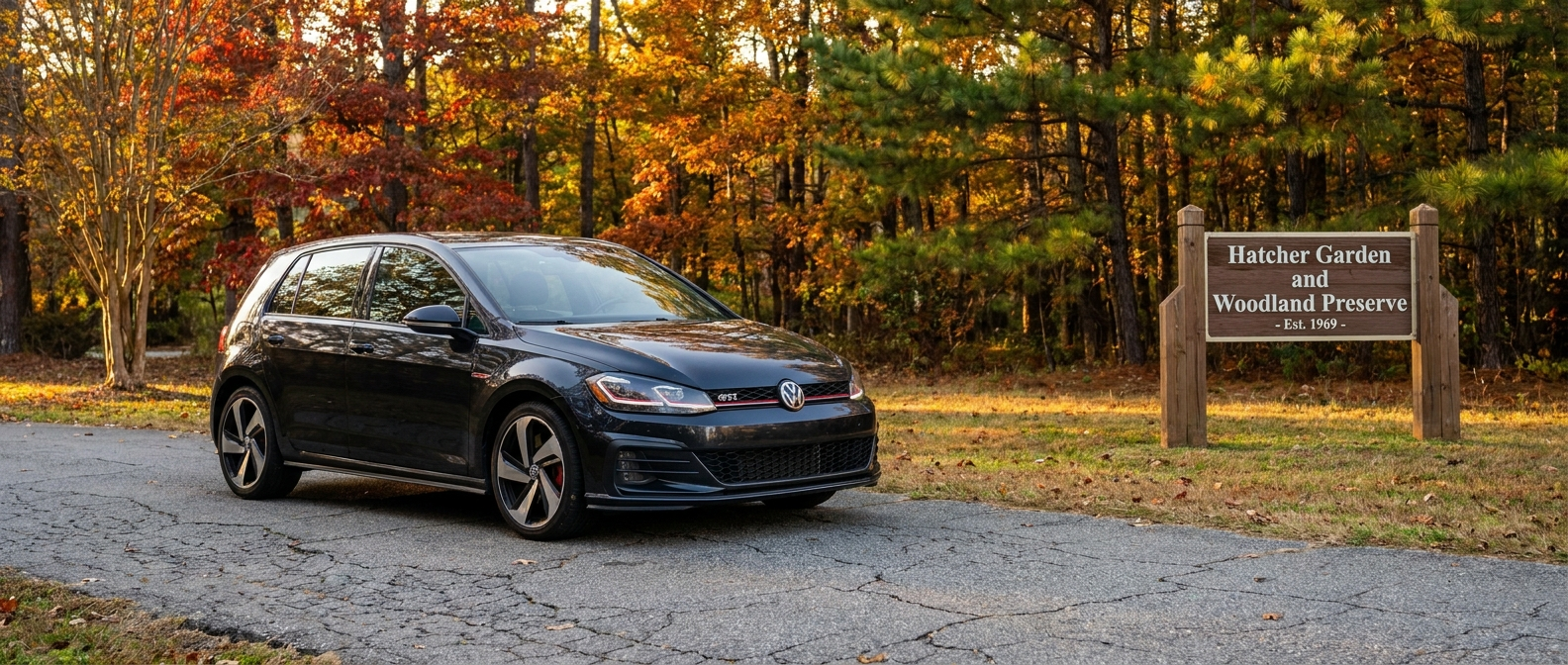
2022 Volkswagen Tiguan parked for school carpool drop-off on a Spartanburg, SC neighborhood street

Volkswagen Tiguan and Atlas by Model Year: The Carpool Sweet-Spot Guide for Spartanburg Drivers

Run carpool along Reidville Road and you need a used Volkswagen that fits a car seat in the second row, keeps its air conditioning steady through a South Carolina August, and won't surprise you with an open recall the week school starts. The ask is specific. And the model year you pick matters more here than most guides bother to tell you. Start with the piece that changes the math. There's a documented NHTSA recall covering 143,053 Atlas vehicles from the 2018 through 2021 model years that could deactivate the front-passenger airbag when a person was actually sitting there. When you're driving someone else's kid, that shifts the calculus. The good news is that the best used years for both the Tiguan and the Atlas sit well within reach for most used-car budgets, and we see enough of these come through our service bays to know what holds up and what doesn't on this corridor. Browse our pre-owned Volkswagen inventory to see what's currently available on our lot. The short version Tiguan sweet spot: 2022-2024 (third-generation refresh, cleaner recall record, standard driver-assist) Atlas sweet spot: 2022-2023 (post-recall-window value, revised interior, three-row carpool capacity) Years to verify carefully before buying: any 2018-2021 Atlas (run the VIN through NHTSA.gov for the PODS airbag recall status) Years to approach cautiously on the Tiguan: 2018-2019 (rear coil spring recall, seat-belt webbing recall on some 2018s) Always confirm: pull a vehicle history report and check NHTSA.gov with the 17-digit VIN before signing anything Which Tiguan Years Hit the Sweet Spot for Carpool Duty? The 2022 through 2024 Tiguan models are the years we'd point a Reidville Road carpool driver toward first, mostly for the cleaner recall record and the standard driver-assist, though supply on the 2024 stays thin and you'll still want a VIN check before you sign. Here's why that matters for how you actually use this one. Model Year Generation Notable for Carpool Key Watch Items 2018 2nd-gen launch Third row added, Apple CarPlay standard Seat-belt webbing recall (some builds); rear coil spring recall; powertrain complaints on record with NHTSA 2019 2nd-gen R-Line trim added; minor updates Rear coil spring recall (same as 2018); five open recalls documented 2020 2nd-gen Wireless charging available; adaptive cruise standard on SE Fewer complaints than 2018-2019; still worth a VIN check 2021 2nd-gen 8-inch touchscreen standard on SE; adaptive cruise standard Recall count increased slightly vs 2020; DSG behavior worth test-driving 2022 2nd-gen refresh Full exterior redesign; blind-spot monitor now standard; driver-assist expanded Cleaner record than 2018-2021 window; check build date for any lingering items 2023 2nd-gen refresh Carries 2022 updates; materials improved Strong choice; fewer complaint years on record 2024 2nd-gen Pre-third-gen value; full driver-assist suite Very clean used-market entry; limited supply Volkswagen described the 2022 Tiguan as a major cosmetic overhaul, touching the grille, bumper, headlights, and front fenders, and it also expanded the availability of advanced driver-assist technologies across trims. On the morning school run, rear cross-traffic alert and blind-spot monitoring are the features you lean on when you back out of a packed lot with a dozen parents and strollers around you. You use them every drop-off. Where we'd slow down is the 2018-2019 window. Per NHTSA's recall records, certain 2018 and 2019 Tiguan vehicles were recalled for rear suspension coil springs that could fracture before their time, damaging a rear tire and causing loss of vehicle control. NHTSA also documents a seat-belt webbing recall specific to certain 2018 Tiguan LWB vehicles, where the front seat-belt webbing could tear during a crash. Both of those are fixable recalls. The open question is whether they've been closed on the exact VIN in front of you. See Tiguan inventory at Steve White Volkswagen Spartanburg Which Atlas Years Should You Watch Out For? The Atlas is the three-row answer for drivers who need to move five or six people regularly, and it's a genuinely capable carpool vehicle when you pick the right year, though the wrong year hands you a recall backlog that takes real attention to sort out before it's safe for other families' kids. Pick carefully and it earns its keep. The PODS airbag issue is the one we watch most closely here. Per NHTSA's documented recall (campaign 69FB), certain 2018 through 2021 Atlas vehicles and 2020 Atlas Cross Sport vehicles experienced a potential fault in the passenger occupant detection system (PODS) wiring that could deactivate the front-passenger airbag when a seat occupant was present. NHTSA and Volkswagen's owner notification letters explicitly advised not to allow anyone in the front passenger seat until the repair was complete. In a family-hauler context, that carries weight. A later NHTSA campaign (24V464) extended coverage through the 2024 Atlas and 2020-2024 Atlas Cross Sport, so the repair is available, though confirming it's closed on any specific used vehicle still takes a VIN lookup. The 2018 Atlas carries the most documented complaint history of any year in the lineup. Between NHTSA and third-party complaint databases, the 2018 model piled up a complaint count that runs well beyond later years, and that first model year also saw a separate rear coil spring recall (campaign 42J2/42J3) alongside the PODS issue. We don't reflexively tell anyone to skip a whole model year, but 2018 takes the most verification work. Explore Atlas options in our pre-owned inventory Browse Atlas Cross Sport availability The year-by-year breakdown for the Atlas shakes out like this. Atlas Year Sweet Spot? Key Issues to Verify via VIN What You Get 2018 No (verify heavily) PODS airbag recall; coil spring recall; highest complaint volume Launch-year value, three rows, base 2.0T or VR6 2019 Verify PODS airbag recall; coil spring recall; rear side-airbag recall on some builds Minor driver-assist additions vs 2018 2020 Verify PODS recall applies; significantly fewer complaints than 2018-2019 Better reliability record; Atlas Cross Sport launched this year 2021 Verify PODS recall applies; mid-cycle facelift with updated grille and interior Refreshed look; smoother interior materials; VR6 still available 2022 Sweet spot Check build date for any lingering open items Cosmetic and interior updates; outside main PODS window for most builds 2023 Sweet spot Fewer documented complaints than 2022 Solid used-market choice; pre-2024-refresh value 2024 Strong pick if budget allows Confirm PODS extended recall (24V464) is closed via VIN Major redesign; leatherette standard across trims per Volkswagen's 2024 Atlas specs Per NHTSA's documented recall campaign 69FB, certain 2018-2021 Atlas and 2020 Atlas Cross Sport vehicles had a PODS wiring fault that could deactivate the front-passenger airbag when occupied. Always run the VIN before buying. The 2022 and 2023 Atlas sit in what we call the value corridor. The cosmetic and materials updates from the 2022 facelift are present, the most common recall window is largely in the rearview, and the used market hasn't priced them at 2024-refresh levels yet. For a Reidville Road carpool driver who needs three rows and German-engineered ride quality, that's a real sweet spot. Which Year Fits Which Carpool Driver? The right year comes down to how you use it, how many rows you need, and how much pre-purchase verification you're willing to do, so a six-seat daily hauler and a fuel-conscious two-kid commute won't land on the same answer. Reidville Road connects Spartanburg to the town of Reidville. You need three rows and you're hauling five or six people regularly. Look hard at a 2022 or 2023 Atlas. Run the VIN through NHTSA.gov before you make an offer, confirm the PODS recall is closed, and you've got a legitimately spacious family hauler. Volkswagen's Atlas specs put the 2026 model's 2.0-liter turbocharged four-cylinder at 269 horsepower and 273 lb-ft of torque, and the 2022-2023 Atlas carries that same turbocharged platform, with the earlier generation's VR6 also available on higher 2022 trims if you track one down. Fuel economy on the 2026 Atlas with front-wheel drive is EPA-rated at 20 city / 27 highway, which reflects the current generation's slight efficiency gains over the 2022-2023 units. For most used budgets, those earlier years stay the practical choice. You're running two or three kids and fuel economy matters on a daily I-85 or Reidville Road commute. The Tiguan is the better fit here. The EPA rates the 2026 Tiguan at 25 city / 32 highway for most FWD trims, a meaningful edge over the three-row Atlas on a daily-driver basis. A 2022 or 2023 used Tiguan carries the refreshed exterior and the expanded driver-assist suite, and skips the PODS recall complexity. Five seats covers most Spartanburg carpool runs. You have a tighter budget and you're not averse to doing recall verification work. A 2020 or 2021 Atlas with a documented repair history earns a serious look. The 2020 saw far fewer complaints than 2018-2019 on record, and if the PODS recall is closed on the VIN in front of you, you get a roomy three-row without paying later-year money. Plan on a pre-purchase inspection at a Volkswagen service center so someone who knows the platform can put eyes on it. You want the newest used Volkswagen you can find with the cleanest record. A 2024 Atlas or a 2024 Tiguan sits at the top of the used spectrum right now. The 2024 Atlas redesign was the most significant update the nameplate has seen, with leatherette seating standard across the board per Volkswagen's own 2024 Atlas documentation. Supply is still thin on those. We'd rather tell you that straight than steer you toward the wrong year. One thing our service team keeps running into on higher-mileage cars. The DSG dual-clutch transmission can develop a low-speed shudder when service intervals have been stretched. It's not universal, and it's usually addressable with fluid service. It shows up more on high-mileage examples that skipped scheduled maintenance. Run the climate control on full during a test drive, sit in stop-and-go traffic if you can replicate it, and feel for that hesitation at parking-lot speeds. That's the tell, and it's a Spartanburg-summer test that works even without a lift. See Current Volkswagen Offers Ready to shop used Volkswagen models with a Spartanburg team that knows this platform? Our pre-owned inventory turns regularly, and we're straightforward about recall history. Frequently Asked Questions What are the best used Volkswagen Tiguan years for a family carpool? The 2022 through 2024 Tiguan models are the years we recommend most confidently for carpool use. The 2022 refresh brought an updated exterior design, blind-spot monitoring as standard equipment, and an expanded driver-assist suite across more trims. The 2018 and 2019 Tiguan had documented NHTSA recalls for rear suspension coil springs that could fracture and damage a rear tire, plus a seat-belt webbing recall on certain 2018 builds. Those recalls are repairable, but confirming they're closed on the specific VIN you're considering is a necessary step before purchase. Is the Volkswagen Atlas safe to buy used for hauling kids? The Atlas is a genuinely capable family SUV, but year selection matters. Per NHTSA's documented recall campaign 69FB, certain 2018 through 2021 Atlas vehicles had a passenger occupant detection system (PODS) wiring fault that could deactivate the front-passenger airbag when someone was sitting there. A separate NHTSA campaign (24V464) later extended coverage through 2024 Atlas and 2020-2024 Atlas Cross Sport vehicles. Always run the 17-digit VIN through NHTSA.gov before purchasing any used Atlas to confirm all open recalls are closed. The 2022 and 2023 model years sit outside the main PODS recall window for most build dates and represent the best combination of value and verified reliability. What is the fuel economy of the 2026 Volkswagen Tiguan? The EPA rates the 2026 Volkswagen Tiguan at 25 city / 32 highway / 28 combined MPG for most front-wheel-drive trims, and 22 city / 30 highway / 25 combined for 4MOTION all-wheel-drive trims. The base S trim with front-wheel drive achieves 26 city / 34 highway. These figures reflect the 2026 third-generation model; if you're buying a used 2022-2024 Tiguan, expect figures in a similar range depending on trim and drivetrain. The Tiguan consistently delivers better fuel economy than the three-row Atlas, which the EPA rates at 20 city / 27 highway / 23 combined for FWD models in the 2026 generation. FAQ: What are the best used Volkswagen Tiguan years for a family carpool? The 2022 through 2024 Tiguan models are the years we recommend most confidently for carpool use. The 2022 refresh brought an updated exterior design, blind-spot monitoring as standard equipment, and an expanded driver-assist suite across more trims. The 2018 and 2019 Tiguan had documented NHTSA recalls for rear suspension coil springs that could fracture and damage a rear tire, plus a seat-belt webbing recall on certain 2018 builds. Is the Volkswagen Atlas safe to buy used for hauling kids? The Atlas is a genuinely capable family SUV, but year selection matters. Per NHTSA's documented recall campaign 69FB, certain 2018 through 2021 Atlas vehicles had a passenger occupant detection system (PODS) wiring fault that could deactivate the front-passenger airbag when someone was sitting there. Always run the 17-digit VIN through NHTSA.gov before purchasing any used Atlas to confirm all open recalls are closed. What is the fuel economy of the 2026 Volkswagen Tiguan? The EPA rates the 2026 Volkswagen Tiguan at 25 city / 32 highway / 28 combined MPG for most front-wheel-drive trims. The Tiguan consistently delivers better fuel economy than the three-row Atlas, which the EPA rates at 20 city / 27 highway / 23 combined for FWD models in the 2026 generation. Value Your Current Vehicle Steve White Volkswagen Spartanburg 2671 Reidville Rd, Spartanburg, SC 29301 (864) 585-2492
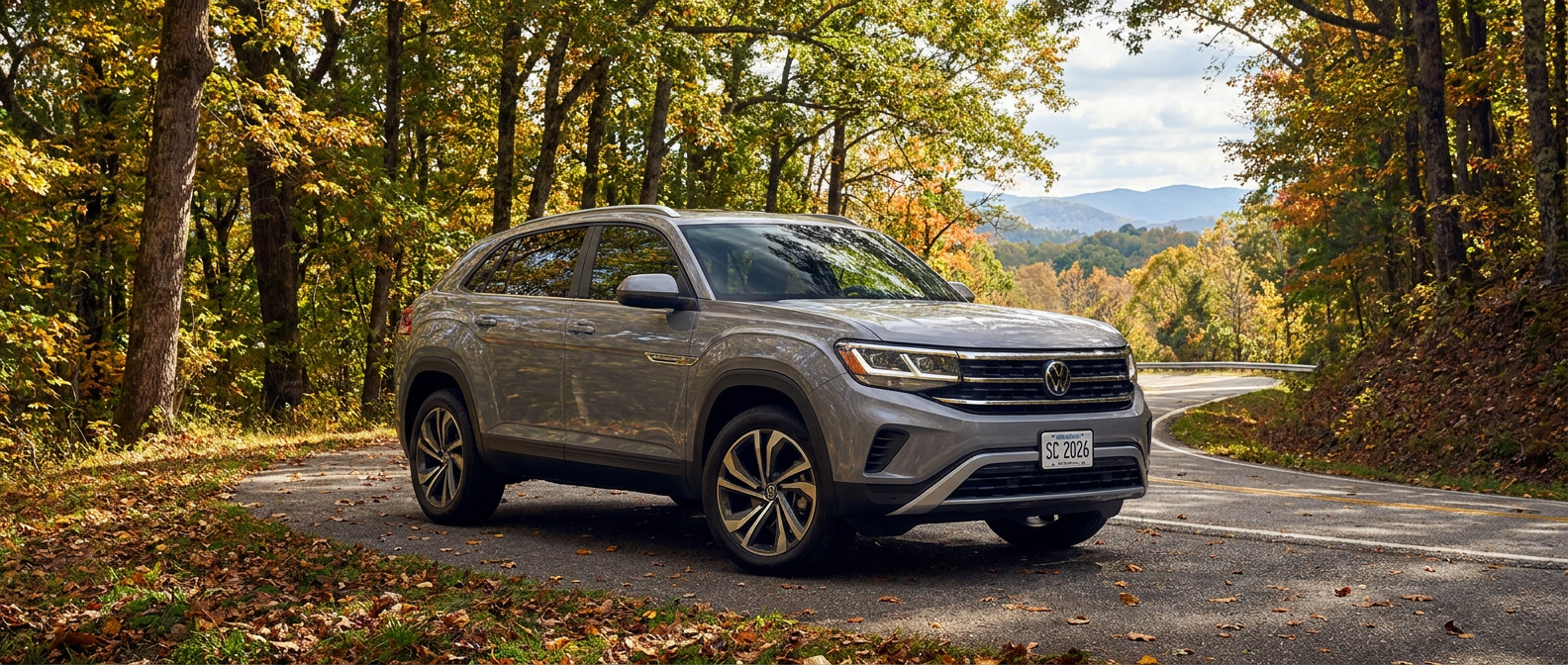
2026 Volkswagen Jetta on a Spartanburg, SC overpass with I-85 and Blue Ridge foothills in the background

Volkswagen Jetta vs. Hyundai Elantra: Which Sedan Actually Works for the Spartanburg Commute?

In this article What's the Real Difference Between These Two Sedans? Does the Transmission Actually Matter for Daily Driving? Passenger Room and Practicality Safety Features: Which One Has Better Standard Coverage? So Which Sedan Should Spartanburg Commuters Pick? Putting real I-85 miles on a car every week changes the math, and the answer here isn't the one the spec sheet points to. The 2026 Volkswagen Jetta and the 2026 Hyundai Elantra sit close enough on price and efficiency that most comparison articles call it a draw. We don't. For the specific demands of Spartanburg's daily commute, these two sedans pull in noticeably different directions. The short version The Jetta carries 184 lb-ft of torque arriving low in the rev range; the Elantra delivers 132 lb-ft but not until 4,500 rpm. That gap is real on I-85 on-ramps. The Elantra's base SE trim posts a slightly higher EPA-estimated 35 mpg combined versus the Jetta's 33-34 mpg combined. Honest win for Hyundai. The Elantra is genuinely roomier inside: 42.3 inches of front legroom versus the Jetta's 41.1, and 38.0 inches of rear legroom versus 37.4. Volkswagen's IQ.DRIVE suite (adaptive cruise with Travel Assist, Front Assist with auto-braking, blind-spot monitoring) comes standard on every 2026 Jetta trim. On the Elantra, driver-assist content varies by trim level. Bottom line: tall drivers and passengers lean Elantra. Drivers who prioritize feel, safety tech, and daily-highway punch lean Jetta. What's the Real Difference Between These Two Sedans? The bigger difference between these two is character, and it shows up in how each car does the daily job rather than on the spec sheet, since both are front-wheel-drive compact sedans with no AWD option and roughly matched fuel economy. Both cover the basics well. Where they split is the feel. Spec 2026 Volkswagen Jetta 2026 Hyundai Elantra SE Engine 1.5L turbo I-4 2.0L naturally aspirated I-4 Horsepower 158 hp 147 hp Torque 184 lb-ft 132 lb-ft Transmission 8-speed automatic CVT EPA City / Hwy / Combined 29 / 40 / 33-34 mpg 31 / 40 / 35 mpg Front Legroom 41.1 in 42.3 in Rear Legroom 37.4 in 38.0 in Cargo Space ~14.1 cu ft 14.2 cu ft NHTSA Overall 5 stars 4 stars (overall) Standard Driver Assists Full IQ.DRIVE suite Varies by trim The EPA rates the Jetta at 29 city / 40 highway / 33-34 combined. The EPA rates the Elantra SE at 31 city / 40 highway / 35 combined. Highway numbers match exactly. The Elantra wins city and combined at the base trim. Call that a verified difference, not a rounding artifact. The torque story runs the other way. Volkswagen's 1.5-liter turbo delivers 184 lb-ft at low revs. Hyundai's 2.0-liter naturally aspirated engine produces 132 lb-ft at 4,500 rpm. On the interstate, that gap shows up right where you feel it, at the merge and the pass. The Jetta's turbo delivers 52 more lb-ft of torque than the Elantra's base engine, and it arrives much earlier in the rev range, making highway merges and passing feel more effortless without pressing the Jetta harder. Does the Transmission Actually Matter for Daily Driving? Yes, it matters more than the raw numbers suggest, because the Elantra runs a continuously variable transmission and the Jetta runs an 8-speed conventional automatic, and those two setups behave differently the moment you ask for hard acceleration even though they feel nearly identical at a steady cruise. The delivery is where you notice it. CVTs are smooth and efficient, and the Elantra's does its job well. Under a normal cruise, you won't notice much difference at all. But ask for hard acceleration from 65 mph on a highway on-ramp, and a CVT tends to hold a flat, buzzy note while the engine builds speed. The Jetta's 8-speed steps through its gears in a way that feels more deliberate and more predictable. It's a subjective thing, we'll grant. We also hear about it consistently from drivers who commute by highway and ask us about long-term fatigue. The Jetta GLI goes further with a 6-speed manual or 7-speed DSG option if that's your preference, though that's a different budget conversation entirely. For the standard Jetta, the 8-speed automatic paired with that low-end torque means the car moves off a complete stop with authority. Spartanburg drivers know the Reidville Road lights to the I-85 ramp by heart. That sequence is where torque delivery earns its keep. See Current Volkswagen Specials Passenger Room and Practicality Give Hyundai its due here, because the Elantra is measurably larger inside than the Jetta, not by a huge margin but verifiably, with 42.3 inches of front legroom versus the Jetta's 41.1 inches and 38.0 inches of rear legroom versus 37.4. The Elantra's total passenger volume checks in at 99.4 cubic feet. The Jetta measures 94.7 cubic feet without a sunroof. Browse our pre-owned sedan inventory if you're flexible on model year and want to compare what's on the lot. If you're six-foot-two or you regularly carry adults in the back seat, the Elantra's extra room stops being a talking point and becomes the reason to buy it. Cargo space comes out essentially even, 14.2 cubic feet in the Elantra against 14.1 in the Jetta. The Jetta's interior doesn't feel cramped. It feels measured, tight the way a well-engineered German car tends to feel tight. What it lacks in raw cubic footage it makes up for somewhat in dashboard quality and tactility (harder things to put a number on). Sit in both before deciding. Team Observation: When the Jetta's dashboard was redesigned for 2025 and carried forward into 2026, it made a noticeable jump in feel for a car in this segment. The 8-inch touchscreen, Climatronic touch climate control, and 15-watt wireless charging come standard. That's legitimate mid-market German-car experience at a compact-car price point. Safety Features: Which One Has Better Standard Coverage? Both cars are safe and the crash ratings show it, but the more useful split for a commuter is what comes standard on a base trim, because per NHTSA the 2026 Volkswagen Jetta earned a five-star overall safety rating while the NHTSA rates the 2026 Elantra at four stars overall. The rating gap isn't the most useful distinction here. What you get on a base trim without optioning up tells you more. Volkswagen's IQ.DRIVE suite comes standard across the entire 2026 Jetta lineup. That includes Travel Assist, which pairs adaptive cruise with lane-centering, plus Front Assist with automatic emergency braking and pedestrian detection, blind-spot monitoring, rear traffic alert, and Emergency Assist. Per NHTSA, the 2026 Jetta holds that five-star overall result with those features baked in at the S trim. On the Elantra side, the available driver-assist content changes with each trim level. An Elantra SE can be configured with fewer of these features than a Jetta S. Worth checking trim by trim if safety tech is a deciding factor for you. For someone who drives I-85 daily, adaptive cruise with lane assist takes real fatigue out of a long commute. Getting it standard, without a trim upgrade, matters. So Which Sedan Should Spartanburg Commuters Pick? Neither car is the wrong answer, since both are genuinely good compact sedans in 2026, but the choice splits cleanly by driver profile, so drive one before you commit and let the differences you actually feel settle it. The split is easier to see once you frame it by who's behind the wheel. Choose the 2026 Volkswagen Jetta if you prioritize a connected, confident highway driving feel; you want adaptive cruise control and Front Assist standard on every trim without shopping trim levels; you value the 8-speed traditional automatic over a CVT; and you find the interior quality and German-engineering character worth the tradeoff in raw interior volume. Choose the 2026 Hyundai Elantra if interior space is the primary factor, especially for taller drivers or passengers; you want the best base-trim fuel economy, the EPA's 35 mpg combined on the SE; or you're attracted to the Elantra Hybrid's 51-54 mpg combined figures, which are genuinely in a different efficiency league. The Elantra's extra interior room and slightly better base MPG are real advantages, and we won't pretend they aren't. What the Jetta gives back is a more driver-connected daily experience, a stronger torque foundation for highway use, and a standard safety-assist suite that doesn't send you into the trim chart. Our team at Steve White Volkswagen Spartanburg is happy to walk you through either car. Come drive the Jetta and decide for yourself whether the character lands for you. Frequently Asked Questions Does the Volkswagen Jetta get better gas mileage than the Hyundai Elantra? Not at the base trim. The EPA rates the 2026 Elantra SE at 31 city / 40 highway / 35 mpg combined, while the EPA rates the 2026 Volkswagen Jetta at 29 city / 40 highway / 33-34 mpg combined. Highway efficiency is identical at 40 mpg. The Elantra wins on city and combined at the base level. If fuel economy is the top priority, the Elantra standard or its Hybrid variant (rated up to 54 mpg combined by the EPA) is the stronger choice. The Jetta's advantage is not in raw efficiency but in its turbo torque delivery, 8-speed automatic transmission, and standard IQ.DRIVE safety suite. Is the Volkswagen Jetta safer than the Hyundai Elantra? Per NHTSA crash testing, the 2026 Volkswagen Jetta earned a five-star overall safety rating. The NHTSA rates the 2026 Hyundai Elantra at four stars overall. Beyond the crash ratings, the Jetta's practical safety advantage for commuters is that Volkswagen's full IQ.DRIVE suite (Travel Assist with adaptive cruise and lane centering, Front Assist with automatic emergency braking, blind-spot monitoring, and rear traffic alert) comes standard on every 2026 Jetta trim, including the base S model. On the Elantra, driver-assist availability varies by trim. For a driver who wants those features without navigating trim levels, the Jetta's standard coverage is a meaningful advantage. Value Your Trade-In Steve White Volkswagen Spartanburg 2671 Reidville Rd, Spartanburg, SC 29301 (864) 585-2492
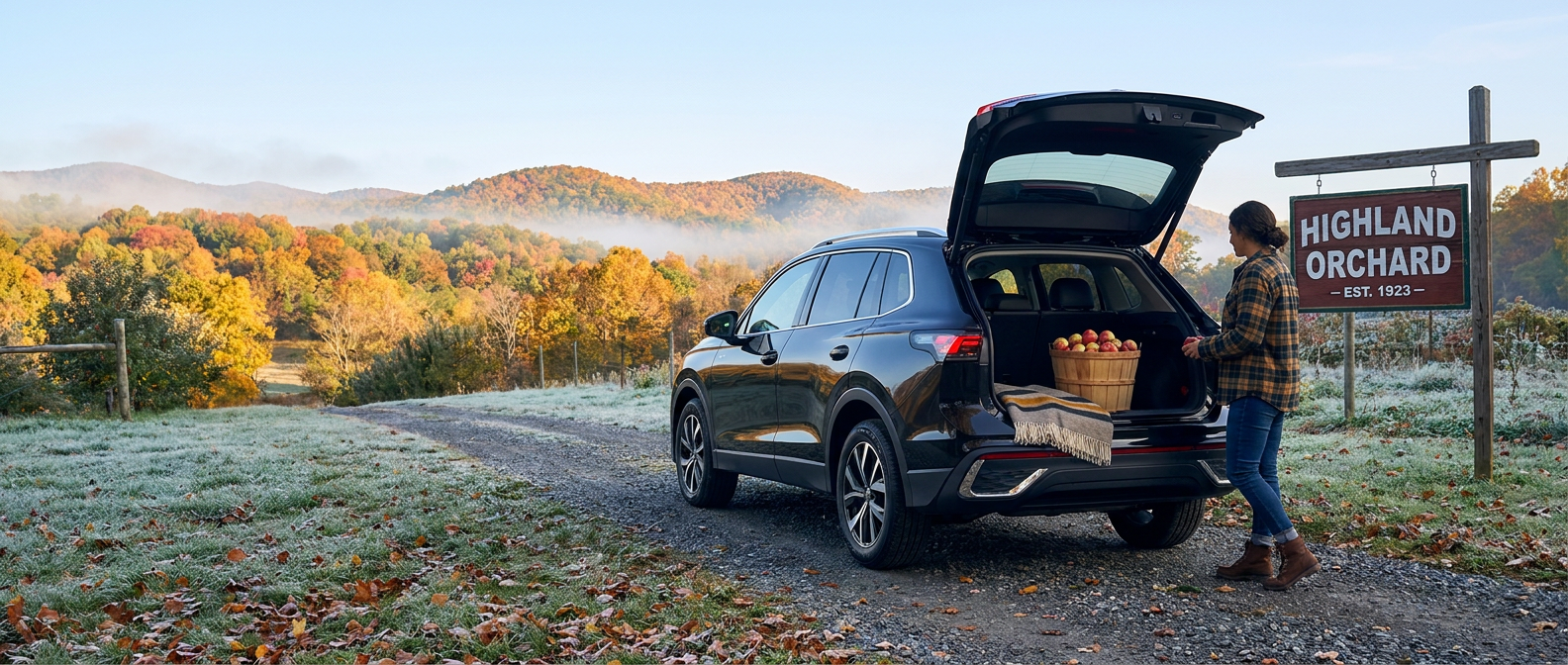
4 Volkswagen Vehicles Worth Considering If You Study at Converse University

In this article The Ranking The Jetta: Serious Efficiency in a Downtown-Ready Package The Taos: When You're the One Everyone Calls for Airport Runs Pros and Cons: Jetta vs. Taos for Student Life The Golf GTI: Because Some Students Actually Care About the Drive The Tiguan: For Moving In, Moving Out, and Everything Between If you live near Converse University's downtown Spartanburg campus, the car question gets specific fast. The choice isn't only about what's affordable. It comes down to whether a car can squeeze into a metered spot on East Main, keep cool in Upstate SC August heat, handle a run down I-85 to Atlanta or Charlotte when the semester ends, and still feel like a real car rather than a compromise. The 2026 Volkswagen Jetta checks every one of those boxes, and it's our top pick. But the right Volkswagen depends on what kind of student driver you are, so we ranked four options by real use-case below. The Ranking Rank Pick Best For Standout Spec 1 Jetta Daily efficiency, tight urban parking EPA-rated 29/40/33 mpg (city/hwy/combined) 2 Taos Students hauling gear or running group trips 27.9 cu ft cargo behind rear seats (FWD) 3 Golf GTI Driving enthusiasts who refuse to own a boring car 241 hp, 7-speed DSG, 4-door hatchback 4 Tiguan Move-in hauler that doubles as a daily driver 33.8 cu ft cargo seats up, 69.8 cu ft folded The Jetta: Serious Efficiency in a Downtown-Ready Package Converse University's 70-acre campus sits right in the middle of downtown Spartanburg, which means street parking is part of your life. Parallel parking between two trucks on a residential street near the Converse campus isn't a hypothetical. It is a Tuesday. At 185 inches long, the Jetta fits gaps a compact SUV simply can't. The EPA rates the 2026 Jetta at 29 mpg city and 40 mpg highway on the standard 1.5-liter turbocharged four-cylinder. That 40-mpg highway figure keeps a run down I-85 to Greenville or up toward Charlotte genuinely inexpensive. Under the hood, the 1.5-liter engine produces 158 horsepower and 184 lb-ft of torque through an eight-speed automatic, which is quick enough in traffic without burning extra fuel to get there. Wireless App-Connect is standard for 2026, so you'll connect your phone without a cable. The tradeoff is a sedan trunk. At 14.1 cubic feet, move-in day is going to take creative packing or a second vehicle. You'll feel that constraint if you own a lot of stuff or regularly volunteer to haul gear. For a clean campus-to-home routine without much hauling, the Jetta stays the sharpest pick here. Nothing else parks this easily. The Taos: When You're the One Everyone Calls for Airport Runs The Volkswagen Taos earns the number two spot for the student who travels loaded, since it swallows gear a Jetta can't while still tucking into a city parking structure downtown. Think music equipment, athletic bags, a printer on move-in day, or three passengers who suddenly need a ride to Croft State Park on a Saturday morning. The 2026 Taos carries 27.9 cubic feet behind the rear seats in FWD trim and opens up to 65.9 cubic feet when those seats fold flat. The 1.5-liter TSI engine delivers 174 horsepower and 184 lb-ft of torque. The EPA rates the FWD Taos at 28 mpg city and 36 mpg highway. That reads as a real step back from the Jetta on the highway, though it's not a painful one. Regular 87-octane gasoline keeps the operating math reasonable. Five real seats and a footprint that still works in a city parking structure make the Taos the practical upgrade for the student who needs that room more than a few times a month. The catch is parking. The Taos runs 175.9 inches long (shorter than many rivals, but still noticeably bigger than the Jetta in a tight row of parallel spots on East Main). If your driving is mostly solo and unloaded, you're paying for cargo capacity you never use. But if you're consistently the friend everyone calls for a ride, the Taos earns that room back fast. Buying Caution: Skip the AWD Taos unless you truly need it. The AWD version drops to an EPA-estimated 25 city and 33 highway. For Upstate SC, where serious winter storms are occasional rather than routine, the FWD version's fuel efficiency is a better daily trade than grip you'll rarely need. Check road conditions on SC Highway 11 in the Blue Ridge foothills if weekend trips north are part of your plan. See Current Volkswagen Specials Pros and Cons: Jetta vs. Taos for Student Life Pros Cons Jetta: 40 mpg highway shrinks the cost of I-85 runs significantly Jetta: 14.1 cu ft sedan trunk limits what you can haul in one trip Jetta: compact length handles the tightest downtown Spartanburg spots Jetta: no hatchback opening means awkward loading of longer items Taos: 65.9 cu ft max cargo handles nearly any student task Taos: longer footprint makes parallel parking on East Main noticeably harder Taos: 174 hp and five proper seats for group road trips Taos: AWD model loses meaningful fuel economy versus the FWD version The Golf GTI: Because Some Students Actually Care About the Drive The 2026 Volkswagen Golf GTI ranks third because it asks you to pay more and burn more fuel than the Jetta, and it earns that trade only for the student who genuinely cares about driving. The EPA rates it at 25 city and 34 highway, landing at 28 mpg combined. Still decent for what you're getting, though it's a genuine step back from the Jetta's numbers on the daily commute. What you get in return is a 2.0-liter turbocharged four-cylinder making 241 horsepower and 273 lb-ft of torque through a 7-speed dual-clutch transmission. The result is fast, and more to the point it's sharp. Steering communicates, and the brakes have real feel. The 12.9-inch touchscreen that arrived with the 2025 refresh carries over for 2026 with actual physical buttons restored, something enthusiast owners pushed Volkswagen to address. Its 2026 model year also marks the GTI's global 50th anniversary, a milestone that matters if you already know what a hot hatch is and means nothing if you don't. There's a real case for it as a student car. Even as an enthusiast toy, it's still a four-door hatchback with real rear seats and usable cargo space, and the hatch opening beats a sedan trunk for daily loading. If you drive to campus and back five days a week and the car is where you spend your time, a car that makes every drive interesting earns its keep beyond the spec sheet. This isn't the frugal choice. It's the enthusiast's pick. The Tiguan: For Moving In, Moving Out, and Everything Between The 2026 Volkswagen Tiguan rounds out the list, and last here doesn't mean weakest, since it answers one specific student need, hauling a full dorm room in August while still driving like a proper daily the rest of the year. Volkswagen lists the 2026 Tiguan with 33.8 cubic feet of cargo behind the rear seats and 69.8 cubic feet with them folded down. You'll fit a moving day in there without renting a trailer. The base engine earns an EPA estimate of 26 city, 34 highway, and 29 mpg combined. The cabin is genuinely quiet at highway speeds, the interior quality feels a step up over economy crossovers, and the 184.4-inch overall length is still compact-SUV territory. The tradeoff is real. This is the largest vehicle on this list, and that size shows on the metered street spots around Converse's campus. Park in a tight garage or on a residential street five days a week, and you'll feel that extra size often. Where the Tiguan makes its case is shared-use situations. If a parent is chipping in on the cost and needs something versatile for family weekends too, the Tiguan becomes an easy yes. The cargo room justifies itself the first time you move out. That day makes the case. Get Pre-Approved for Financing Steve White Volkswagen Spartanburg 2671 Reidville Rd, Spartanburg, SC 29301 (864) 585-2492
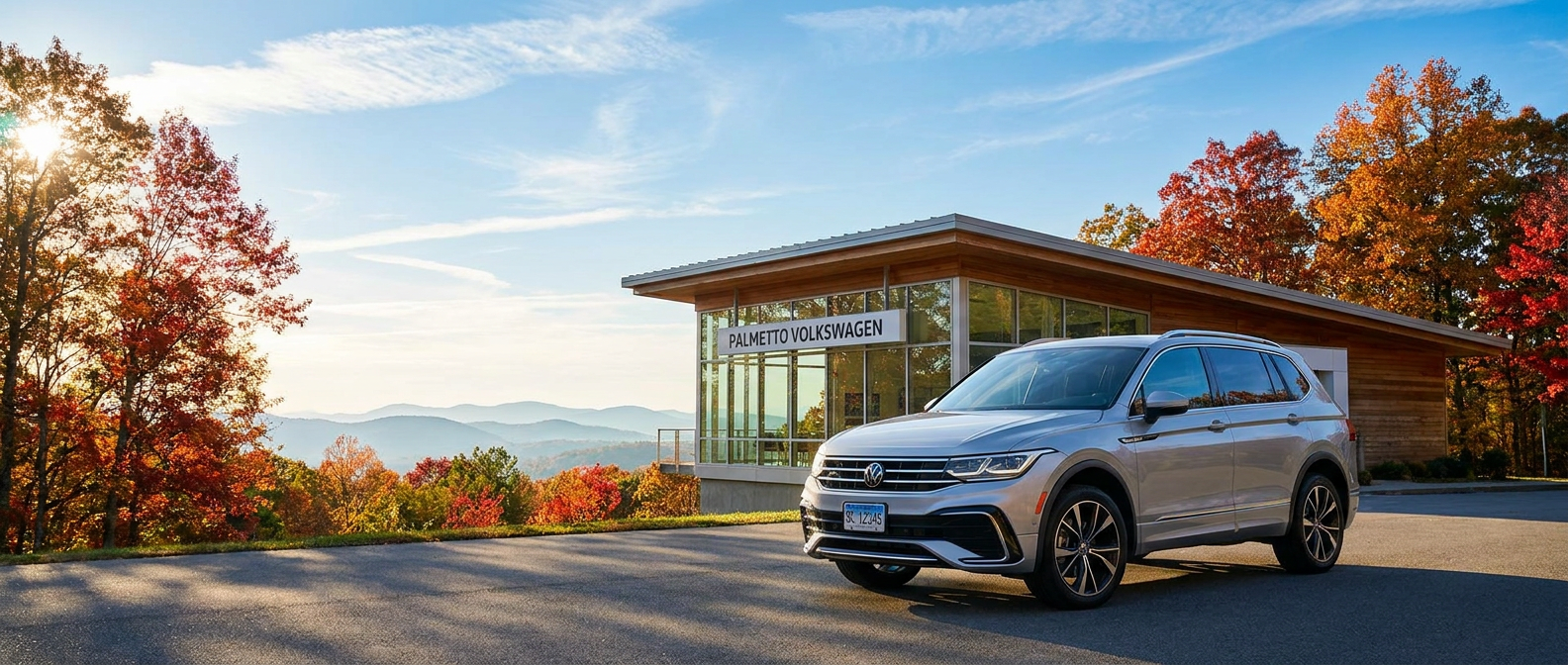
Contact Us

Fill out this form below and we'll contact you shortly
*Required Fields