

If you're loading a crate into the back of your Volkswagen before a Saturday morning at Croft State Park, model year matters more than the badge lets on. A used 2019 Tiguan and a 2026 Tiguan aren't the same vehicle in any dimension that matters to a 70-pound Labrador. Browse pre-owned Volkswagen SUVs at Steve White Volkswagen Spartanburg The short version runs like this. Any 2022-and-newer Tiguan and any Atlas from 2018 onward give you the cargo geometry a dog owner actually needs. Older Tiguans (pre-2018, and especially pre-2017) are tighter than they look on paper. We'll break it down year by year. The short version Sweet spot for the Tiguan: 2022-2026 (the fully loaded post-redesign generation with a near-flat load floor and meaningful rear cargo depth) Sweet spot for the Atlas: 2018-2026 (purpose-built three-row with real behind-the-third-row clearance for a crate) Years to watch on the Tiguan: 2017-2019 (third-row option ate cargo space; some NHTSA-documented complaints about the DSG transmission) 2026 Tiguan is a fresh redesign with Volkswagen listing 33.8 cubic feet behind the second row (up significantly from the outgoing generation) Hatcher Garden welcomes leashed dogs on its paved 0.4-mile loop; Croft State Park's official policy allows leashed pets on six-foot leads across most of its 7,054 acres Which Model Years Are the Sweet Spot for Spartanburg Dog Owners? For most Spartanburg dog owners the sweet spot lands on the 2022-2026 Tiguan or any Atlas from 2018 on, though the newest 2026 Tiguan sets the benchmark, with Volkswagen listing 33.8 cubic feet of cargo space behind the second row and 69.8 cubic feet with the seats folded flat, a clear jump from the previous generation's more modest load floor. Hold that number in your head when you're sizing up a used example. Model Year Cargo Behind 2nd Row Flat Load Floor Our Read for Dogs 2026 Tiguan (current) 33.8 cu ft Yes (nearly flat) Best-in-generation; roomy enough for a 32-inch crate with room for a bag 2022-2025 Tiguan ~33.8 cu ft Yes Same generation as 2026 (pre-facelift); strong dog hauler 2018-2021 Tiguan ~22 cu ft Stepped (minor) Comfortable for medium dogs; a 36-inch crate is tight 2017 Tiguan ~12 cu ft (with 3rd row) No (high load floor) Steer clear for large dogs; 3rd-row model compounds the problem 2009-2016 Tiguan ~23 cu ft No Compact, older safety tech; fine for small dogs, not recommended for crates 2026 Atlas 20.6 cu ft (3rd row in use) Yes (rows folded) 96.6 cu ft fully open; two large crates fit without stacking 2018-2025 Atlas ~20-21 cu ft (3rd row in) Yes (rows folded) Consistent generation; same basic geometry as 2026 The 2022-2026 Tiguan is genuinely the pet-owner's window into this model. Its redesign delivered a cargo area wide and deep enough to take a standard airline-sized crate, and you don't have to fold the second row first. Good dog cars start there. See current Tiguan inventory at Steve White Volkswagen Spartanburg Which Model Years Should You Watch Out For? The one to watch is the 2017 Tiguan, and the reason is packaging more than reliability, since Volkswagen sold it alongside the 2018 redesign as the "last of the old generation," and its 7-passenger configuration with the optional third row was almost always the one on dealer lots. With that third row in place, Volkswagen listed a cargo area of roughly 12 cubic feet. About the size of a carry-on bag. Not with a dog crate. The 2017 Tiguan's optional third row cut available cargo space to roughly 12 cubic feet (less than half of what the 2022-2026 generation provides). On the reliability front, the 2017-2019 Tiguan drew NHTSA-documented complaints related to its 7-speed DSG dual-clutch transmission, including hesitation on low-speed engagement. You won't get stranded by that on flat roads, but Upstate South Carolina's rolling terrain between I-26 and Croft State Park loads a transmission harder at low speed than flat suburban driving does. Get one inspected before you buy. The 2009-2016 Tiguan generation isn't a problem vehicle, though it predates Volkswagen's standard driver-assistance suite. If you're covering the I-85 corridor to Greenville regularly with a dog in the back, current lane-keeping assist and automatic emergency braking are worth having. See current Atlas inventory at Steve White Volkswagen Spartanburg Team Observation: For hauling large dogs, the 2018-onward Atlas solves the problem without compromise. You'll get a near-flat floor and roughly 55.5 cubic feet by folding the third row. Enough for two large crates side by side. Our team has seen this configuration work well for customers who run between Spartanburg and the mountains along SC Highway 11. Which Year Fits Which Buyer? The right year depends less on your dog's size than on how you use the SUV the other six days of the week, so a weekend hiker and a family of five can land on different answers with the same Labrador in back. You want a 2022-2026 Tiguan if: You're a driver who makes solo or two-person trips to Croft State Park on weekends, carries one large dog or two medium ones, and wants a compact-SUV footprint for Reidville Road and downtown Spartanburg parking. Volkswagen lists the 2026 Tiguan at 184.4 inches long and 66.1 inches tall (FWD). It fits in a standard single-car garage, which matters for Upstate SC summers when you don't want a hot car greeting your dog on the return trip. You want a 2018-2026 Atlas if: You're the driver with kids and a dog, or two dogs. The Atlas holds 96.6 cubic feet with both rear rows folded, large enough for two large-breed crates plus a bag of supplies. The 2026 Atlas earned IIHS Top Safety Pick+ status, which matters when you're running I-85 on a Friday afternoon with the whole family (including the one who can't buckle up). The honest tradeoff: The Atlas is the more capable pet hauler, no question. It's also longer, heavier, and harder on fuel. The EPA rates the 2026 Atlas at 18-20 mpg city and 24-27 mpg highway, depending on drivetrain. The Tiguan is the better daily driver for someone who only needs serious cargo room on weekends. A quick note on Hatcher Garden. Hatcher Garden covers 10 acres on John B. White Sr. Blvd. The preserve stays open year-round during daylight hours and free to enter, and leashed dogs are welcome on the paved 0.4-mile loop. That loop stays short, so the bigger job is the car that gets your dog there clean and cool, and you'll feel that more than the walk. Croft State Park, on the south side of Spartanburg, is the bigger adventure, spanning 7,054 acres with official South Carolina State Parks policy allowing leashed pets on a six-foot lead in most outdoor areas, and enough trail to tire out a high-energy dog. Value Your Trade-In If you're upgrading from an older Tiguan specifically to get more dog space, knowing your trade-in value before you shop puts you in a better position. The jump from a 2017 to a 2022-2026 generation is substantial in cargo terms. Browse the current Volkswagen lineup at Steve White Volkswagen Spartanburg By the Steve White Volkswagen Spartanburg Team | July 2026 Frequently Asked Questions What's the real cargo difference between the 2017 and 2022 Volkswagen Tiguan? The difference is significant. A 2017 Tiguan, especially the 7-passenger version with the optional third row installed, offered roughly 12 cubic feet of cargo space with that row in place. The 2022-2026 Tiguan generation provides 33.8 cubic feet behind the second row, per Volkswagen's published specs. In plain terms, that's the gap between squeezing in a small travel crate and comfortably loading a full-sized one. Are leashed dogs allowed at Hatcher Garden and Croft State Park? Yes to both, as long as you've got a leash. Hatcher Garden's official rules ban unleashed pets but permit dogs on leash on its paved 0.4-mile loop. Croft State Park, per the South Carolina State Parks official site, allows pets on a leash no longer than six feet in most outdoor areas across its 7,054-acre grounds. Verify current rules directly with each venue before your visit, since policies can change. Is the 2026 Volkswagen Atlas or 2026 Volkswagen Tiguan better for transporting a large dog? If cargo space is all that matters, the Atlas wins clearly. With the third row folded, the 2026 Atlas delivers 55.5 cubic feet; with both rear rows folded, it opens to 96.6 cubic feet. The 2026 Tiguan maxes out at 69.8 cubic feet with the second row folded. For one large dog, either works well. For two large dogs in separate crates, the Atlas gives you the margin you'll want. The Tiguan is the better daily driver if you mostly need the space on weekends. View Current Volkswagen Offers Steve White Volkswagen Spartanburg 2671 Reidville Rd, Spartanburg, SC 29301 (864) 585-2492
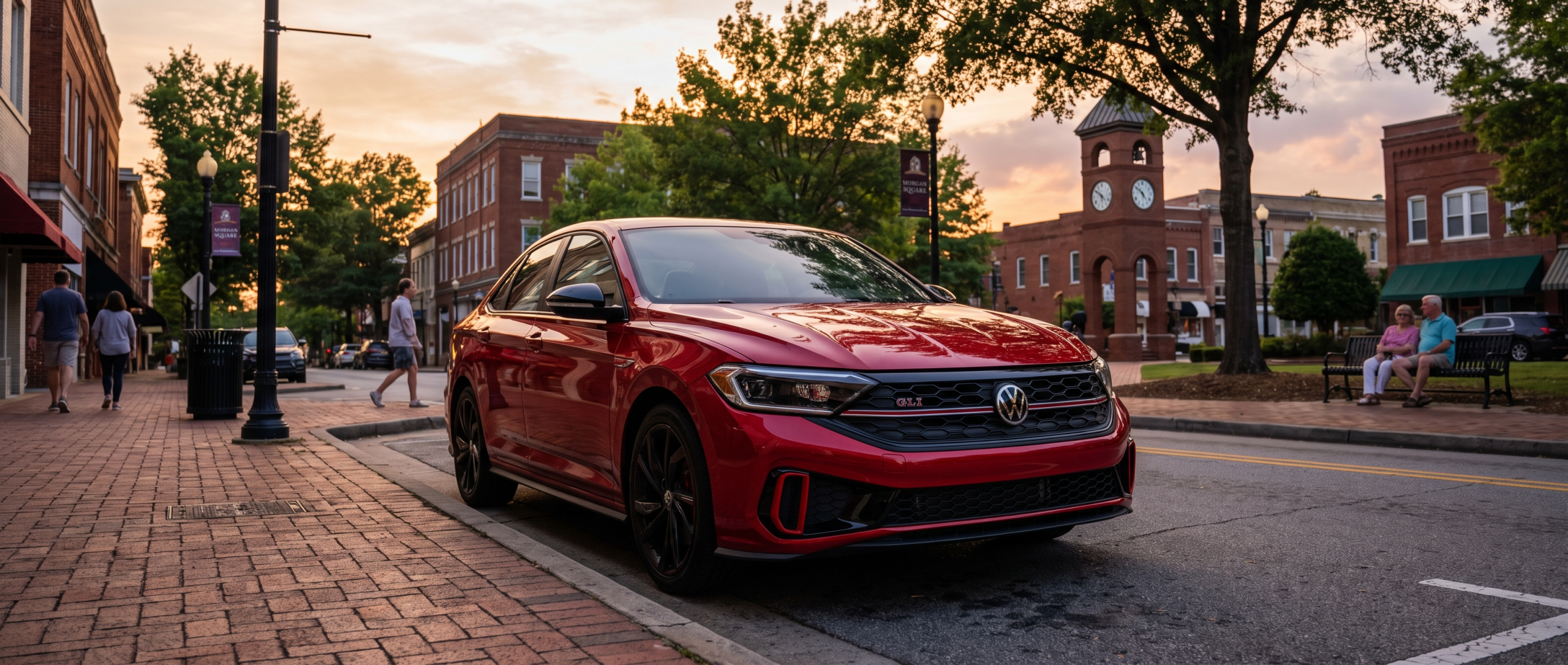
The 2026 Volkswagen Jetta GLI Has Exactly the Right Excuse for a Summer Night Out
The 2026 Volkswagen Jetta GLI is the last car Volkswagen sells in the United States with a manual gearbox. On its own, that fact turns an ordinary Thursday into something you'll look forward to. The Jetta GLI is a genuine performance sedan, not a trim with a spoiler bolted on. Volkswagen drops the same turbocharged 2.0-liter TSI engine that powers the Golf GTI into the Jetta's four-door body, adds a VAQ limited-slip front differential, tunes the suspension 0.6 inches lower than the standard Jetta, and sends it out with 228 horsepower and 258 lb-ft of torque. On a warm Spartanburg evening, with Morgan Square's Music on Main waiting downtown and I-85 clear ahead of you, those specs stop reading like numbers on a window sticker and start feeling like a reason you'll actually use. Volkswagen rates the 2026 Jetta GLI at 228 hp and 258 lb-ft of torque from a turbocharged 2.0-liter TSI engine, with EPA-estimated fuel economy of 26 mpg city and 36 mpg highway in the six-speed manual configuration. What Do the Specs Actually Mean for How It Drives? They mean more than the raw figures suggest, because the engine handles only part of the job here, and the VAQ differential plus the sport suspension do quiet work you'll feel through the steering well before any spec on the sheet catches up. Spec 2026 Jetta GLI Autobahn Engine 2.0L turbocharged TSI inline-4 Horsepower 228 hp @ 6,500 rpm Torque 258 lb-ft @ 4,000 rpm Transmission 6-speed manual (standard) or 7-speed DSG automatic 0-60 mph (DSG) 5.6 seconds Front suspension Sport-tuned, 0.6 in. lower than base Jetta Front differential VAQ electronic limited-slip Front brake rotors 13.4-inch vented discs Fuel economy (manual, EPA est.) 26 city / 36 hwy / 30 combined Fuel type Regular 87-octane unleaded Infotainment 8-inch screen, wireless App-Connect, 8-speaker audio Adaptive damping DCC system: Comfort, Normal, Sport modes The fuel-type row is easy to skip past on the spec sheet. Volkswagen engineers built the TSI to run on regular 87-octane fuel, not premium. For a car with this much torque on tap at 4,000 rpm, that's uncommon, and it keeps everyday ownership straightforward. The VAQ differential is what sets the GLI apart from a Jetta with a sport suspension kit. Standard front-wheel-drive cars push wide in corners because torque flows to the wheel that's got less grip. The VAQ uses a multi-plate clutch and a hydraulic pump to send torque to the wheel that has more traction. Tighter exits. Less fighting the wheel on a curved on-ramp. Volkswagen's sport-tuned suspension (lower and stiffer than the base car) puts that work into the steering, and a seat cushion never has to bail you out. You feel every bit of it. The GLI at Night: Why Spartanburg's Summer Makes Sense Here A standard Jetta handles the daily grind as a composed, no-fuss commuter, and the GLI keeps every bit of that competence while adding one thing the base car never bothers to offer, an actual reason to leave the house early on a warm evening. It makes the drive worth as much as the arrival. Spartanburg's Music on Main runs every Thursday evening from April through August at Morgan Square, free, 5:30 to 8:30 pm. The event is a city-funded tradition that rewards having a car worth parking nearby, and the GLI earns that walk back to the car. Dual exhaust tips at the rear, 18-inch machined alloy wheels (or gloss black with the optional Black Package), red GLI badges, and a rear lip spoiler that actually earns its keep at speed. You don't have to say what it is. It says it. Does a late exit from downtown turn the I-85 merge into a chore? Barely. You've got real thrust when you need it. Leaving downtown Spartanburg at 8:30 on a Thursday night means I-85 is moving, and the DSG version's 5.6-second 0-60 time (per Car and Driver testing) makes the merge feel easy at speed. On the manual, that figure stretches to around 6.0 seconds based on Car and Driver testing of the 2025 equivalent. Either way, the turbo pulls hard from 1,800 rpm, the DCC adaptive damping smooths out Reidville Road's surface inconsistencies in Comfort mode, and the EPA's 36-mpg highway rating means the 13.2-gallon tank goes a long way before you notice it. On the manual. If you've never driven a stick, the GLI is an approachable place to start, and the clutch won't punish you for learning. The throws are deliberate, the clutch is predictable, and Volkswagen charges the same price for either transmission. If you've been thinking about it, this is the car to finally try. On a summer evening specifically, the GLI pulls off a few things worth naming. The Climatronic dual-zone climate control and ventilated front sport seats handle 90-degree Upstate SC heat before you've cleared the parking garage The 8-speaker audio system (standard on all 2026 GLIs, restored after a brief 2025 revision) gives the ride a soundtrack that matches the car's personality Physical steering-wheel buttons (returned for 2026 after the 2025 touch-control experiment) keep you focused on the road instead of hunting for volume Wireless Apple CarPlay and Android Auto connect in under three seconds so navigation is ready before you leave the space The Honest Tradeoff: Where the GLI Fits and Where It Doesn't The straight version we'd give you here on the lot is that the 2026 GLI is front-wheel drive, with no all-wheel-drive option and no all-road pretension, and that's fine for most Upstate driving but still worth knowing up front before you fall for the exhaust note. If your life runs through mountain weather, a snowy Blue Ridge winter weekend, or a job that demands serious traction management, the GLI will have you thinking. For some Upstate SC drivers, that's a real limitation. For the driver who wants a composed daily car that earns its weekend drives, though, the GLI fits the bill. The Golf GTI shares the same engine and the same performance profile, but it's a hatchback with less trunk space (14.1 cubic feet in the GLI versus the GTI's 22.8). If you're carrying more gear, a golf bag, or someone who needs to get in and out of a rear seat with dignity, the GLI's four-door sedan shape solves that without asking you to give up the drive. And if you really need AWD in a performance Volkswagen package, that conversation points toward something further up the lineup. But for the 22-to-40-year-old driver living in Spartanburg, commuting the I-85 corridor, and looking for something that won't make a Thursday night feel like every other Thursday? The GLI is the specific answer. Browse our current new inventory to see which configurations are available at Steve White Volkswagen today. Frequently Asked Questions About the 2026 Volkswagen Jetta GLI Does the 2026 Jetta GLI require premium fuel? No. Volkswagen rates the 2026 Jetta GLI to run on regular 87-octane unleaded fuel. The turbocharged 2.0-liter TSI engine is designed to deliver its full 228 hp and 258 lb-ft of torque on regular fuel, and that's unusual for a performance sedan in this class, which keeps daily driving costs more predictable. What is the difference between the manual and DSG transmission on the 2026 Jetta GLI, and which should I choose? Volkswagen prices the six-speed manual and seven-speed DSG automatic identically for 2026. The DSG is marginally quicker in straight-line acceleration (5.6 seconds to 60 mph per Car and Driver versus approximately 6.0 seconds for the manual). The manual is more engaging to drive and returns slightly higher highway fuel economy, with the EPA rating the manual at 36 mpg highway compared to 35 mpg for the DSG. Our take is simple. If you've wanted to drive a manual and the GLI appeals to you, take it for a test drive before you decide. It's a genuinely approachable clutch, and you won't get another chance to buy a new Volkswagen with three pedals after this generation. See Current Volkswagen Offers Steve White Volkswagen Spartanburg 2671 Reidville Rd, Spartanburg, SC 29301 (864) 585-2492
4 Best Volkswagen Models for Drivers Living Near Blackstock Road
In this article How We Ranked Them No. 1 -- The 2026 Tiguan: Built for the Reidville Road Rhythm No. 2 -- The 2026 Atlas: When Blackstock Road Means Three Rows No. 3 -- The 2026 Jetta GLI: The Commuter That Doesn't Feel Like a Commuter No. 4 -- The 2026 Taos: The Practical Pick for a Smaller Footprint The Verdict: Tiguan for Most, Atlas for Families, GLI if You Drive to Feel It For most Blackstock Road drivers, the Tiguan takes the top spot. It's well-rounded, it handles the Reidville Road stop-and-go without punishing you, and the redesigned 2026 version brought a real efficiency bump that pays off on that corridor. Your best pick still depends on whether you're carpooling kids, chasing highway miles to Greenville, or after something with genuine driving feel. We ranked the whole 2026 lineup for life on this stretch of Spartanburg. See our current Tiguan inventory and judge for yourself. How We Ranked Them The four models below earned their spots on three things that matter along the Blackstock Road corridor. We weighed daily commuter efficiency on the Reidville Road and I-26 run, cargo and passenger practicality for the residential family mix here, and the German driving feel that sets a Volkswagen apart from a generic crossover. Rank Model Best For Standout Spec 1 Tiguan Everyday commuters + couples EPA-rated 32 mpg highway (FWD) 2 Atlas Families needing a third row Seats 7, up to 96.6 cu ft cargo 3 Jetta GLI Driving enthusiasts, solo commuters 228 hp, 30 mpg combined (manual) 4 Taos Entry-level buyers, urban-sized garage Up to 36 mpg highway (FWD) No. 1 -- The 2026 Tiguan: Built for the Reidville Road Rhythm The Tiguan earns the top spot because the 2026 redesign was aimed squarely at drivers who live the Blackstock and Reidville stop-light routine. It does cap out at five seats. The EPA rates the 2026 Tiguan FWD at 25 city and 32 highway, and the new mild-hybrid option (Volkswagen's first 48-volt system offered in the US) uses a starter-generator to smooth out exactly the kind of stop-start traffic you hit between Blackstock Road and I-26. Its predecessor never cracked 30 mpg on the highway. The gain is real. The tradeoff deserves a plain statement. The Tiguan seats five and stops there. If you've got three kids and a dog, scroll down to the Atlas section. But for the couple, the young professional, or the small family that doesn't need a third row, the 201-horsepower 2.0-liter turbo and 8-speed automatic deliver a composed, confidence-inspiring drive a similarly priced mainstream crossover doesn't match. At Steve White Volkswagen, the Reidville Road corridor is where that suspension calibration shows itself. Take the Tiguan and the Taos over the same rough patch toward I-26, and the German ride quality separates the two inside the first mile. Browse the Taos if you want a smaller footprint instead. Buying caution: If you're comparing the FWD and 4MOTION (AWD) Tiguan trims, know the AWD version trades roughly 7 mpg of highway efficiency for all-weather confidence. Upstate SC winters aren't brutal by most measures, but the occasional ice event on I-26 is real. Think about whether those few days a year justify the trade. No. 2 -- The 2026 Atlas: When Blackstock Road Means Three Rows The Atlas takes second because it's the only model here with a real third row, and that one fact carries the case. It's also the hardest of the four to thread through Blackstock Road's tighter streets. Volkswagen lists the 2026 Atlas with seating for seven and up to 96.6 cubic feet of total cargo capacity when both the second and third rows fold flat. Behind the third row, you still have 20.6 cubic feet, enough for a full Costco run (yes, that Costco on West Blackstock Road is exactly what we're talking about). The 2026 Atlas also moved to Volkswagen's new "Evo4" 2.0-liter TSI engine rated at 269 horsepower and 273 lb-ft of torque, and it's built in Chattanooga, Tennessee, if American-made production matters to your household. The size is the honest downside here. The Atlas is big to thread through neighborhood streets, and Blackstock Road's residential sections aren't wide. If your driveway is tight or you park on the street, you'll feel those dimensions. It's not a dealbreaker. Just worth knowing going in. For the Upstate SC family making regular runs toward Greenville or heading up SC Highway 11 into the Blue Ridge foothills now and then, the Atlas handles those bigger roads with authority. The I-85 corridor commute feels relaxed in this vehicle in a way a two-row crossover doesn't quite replicate. Check Atlas availability here. No. 3 -- The 2026 Jetta GLI: The Commuter That Doesn't Feel Like a Commuter The Jetta GLI lands third because it's the last Volkswagen you can buy in the United States with a six-speed manual gearbox, and for the right driver that fact alone settles the decision. The sedan trunk does limit what you can haul. If that line lands for you, you already know your answer. For everyone else, the 2026 Jetta GLI sends 228 horsepower and 258 lb-ft of torque to the front wheels through either that 6-speed manual or a 7-speed DSG dual-clutch automatic. The EPA rates it at 30 mpg combined with the manual and 29 mpg combined with the automatic, a legitimate efficiency number for a car that runs like this. The GLI also carries GTI-grade brakes and an electronic limited-slip differential (VAQ), so the Blackstock-to-Reidville stretch you drive twice a day actually gets a bit of personality instead of just existing. Browse Jetta GLI inventory at Steve White Volkswagen. The sedan format costs you cargo flexibility. You get 14.1 cubic feet of trunk space, sealed off from the cabin, so a mountain bike or a kayak won't load the way it would in a hatchback or crossover. Think of it as a driver's car with adult rear seating and a real trunk. Pros Cons 228 hp with GTI-sourced hardware Trunk-only cargo (no fold-flat hatch) Last manual Volkswagen available in the US Front-wheel drive only 30 mpg combined keeps fuel bills reasonable Firm sport suspension on rough pavement Adaptive suspension standard on Autobahn trim Single trim level (no budget entry point) No. 4 -- The 2026 Taos: The Practical Pick for a Smaller Footprint The Taos fits a specific Blackstock Road driver, the one who wants German engineering, skips the third row, and values easy parking in tighter residential spots. It does give up some punch to earn that. The 2026 Taos runs a 1.5-liter turbocharged four-cylinder at 174 horsepower and 184 lb-ft of torque. FWD models hit up to 36 miles per gallon on the highway according to Volkswagen's published figures, the highest highway number in this four-vehicle lineup. The cargo story beats what the Taos's compact size suggests. Volkswagen lists 27.9 cubic feet behind the rear seats on FWD models, expanding to 65.9 cubic feet with the second row folded. You get a nearly flat load floor for groceries, a weekend bag, and the odd piece of furniture. No drama. Skip the Taos if quick highway merges matter to you. The 174-horsepower engine is capable but not spirited, and on Reidville Road with the air conditioning running hard in a South Carolina July, it does its job without complaint. You won't feel the urgency the Tiguan's 201-horsepower engine gives you merging onto I-26. That 27-horsepower gap shows in daily driving. The Verdict: Tiguan for Most, Atlas for Families, GLI if You Drive to Feel It The Tiguan is the right call for most Blackstock Road drivers who want one car for commuting and errands. The Atlas takes over the instant a third row stops being optional, and the Jetta GLI answers for the driver who wants the daily drive to feel like something. Move to the Atlas if three rows are a household necessity. The Jetta GLI earns the third slot for the driver who treats the commute as a reason to enjoy the process. The Taos sits fourth not because it's a lesser vehicle, but because the Tiguan's step up in power and interior presence tends to win a back-to-back drive. We're right here on Reidville Road, a very short drive from Blackstock Road. Come drive any of these and see which one fits your actual life, not just a ranking on a page. Value Your Trade-In Today Steve White Volkswagen Spartanburg 2671 Reidville Rd, Spartanburg, SC 29301 (864) 585-2492
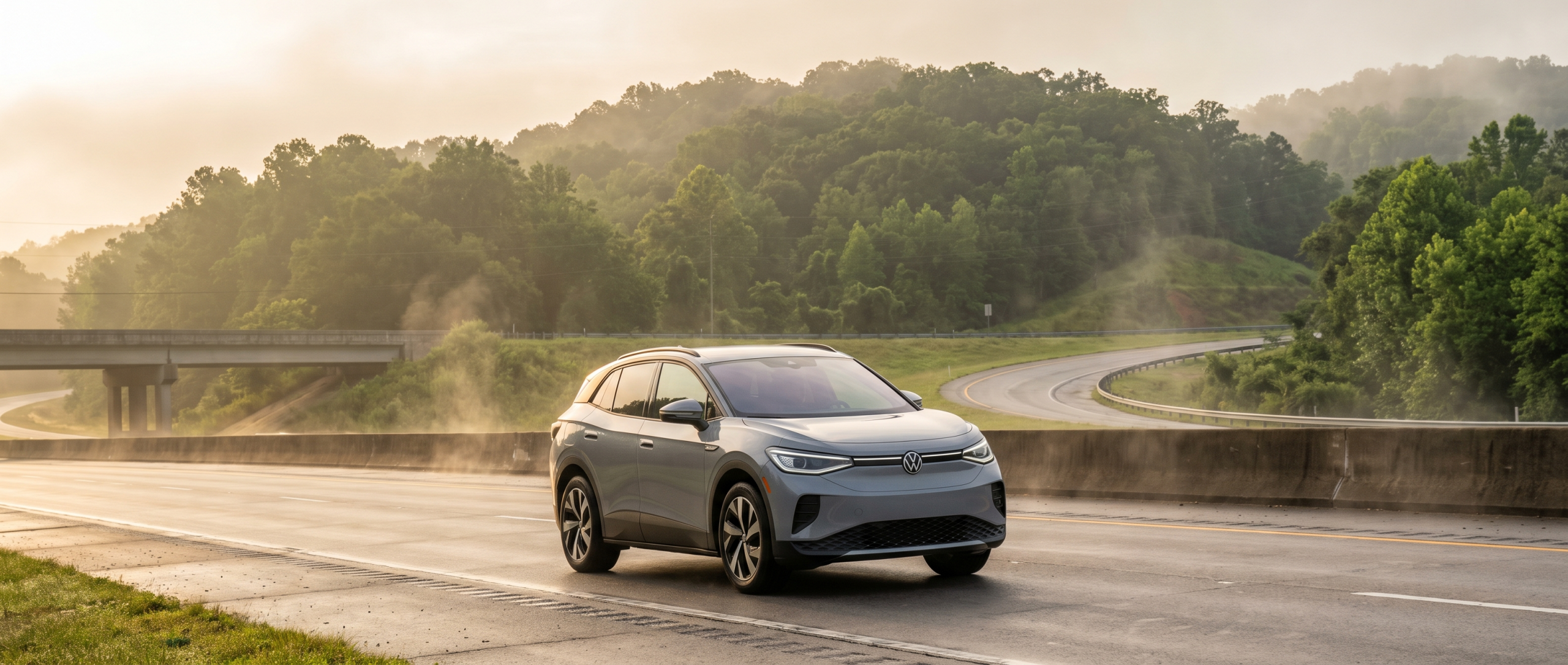
A Commuter's Day Between Spartanburg and Greer: 4 Stops, One Volkswagen ID.4
Your round trip runs 36 miles. The EPA rates the 2026 Volkswagen ID.4 at 291 miles in rear-wheel-drive trim. So the math says you could run this corridor eight times on a single charge, and that's exactly why the ID.4 fits the Upstate SC commute so well. Let's walk you through one full commuter day on the Spartanburg-to-Greer run, stop by stop, so you can see where the ID.4 earns its keep and where you'd want to plan ahead. We'll give you the caveat up front. No heat pump comes standard on US-market 2026 ID.4s. The resistive heater in winter is less efficient than what you'd find on some rivals, and cold mornings will soften real-world range. On an 18-mile run charged at home overnight, that tradeoff stays manageable. On a long highway trip in January, you'd feel it more. This is a corridor car, not a cross-country car, and it's specced and priced accordingly. See Current Volkswagen ID.4 Offers What's the Route? The route is the I-85 corridor between Spartanburg and Greer, about 18 miles each way, and the dominant reason people drive it is BMW Manufacturing at 1400 Highway 101 South in Greer, one of the largest auto manufacturing campuses in the United States, with more than 11,000 workers on site. Add supplier operations, healthcare workers, and retail employees across both cities, and it's one of the busiest 20-mile stretches in all of Upstate South Carolina. Stop Drive Time What Happens What to Pack Home in Spartanburg Start of day Unplug from overnight Level 2 charge Travel mug; car is already at 100% I-85 South to Greer 25 to 35 min The commute run; cabin pre-cooled via app Nothing extra; it's already comfortable Midday stop in Greer 30 to 60 min Errand, lunch, or optional DC fast-charge top-up Electrify America app if you want the top-up Return to Spartanburg 25 to 35 min Same corridor, same easy math Still plenty of range; plug in at home Range used for the full day: roughly 36 to 40 miles of actual driving against the EPA-rated 291 miles for RWD or 263 miles for AWD. You'll arrive home well above 80% on most days. The Four Stops, In Order Stop 1: Your Driveway in Spartanburg (6:30 AM) You unplug and pull out with a full battery, and that's the commuter superpower on this route. The 2026 ID.4's onboard AC charger handles 11 kW on a Level 2 home setup, meaning a full 0-to-100% replenish takes roughly 7.5 hours overnight on a 48-amp circuit. Plug in at 6 PM, and the car is ready well before midnight with hours to spare. The ID.4's Climatronic dual-zone automatic climate control is worth pre-setting through the app while it's still plugged in. On a July morning in Upstate SC, cooling the cabin before you disconnect means you pull that energy from the grid rather than your battery. July mornings here are not gentle. Over a full year of commuting, that small habit adds up. There's no gas station. No stopping before work. The car restores itself while you sleep. Stop 2: I-85 South to the Greer Corridor (7:00 AM) Eighteen miles, and in lighter traffic you're in Greer in about 25 minutes. When I-85 backs up near the BMW plant exits, expect closer to 35. The ID.4's character shifts the commute in your favor here, because stop-and-go traffic actually improves EV efficiency compared with steady highway speeds (regenerative braking recovers energy every time you slow). A gas vehicle burns extra fuel in a crawl. The ID.4 partially recoups it. The EPA rates the 2026 rear-wheel-drive model at 113 MPGe combined. Its rear-mounted electric motor produces 282 horsepower and 402 lb-ft of torque. No, it won't pass for a sport sedan. But the low-end torque makes merging onto I-85 feel entirely relaxed, and you're never hesitating about whether you have room to take the lane. July timing note: Traffic near the BMW plant exits peaks sharply between 6:45 and 7:30 AM on weekdays. Leave by 6:50 and you'll get the cleaner run. Either way, your range math improves in the crawl, not worsens. Browse available Volkswagen ID.4 models at Steve White Volkswagen Spartanburg Stop 3: Greer Midday (12:00 PM) Will you need to charge midday? No, not on an 18-mile commute, and we'll say that plainly. But the infrastructure is there if you want a top-up or if your day runs longer than usual. Volkswagen includes three years of complimentary 30-minute fast-charge sessions on the Electrify America network with every new ID.4, and the Upstate SC region already has public DC fast charging in the Greenville-Spartanburg metro area. If you use it, you'll find the 2026 ID.4 accepts up to 175 kW at a compatible station, and Volkswagen rates the 10-to-80% session at around 30 minutes at that speed. On an 18-mile commute, a midday session would have you pulling into the driveway near 100%. Call it peace of mind more than necessity, since you don't need it. The EPA rates the 2026 Volkswagen ID.4 RWD at 291 miles of range and 113 MPGe combined, meaning the full Spartanburg-Greer round trip of roughly 36 miles uses about 12% of a full charge. Explore financing options for the Volkswagen ID.4 Stop 4: Back in Spartanburg (5:30 PM) Plug in when you get home, and that's the entire routine. The ID.4's commuter math on this corridor stays comfortable. Two 18-mile legs, overwhelmingly highway and mixed flow, against a vehicle rated at more than eight times that distance per charge. Even after a July day with the AC working through Upstate SC heat, you're not threading a needle on range when you pull into the driveway. We want to be straight about AWD trims. The dual-motor AWD Pro and AWD Pro S deliver 335 horsepower, but the EPA rates them at 263 miles rather than 291. Still more than seven times the round-trip distance. AWD makes sense if you're regularly pushing into the mountains on weekends via SC Highway 11, or if you want traction confidence during the occasional Upstate ice event. For the pure commuter case on this corridor, the RWD Pro covers it with room to spare. Tweak It to Your Crew The itinerary above is built for the solo Spartanburg-to-Greer commuter, and it holds up well there, but change a few variables like your home city, a second car in the driveway, or an after-work detour, and the ID.4's case shifts a little, so here's how the same vehicle flexes to a few common Upstate setups. If you live in Greer and commute into Spartanburg: Same math, same logic. You'll charge at home on the Greer side and arrive in Spartanburg at full strength every morning. If you're a two-car household: The ID.4 works as the dedicated corridor car while a gas vehicle handles the longer, unpredictable road trips. A Volkswagen Taos makes a natural companion for that role if you want to keep both vehicles in the Volkswagen family. The range tradeoff essentially disappears when you're not asking one car to do everything. If you add an after-work stop at Croft State Park: The park sits on Spartanburg's south side, 7,054 acres of trail and lake access. An evening detour there and back adds fewer than 15 miles to a day that already used only about 36 miles of your 291-mile range, so you're still comfortable. The math stays comfortable. There's one honest boundary here. If your workday regularly turns into an unplanned 100-plus-mile driving day on top of the commute, sit down with the range numbers before you commit. The ID.4 handles the daily corridor run easily and handles reasonable surprises. It is not the right fit if those surprises are a constant. For the Spartanburg-Greer commuter who charges at home and drives a predictable route, this is a straightforward vehicle to recommend. Come in and we'll walk through trim selection and the home charging setup together. By the Steve White Volkswagen Spartanburg Team | July 2026 Value Your Current Vehicle Toward a Volkswagen ID.4 Steve White Volkswagen Spartanburg 2671 Reidville Rd, Spartanburg, SC 29301 (864) 585-2492
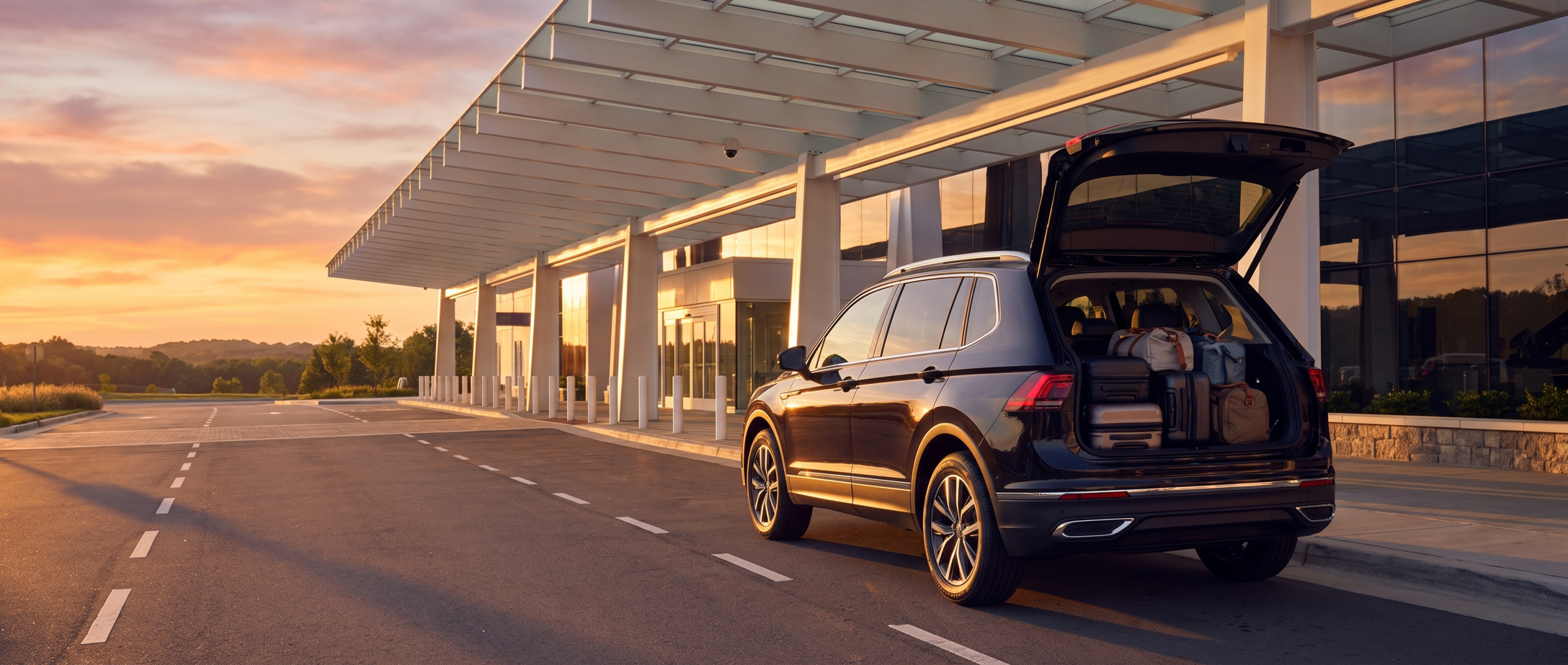
3 Volkswagen Models Compared for Your GSP Airport Run
In this article How Do the Jetta, Tiguan, and Atlas Actually Compare? Does Cargo Space or Seat Count Drive Your Decision? When You're Picking Up More Than Bags Pick the Volkswagen That Fits Your Pickup The drive from Spartanburg to Greenville-Spartanburg International Airport is 19 miles of I-85. You hit highway speed almost immediately, you park in the free cell phone lot, and you load up fast. Specific job, that one. It rewards a driver who knows whether they're picking up one rolling bag or five checked pieces (and whether the return trip seats two adults or seven). We've lined up the 2026 Volkswagen Jetta, the 2026 Tiguan, and the 2026 Atlas against that exact run. The tradeoff is real. The Jetta costs less to run and parks in a snap, but it'll make four adults feel like they're negotiating elbow rights. The Atlas swallows a family reunion's worth of luggage, though its fuel economy reflects its size. The Tiguan lands squarely in between (which is either its best quality or a mild compromise, depending on what you're hauling). The short version Solo or couple pickup: The 2026 Jetta is the efficiency winner. The EPA rates it at 40 mpg highway, and 14.1 cubic feet of trunk swallows two carry-ons without a second thought. Group of four with mixed bags: The 2026 Tiguan is the sweet spot (33.8 cubic feet behind the rear seats, 34 mpg highway on the fuel-efficient FWD trim). Extended family or luggage-heavy crew: The 2026 Atlas seats seven and offers up to 96.6 cubic feet with rows two and three folded. Nothing else in the Volkswagen lineup touches it for big pickups. The GSP cell phone lot changes the math. You're not circling. You wait, then load in one pass. A well-organized cargo area matters more than curb agility. All three handle I-85 merges with no drama. Turbocharged engines across the board. How Do the Jetta, Tiguan, and Atlas Actually Compare? All three merge onto I-85 without complaint, so the choice comes down to size rather than power, and matching the vehicle to the size of your pickup sorts most of it out. A solo run and a seven-person arrival with checked bags are not the same job, and these three Volkswagens split cleanly along that line. Feature 2026 Jetta 2026 Tiguan 2026 Atlas Cargo behind rear seats 14.1 cu ft 33.8 cu ft 20.6 cu ft (3rd row up) Max cargo (seats folded) 14.1 cu ft (sedan) 69.8 cu ft 96.6 cu ft Passenger capacity 5 5 7 EPA highway mpg (best trim) 40 mpg 34 mpg 27 mpg Drivetrain options FWD only FWD or AWD FWD or AWD Best for Solo/couple, frequent runs Four adults, mixed bags Full family or luggage-heavy crew A few things jump out. The Jetta's 40 mpg highway number (confirmed by the EPA for the S trim) is genuinely strong for a car that still fits two adults and their bags without folding anything. Behind the Tiguan's rear seat sits 33.8 cubic feet, the number that makes it useful for airport runs, since it holds four adults in comfort and still loads a full-size checked bag per person. The Atlas's cargo headline is 96.6 cubic feet with everything folded flat, though the more relevant figure for a pickup run is the 20.6 cubic feet you get when the third row is in use. Checked luggage means collapsing a row. Does Cargo Space or Seat Count Drive Your Decision? Cargo space drives the decision for most pickups, but seat count takes over the moment you're collecting more than four people at once. For a couple or a small group, focus on how the bags load and how the trunk or liftgate is shaped. For a full crew, count the seats first and let cargo follow. The free cell phone waiting area at GSP means you hold until your passenger texts you from baggage claim, then you get one pass at the curb. Your cargo plan needs to be set before you pull in (not while you're blocking the Delta arrivals lane). The 2026 Jetta holds 14.1 cubic feet in its trunk. Two full-size roll-aboards and a personal item fit comfortably. Three bags? It gets tight, and the fixed sedan lid means you can't cheat the geometry. The Jetta is the right car when you know you're picking up one or two travelers who pack like they mean it. The 2026 Tiguan's liftgate changes everything. With 33.8 cubic feet behind the rear seats, you're loading four rolling bags without touching the seat controls. Add a stroller bag or a car seat carrier. It still fits. On the I-85 stretch home, the EPA's 34 mpg highway figure for the FWD S trim means you're not paying a meaningful fuel penalty for that flexibility. The 2026 Tiguan FWD S trim earns an EPA-estimated 34 mpg highway (the most fuel-efficient configuration in the Volkswagen SUV lineup and a real asset on a 19-mile highway run). Now the 2026 Atlas. It seats seven, which sounds like the obvious answer for big groups. But watch the tradeoff. When all three rows are in use, cargo shrinks to 20.6 cubic feet, which is carry-on territory. Checked bags mean folding the third row, and someone moves up. For a true five-person pickup with full luggage, confirm the bag count before you commit. The EPA rates the FWD model at 20 city and 27 highway (a capable, comfortable hauler built for space over economy). See Current Volkswagen Offers When You're Picking Up More Than Bags Some runs come down to people rather than luggage, so rear-seat comfort and legroom start to matter as much as cargo volume. Who's riding home, and for how long, shapes which of these three earns the pick. The points below break down the space each one gives your passengers on the 19-mile return. Rear legroom on the I-85 return. The Jetta offers 37.4 inches of rear legroom (genuinely fine for two adults on a 27-minute drive, tight for three). The Tiguan's cabin is wider. Three adults in the second row sits more comfortably than a compact sedan, and there's no armrest dispute heading back up I-85. The Atlas third row works for adults. Volkswagen lists 33.7 inches of third-row legroom (enough for a grown adult on a short run, not just kids pressed against the window). IQ.DRIVE driver assistance comes standard on all three. Adaptive cruise and lane-keeping assist on a 19-mile highway run in Upstate SC summer traffic is a genuine comfort, not a sales checkbox. GSP's cell phone lot accommodates all three sizes easily. The Jetta also fits in tighter spaces on the Greenville side when lots back up on a busy Friday evening. Pick the Volkswagen That Fits Your Pickup Pick by the run you make most weeks. A recurring solo trip points one way, a full-family arrival points another, and the middle ground is where the Tiguan earns its keep. The three breakdowns below sort it out. The 2026 Jetta fits if you're making frequent solo or couple runs to GSP, fuel economy is a priority (40 mpg highway on I-85 is a legitimate reason to pay attention), and your passengers pack one bag each. It's the efficient, recurring-run car. Not the family-reunion car. The 2026 Tiguan fits if you're picking up three or four adults with mixed, unpredictable luggage and you want SUV flexibility without the Atlas's size footprint. At 33.8 cubic feet with the seats up, you load first and adjust later. It's the model built for exactly this kind of versatile daily use around the Upstate. The 2026 Atlas fits if you're the designated driver for a traveling sports team, a full family with checked bags, or you're combining two separate arrivals in one trip. Fold row three, load everything, seat five in rows one and two. The Atlas handles that without compromise. One caveat worth stating plainly. If your typical GSP run is one or two people, the Atlas is more car than the job needs. The Tiguan will do it better and cost less at the pump. Browse our current Volkswagen inventory to compare what's available across all three right now. Frequently Asked Questions Which Volkswagen has the most cargo space for airport runs? The 2026 Atlas offers the most total cargo capacity in the Volkswagen lineup (up to 96.6 cubic feet with all rear seats folded, per Volkswagen's specifications). For a standard pickup run where the third row stays up, the 2026 Tiguan's 33.8 cubic feet behind the rear seats is the more practical number. It loads four full-size bags without touching the seat controls, which matters when you have one pass at the curb. Is the GSP airport easy to navigate for a quick pickup? Yes. Greenville-Spartanburg International Airport offers a free cell phone waiting area near the terminal, so you hold there until your passenger exits baggage claim and texts you. One curb pass typically handles the load. The airport sits right off I-85 in Greer, about 19 miles from Spartanburg (essentially all highway), which is why fuel economy figures like the 2026 Jetta's EPA-estimated 40 mpg highway are worth noting if you're making this trip regularly. Value Your Trade-In Steve White Volkswagen Spartanburg 2671 Reidville Rd, Spartanburg, SC 29301 (864) 585-2492
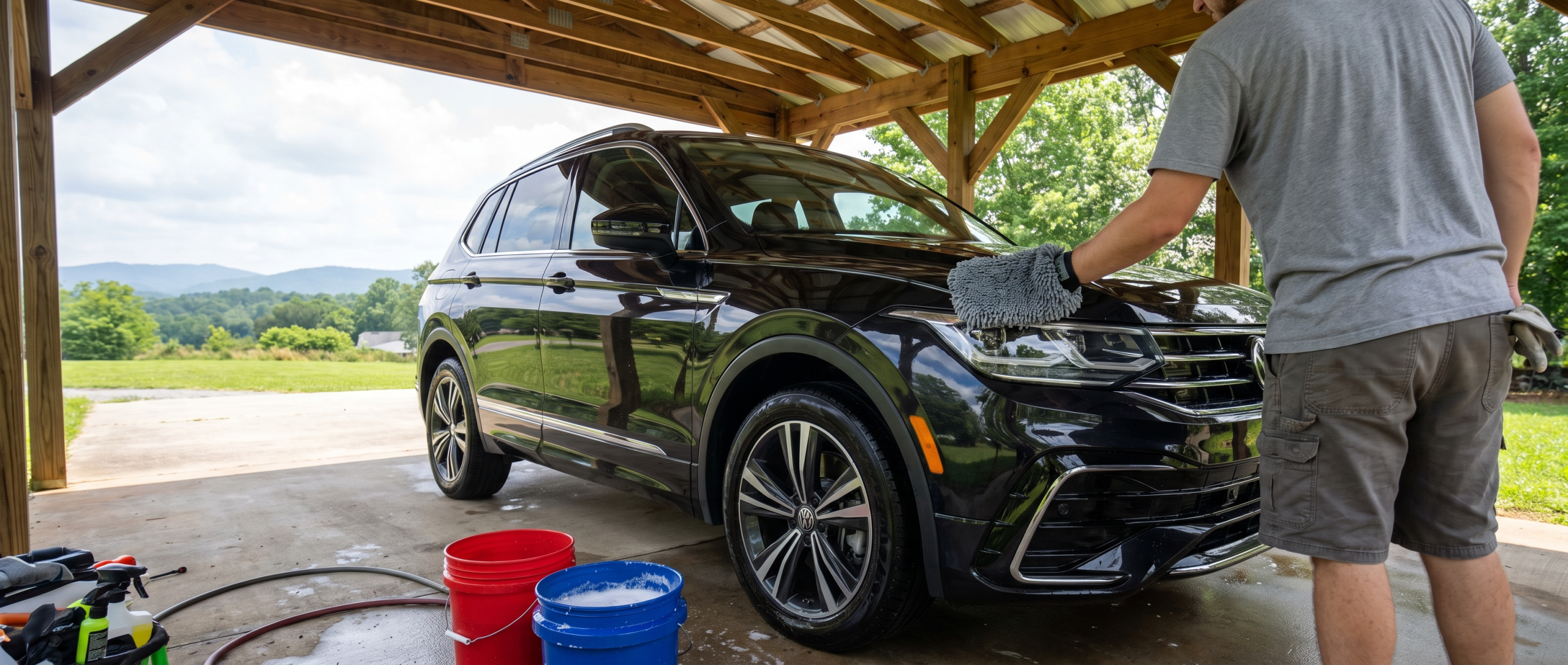
Summer Car Wash Checklist for Volkswagen Owners in Spartanburg
Spartanburg's July heat can turn a well-meaning driveway wash into the very thing that damages your paint. The fix is timing and technique. Tiguan owners, Atlas owners, and Jetta commuters (plus anyone else parked under the Upstate SC sun) all face the same combination. Average July highs reach 91 degrees F, relative humidity sits around 68%, and afternoon pop-up thunderstorms soak a car then evaporate before you think to dry it. That triple threat is what this checklist is built around. What Goes on the Summer Wash Checklist? Work through these ten items in order, top to bottom, and you'll protect the clear coat rather than scuff it; skipping the first two steps is what sets up the water spots and surface residue that show up on otherwise clean cars in our service bay. The order matters. The 10-Point Volkswagen Summer Wash Checklist Choose your time window. Wash before 9 a.m. or after 7 p.m. Surface temps above roughly 77 degrees F speed up soap evaporation and bake mineral deposits into the clear coat before you can rinse them off. Pre-rinse from top to bottom. Knock the loose dirt, pollen, and brake dust off before any mitt touches the paint. Skip this and you'll grind that debris straight into the clear coat. Set up two buckets. One holds your pH-neutral car shampoo solution. The other holds clean rinse water only. Rinse the mitt in the clean bucket between panels, and grit guards in both buckets trap what comes off. Wash panel by panel, top down. Roof and glass first, rocker panels and bumpers last. Use straight, overlapping passes with a microfiber mitt. Circular motions leave circular swirl marks. Rinse each panel before the soap dries. In Spartanburg's summer heat, soapy water left on a hot panel for even a couple of minutes leaves residue that fights off a second rinse. Remove bird droppings and sap immediately. These bond to hot paint faster than anything else out there. A damp microfiber cloth and a little detailer spray handles fresh spots. Wait a day or more in 90 degrees F heat and you'll risk etching the clear coat permanently. Dry with a large microfiber towel using blotting motions. Don't drag. Don't reach for a terry cloth or chamois. Blot and lift. Water spots come from mineral deposits left by evaporation, and they're a lot harder to remove once the afternoon sun bakes them on. Clean the wheels separately. Brake dust is corrosive and acidic. Use a dedicated pH-neutral wheel cleaner and a soft brush. Never reuse the paint mitt on the wheels. Apply a paint sealant or wax after washing. Synthetic paint sealants generally hold up three to six months in sustained summer heat. Traditional carnauba wax lasts closer to four to six weeks. Either one protects the clear coat from UV breakdown and makes the next rinse easier. Apply UV protectant to rubber trim and plastic. Black trim and door seals dry out and fade faster in sustained heat. A trim protectant with UV inhibitors takes about two minutes and adds real longevity. Why the Upstate SC Summer Makes Each Item Non-Negotiable Every item on that list earns its spot because of Upstate summer physics, and the reasons break into three groups (heat, pollen, and storm water), so once you see what each one does to the paint, the checklist stops feeling fussy and starts feeling obvious. Jetta drivers commuting the I-85 corridor and families loading an Atlas for Croft State Park are dealing with the same physics. Spartanburg's July average high reaches 91 degrees F. The metal surface of your hood or roof routinely hits 140 to 160 degrees F by midday. Wash water and shampoo hit that surface and flash-evaporate, leaving behind the minerals and soap compounds that create the water spots you'll see even after a thorough wash. That's items 1 and 5. The pollen and sap window is a separate problem. Spartanburg's proximity to the Blue Ridge foothills brings heavy tree pollen in spring and into early summer, and pine sap can coat a car overnight near any stand of pines. Pollen left on hot, humid paint starts bonding chemically within hours, especially when dew or afternoon humidity keeps it damp against the surface. That's why item 6 says immediately and not "soon." The afternoon thunderstorm cycle is the trickiest part. A quick storm looks like a free rinse. It isn't. Storm runoff picks up road oil, pollen, and atmospheric pollutants as it falls, then sits on a hot surface and bakes as the car heats back up in post-storm sun. If you can't dry the car within roughly 30 minutes of a summer storm, a quick pass with a microfiber and detailer spray is worth doing. A note on technique: The two-bucket method is the single most effective thing a home washer can do to prevent swirl marks. One bucket with pH-neutral shampoo, one with clean rinse water, and a microfiber mitt with grit guards in both. Rinse the mitt in the clean water after every panel. The dirt that causes most swirl marks stays in the rinse bucket instead of riding back onto the paint. Checklist Item Why It Matters in Spartanburg's Summer Wash before 9 a.m. or after 7 p.m. Surface temps above 77 degrees F cause soap to evaporate and etch before rinsing Two-bucket method with grit guards Keeps abrasive dirt in the rinse bucket, not back on the paint pH-neutral car shampoo only Dish soap strips wax and ceramic coatings, leaving the clear coat exposed Panel-by-panel rinsing Prevents soap from drying on hot metal between wash and rinse passes Immediate sap and dropping removal High heat accelerates etching; fresh spots lift cleanly, day-old ones may not Separate wheel tools Brake dust is acidic; reusing the paint mitt transfers corrosive particles Microfiber blot-dry (no drag) Dragging traps remaining grit and creates fine scratches in the clear coat Paint sealant every 3 to 6 months Synthetic sealants outlast summer wax (4 to 6 weeks) under sustained UV and heat UV trim protectant Black plastic and rubber oxidize and fade in sustained 90 degrees F+ exposure Post-storm detailer spray Storm runoff deposits road oil and pollen; evaporation bakes it onto hot paint Schedule a Detail or Service Appointment Your Print-and-Go Recap Tape this recap to the garage wall or keep it on your phone, because the timing and the two-bucket setup are the parts that're easy to skip when you're already sweating in the driveway, and they're the two that matter most for the paint. Before you start: Is it before 9 a.m. or after 7 p.m.? Is the car in shade, or at least out of direct midday sun? Are both buckets set up with grit guards? Washing: Pre-rinse from the roof down. Wash panel by panel with straight passes. Rinse each panel before you move on. Wheels get their own tools, always. Bring it to our service team if it's been more than a season since a full detail. Drying and protection: Blot dry right away with microfiber. Check for sap, bird droppings, or bug residue and spot-treat now. Apply sealant or wax if it's been more than a few months. Hit the trim and rubber with UV protectant. After a storm: Don't assume the rain did the work. Wipe down with a microfiber and detailer spray within 30 minutes if you can. One tradeoff worth naming up front. This checklist takes real time. A two-bucket hand wash done right runs 45 to 60 minutes. Drive-through washes are faster, but the spinning brushes in older-style tunnels are how a lot of swirl marks get into paint. A touchless wash is a solid middle ground for maintenance washes between full hand-wash sessions, especially during the weeks when Spartanburg's afternoon heat makes driveway timing tough. Frequently Asked Questions What time of day is best for washing a Volkswagen in Spartanburg's summer? Early morning, before 9 a.m., is the best window. The car's surface is coolest then, which keeps soap and rinse water from evaporating before you can remove them. That flash evaporation is what leaves water spots and soap residue baked into the clear coat. Late evening after 7 p.m. works as a second choice, as long as you dry the car completely before overnight humidity settles on the surface. Is it okay to use dish soap to wash my car? It isn't a good idea. Dish soaps are built to cut grease aggressively, and they do the same thing to the wax or paint sealant on your clear coat, stripping the protective layer right off. A pH-neutral car-specific shampoo cleans well without breaking down the protection you need through the summer months. It's a simple switch, and it protects a real investment. See Current Volkswagen Offers Steve White Volkswagen Spartanburg 2671 Reidville Rd, Spartanburg, SC 29301 (864) 585-2492
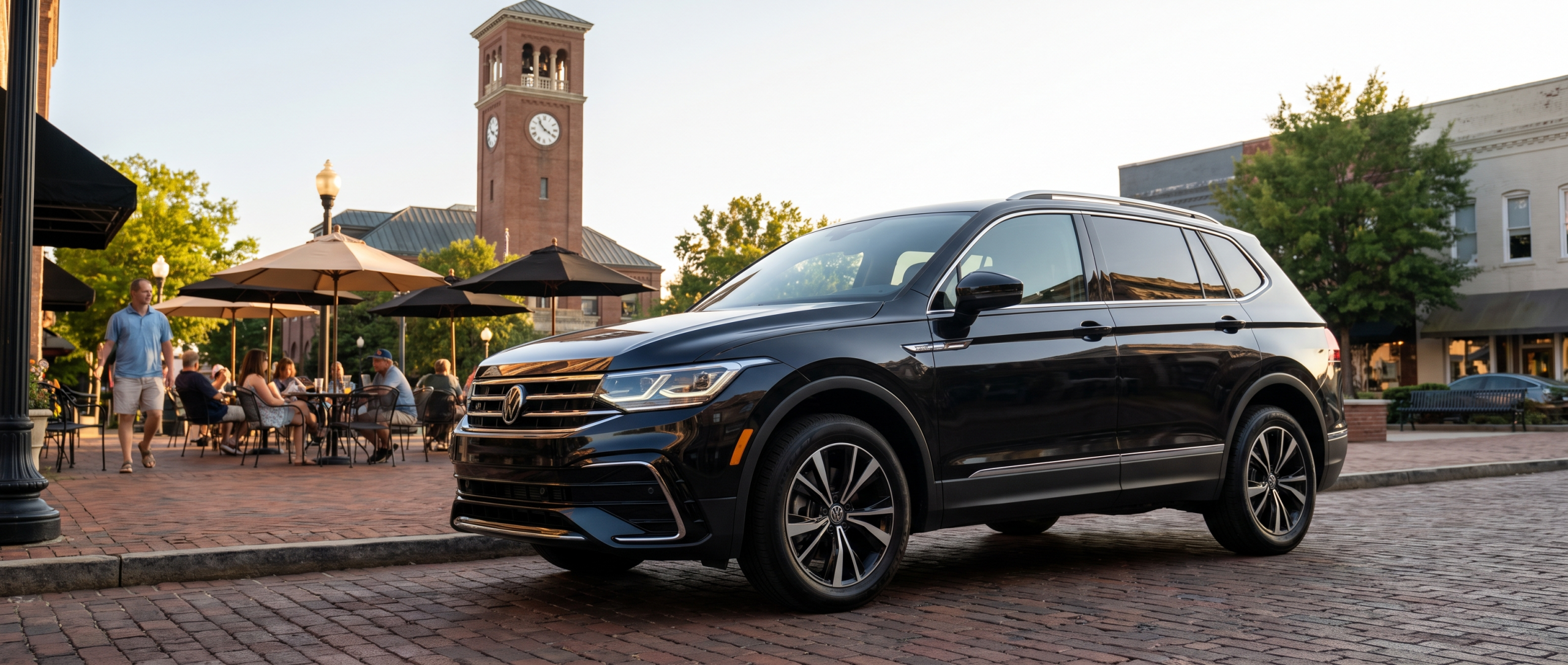
How to Set Up Your Volkswagen for a Weekend at The Beacon and Morgan Square
In this article What You Need Before You Start Setting Up Your Volkswagen for Both Stops Honest Tradeoffs: Where This Plan Has Limits A Quick Checklist Before You Roll Out A Recap for the Road Spartanburg drivers making the loop from The Beacon Drive-In over to Morgan Square are stacking two very different parking situations into one afternoon. One stop is a sprawling curb-service lot where extra cargo room and comfortable seating genuinely matter. The other is a pedestrian-filled downtown square where a compact footprint decides whether you slide into a spot or circle the block twice. The good part is that the Volkswagen lineup covers both scenarios cleanly. Here's how to match your vehicle and set it up so neither stop slows you down. The Tiguan's 33.8 cubic feet of cargo space behind the rear seats (EPA-verified for the 2026 model) is the practical sweet spot for a Beacon-to-Morgan Square loop with a full crew of five. The 2026 Volkswagen Tiguan is the model we walk most of these steps through, because its cargo and passenger balance fits both stops better than anything else in the lineup for a crew of two to five. That said, we'll show you where the Atlas or the Taos makes more sense depending on your headcount. What You Need Before You Start Different Volkswagen models carry different setup requirements for this particular loop, and the right pick leans less on brand loyalty than on how many people and how much gear you're hauling that day. Use this table to match your situation before you ever leave the house. Your Situation Best Fit Key Spec to Know Couple or two adults, easy downtown parking priority Taos FWD EPA-rated 31 mpg combined; shorter wheelbase for tight spots Family of 4-5, Beacon curb service + Morgan Square stroll Tiguan SE or higher 33.8 cu ft cargo seats-up; 60/40 split rear seat Group of 6-7, cooler and gear in tow Atlas 55.5 cu ft with third row folded; up to 5,000 lb towing if bringing a trailer You care about parking ease above all else Taos 184.4 in long (Tiguan) vs. slightly shorter Taos footprint You want the hands-free liftgate at the Beacon Tiguan SE R-Line or higher Available hands-free power liftgate Note on downtown parking: Spartanburg's Morgan Square area has multiple garages and surface lots. The West Main Street pedestrian zone means the shortest walk comes from the Spring Street or Magnolia Street garages, not curbside on Main. A shorter vehicle earns a shorter walk, and you'll feel it downtown. Setting Up Your Volkswagen for Both Stops The sequence below is what we'd actually run through before leaving Reidville Road for the afternoon, and it works for any model in the lineup as long as you fold in the Atlas and Taos notes where they show up. None of it needs to happen at the restaurant if you set it up in the driveway first. Step 1: Decide on seats-up or seats-down before you load the cargo area. The 2026 Tiguan's rear seat is a 60/40 split, and that split does more work than it looks like it should. If you're picking up food for five at the Beacon, keep both halves up and use the full 33.8 cubic feet behind the seat. Plenty of room for a bag from every person in the car with space to spare. Going as a couple and want to lay a cooler flat? Drop the 40-percent section. The Atlas unlocks 55.5 cubic feet with just the third row folded, which means a full family-sized haul from the Beacon fits without anyone balancing a bag on their lap. Step 2: Use the underfloor storage for valuables before you head downtown. The Tiguan and Atlas both include underfloor storage in the cargo area. Morgan Square draws a crowd on Music on Main Thursdays (5:30 to 8:30 p.m., every Thursday through August in 2026) and during Art Walk nights. The underfloor compartment is exactly where phones, wallets, and sunglasses cases go when you're walking away from the vehicle. It locks with the car. Use it. Step 3: Set your climate before you're in the Beacon queue. Upstate SC summers are legitimate. July afternoons in Spartanburg regularly hit the upper 80s and above, and the Beacon's curb service means the engine stays running while you wait. Set your climate to recirculate before you pull in, ideally before you're even in line. If you're in a Tiguan SE or higher, ventilated front seats are available and worth switching on at this point. Heated and ventilated front seats are standard on certain upper trims, so check your trim sheet for the configuration you have. Step 4: Call your order before you arrive at The Beacon, or plan for 10-20 minutes. The Beacon at 255 John B. White Sr. Blvd. has been a Spartanburg institution since 1946. Curb hops take your order at the car. If you've got a full-sized group in an Atlas with the third row up, confirm your seating before you queue so everyone can hear the curb hop clearly. The Chili-Cheese A-Plenty is notorious for being a two-hand situation. Plan accordingly. Step 5: Activate your parking assist or plan your downtown approach before you reach Morgan Square. The Taos is the easiest Volkswagen to slide into a tight parallel spot downtown, full stop. Its smaller footprint and responsive steering make the Spring Street garage area or an on-street spot on Magnolia genuinely manageable for drivers who don't parallel park daily. The Tiguan handles downtown fine too. The Atlas is comfortable in a garage bay, though you shouldn't plan on curbside parallel with it on a busy Music on Main night. Parking in a garage and walking two or three blocks is the smarter play regardless of which model you're in. Step 6: Lock up and go. Seriously, use the key fob. Should you bother folding the mirrors on a crowd night? At Morgan Square, yes. Lock the vehicle with the fob, verify the mirrors folded (an available feature on upper Tiguan and Atlas trims), and walk. The Volkswagen Digital Cockpit and 12.9-inch infotainment screen in the Tiguan can look tempting to a passerby. Don't leave anything visible on the seat. Tip: the step that's easy to skip. Set your cargo area before step 1, not after you've loaded people and bags. The Tiguan's 60/40 rear seat is much harder to reconfigure once there are drink cups and bags already in the load floor. Two minutes of prep in the driveway saves a reorganization in the Beacon parking lot. Step 7: Check the Beacon's hours against your Morgan Square timing. The Beacon is open Monday through Thursday until 9:00 p.m. and Friday-Saturday until 10:00 p.m. Morgan Square's Music on Main runs 5:30 to 8:30 p.m. on Thursdays. If you're doing both in one afternoon, hitting the Beacon first (say, 4:00 p.m.) then walking Morgan Square for the 5:30 concert is the sequence that doesn't rush either stop. See Current Volkswagen Offers Honest Tradeoffs: Where This Plan Has Limits The Taos is the easy-parking, fuel-efficient pick, and its EPA-rated 31 mpg combined (FWD) means the round trip from anywhere on the I-85 corridor barely registers at the pump. But it's also the smallest interior of the three. If you're carrying four adults who aren't teenagers, the rear legroom gets real on the way home. The Tiguan is the all-conditions answer for most families, and the Atlas handles everything the Tiguan can't. The honest trade with the Atlas is maneuverability. Verified at 20 mpg city and 27 mpg highway (EPA, FWD), it isn't built for nimble downtown parking. The Atlas is built for large crews and real cargo loads. Know the problem before you choose. A Quick Checklist Before You Roll Out Decide seats-up vs. seats-down configuration before loading Store valuables in underfloor cargo compartment Set climate to recirculate mode before the Beacon queue Confirm your Beacon order is ready to call ahead or allow extra time Identify your downtown parking target (Spring Street or Magnolia garage recommended) Activate parking assist if your trim includes it Lock with fob and mirror-fold when you park for Morgan Square Frequently Asked Questions What's the easiest Volkswagen to park downtown near Morgan Square in Spartanburg? The 2026 Volkswagen Taos is the most manageable in tight downtown situations. Its smaller footprint and responsive steering make parallel parking and garage maneuvering noticeably easier than in the larger Tiguan or Atlas. How much cargo room does the 2026 Volkswagen Tiguan have for a Beacon run with a full group? Volkswagen rates the 2026 Tiguan at 33.8 cubic feet of cargo space with the rear seats up. That's a practical amount for five people's food and bags. Drop the 60/40 split rear seat and the total expands to 69.8 cubic feet for oversized items. Which Volkswagen is best for highway fuel efficiency on the drive to Spartanburg? The Taos delivers 31 mpg combined (EPA, FWD) on the I-85 and I-26 corridors, making it the most efficient option for a full round trip from outlying areas. A Recap for the Road The Tiguan handles the Beacon-to-Morgan Square loop cleanly for most Upstate SC drivers, and it does it without asking for anything special. Seats five, loads gear, parks in a standard garage bay without drama. The Taos wins if your priority is easy downtown maneuvering and 31-mpg efficiency on the I-26 and I-85 runs to get there. The Atlas wins when the headcount goes above five or when you're bringing anything that needs real cargo volume (or towing capacity, rated at 5,000 pounds when properly equipped per Volkswagen). None of these vehicles needs a special setup to handle two local stops. They just need the right configuration before you leave the driveway, not after you're already in line at the Beacon. Come see us on Reidville Road and we'll walk you through the specific trim differences in person. Which configuration you want is usually the question worth answering first, ahead of which model. See What Your Current Vehicle Is Worth Steve White Volkswagen Spartanburg 2671 Reidville Rd, Spartanburg, SC 29301 (864) 585-2492
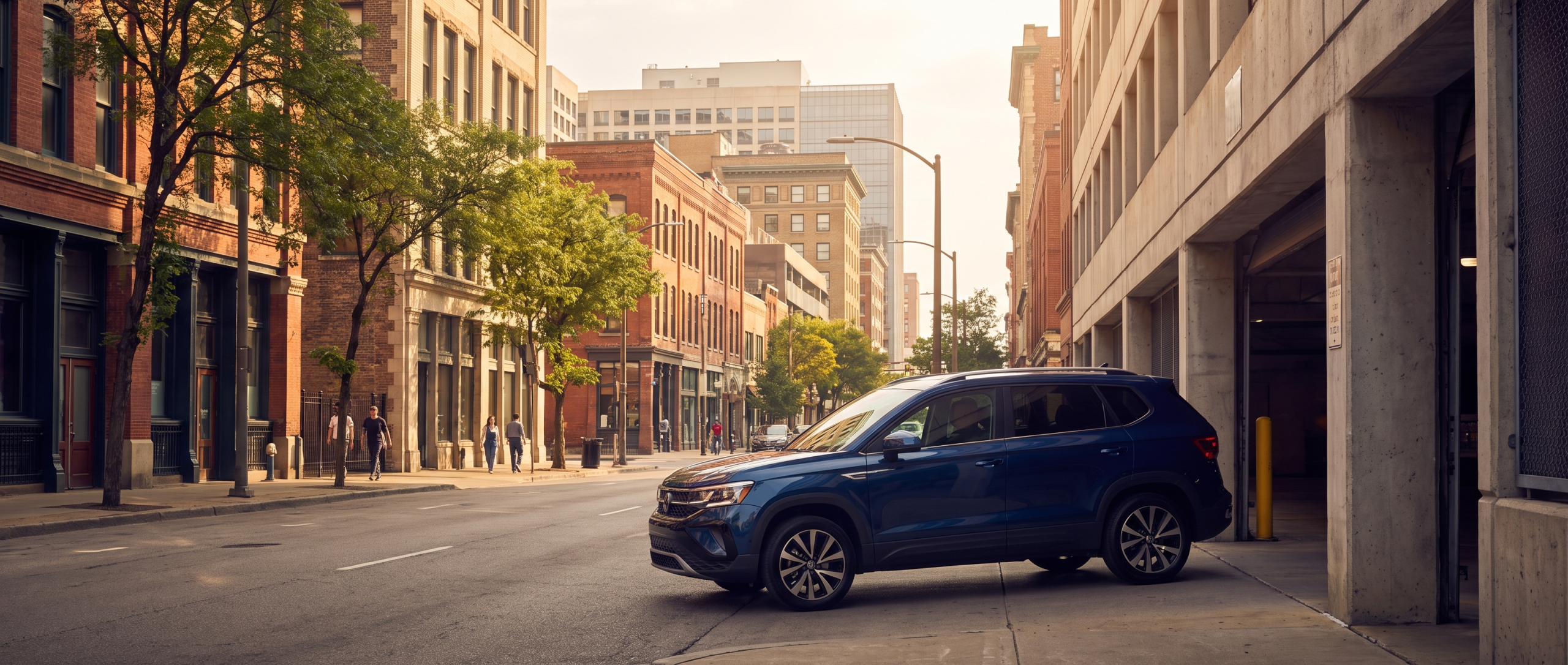
The 2026 Volkswagen Taos Makes a Strong Case for Spartanburg City Driving
Downtown Spartanburg is in the middle of a growth spurt right now. New construction, road closures on E. Main Street, and event nights at venues near Morgan Square mean that finding and fitting into a parking spot has become a real calculation, not just an afterthought. We've watched drivers pull up in full-size SUVs and then spend five anxious minutes deciding whether they can clear a garage entrance pillar. The 2026 Volkswagen Taos mostly eliminates that conversation. At 175.9 inches long with a 35-foot turning circle, the Taos is sized for exactly this kind of urban friction. It carries German engineering, a turbocharged engine, and a full IQ.DRIVE driver-assistance suite into a footprint that genuinely fits the city you're driving in. The rest of this piece explains the specifics. The 2026 Volkswagen Taos (175.9 inches long with a 35-foot turning circle and standard blind-spot monitoring) is purpose-built for the kind of compact, active urban driving that Spartanburg's growing downtown demands. Browse the 2026 Volkswagen Taos at Steve White Volkswagen Spartanburg to see current availability and trim options. Why Does the Taos Fit Spartanburg's Streets So Well? The city itself gives us the clearest answer. Downtown Spartanburg operates five parking garages with more than 3,300 total spaces, and those garages serve a compact, walkable core that is actively adding restaurants, offices, and event venues. Tight column spacing, low clearances, and single-lane ramps are the norm. The Taos's dimensions aren't an accident of design. They're an advantage here. Spartanburg Condition Taos Feature That Handles It Why It Matters Compact downtown garage columns and low-clearance ramps 175.9" overall length, 64.5" height (FWD) Clears most standard garage envelopes with room to spare Tight single-lane turns inside garages 35-foot turning circle Completes most 180-degree reversals without a three-point turn Event-night parallel parking near Wofford College and USC Upstate 72.5" width + rear cross-traffic alert Lets you read the gap before committing; rear alert catches approaching traffic I-85 and I-26 corridor commuting at higher speed 174-hp 1.5L turbo, 8-speed automatic Confident merge power without burning premium fuel (regular 87-octane) Frequent stop-and-go on Reidville Road and surface streets EPA-estimated 28 mpg city (FWD) Keeps fuel costs predictable on the daily grind Active construction zones with abrupt lane shifts Standard Forward Collision Warning and Adaptive Cruise Control Reduces reaction burden in slow, compressed traffic That last row deserves a pause. The IQ.DRIVE suite comes standard on every 2026 Taos trim, not as an upgrade package you have to budget for. Forward Collision Warning, Blind Spot Monitoring, Rear Cross-Traffic Alert, Lane Keeping Assist, and Adaptive Cruise Control with Stop-and-Go are all included on the base S. For city driving specifically, that combination of features does real work, not just highway work. The Footprint Comparison That Actually Matters for Upstate Drivers A concrete number worth looking up before you decide: the Volkswagen Tiguan, which we also carry and genuinely recommend for families, measures 184.4 inches in length. The Taos is 175.9 inches. That 8.5-inch difference sounds modest until you're trying to parallel park on a street that already has construction equipment closing off one lane of Kennedy Street. The Taos fits where the Tiguan requires a second look. And to be clear, that's not a knock on the Tiguan. If you need third-row capacity or more cargo room, it's the right call. But if your daily life is centered on Spartanburg's urban core rather than weekend hauling, the Taos earns its place by being genuinely smaller in all the useful ways. Volkswagen's official press materials confirm the 2026 Taos FWD model sits at 105.9 inches of wheelbase, which is what produces that tight turning geometry on a vehicle with real interior room. The rear seat still delivers 37.9 inches of legroom. So you're not sacrificing passenger comfort to get the smaller footprint. That tradeoff usually costs you something. Here, it mostly doesn't. See how the Tiguan compares if third-row space is what your situation actually calls for. Tip for Spartanburg drivers: The City of Spartanburg offers free two-hour parking and free parking after 5 PM in all downtown garages. For a vehicle you're using daily in that environment, the Taos's 28-mpg city EPA estimate and compact garage footprint add up to meaningful real-world savings over time. The combination of fit and fuel efficiency is harder to find at this size than you'd expect. Next step: If you want to feel how the Taos threads through a real parking structure before committing, bring it on Reidville Road and into downtown. Our team at Steve White Volkswagen Spartanburg can set up a test route that puts the city driving experience front and center, not just a highway loop. The Honest Tradeoff, and Where the Taos Still Wins We'll say it plainly: if you tow a boat to Lake Bowen or need to move a group of six, the Taos isn't your vehicle. It has no official tow rating from Volkswagen, and its cargo hold tops out at 27.9 cubic feet behind the rear seat with FWD. For those use cases, the Volkswagen Atlas has 5,000 pounds of towing capability and a full third row. That's the right tool for that job. For a significant portion of Spartanburg drivers, though, the daily reality runs in the opposite direction: a commute on I-85, a lunch spot near USC Upstate, and a parking garage that rewards a smaller footprint. The 2026 Taos runs that scenario on 28 city mpg, parks on a 35-foot turning circle, and does it with standard safety assists that take some of the concentration load off in stop-and-go. The EPA's rating for the FWD model is 31 mpg combined. For a turbocharged SUV that runs on regular fuel, that number holds up well against the segment. In our experience, drivers who've walked the Taos lot after initially considering the Tiguan are often surprised the interior doesn't feel as compact as the exterior suggests. That 37.9 inches of rear legroom is a real differentiator for a vehicle this length, and the 2026's standard wireless App-Connect means your phone mirrors whether you're running Apple CarPlay or Android Auto. Accessible, practical, and not stripped down. Browse our current new Volkswagen inventory to see which Taos trims are on the lot right now. See Current Volkswagen Specials Value Your Trade-In Steve White Volkswagen Spartanburg 2671 Reidville Rd, Spartanburg, SC 29301 (864) 585-2492
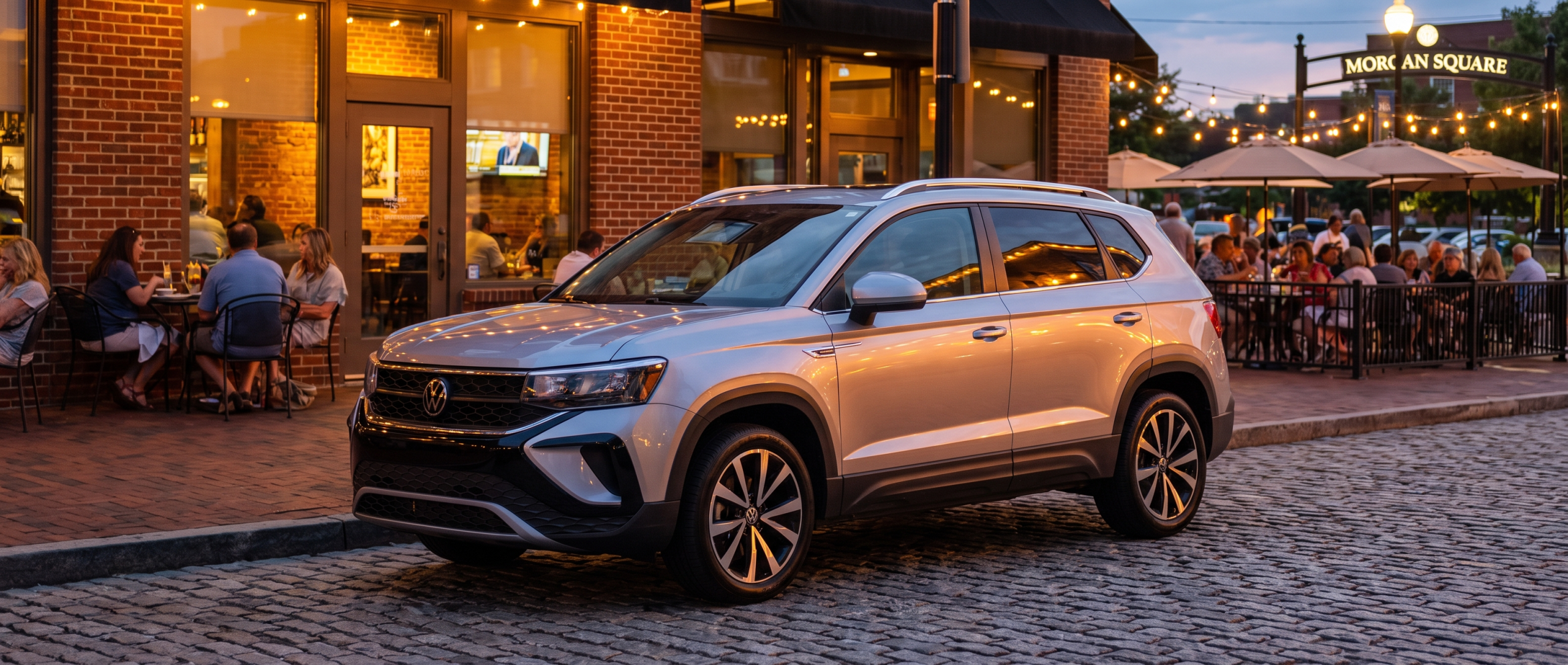
Downtown Spartanburg's Restaurant Scene: How to Drive Your Volkswagen Through It Smartly
In this article Downtown Spartanburg Driving: What to Do, What to Skip The Footprint Numbers That Matter at the Magnolia Street Garage Five Habits That Keep Your Volkswagen (and Other Diners) Safe Downtown The Right Choice Gets You Back to Dinner Faster Morgan Square's dining district is more alive than it's been in years, and it's also more complicated to navigate than it used to be. Several surface lots that regulars relied on closed in early 2026 as new construction got underway, and the city's parking garages are now the primary answer for anyone heading to dinner on East Main Street or Magnolia Street. That shift changes which Volkswagen you want underneath you. Our short answer: a shorter, narrower footprint wins downtown. The 2026 Volkswagen Taos and the 2026 Volkswagen Golf GTI are the two models we'd point toward for a regular downtown restaurant run, and the reasons come down to real measurements and real city fuel economy, not marketing language. Downtown Spartanburg Driving: What to Do, What to Skip Conditions downtown right now are genuinely different from what drivers faced a couple of years ago, and that's worth spelling out before you plan your evening. Morgan Square is pedestrianized, and the city is actively designing a permanent outdoor dining zone along West Main and Dunbar Street. New construction near Daniel Morgan Avenue means occasional lane narrowing. The city's garages (Magnolia Street, Dunbar Street, Kennedy Street, St. John Street) are doing the heavy lifting, but their ramps and tight turning aisles reward compact footprints in a way that's hard to appreciate until you're actually in one. Situation Do This Skip This Multilevel garage ramp Choose a model under 176 inches long Pulling an Atlas into an unfamiliar deck at night adds real stress Parallel spot on East Main Street The GTI at 168.8 inches slides in cleanly A 184-inch vehicle in a short parallel space means multiple attempts Stop-and-go on Magnolia Street Use the Jetta's EPA-rated 29 mpg city figure on repeated loops Don't idle a larger, thirstier engine through a slow dinner circuit Pedestrian-heavy zones near Morgan Square Slow early, driver focused, eyes on foot traffic Never cut through pedestrianized sections of the square Parking after 5 PM All city garages are free after 5 PM and all day weekends Circling for metered street spots wastes time and fuel The Footprint Numbers That Matter at the Magnolia Street Garage Drivers who come back from a downtown evening and mention a tight moment in the garage are almost always describing the same thing: a spiral ramp where the compact model tracked through without drama and the longer one demanded real technique. Volkswagen's press data lists the Taos at 175.9 inches long and 72.5 inches wide. The Golf GTI is even shorter at 168.8 inches long and 70.4 inches wide. The Tiguan, by contrast, measures 184.4 inches long. That 8.5-inch gap between the Taos and the Tiguan sounds like a rounding error until you're threading a concrete pillar on Deck 3 of the Magnolia Street Garage (554 spaces, right next to Morgan Square). At that point it isn't trivial at all. The Tiguan carries more people and cargo, and if you're rolling downtown with four adults, that roomier cabin earns its extra length. For a couple heading to dinner on a Thursday night, the shorter Volkswagen just makes the evening easier. Worth saying plainly: neither the Taos nor the GTI is a big-group vehicle. Four passengers fill the Taos comfortably; five is possible but snug. Know your headcount before you pick the key. Something we notice on the lot: The Golf GTI's sport-tuned suspension handles the rougher pavement on some of Spartanburg's older side streets better than most drivers expect from a small hatchback. It reads as a committed driving tool rather than just a small car, and that matters when you're navigating actively changing downtown infrastructure. Five Habits That Keep Your Volkswagen (and Other Diners) Safe Downtown Choose your garage before you leave home. The Dunbar Street Garage at 650 spaces and the Magnolia Street Garage at 554 spaces serve East Main Street and Morgan Square restaurants directly. Knowing your target means no reactive lane changes on a busy Friday. Enter garage ramps at low speed. Deck entry turns are tight by design. The GTI's 70.4-inch width and the Taos's 72.5-inch width both fit standard bays without drama; carrying road speed into the turn is where problems start. Pull a ticket even during free hours. The City of Spartanburg requires it at all automated kiosks regardless of time. Forgetting causes an exit hold-up that affects other drivers behind you. Use the standard IQ.DRIVE driver assistance suite. Both the 2026 Taos and Golf GTI include Volkswagen's IQ.DRIVE technology as standard equipment, with front assist active even at low parking-lot speeds. Foot traffic near outdoor dining areas on Magnolia Street picks up around 8 PM on summer evenings. Check your fuel before heading out. The EPA rates the 2026 Jetta at 29 mpg city, the strongest city figure for any non-electric Volkswagen sedan. If your evening runs longer and involves more circling than planned, that efficiency figure costs you the least at the pump. See Our Current Volkswagen Offers The Right Choice Gets You Back to Dinner Faster A simple working rule for a couple or solo driver hitting Morgan Square on a weeknight: bring the short Volkswagen. The Golf GTI at 168.8 inches is the most agile model in the lineup for urban maneuvering, and it rewards a driver on Spartanburg's tighter side streets. The Taos at 175.9 inches gives you the elevated seating position some drivers prefer without crossing into territory where garage ramps become a concern. Save the Atlas for the days when the whole crew is coming along. Parking downtown is free after 5 PM every evening and all day Saturday and Sunday. Browse our current inventory to find the footprint that fits your plans, and bring the right Volkswagen to the table. Value Your Trade-In Steve White Volkswagen Spartanburg 2671 Reidville Rd, Spartanburg, SC 29301 (864) 585-2492
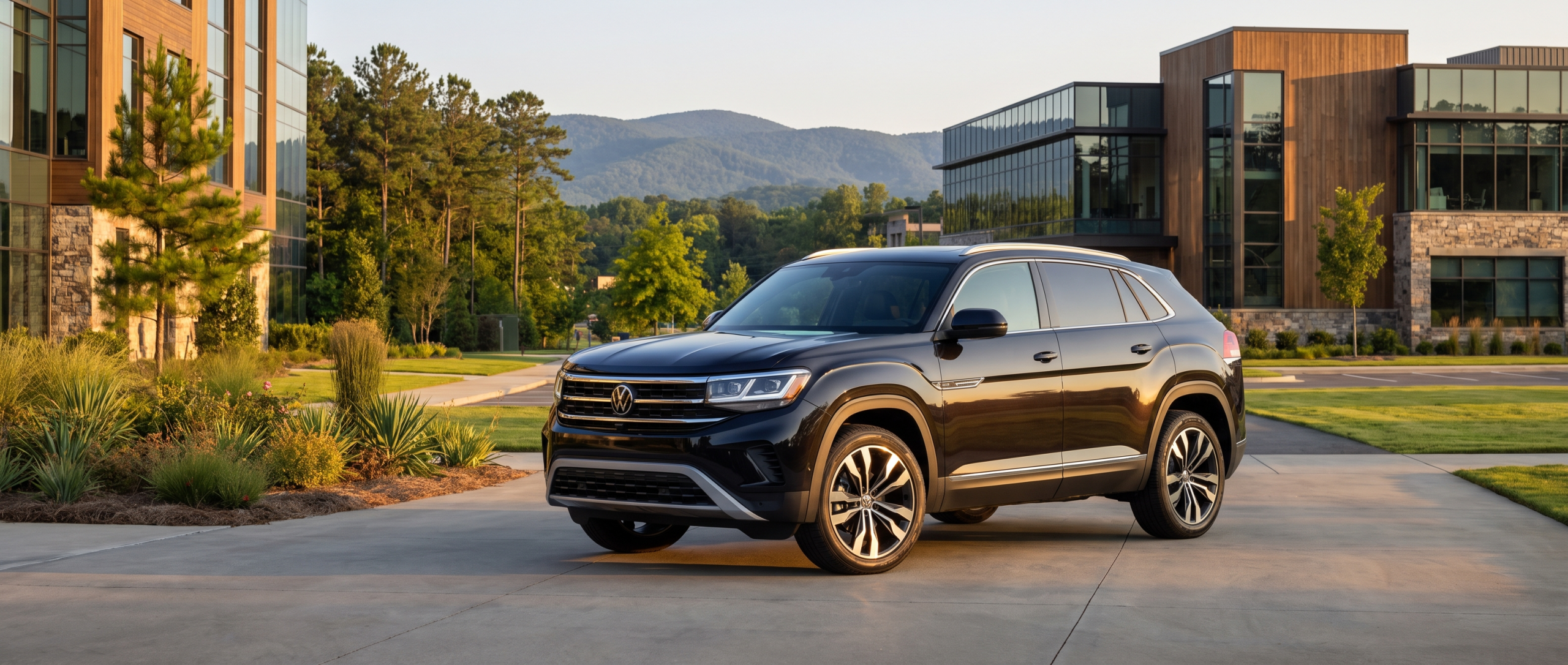
The Two-Row Advantage: Why the 2026 Volkswagen Atlas Cross Sport Fits the Spartanburg Professional Life
In this article What Do the Specs Actually Mean for Your Daily Drive? The IQ.DRIVE Suite: German Engineering Meets the I-85 Commuter A Real Tradeoff: What the Atlas Cross Sport Doesn't Get Right Who the Atlas Cross Sport Actually Fits in Upstate SC There's a stretch of I-85 near Spartanburg that locals have long called "the Autobahn," and that nickname didn't arrive by accident. German manufacturers including BMW, Michelin, BASF, and Siemens planted roots here decades ago, and today Spartanburg County anchors one of the most German-influenced industrial corridors in the country. So it makes a certain logical sense that the midsize SUV drawing serious attention from Upstate SC professionals drives, feels, and thinks like a German-engineered product. The 2026 Volkswagen Atlas Cross Sport is exactly that. The 2026 Atlas Cross Sport is rated an IIHS Top Safety Pick and delivers 269 horsepower, 40.4 inches of rear legroom, and up to 77.6 cubic feet of cargo space. No third row. No compromise on the things that actually matter for a Spartanburg commuter. Browse the 2026 Atlas Cross Sport at Steve White Volkswagen Spartanburg to see current availability on Reidville Road. What Do the Specs Actually Mean for Your Daily Drive? Pull these numbers out of the abstract and put them on a real commute, and they start to make sense in a different way. Spec 2026 Atlas Cross Sport Why It Matters on I-85 Engine 2.0L TSI Turbo, 269 hp / 273 lb-ft Confident merge power at highway speeds; same output across all five trims Transmission 8-speed automatic with paddle shifters Smooth progression; no hunting at highway cruise AWD 4Motion (opt. SE/SE Tech; std SEL+) Active traction before wheelspin, not after Drive Modes Eco, Comfort, Sport, Custom, Snow + Off-Road (4Motion) Eco on the commute, Sport for SC Highway 11 weekends EPA Fuel Economy (FWD) 20 city / 26 hwy / 23 combined Real-world highway number holds on long Greenville-to-Spartanburg runs EPA Fuel Economy (4Motion SE/SE Tech) 19 city / 26 hwy / 21 combined One mpg city penalty for AWD capability Rear Legroom 40.4 inches Adults fit comfortably; no cramped client conversations Cargo (seats up) 40.3 cu ft A full set of golf bags or a week's worth of luggage Cargo (seats folded) 77.6 cu ft Enough for a Croft State Park kayak run or a Costco haul Towing Capacity Up to 5,000 lbs (properly equipped) Handles a bass boat or a small camper for Blue Ridge escapes Safety Rating IIHS Top Safety Pick Verified independent crash-test recognition Drag Coefficient 0.34 Cd Lower than most SUVs in this segment; wind noise is genuinely reduced at speed The EPA rates the FWD Atlas Cross Sport at 20 city and 26 highway. That highway figure matters most for Upstate drivers: a Spartanburg-to-Greenville loop runs mostly freeway, and the 26 mpg highway rating holds up in normal conditions. The one honest tradeoff with 4Motion AWD is a one-mpg city dip, down to 19. Worth it? For anyone whose morning commute involves wet I-85 in January, we'd say yes. Drivers who upgrade to 4Motion tend to stop second-guessing it once they've used Snow mode in conditions where it earns its keep, and the system activates predictively before wheelspin actually starts rather than reacting after the fact. See Current Atlas Cross Sport Offers The IQ.DRIVE Suite: German Engineering Meets the I-85 Commuter For a Spartanburg professional, the number that shapes the daily experience isn't 269 horsepower. It's what Volkswagen's IQ.DRIVE suite does between the on-ramp and the parking garage. Every 2026 Atlas Cross Sport trim ships with the full IQ.DRIVE package: adaptive cruise control, lane-keeping assist, forward collision warning with automatic emergency braking, and exit warning assist. Standard. No trim-level shuffle and no upgrade package required to get there. Put that in the context of a commute running from the eastern Spartanburg suburbs toward the BMW campus in Greer, and adaptive cruise control in stop-and-go traffic stops being a luxury line item. It becomes a fatigue management tool. The lane assist works quietly on the long, straight highway stretches without aggressively pulling at the wheel unless you're genuinely drifting. That balance between active safety and driver feel is a calibration choice, and it's a good one. Competing SUVs with correction systems that feel like a tug-of-war are a fair comparison point; the Atlas Cross Sport doesn't fight you. Worth knowing: The Atlas Cross Sport's 12-inch touchscreen, 10.25-inch Digital Cockpit Pro instrument cluster, wireless Apple CarPlay, wireless Android Auto, 15-watt wireless charging, and four USB-C ports with 45-watt fast charge all come standard across every trim. A dead phone before a morning meeting is harder to accomplish than you'd think. A Real Tradeoff: What the Atlas Cross Sport Doesn't Get Right Skipping this section wouldn't serve you well, so we won't. The touch-sensitive climate controls are genuinely frustrating. They look clean and modern, but finding the temperature slider with a gloved hand or without looking down is harder than it should be. Multiple automotive reviewers who tested the 2026 model flagged this specifically, and our experience with customers who've driven the vehicle backs up the same ergonomic observation. If you adjust your climate constantly, plan to spend your first week getting familiar with the touchscreen menu rather than reaching by feel. Some interior plastics on lower trims also feel a step below what the pricing would suggest. The SE's leatherette seats and heated and ventilated fronts are genuinely good. The hard plastic surfaces on door panels and lower dash areas are less so. SEL and above get leather and a memory driver seat; that tier is where the interior fully earns its position. The two-row-only layout means the Atlas Cross Sport won't work if you're regularly hauling more than four adults. That job belongs to the three-row standard Volkswagen Atlas. Know that before you sit down. Pros Cons 269 hp uniform across all five trims Touch-sensitive climate controls poorly suited for tactile use IIHS Top Safety Pick safety rating Interior plastics on SE trims below pricing expectations 40.4-in rear legroom (class competitive) No third row; five-passenger max IQ.DRIVE suite standard on every trim 4Motion AWD adds cost; not standard until SEL 77.6 cu ft max cargo space Resale value trails some key segment rivals 0.34 drag coefficient; quiet at highway speed Touch-screen-controlled drive modes (no physical dial) Wireless CarPlay, Android Auto, 45W USB-C standard SEL Premium trim required for massage seats Who the Atlas Cross Sport Actually Fits in Upstate SC A recognizable professional profile keeps showing up around the Atlas Cross Sport in Spartanburg. Compact SUVs that feel cramped the moment a client sits in the back seat have run their course. There's no need for a third row, but 77.6 cubic feet of flat cargo space on a weekend is a different matter. I-85 is a daily reality, and safety shouldn't require an upgrade package. Plus the vehicle needs to reflect a standard of engineering that feels consistent with the professional environment these buyers work in every day. That last point carries specific weight in this market. Spartanburg's largest employers include BMW's North American manufacturing headquarters and Michelin North America's US base. Engineers, managers, and technical professionals who spend their days in facilities shaped by German manufacturing philosophy tend to recognize the same philosophy when they drive it home. The Atlas Cross Sport's 0.34 drag coefficient, its predictive 4Motion AWD engagement, its uniform powertrain across the entire lineup: these are calibration choices, and they're the kind that show up in the drive rather than just on a spec sheet. The Volkswagen Tiguan serves the buyer who wants a more compact footprint and optional third-row seating in a smaller package. The Atlas Cross Sport occupies a different lane: bigger cargo, longer wheelbase, more rear legroom, without the bulk and third-row complexity of the full Atlas. For a Spartanburg professional who carries clients, hauls gear for Blue Ridge Mountain foothills weekends, and commutes the I-85 corridor daily, that positioning hits a specific practical target that two-row competitors in this segment often miss. If you're weighing whether to step up to the full Volkswagen Atlas for the third row you might use twice a year, consider what you'd trade away: the Cross Sport's lower, sportier roofline, its slightly sharper cornering character, and a drag coefficient that shows up in wind noise reduction at highway speed. That tradeoff is personal. It's worth a side-by-side drive before you decide. Frequently Asked Questions Is the 2026 Volkswagen Atlas Cross Sport a good choice for professionals who commute on I-85? For a Spartanburg professional who drives I-85 regularly, the Atlas Cross Sport offers a well-matched set of features: IQ.DRIVE adaptive cruise control and lane assist standard on every trim, a 40.4-inch rear seat for client transport, and 4Motion AWD available for winter-weather commutes. The EPA rates FWD models at 26 mpg highway, and that number holds up on the consistent freeway stretches between Spartanburg and Greenville. The honest limitation is the touch-sensitive climate controls, which take real adjustment to use comfortably without looking away from the road. Does the Atlas Cross Sport need the third row, or is the standard two-row layout enough? The Atlas Cross Sport is a five-passenger, two-row SUV by design. If your household regularly seats more than five people, the three-row Volkswagen Atlas is the right choice. For a professional buyer who carries four adults at most and wants the cargo flexibility of 77.6 cubic feet of flat load space, the two-row layout is not a compromise. Without a third-row mechanism, the folded floor sits lower and flatter, and that's actually what makes the Cross Sport's cargo area so usable. Value Your Current Vehicle Toward an Atlas Cross Sport Steve White Volkswagen Spartanburg 2671 Reidville Rd, Spartanburg, SC 29301 (864) 585-2492
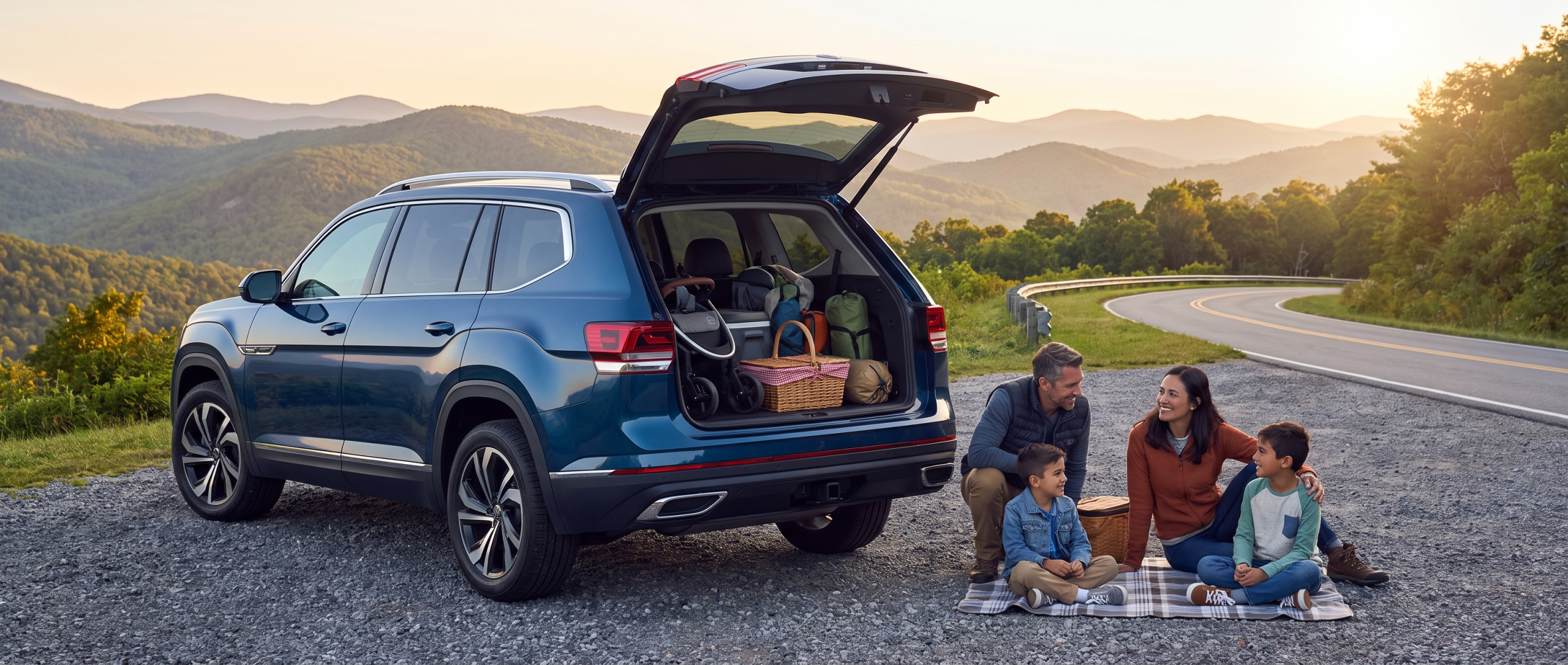
Which Volkswagen SUV Is Right for Spartanburg Drivers Who Need Third-Row Space?
If you need a third row from Volkswagen, the answer is one model and one model only: the 2026 Volkswagen Atlas. Every other VW SUV -- including the Atlas Cross Sport -- seats five people across two rows. The Atlas carries up to seven passengers and delivers 33.7 inches of third-row legroom, making it the only VW built for the kind of full-capacity driving Upstate SC families actually do. Does the Atlas Cross Sport Have a Third Row? The Atlas Cross Sport does not have a third row. This is the single most common point of confusion among Spartanburg VW shoppers, and it shapes everything else about the decision. The Atlas Cross Sport shares the Atlas platform and its 269-horsepower turbocharged engine, but Volkswagen replaced the third row with a lower, sloping roofline and a significantly larger cargo hold. The result is a five-passenger two-row SUV with 40.3 cubic feet of cargo space behind the second row -- useful for couples and smaller families who prioritize cargo flexibility over passenger capacity. If your reason for visiting a VW lot is "I need to seat seven," the Cross Sport is not the vehicle. The table below makes the tradeoffs concrete. Feature 2026 Atlas (3-row) 2026 Atlas Cross Sport (2-row) Passenger capacity 7 (or 6 with captain's chairs) 5 Third-row legroom 33.7 in. None Third-row headroom 38.3 in. None Cargo behind rear seats 20.6 cu. ft. 40.3 cu. ft. Cargo (max, all rows flat) 96.6 cu. ft. 77.6 cu. ft. Engine 2.0L TSI, 269 hp 2.0L TSI, 269 hp AWD availability Available all trims Available all trims Towing capacity (equipped) 5,000 lb 5,000 lb EPA combined (FWD) 23 mpg 23 mpg IIHS safety designation Top Safety Pick Top Safety Pick The power, efficiency, and safety story is identical between the two. The split is entirely about row three. Is the Atlas Third Row Actually Usable -- or Just There for Appearances? This is the question that moves people from "I want seven seats" to "I want the Atlas." Many three-row SUVs offer a third row that works only for young children; the Atlas positions itself differently. Volkswagen lists 33.7 inches of legroom in the third row and 38.3 inches of headroom. Those numbers matter on Spartanburg roads specifically: a round trip to browse new inventory is short, but a family run up SC Highway 11 through the Cherokee Foothills National Scenic Highway is a two-to-three-hour drive each way. Adults riding in a cramped third row feel that difference by the first fill-up. The second-row seat is also designed to make third-row entry practical rather than acrobatic. Volkswagen's sliding second-row bench moves fore and aft 7.7 inches and folds forward even with a child safety seat installed, which means a carpool with mixed-age passengers does not require everyone to reorganize every time a kid climbs through. On the SEL and SEL Premium R-Line trims, second-row captain's chairs reduce total capacity to six but create a true walk-through aisle to the third row. For Spartanburg families running school carpools or road trips: the Atlas offers 33.7 inches of third-row legroom -- enough that adults can manage an hour or two back there without complaint. Trim note: If you plan to use the third row regularly with adults, step at least to the SE with Technology trim. It adds a hands-free power liftgate (useful when both arms carry gear), and the captain's chairs option becomes available -- the walk-through path to row three makes boarding quicker for everyone, which matters in a school carpool lane where seconds count. Does the Atlas Offer AWD, and Does That Matter for Upstate SC Driving? The Atlas offers Volkswagen's 4MOTION all-wheel-drive system on every trim level, and it is standard on SEL and SEL Premium R-Line models. For most Spartanburg drivers, FWD is adequate -- Upstate SC does not see prolonged snow accumulation -- but 4MOTION earns its keep in two real scenarios. First, summer thunderstorms on I-85 between Spartanburg and Greenville can drop standing water on the highway quickly. 4MOTION redistributes torque to the wheels with traction rather than letting the front wheels spin through a flooded lane. Second, for drivers who run day trips up toward the Blue Ridge foothills, wet leaf litter on two-lane roads in October and November creates the exact surface condition AWD handles most predictably. The EPA rates the 2026 Atlas FWD at 20 city / 27 highway, and AWD models land at approximately 22 mpg combined. That is a modest efficiency trade for meaningfully improved stability in conditions that do show up here. Across the I-26 corridor toward the coast, FWD handles most conditions without issue; for mountain-adjacent trips, 4MOTION is the more confident choice. See Current Atlas Offers FAQ Does any other Volkswagen SUV offer a third row besides the Atlas? No. In the 2026 Volkswagen lineup, the Atlas is the only SUV with three-row seating. The Taos, Tiguan, Atlas Cross Sport, and ID.4 all seat five passengers across two rows. The ID. Buzz, Volkswagen's all-electric van, seats seven but is a different vehicle category. If your priority is a three-row Volkswagen SUV, the Atlas is the only path. How many people does the 2026 Atlas seat, and can adults really fit in the third row? The 2026 Atlas seats seven with the standard second-row bench, or six with the available captain's chairs. Volkswagen lists 33.7 inches of third-row legroom -- above average for this class. Adult passengers fit comfortably for trips up to an hour or two. Children and teenagers fit without reservation. The third row is not a token feature; Volkswagen designed it as the vehicle's reason for existing. Is the 2026 Atlas a safe vehicle for families? The IIHS awarded the 2026 Atlas a Top Safety Pick designation, and the NHTSA gave it a five-star overall safety rating. For 2026, Volkswagen added rear seat belt pretensioners and load limiters as standard equipment, which improves rear-occupant protection in frontal collisions. Standard IQ.DRIVE driver assistance includes forward collision warning, adaptive cruise control, and lane-centering assist on every trim. Explore Financing Options Steve White Volkswagen Spartanburg 2671 Reidville Rd, Spartanburg, SC 29301 (864) 585-2492
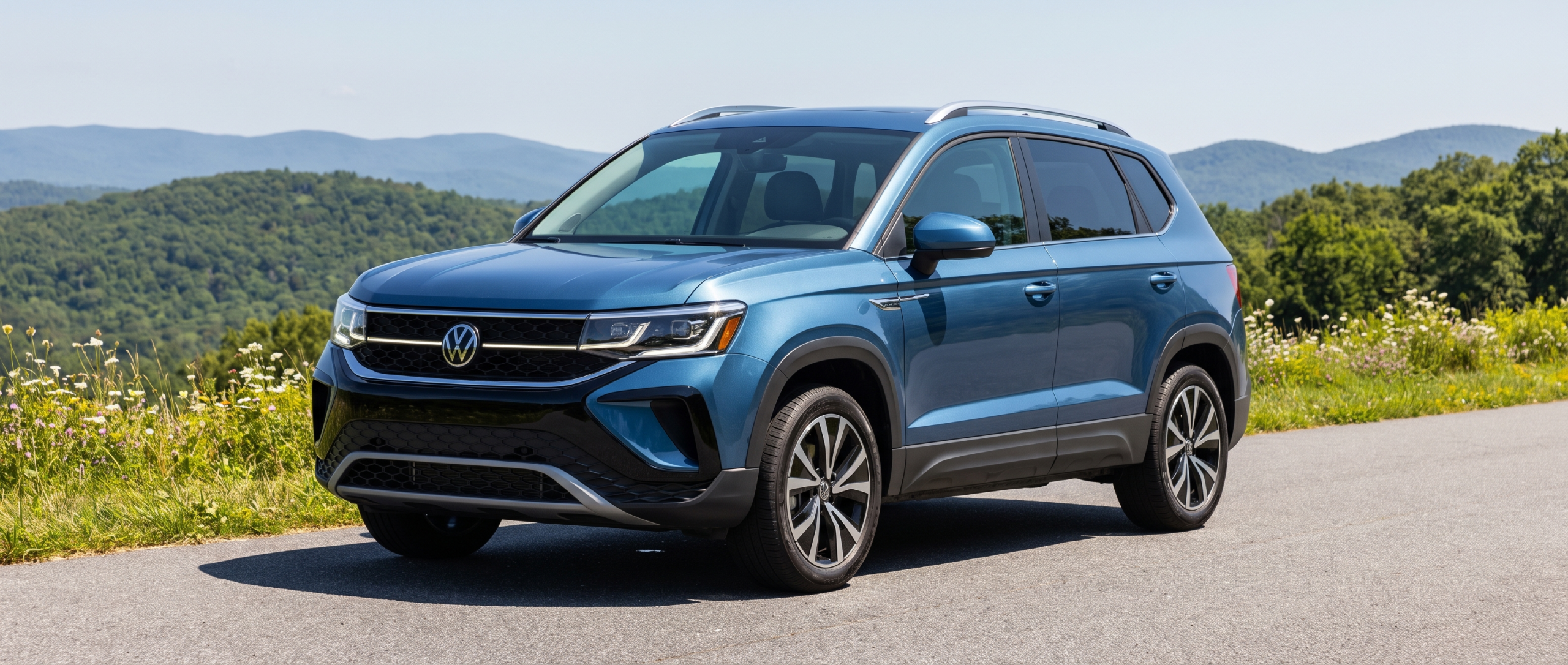
2026 Taos vs. 2026 Tiguan: Which Volkswagen Goes Farther on a Tank in Spartanburg?
In this article What's the Real MPG Difference Between the Taos and the Tiguan? Does the Drivetrain Choice Matter More Than the Model on Your Commute? Real-World Summer Efficiency: What Spartanburg's Heat Does to Both Models So Which Volkswagen Should You Pick? If you're choosing between VW's two most popular SUVs and fuel economy matters to you, the answer is clear: the 2026 Taos earns 3 more combined MPG than the base Tiguan in FWD form -- and up to 6 more than a Tiguan equipped with 4MOTION AWD. In Spartanburg's July heat, where the AC compressor is rarely off, that gap is felt at every fill-up on the I-85 corridor. The short version The EPA rates the 2026 Taos at 28 city / 36 highway / 31 combined (FWD), versus 25-26 city / 32-34 highway / 28-29 combined for the 2026 Tiguan FWD. Add 4MOTION AWD to the Tiguan and combined MPG drops further to 25 -- a full 6 mpg below the Taos FWD. Both run on regular 87-octane gasoline and share a turbocharged engine philosophy, but the Taos is lighter and smaller, which is where the efficiency edge comes from. If you frequently run I-85 between Spartanburg and Greenville, the Taos is the stronger fuel-economy pick. If you need third-row seating or tow capacity, the Tiguan earns its larger footprint. Either way, your biggest real-world MPG lever in an Upstate SC summer is how you manage the AC -- not which trim level you chose. the 2026 Taos is the more fuel-efficient of the two by every EPA measure, but that doesn't make it the right pick for every driver. Here's what the numbers actually mean on the roads you drive. What's the Real MPG Difference Between the Taos and the Tiguan? Three combined MPG in the real world is not abstract -- it adds up across a year of Upstate commuting. The EPA's 2026 Fuel Economy Guide puts the numbers side by side cleanly, and a couple of things stand out beyond the headline figures. Spec 2026 Taos FWD 2026 Tiguan S FWD 2026 Tiguan SE/SE R-Line FWD 2026 Tiguan 4MOTION AWD City MPG (EPA) 28 26 25 22 Highway MPG (EPA) 36 34 32 30 Combined MPG (EPA) 31 29 28 25 Engine 1.5L turbo 4-cyl 2.0L turbo 4-cyl 2.0L turbo 4-cyl 2.0L turbo 4-cyl Fuel type Regular 87 Regular 87 Regular 87 Regular 87 Cargo (behind 2nd row) Competitive 69.8 cu ft 69.8 cu ft 69.8 cu ft The Taos's efficiency advantage comes from a smaller, lighter 1.5-liter turbocharged engine versus the Tiguan's 2.0-liter unit. Both use an eight-speed automatic, and both run on regular gasoline -- no premium surcharge on either. The Tiguan's 2.0-liter produces more torque, which is why it can tow up to 1,500 pounds and seat up to seven passengers in higher trims. That capability costs something on the fuel gauge. One number in the table deserves special attention: the 4MOTION AWD Tiguan at 22 city / 30 highway. If you've been eyeing AWD for foul-weather confidence on I-85 and selected a Tiguan, you're looking at 25 combined -- six below the Taos FWD. For most Upstate SC drivers, the terrain and weather rarely require AWD, which makes FWD Tiguan and Taos the more relevant comparison. The EPA rates the 2026 Taos FWD at 31 combined MPG -- 3 more than the FWD Tiguan S and 6 more than the 4MOTION Tiguan. On a typical 12,000-mile Spartanburg year, that gap is real money at the pump. Does the Drivetrain Choice Matter More Than the Model on Your Commute? For most Spartanburg drivers running the I-85 corridor between Greenville and the city, the drivetrain choice within the Tiguan line matters nearly as much as choosing between Tiguan and Taos. The spread between a Tiguan S FWD (29 combined) and a Tiguan 4MOTION AWD (25 combined) is four MPG -- almost as large as the gap between the Taos FWD and the Tiguan S FWD. If your driving is primarily highway miles between exits on I-85, both the Tiguan and the full VW new inventory reward you for staying in FWD. South Carolina's roads -- even the rolling Piedmont terrain south of the Blue Ridge foothills -- rarely demand AWD for traction. Snow events are infrequent enough in Spartanburg that the extra drivetrain hardware spends most of the year adding weight without adding grip. Where FWD genuinely shows up in the real world: the Taos's smaller 1.5L turbo reaches efficient cruise RPM faster on flat-to-rolling ground, like the long, gradual grades on I-85 south toward Gaffney. The Tiguan's 2.0L is tuned more for pull -- it earns its lower MPG rating when you're merging at highway speed or hauling passengers. That said, if you regularly take SC Highway 11 along the Cherokee Foothills National Scenic Highway for weekend drives into the mountains, the Tiguan's extra torque is more noticeable -- and the fuel cost difference narrows a bit in that kind of spirited driving. Real-World Summer Efficiency: What Spartanburg's Heat Does to Both Models July in Spartanburg is not the same as EPA test conditions, and the gap between the window sticker and your gauge cluster is wider than most drivers expect. The main culprit is the AC compressor -- not potholes, not altitude. "Under very hot conditions, AC use can reduce a conventional vehicle's fuel economy by more than 25%, particularly on short trips." -- U.S. Department of Energy, fueleconomy.gov That's a significant number to carry around in Upstate SC in July. A 2026 Taos rated at 31 combined can realistically drop into the mid-to-upper 20s on a day of short errands -- school drop-off, a stop at a store on Reidville Road, back home -- if the AC is working hard to cool a sun-soaked cabin each time. The same dynamic affects the Tiguan. A few habits that make a measurable difference on either model: Park in shade when possible. A cooler cabin on startup means the compressor works for seconds, not minutes, before backing off. Vent before blasting. Cracking the windows for 30-60 seconds when you first get in expels the hottest trapped air; the AC then cools a 90-degree cabin instead of a 130-degree one. Use the recirculation mode once the cabin is cool. Recirculating already-cooled air requires less compressor effort than conditioning fresh hot air from outside. Check tire pressure monthly. SC summer heat causes tire pressure to fluctuate; underinflated tires are among the most consistent fuel-economy reducers on any vehicle, and both the Taos and Tiguan are sensitive to it. Maintain your service schedule. A clean air filter and fresh engine oil at the correct viscosity both support the turbocharged engine's efficiency on either VW. The Taos's lighter weight means the AC system is conditioning a smaller volume of cabin air, which gives it a slight real-world edge even beyond its rated MPG advantage -- though the difference is subtle compared to the behavioral habits above. So Which Volkswagen Should You Pick? The honest answer depends on what you're actually driving and carrying, not on which number looks better on paper. Choose the Taos if: Your daily driving is the Spartanburg-Greenville I-85 run or urban errands, and you want the most fuel-efficient VW SUV without trading down to a sedan. You're a solo driver or couple who doesn't need third-row seating. Fuel economy is a primary buying criterion -- the Taos's 31 combined is the strongest number in the VW gasoline SUV lineup. Choose the Tiguan if: You regularly carry more than five passengers or need the available third-row seating. You want more towing capacity (up to 1,500 pounds) for a small trailer or gear on SC Highway 11. Interior cargo volume -- 69.8 cubic feet behind the front seats -- is a priority over maximizing MPG. You prefer the 2.0L engine's additional torque for highway merging confidence. If pure fuel economy is the deciding factor, the Taos wins by a clear, documented margin. If capability and passenger space matter more, the Tiguan earns its rating. Most drivers choosing between these two are not on the extreme ends -- they're families or couples who want a practical VW SUV that doesn't punish them at the pump, and for that reader, the Taos is typically the more satisfying choice in Spartanburg's driving environment. Frequently Asked Questions Does AWD significantly hurt the Tiguan's fuel economy? Yes, noticeably. The EPA rates the 2026 Tiguan with 4MOTION all-wheel drive at 22 city / 30 highway / 25 combined, versus 26 city / 34 highway / 29 combined for the base S trim in FWD. That's a 4 mpg drop in combined efficiency -- roughly the same gap as the difference between the Taos FWD and the Tiguan S FWD. How does summer heat affect my VW's real-world MPG in Spartanburg? Air conditioning is the primary culprit. The U.S. Department of Energy notes that under very hot conditions, AC use can reduce fuel economy by more than 25%, particularly on short trips. In practical terms: both the Taos and Tiguan will fall below their EPA combined ratings on a July day full of short in-town errands. What are the best habits to maximize fuel economy in hot weather? Parking in shade, venting the cabin before engaging the AC fully, using recirculation mode, keeping tire pressure at spec, and maintaining your service schedule are the most effective ways to recover lost miles per gallon on either VW. See Current VW Offers The Jetta is also worth a look if you're open to a sedan: the EPA rates it at 29 city / 40 highway / 34 combined for the 2026 model year in S trim -- the most efficient non-EV in the VW lineup by a notable margin and a strong option for I-85 commuters who don't need SUV cargo space. Schedule a Service Appointment Steve White Volkswagen Spartanburg 2671 Reidville Rd, Spartanburg, SC 29301 (864) 585-2492