
Blog

Volkswagen Jetta GLI vs. Acura Integra for Spartanburg Drivers

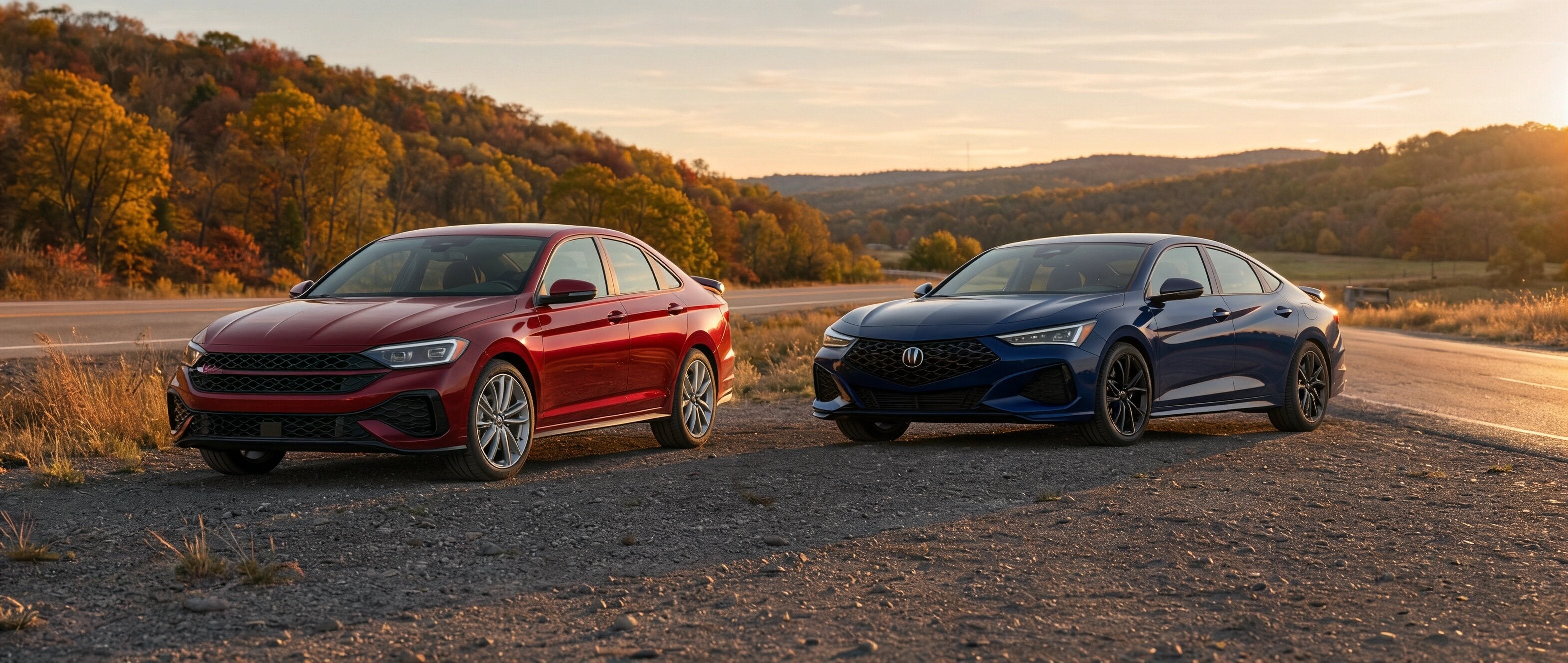
Red 2027 VW Jetta GLI sedan beside blue Acura Integra liftback on a foothills road near Spartanburg.

By the Steve White Volkswagen Spartanburg Team | November 2026

If you're shopping a fun sport compact sedan around Spartanburg and you've narrowed it to the Jetta GLI and the Acura Integra, you've built a smart shortlist already. The Jetta GLI wins on raw torque and driving engagement, while the Integra wins on cargo versatility and a slightly more premium badge. Neither choice is wrong. They just fit different drivers, and the right answer depends almost entirely on what you actually do with the car.

See Current Volkswagen Jetta GLI Offers

Which Is the Better Fit for Spartanburg Roads and the SC Highway 11 Run, the Jetta GLI or the Integra?

For Spartanburg's split of fast highway corridors and the twisty climb up SC Highway 11, the Jetta GLI is the stronger all-around fit, though the Integra stays composed and easy to live with if most of your week is a plain commute to Greenville or Anderson. The highway run stays straight and quick, so it rewards confident manners at speed. SC Highway 11, the Cherokee Foothills National Scenic Highway, is the other world, 100 winding miles along the Blue Ridge that reward a car with suspension you can feel working. On that second kind of road the Jetta GLI pulls ahead. Its Dynamic Chassis Control adaptive suspension and the VAQ electronically-controlled limited-slip differential feed the front axle genuine traction out of a corner instead of letting the inside wheel spin. The Integra with the A-Spec adaptive dampers handles well enough, but its steering is lighter and its chassis leans toward comfort. Run Highway 11 on a Sunday morning and that difference is easy to feel.

For the commuter who just wants a smooth daily driver in a sport-sedan shape, both cars deliver. The Integra's CVT stays relaxed in traffic. The DSG of the Jetta GLI makes quick work of a highway merge. Neither one will wear you out.

How Do the Jetta GLI and Integra Compare on the Specs That Decide This Matchup?

The spec that reshapes this matchup for 2027 is what's gone from both cars, because each one just dropped its manual gearbox, and that moves the question away from stick-shift feel and toward which automatic actually moves the car better. The Jetta GLI dropped its six-speed manual for 2027, leaving the seven-speed DSG as the only gearbox. The Integra's A-Spec manual was paused after the 2026 model year (the Type S still gets a six-speed manual, but that's a different tier entirely). So for 2027, both cross-shopped trims are automatic-only. The DSG's dual-clutch character still gives the Jetta GLI a more mechanical, engaged feeling than the Integra's CVT, even without three pedals.

Which Has More Power and Engine Response, the Jetta GLI or the Integra?

On power the Jetta GLI holds the clearer edge, since its 2.0-liter turbocharged engine delivers 228 horsepower and 258 lb-ft of torque against the Integra's 1.5-liter turbo at 200 horsepower and 192 lb-ft, and that torque gap is what you feel in daily driving. The 66 lb-ft difference is the number that matters most day to day. Torque is what you feel merging onto a busy interstate or pulling out of a tight turn. The GLI puts it down from 1,700 rpm, so it's pulling hard before the tachometer has moved far.

The Integra is not slow. But its engine pulls harder higher in the rev range, and the CVT is calibrated to keep it there. Smooth and efficient, sure, but it's a different feel behind the wheel. Want the car to answer your foot instead of the transmission's algorithm? The GLI wins here.

Is the Jetta GLI or the Integra Better for Tech and Daily Convenience?

On tech and daily convenience the two land close, with the Jetta GLI Autobahn arriving fully loaded and the Integra A-Spec with Technology matching most of it feature for feature, so this one comes down to how the screens are laid out more than what's included. Check the Autobahn's standard equipment and there's not much left to add. A 10.25-inch Digital Cockpit Pro instrument display, an 8-inch touchscreen with wireless App-Connect (Apple CarPlay and Android Auto, both wireless), heated and ventilated Vienna leather seats, a heated steering wheel, a panoramic sunroof, and a wireless charging pad all come standard on the single Autobahn trim. The IQ.DRIVE suite adds adaptive cruise with Stop and Go, Travel Assist semi-automation, blind-spot monitoring, rear traffic alert, and lane assist. There's no trim decision to make, since Autobahn is the only GLI you can buy for 2027.

The Integra A-Spec with Technology brings a 9-inch touchscreen (the instrument cluster of the Jetta GLI is a 10.25-inch Digital Cockpit Pro, though the two displays are structured differently), wireless Apple CarPlay and Android Auto, full AcuraWatch driver aids, and adaptive dampers. It earns the Technology name. The Integra's infotainment interface gets positive marks for clean organization, and the AcuraWatch suite is thorough. On pure on-paper equipment, the two run close.

Which Costs Less to Run, the Jetta GLI or the Integra?

On running costs the Integra holds a clear advantage, and it's worth being straight about it, because the 1.5-liter engine and CVT return roughly 32 mpg combined against the 26 city, 35 highway, 29 combined of the Jetta GLI. If your driving leans heavy on around-town errands and local stop-and-go traffic, the gap widens further in the Integra's favor.

The maintenance schedule of the Jetta GLI is straightforward for a German car at this tier, and the engine family (EA888 Gen 3) has a long production history, which helps parts availability and technician familiarity in the region. Neither car carries unusual ownership costs at this price point. The Integra's Honda-platform underpinnings are well-established and have a strong local service network. On pure fuel economy, the Integra wins. For the driver who stacks up highway miles, the 35 mpg highway rating of the Jetta GLI closes that gap considerably. When you're ready to work through the numbers on either car, our financing team can walk you through the options.

Where Does the Integra Beat the Jetta GLI?

The Integra beats the Jetta GLI on two fronts that might matter more to you than any line on a spec sheet, and both come down to how the car carries your stuff and how the badge reads in your driveway.

Cargo space is the bigger of the two. The Integra's liftback design gives it 24.3 cubic feet behind the rear seats (with 60/40 split folding), while the conventional sedan trunk of the Jetta GLI holds 14.1 cubic feet. Haul sports gear, luggage, or a road bike's worth of odds and ends on a regular basis, and the Integra's wide-opening liftgate does things a sedan trunk simply can't. That's not a small gap.

What Is the Jetta GLI Like to Live With Compared with the Integra?

Lived with every day, the Jetta GLI is a comfortable daily car that sits a touch higher off the road than the Integra, which makes getting in and out easier, especially for shorter drivers or anyone who dislikes the low-slung seating that comes with sport-tuned cars. The DSG's low-speed behavior smooths out once it's warmed up, though it can feel slightly hesitant in a tight parking lot at a crawl, a trait of dual-clutch transmissions that some drivers notice and others never do.

The Integra rides lower (55.5 inches overall height versus 57.3 inches for the Jetta GLI), and rear passengers taller than six feet will find headroom snug at 36.4 inches. Front legroom is comparable, at 42.3 inches in the Integra and 41.1 inches in the Jetta GLI. The Integra's liftback also puts the rear window inside the opening glass, which creates a blind spot that takes some adjusting when you park. Neither car has a physical volume knob, and both lean on touchscreen climate and media controls, which divides opinion among drivers who spend time behind the wheel.

Are There Known Issues to Watch on the Jetta GLI or the Integra?

Neither the Jetta GLI nor the Integra carries a known issue big enough to swing this decision on its own, though each has a couple of items worth a quick check before you sign, and one of them is a documented recall on specific Jetta GLI model years. For the Jetta GLI, the 2025 GLI-specific federal safety record shows no active recalls, and that generation carries a five-star overall safety rating. Worth noting in context, a recall was issued covering some 2025-2026 Jetta and Jetta GLI models for a transmission ground wire connection issue. That recall is documented and resolved through the dealer network. Buying a 2025 or 2026 GLI? Ask us to verify the recall status on the VIN. The 2027 Jetta GLI is new enough that it carries no recall history to date.

For the Integra, the 2023-generation car earned top-tier crash-test recognition at launch, and the nameplate has picked up no significant recall pattern across its current generation. Owner forum themes center on the CVT's behavior at low speeds and occasional infotainment connectivity quirks, neither of which points to a structural concern.

Neither car has a known issue serious enough to tip the decision on its own.

Which Should You Buy, the Volkswagen Jetta GLI or the Acura Integra?

Which one you should buy comes down to what you want the car to do, because the Jetta GLI rewards the driver who cares about the drive while the Integra rewards the owner who needs cargo room and the best fuel economy of the pair. The split is simple.

The Jetta GLI is the right car if the drive itself is part of the point. More torque, a quicker-feeling transmission, a chassis tuned for the kind of winding roads Upstate South Carolina actually has, and a fully equipped Autobahn trim with no option regret. Those add up to a sport sedan that behaves like one. The Autobahn is the only configuration offered for 2027, which simplifies the decision considerably.

The Integra is the right car if you need hatchback cargo versatility in a sport sedan's body, want the better fuel economy of the two, or find the Acura badge meaningful in your market. The liftback genuinely changes what the car can do on a weekend run, and the AcuraWatch suite is thorough. Those are real advantages, not marketing language.

We carry the Volkswagen Jetta lineup if you want to compare the base Jetta against the GLI before committing. We'd also point you to the Golf GTI, which shares the engine and driving character of the Jetta GLI in a hatchback body. In some ways it's the closest thing to having both cars at once. See what's on our lot and schedule a back-to-back drive. That's genuinely the best way to settle this, since both cars make a strong case on paper and both feel different once you're behind the wheel.
Frequently Asked Questions About the Volkswagen Jetta GLI vs. Acura Integra in Spartanburg

Does the 2027 Volkswagen Jetta GLI still come with a manual transmission?

No. Volkswagen dropped the six-speed manual from the Jetta GLI for 2027, which leaves the seven-speed DSG dual-clutch automatic as the only available gearbox. If a manual transmission is important to you, the outgoing 2026 GLI may still be available, or the Jetta GLI isn't the right choice for 2027.

Does the 2027 Acura Integra A-Spec come with a manual transmission?

The manual transmission on the Integra A-Spec with Technology was paused after the 2026 model year, so for 2027 the A-Spec is CVT-only. The Integra Type S continues to offer a six-speed manual, but it's a significantly different and higher-priced performance variant.

Which is more practical for everyday use, the Jetta GLI or the Integra?

For pure cargo practicality, the Integra's liftback holds 24.3 cubic feet behind the rear seat with a wide-opening liftgate, while the conventional sedan trunk of the Jetta GLI holds 14.1 cubic feet. The Integra wins that one clearly. For driver engagement and commute feel on winding roads and steady highways, the torque advantage and adaptive suspension of the Jetta GLI make the stronger daily case for the driver-focused buyer.

Which car is cheaper to run, the Jetta GLI or the Integra?

The Integra's 1.5-liter engine and CVT combination returns better combined fuel economy than the 2.0-liter turbo of the Jetta GLI. For stop-and-go driving in local traffic, that gap is meaningful. The 35 mpg highway figure of the Jetta GLI is competitive for the class, but if most of your miles are urban, the Integra is likely cheaper to fuel.

Is the Volkswagen Jetta GLI available in Spartanburg?

Yes. Steve White Volkswagen Spartanburg carries the Jetta GLI, and we serve drivers from Spartanburg, Greenville, and Anderson, SC. Contact our team to check current Jetta GLI Autobahn availability and to arrange a test drive alongside any other model in the lineup.

Steve White Volkswagen Spartanburg

2671 Reidville Rd, Spartanburg, SC 29301

(864) 585-2492

Recommended Posts

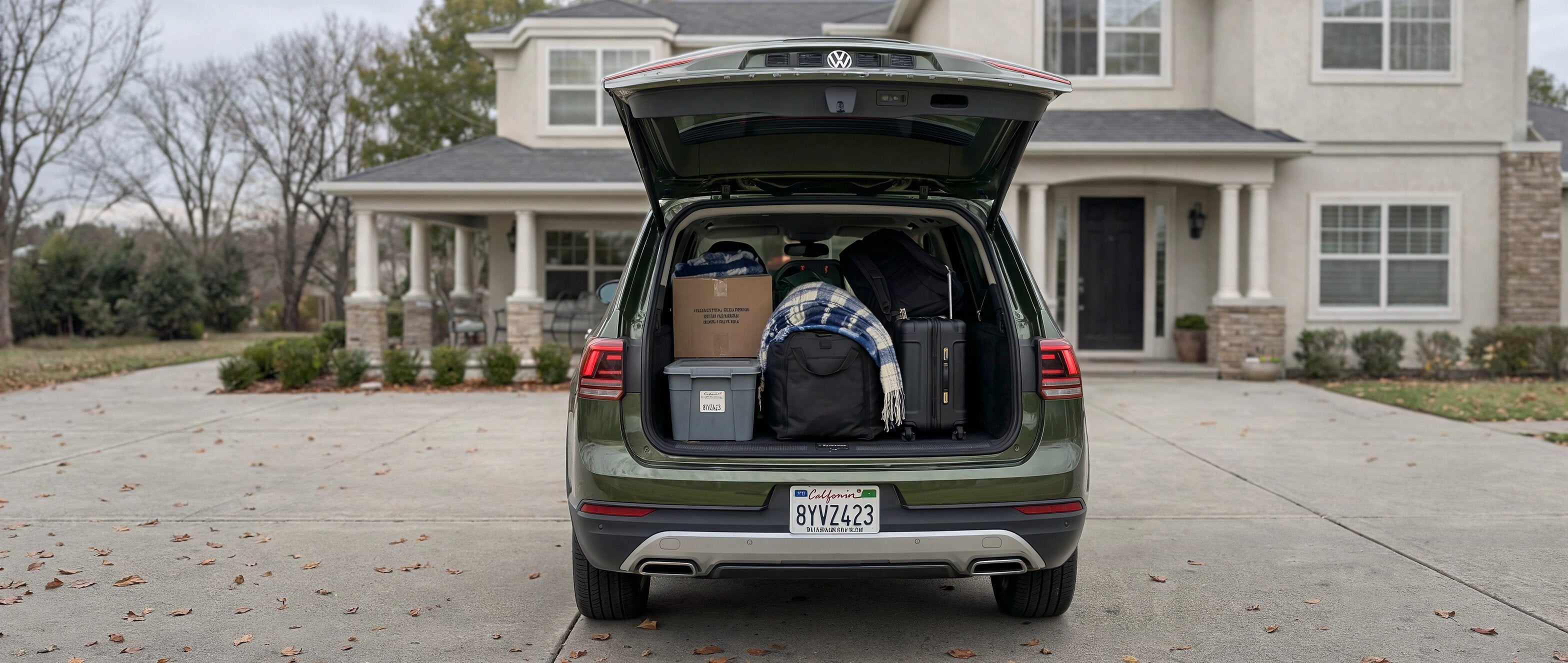
A parent loads bins and bags into the open cargo area of a green 2027 VW Atlas in a Spartanburg driveway.

Best Volkswagen Models for the Drive Home From College to Spartanburg

In this article How Do You Drive a Fully Loaded Volkswagen Safely on the Highway on Move-Out Day? What Should You Never Do When Driving a Loaded Volkswagen on the Highway Out of Spartanburg? How Much Longer Does It Take to Stop When Your Volkswagen Is Loaded for Move-Out? Which Volkswagen Features Help on I-85 When You Are Hauling Dorm Room Everything? What Should You Check Before Heading Out on the Highway for College Move-Out Weekend? Finals week smells like cold coffee, overpacked bins, and a little panic. You pull up to the residence hall, the curb's a mess, and somewhere up four flights of stairs your kid is waiting with seventeen months of accumulated life to cram into one vehicle. Your job is to get it all home in a single trip, on the interstate, without clipping anyone. The model you drive decides whether that's easy or miserable. How Do You Drive a Fully Loaded Volkswagen Safely on the Highway on Move-Out Day? You can drive a fully loaded Volkswagen safely, but a loaded vehicle behaves differently than an empty one, and the interstate through the Upstate won't forgive a distracted merge. Cargo weight settles the rear suspension a touch lower and can make the vehicle feel more planted at highway speed, though it also stretches your stopping distances. Plan for it. The Atlas and the Volkswagen Tiguan both handle this run well. What separates them is who you're carrying. One kid plus both parents? The Tiguan manages it cleanly, with 69.8 cubic feet of cargo when the second row folds flat and 40.2 inches of rear legroom when it's up. Bring two kids home the same weekend, or add a younger sibling, and the Volkswagen Atlas becomes the right tool. You get three rows, 95.4 cubic feet of maximum cargo, and a third row that fits a full-grown college student at 34.1 inches of legroom. What Should You Never Do When Driving a Loaded Volkswagen on the Highway Out of Spartanburg? Never pack the cargo area up to the headliner and then treat the highway merge like a normal Tuesday, because a fully loaded three-row SUV is heavier and taller than the one you drive to work, and that shifts the physics in ways that matter when you're threading busy lanes. Give yourself room. The Atlas carries IQ.DRIVE(R) as standard equipment on every trim. Travel Assist with driver-initiated lane changes, Active Blind Spot Monitor, and Rear Traffic Alert are all running whether you ordered the base SE or the SEL Premium R-Line. When a tower of bins blocks your rear view, those features carry a real load. How Much Longer Does It Take to Stop When Your Volkswagen Is Loaded for Move-Out? Yes, a loaded Volkswagen needs more room to stop than an empty one, and the mechanism is plain: more mass requires more brake force to decelerate at the same rate, while tires already warmed from a highway run give up some of the grip margin they had cold at the start of the day. It isn't dramatic, but it's real, and it's the reason following distance matters more on a loaded vehicle than an empty one. See Current Volkswagen Specials Which Volkswagen Features Help on I-85 When You Are Hauling Dorm Room Everything? The features that help most on I-85 pull double duty, giving you both the cargo room and the highway assistance tech that let you keep your eyes on the road, not the rearview mirror, because this corridor between Spartanburg and Greenville runs six lanes in places, carries heavy truck traffic, and throws merge zones at you that won't reward optimism. Our inventory on Reidville Road sits right on the SC-296 corridor, which feeds directly onto that stretch. The Atlas Cross Sport deserves a mention for families who want two rows and a sportier roofline. It carries less than the three-row Atlas (no third row, lower cargo ceiling) but more usable flat-floor space than the Tiguan. If your kid's an only child and you're picking up at Wofford, that two-row layout often works fine. What Should You Check Before Heading Out on the Highway for College Move-Out Weekend? Before you pull out, check two things above all else, your tire pressure and your cargo anchors. A vehicle loaded at or near its rated cargo capacity puts maximum load on the tires, and low pressure combined with a heavy load is the leading cause of tire stress on a long highway run. Check the pressure cold, before you load up, against the sticker inside the driver's door jamb rather than the number on the tire sidewall. Do it cold. Frequently Asked Questions About Volkswagen Models for the College Drive Home in Spartanburg Which Volkswagen fits two college students' worth of dorm gear in one trip? The 2027 Atlas is the practical answer. Fold both rear rows and you've got 95.4 cubic feet of cargo, and with the third row up it still seats seven with 34.1 inches of legroom in back. Picking up two kids from Wofford and USC Upstate on the same weekend run up the interstate? The Atlas is the one vehicle in the Volkswagen lineup that pulls it off without leaving a lamp on the sidewalk. Does the 2027 Volkswagen Atlas have driver assistance features for highway driving? Yes, and it's one of the genuinely useful things about this lineup for a move-out run. IQ.DRIVE(R) is standard on every 2027 Atlas trim, not an upgrade package but standard equipment. You get Adaptive Cruise Control with Stop and Go, Travel Assist with driver-initiated lane changes, Active Blind Spot Monitor, and Emergency Assist. On the highway with a blocked rear window and two hours of driving ahead, those systems earn their keep. Is the 2027 Volkswagen Tiguan big enough for a single student's move-out load? For one kid, yes, comfortably. The 2027 Tiguan folds its second row to open up 69.8 cubic feet of cargo, and with the seats up you've got 40.2 inches of rear legroom, plenty for a college student with a sibling riding along. The tradeoff is real. The Tiguan seats five, so the moment a third person climbs into the back seat, the cargo area drops to its seated configuration. Plan the headcount before the packing list. Does 4MOTION all-wheel drive make a difference on the Spartanburg-to-home run? For a dry November run, it's not a deciding factor. Where 4MOTION all-wheel drive earns its spot is the return trip in January or early February, when the Upstate occasionally sees ice on the bridges and overpasses before the road surface clears. The Atlas offers 4MOTION on every trim above the base SE, and the Tiguan offers it across the lineup through the available 4Motion configuration. If your family does both fall and spring move-outs, the AWD option is worth factoring in. Can our team at Steve White Volkswagen Spartanburg help us choose the right model before move-out season? Absolutely. Come see us on Reidville Road and we'll walk you through the Atlas and Tiguan side by side, cargo measurements, seating configurations, and which trim gives you the highway tech your move-out run actually needs. Schedule a pre-trip service check while you're there if the drive's coming up soon. By the Steve White Volkswagen Spartanburg Team | November 2026 Value Your Trade Before the Next Chapter Steve White Volkswagen Spartanburg 2671 Reidville Rd, Spartanburg, SC 29301 (864) 585-2492

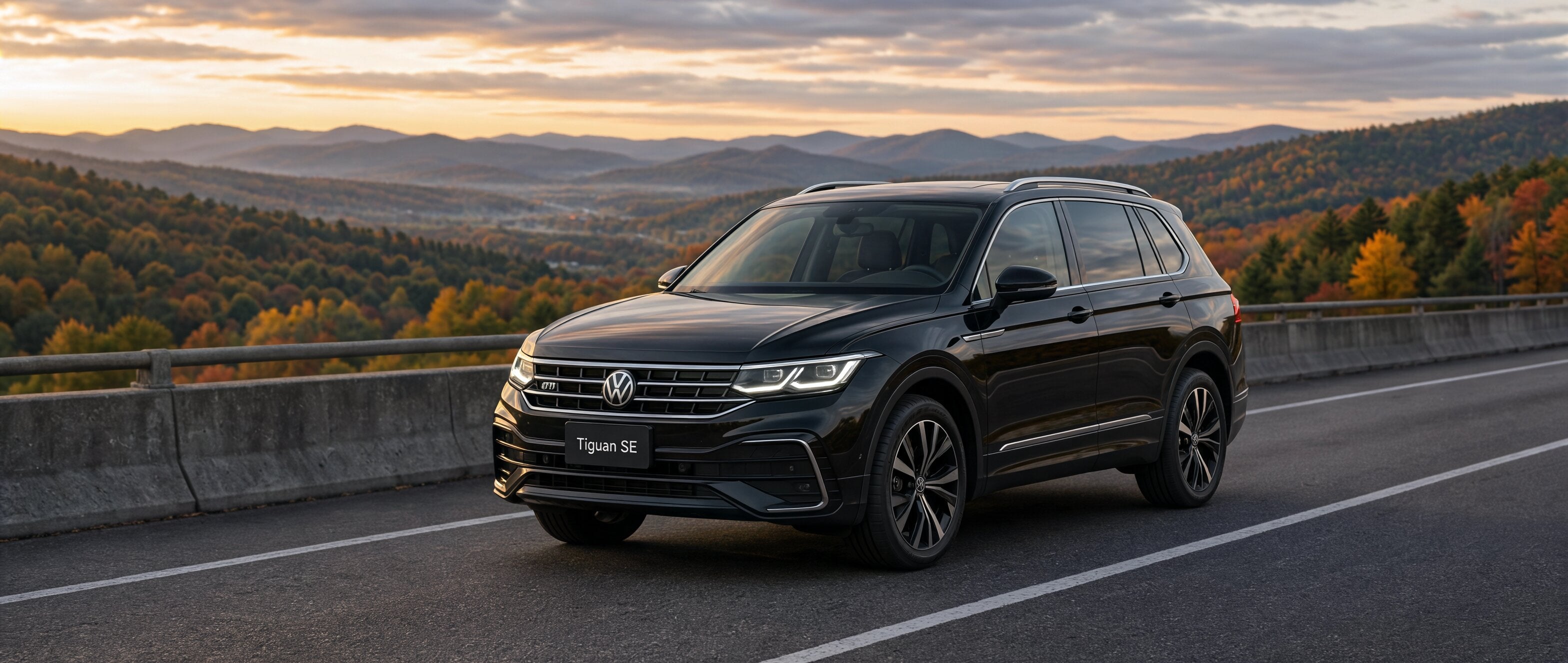
2026 Volkswagen Tiguan SE parked on overpass near Reidville SC with Upstate South Carolina hills in background

Why the 2026 Volkswagen Tiguan Fits Drivers Near Moore and Reidville

In this article What Do You Actually Get at Each Tier? Where the Tech and Safety Story Gets Interesting The Honest Tradeoff Which Tiguan Tier Fits Reidville Road Drivers The bottom line: the base trim S of the 2026 Tiguan lands with a 12.9-inch touchscreen, heated front seats, and the full IQ.DRIVE suite. Travel Assist comes included before you add a single option, which reshapes the value math at every tier above it. If you live near Moore or Reidville and you're circling a Tiguan, the pitch you've probably heard runs something like "German engineering, right-sized." True enough, as far as it goes. But it won't tell you which of the four trims actually makes sense for your commute, or where you're paying for something real versus something you'll never touch. Browse our 2026 Volkswagen Tiguan inventory and you'll see the spread quickly. Explaining that spread is what we're here to do. Reidville Road sits at the junction of the SC-296 corridor and an easy on-ramp to I-85, which carries roughly 85,000 vehicles a day through Spartanburg County. So you're looking at a highway-heavy driving profile, and the Tiguan was redesigned specifically for it. The 2026 generation shed about 170 pounds, dropped the third row in favor of a wider cargo floor at 33.8 cubic feet with the seats up, and moved the gear selector to the steering column to open up the center console. Most important, it put the full IQ.DRIVE driver assistance suite on every single trim level. Travel Assist with assisted lane changing is standard on the base S. You don't earn it by upgrading. Most online guides skip right past that fact. And it matters for your decision. What Do You Actually Get at Each Tier? The 2026 Tiguan comes in four trim levels, the S, the SE, the SE R-Line Black, and the SEL R-Line Turbo, and what you're really buying as you climb is material quality and convenience rather than more tech or safety, since the core suite stays constant across all four. A few things change notably as you move up. Trim Standard highlights 4MOTION AWD EPA combined (FWD) Best for S 12.9" touchscreen, Digital Cockpit Pro, IQ.DRIVE (Travel Assist standard), heated front seats, 17" alloys, wireless Apple CarPlay / Android Auto, 4x 45W USB-C Optional add-on 29 mpg Daily commuters who want the full tech and safety suite without the extras SE Adds synthetic leather, 19" wheels, power liftgate, remote start, ambient lighting, dual-zone climate Optional add-on 28 mpg Couples or small families who want a noticeably nicer cabin feel SE R-Line Black Adds blacked-out exterior trim, panoramic sunroof, 30-color ambient lighting Optional add-on 28 mpg Drivers who want the sporty exterior package alongside the SE interior SEL R-Line Turbo Adds 268-hp EA888 evo5 engine, massaging front seats, walnut wood trim, ventilated seats, upgraded ambient lighting Standard (AWD only) 25 mpg (AWD) Enthusiasts and longer-haul I-85 drivers who want noticeably more passing power A few things worth unpacking here. First, the S is genuinely well-equipped. What you give up against the SE has nothing to do with tech or safety. You give up material quality and convenience, so think synthetic leather, the power liftgate, and remote start. If your priority is commute-focused German engineering and the seat feel doesn't fuss you, the S does the job without charging you for things you'll rarely use. Second, the 4MOTION AWD option is available on the first three trims as an add-on. The tradeoff is real. 4MOTION drops fuel economy from 29 mpg combined for the S FWD to 25 mpg combined. Upstate SC doesn't require AWD for the typical Reidville Road commute. What it does give you is traction confidence in November ice, or during one of those sudden Spartanburg County downpours that make I-85 genuinely unpleasant. Whether that tradeoff suits you is a driving-habit question, not a capability question. Third, the SEL R-Line Turbo is a different machine in one specific way. Its 268-horsepower EA888 evo5 engine produces 258 lb-ft of torque. The other three trims run 201 horsepower with 207 lb-ft (FWD) or 221 lb-ft (AWD). That gap is no marginal spec difference, and on the Charlotte run up I-85, you'll feel it. Where the Tech and Safety Story Gets Interesting See what's in stock right now and you'll notice one consistent thread across the lineup, which is that every 2026 Tiguan here arrives with IQ.DRIVE already on board, base S included, and the safety suite is fully loaded from the very first trim. Why does that matter on I-85 specifically? Travel Assist pairs adaptive cruise control with lane centering and Emergency Assist. On a sustained highway run, say Reidville toward Greenville or up toward Gaffney, it holds your gap to the traffic ahead, keeps the lane, and flags when it senses the driver has gone unresponsive. Volkswagen lists it as operating at speeds up to 95 mph. The 2026 update added automatic assisted lane changing (new for this model year), so flick the turn signal and Travel Assist executes the lane change itself. None of that is a top-trim feature. You get it on the S. Most buyer guides on this topic leave a gap. They note IQ.DRIVE exists, yet they don't flag that Travel Assist with the assisted lane-change function sits on a base-trim compact SUV. For a driver logging daily I-85 miles, that reshapes what "value" really means. Team observation. On a steady I-85 commute, Travel Assist is the feature that tends to win drivers over once they've felt it work. Since it comes standard on the S, the upgrade conversation changes. If your use case is highway commuting, the S covers the core need, and the step to SE is about interior feel rather than drive tech. The 12.9-inch touchscreen and the 10.25-inch Digital Cockpit Pro are also standard on the S. You also get wireless Apple CarPlay and Android Auto, wireless charging, and all four USB-C ports at 45 watts each. No need to wait for the SE to get connectivity. Next step. Put the S and SE side by side before you decide. The difference in seat feel is real, and it's worth evaluating in person. If you need three rows, the Volkswagen Atlas is worth comparing, since the Tiguan is a two-row vehicle in 2026. The Honest Tradeoff The honest knock on the Tiguan is reliability perception, since Volkswagen compact SUVs carry a reputation earned over earlier generations for higher ownership costs than Japanese competitors, and that's the tradeoff worth naming plainly before the cabin wins you over. What's changed for 2026 is build simplification. Dropping the third row reduced mechanical complexity. The 2.0-liter turbocharged four-cylinder, in its 201-hp form, is a proven unit with years of refinement behind it. The SEL R-Line Turbo's EA888 evo5 is newer, so the long-term ownership pattern is less established. If ownership-cost predictability is your priority, the S or SE with the standard 201-hp engine is the more conservative choice. We mean that as a real recommendation, not a hedge. What you're buying in a Tiguan is a driving feel, an interior quality level, and a technology package that the segment's reliability leaders typically reserve for a tier up. Whether that tradeoff works for you depends on whether you care about those things enough to manage them. We work with buyers at both ends of that spectrum. View Current Volkswagen Tiguan Offers Which Tiguan Tier Fits Reidville Road Drivers For a typical commute around Moore and Reidville, the SE lands as the sweet spot, because it adds the quality-of-life touches that make the cabin feel worth the badge without the fuel-economy penalty of the SEL R-Line Turbo's mandatory AWD or the expense of the top trim's 268-hp engine you may not need. Go with the S if you drive mainly for the tech and the feel, carry no passengers scrutinizing seat materials, and want to keep things lean. The savings over the SE are real and nothing on the safety or infotainment front changes. The SE R-Line Black makes sense if the blacked-out exterior and panoramic sunroof matter to you in particular. Under the hood it's the same package as the SE, just styled differently and with the sunroof. As for the SEL R-Line Turbo, it earns its spot for drivers who run I-85 beyond Spartanburg regularly, want the passing power, and appreciate the massaging seats on a longer haul. The standard 4MOTION AWD also makes this the natural choice if you want AWD without having to option it in. The financing team at Steve White Volkswagen Spartanburg can walk through what that tier difference looks like in real terms for your situation. Frequently Asked Questions Does the base 2026 Volkswagen Tiguan S come with Travel Assist? Yes. Travel Assist with assisted lane changing is part of the IQ.DRIVE suite, which Volkswagen lists as standard on every 2026 Tiguan trim, including the base S. This means adaptive cruise control, lane centering, and the assisted lane-change function are all present before any upgrades. For I-85 commuters near Reidville and Moore, that's a meaningful standard-equipment fact that most online overviews understate. Is 4MOTION AWD worth adding on the Tiguan for Upstate SC driving? It depends on your winter habits. The EPA-rated fuel economy for a 4MOTION-equipped Tiguan S or SE drops to 25 mpg combined versus 29 mpg (S FWD) or 28 mpg (SE FWD). Upstate SC winters are mild enough that FWD handles the typical commute year-round. If you occasionally drive toward the foothills or the Blue Ridge on wet or icy roads, 4MOTION provides genuine traction confidence. If your routes are entirely Reidville Road and I-85 flats, FWD is a reasonable choice that preserves fuel economy. Find Out What Your Trade-In Is Worth Steve White Volkswagen Spartanburg 2671 Reidville Rd, Spartanburg, SC 29301 (864) 585-2492

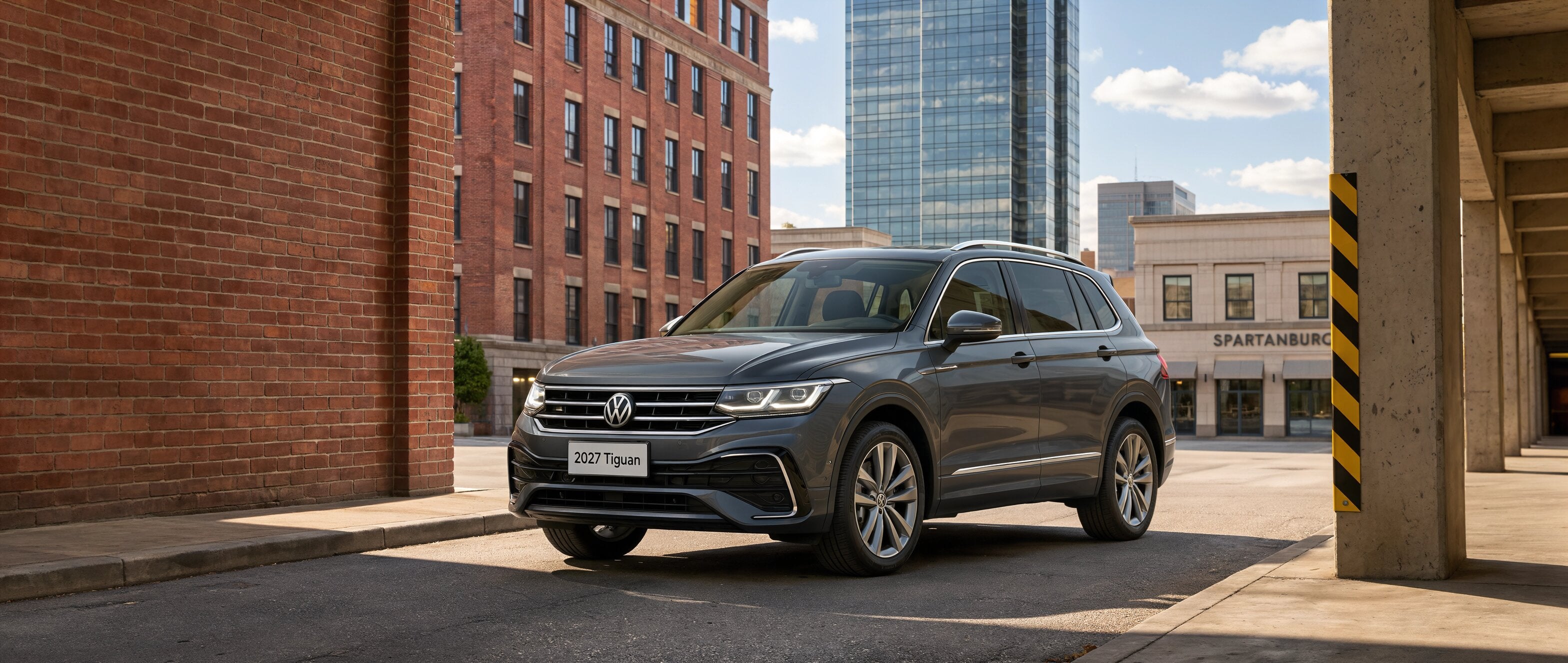
2027 Volkswagen Tiguan parked at a downtown Spartanburg parking garage on a weekend afternoon

Volkswagen Vehicles for The Beacon and Downtown Spartanburg Weekends

A Saturday that starts at The Beacon Drive-In on John B White Sr Boulevard and ends at a downtown Morgan Square event drops you into two completely different parking situations back to back. The Beacon gives you a wide, flat, curb-service lot with room for a loaded Expedition towing a camper. Downtown Spartanburg's weekend garages are free, yes, but the ramp turns and stall dimensions reward a compact footprint, and you'll feel that the second you line up for a corner. Before you buy, understand one thing that doesn't show up on the window sticker. Vehicle length and turning radius determine how your Saturday actually feels, not horsepower, not cargo specs. The short answer is that the 2027 Volkswagen Taos and the Golf GTI nail both stops; the Tiguan handles them well with a bit more patience; the Atlas is the right call when you need three rows and don't mind using the full stall. We'll walk through why each one fits the way it does, or doesn't. At 175.9 inches long with a 37.6-foot turning diameter, the 2027 Taos is the most parking-friendly SUV in the Volkswagen lineup, a meaningful advantage when a downtown garage ramp is tighter than it looks on Saturday night. How Does Vehicle Footprint Actually Work? Footprint is really two numbers working in tandem, overall length and turning diameter, where length is how much of the stall you fill and diameter is the full circle your front wheels need to clear a corner, and the pair almost never gets talked about at the buying stage. They work together, and you'll feel the difference most on a ramp. Model Length Turning Diameter EPA MPG (FWD/City-Hwy) Best parking fit 2027 Golf GTI 168.9 in ~36 ft 25 city / 34 hwy Tightest downtown stalls; The Beacon with room to spare 2027 Taos 175.9 in 37.6 ft 27 city / 35 hwy Both stops with ease 2027 Jetta 186.5 in 36 ft 29 city / 40 hwy The Beacon effortlessly; downtown needs a full pull-through 2027 Tiguan 184.4 in 38.1 ft 26 city / 34 hwy Both stops; AWD trims require a wider arc 2027 Atlas Cross Sport Longer than Tiguan Wider arc Lower city The Beacon yes; downtown pick your garage level The EPA rates the front-wheel-drive 2027 Taos at 27 city and 35 highway (versus 26 city/34 highway for the front-wheel-drive 2027 Tiguan S), so the size-to-efficiency trade tilts toward the Taos in a real way. Size wins here. At 168.9 inches, the 2027 Golf GTI is the shortest vehicle in the lineup, with 241 horsepower and 273 lb-ft of torque from its 2.0-liter turbocharged four-cylinder. It's no sacrifice choice. Turning diameter matters most on the entry and exit ramps inside a parking garage. A 37-foot arc versus a 38-foot arc works out to roughly one extra steering correction at a blind corner. On a quiet Tuesday, nobody cares. On a busy Saturday night with someone waiting behind you, that one correction is everything. Which One Do You Need Here in Spartanburg? Which Volkswagen you need depends less on the vehicle and more on how you actually use these weekends, because the City of Spartanburg operates more than 3,300 garage spaces across five downtown facilities, all free on weekends, and that abundance of room changes the math for every model in the lineup. You've got more room than the ramps suggest. The Kennedy, Magnolia, and Stadium garages sit closest to the Morgan Square end of downtown. Ramp widths vary by level and by which garage you pick. The Beacon flips the script with a free surface lot that's got ample room, curb-service lanes to pull into, and no tight turns at all. So the goal is one vehicle that handles both parking types without forcing you to plan your route around your wheelbase. You won't have to. For couples and solo drivers: The 2027 Golf GTI and 2027 Jetta are the natural fit. At 168.9 inches, the GTI tucks into the tightest garage stall downtown Spartanburg has, then rewards you with a lively drive back up Reidville Road. The Jetta runs a bit longer at 186.5 inches, but its turning diameter matches the GTI at 36 feet, so it threads garage corners cleanly. You'll only feel the difference in longer stalls, where the sedan's trunk reaches further back. For small families: The 2027 Tiguan hits the sweet spot. At 184.4 inches it's compact enough for downtown, yet it still gives you 33.8 cubic feet of cargo space with the rear seats up. The EPA rates the front-wheel-drive Tiguan S at 26 city and 34 highway. Add 4MOTION all-wheel drive and those numbers come down to 22 city and 29 highway (per EPA estimates), while the arc widens slightly. You'll still clear any of the five downtown garages, though you'll want to check your mirrors on the lower levels of the Stadium Garage. For bigger groups: The Atlas is the straightforward answer. The 2027 Atlas arrives with a redesigned platform, a new 282-horsepower turbocharged 2.0-liter engine, more than the outgoing model, and real three-row capability. The tradeoff is live and worth saying out loud. It's longer than the Tiguan and needs more room on ramp corners. None of that bites at The Beacon. Downtown, grab a pull-through space or head to the top level, where the sky-deck stalls open on three sides. The genuine tradeoff to name plainly: bigger vehicles flex better for group days. They're also more work in tight spaces. No amount of parking assist changes the fact that a longer wheelbase needs a wider corridor. If you spend most Spartanburg weekends with two people and a bag, the Taos probably costs you nothing you'd actually miss. Quick Terms Worth Knowing Term What it means in plain English Turning diameter The full circle, tip to tip, your vehicle needs to complete a U-turn Wheelbase Distance from front axle to rear axle; longer means harder 90-degree turns FWD Front-wheel drive; lightest configuration, best efficiency 4MOTION The all-wheel-drive system of Volkswagen; available on Tiguan, Taos, Atlas What This Means for Your Next Vehicle If Spartanburg weekends are a regular thing for you, with The Beacon on the way out, a downtown Morgan Square event on the way back, and maybe a game at Fifth Third Park woven in, then you're not really buying a vehicle for a highway spec sheet, you're buying it for the specific thing a parking garage ramp asks of it on a busy Saturday night. We keep the full lineup on our lot on Reidville Road precisely because different life setups need different answers. A couple chasing the most engaging drive and the smallest parking footprint lands on the Golf GTI without much argument. A family of five who needs three rows accepts that the Atlas takes the whole stall. Everyone in between sits in Taos-to-Tiguan territory. That's a good place to be. The honest thing we tell people when they ask is simple. Come drive the two or three models that fit your size requirement on a weekday when it's quiet, then trust what you felt. The specs confirm the choice, but they don't replace it. Frequently Asked Questions Does the Volkswagen Tiguan fit in downtown Spartanburg's parking garages? Yes, with no special maneuvering required at most levels. The 2027 Tiguan measures 184.4 inches in length with a 38.1-foot turning diameter, which fits comfortably within the standard stall dimensions in Spartanburg's five downtown garages. The front-wheel-drive S and SE trims have the tightest turning arc; 4MOTION trims need a few extra inches on blind corners. All five garages are free on weekends, so your best move is to pick the Kennedy or Magnolia garage (closest to Morgan Square) and take a mid-level floor where stall access is straightforward. Is the Golf GTI practical enough for a full-day Spartanburg outing? More practical than its performance reputation suggests. At 168.9 inches long, it is the most compact vehicle in the Volkswagen lineup in the U.S. and the easiest to place in a tight downtown stall. The rear hatch opens to a usable cargo area, the rear seats hold two adults comfortably for the drive to The Beacon, and the EPA rates it at 25 city and 34 highway miles per gallon. The limitation is cargo volume once you fold the rear seats, which is significantly less than the Taos or Tiguan. If your weekend involves grocery bags and stroller hardware, the Taos is the more honest choice. If it involves two people and a willingness to take the long way home on SC Highway 11, the Golf GTI is hard to argue with. See Current Volkswagen Offers Steve White Volkswagen Spartanburg 2671 Reidville Rd, Spartanburg, SC 29301 (864) 585-2492