

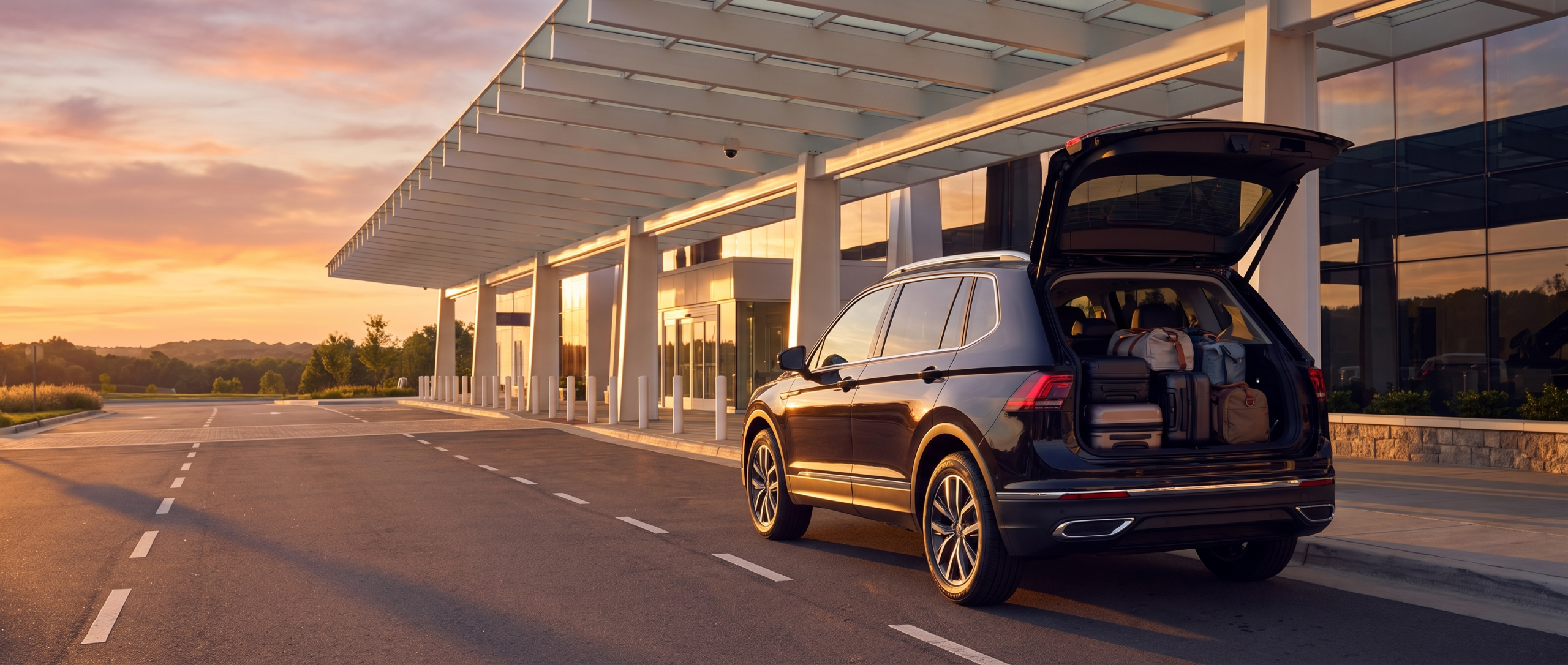
The drive from Spartanburg to Greenville-Spartanburg International Airport is 19 miles of I-85. You hit highway speed almost immediately, you park in the free cell phone lot, and you load up fast. Specific job, that one. It rewards a driver who knows whether they’re picking up one rolling bag or five checked pieces (and whether the return trip seats two adults or seven).
We’ve lined up the 2026 Volkswagen Jetta, the 2026 Tiguan, and the 2026 Atlas against that exact run. The tradeoff is real. The Jetta costs less to run and parks in a snap, but it’ll make four adults feel like they’re negotiating elbow rights. The Atlas swallows a family reunion’s worth of luggage, though its fuel economy reflects its size. The Tiguan lands squarely in between (which is either its best quality or a mild compromise, depending on what you’re hauling).
- Solo or couple pickup: The 2026 Jetta is the efficiency winner. The EPA rates it at 40 mpg highway, and 14.1 cubic feet of trunk swallows two carry-ons without a second thought.
- Group of four with mixed bags: The 2026 Tiguan is the sweet spot (33.8 cubic feet behind the rear seats, 34 mpg highway on the fuel-efficient FWD trim).
- Extended family or luggage-heavy crew: The 2026 Atlas seats seven and offers up to 96.6 cubic feet with rows two and three folded. Nothing else in the Volkswagen lineup touches it for big pickups.
- The GSP cell phone lot changes the math. You’re not circling. You wait, then load in one pass. A well-organized cargo area matters more than curb agility.
- All three handle I-85 merges with no drama. Turbocharged engines across the board.
How Do the Jetta, Tiguan, and Atlas Actually Compare?
All three merge onto I-85 without complaint, so the choice comes down to size rather than power, and matching the vehicle to the size of your pickup sorts most of it out. A solo run and a seven-person arrival with checked bags are not the same job, and these three Volkswagens split cleanly along that line.
| Feature | 2026 Jetta | 2026 Tiguan | 2026 Atlas |
|---|---|---|---|
| Cargo behind rear seats | 14.1 cu ft | 33.8 cu ft | 20.6 cu ft (3rd row up) |
| Max cargo (seats folded) | 14.1 cu ft (sedan) | 69.8 cu ft | 96.6 cu ft |
| Passenger capacity | 5 | 5 | 7 |
| EPA highway mpg (best trim) | 40 mpg | 34 mpg | 27 mpg |
| Drivetrain options | FWD only | FWD or AWD | FWD or AWD |
| Best for | Solo/couple, frequent runs | Four adults, mixed bags | Full family or luggage-heavy crew |
A few things jump out. The Jetta’s 40 mpg highway number (confirmed by the EPA for the S trim) is genuinely strong for a car that still fits two adults and their bags without folding anything. Behind the Tiguan’s rear seat sits 33.8 cubic feet, the number that makes it useful for airport runs, since it holds four adults in comfort and still loads a full-size checked bag per person. The Atlas’s cargo headline is 96.6 cubic feet with everything folded flat, though the more relevant figure for a pickup run is the 20.6 cubic feet you get when the third row is in use.
Checked luggage means collapsing a row.
Does Cargo Space or Seat Count Drive Your Decision?
Cargo space drives the decision for most pickups, but seat count takes over the moment you’re collecting more than four people at once. For a couple or a small group, focus on how the bags load and how the trunk or liftgate is shaped. For a full crew, count the seats first and let cargo follow.
The free cell phone waiting area at GSP means you hold until your passenger texts you from baggage claim, then you get one pass at the curb. Your cargo plan needs to be set before you pull in (not while you’re blocking the Delta arrivals lane).
The 2026 Jetta holds 14.1 cubic feet in its trunk. Two full-size roll-aboards and a personal item fit comfortably. Three bags? It gets tight, and the fixed sedan lid means you can’t cheat the geometry. The Jetta is the right car when you know you’re picking up one or two travelers who pack like they mean it.
The 2026 Tiguan’s liftgate changes everything. With 33.8 cubic feet behind the rear seats, you’re loading four rolling bags without touching the seat controls. Add a stroller bag or a car seat carrier. It still fits. On the I-85 stretch home, the EPA’s 34 mpg highway figure for the FWD S trim means you’re not paying a meaningful fuel penalty for that flexibility.
Now the 2026 Atlas. It seats seven, which sounds like the obvious answer for big groups. But watch the tradeoff. When all three rows are in use, cargo shrinks to 20.6 cubic feet, which is carry-on territory. Checked bags mean folding the third row, and someone moves up. For a true five-person pickup with full luggage, confirm the bag count before you commit. The EPA rates the FWD model at 20 city and 27 highway (a capable, comfortable hauler built for space over economy).
When You’re Picking Up More Than Bags
Some runs come down to people rather than luggage, so rear-seat comfort and legroom start to matter as much as cargo volume. Who’s riding home, and for how long, shapes which of these three earns the pick. The points below break down the space each one gives your passengers on the 19-mile return.
- Rear legroom on the I-85 return. The Jetta offers 37.4 inches of rear legroom (genuinely fine for two adults on a 27-minute drive, tight for three).
- The Tiguan’s cabin is wider. Three adults in the second row sits more comfortably than a compact sedan, and there’s no armrest dispute heading back up I-85.
- The Atlas third row works for adults. Volkswagen lists 33.7 inches of third-row legroom (enough for a grown adult on a short run, not just kids pressed against the window).
- IQ.DRIVE driver assistance comes standard on all three. Adaptive cruise and lane-keeping assist on a 19-mile highway run in Upstate SC summer traffic is a genuine comfort, not a sales checkbox.
- GSP’s cell phone lot accommodates all three sizes easily. The Jetta also fits in tighter spaces on the Greenville side when lots back up on a busy Friday evening.
Pick the Volkswagen That Fits Your Pickup
Pick by the run you make most weeks. A recurring solo trip points one way, a full-family arrival points another, and the middle ground is where the Tiguan earns its keep. The three breakdowns below sort it out.
The 2026 Jetta fits if you’re making frequent solo or couple runs to GSP, fuel economy is a priority (40 mpg highway on I-85 is a legitimate reason to pay attention), and your passengers pack one bag each. It’s the efficient, recurring-run car. Not the family-reunion car.
The 2026 Tiguan fits if you’re picking up three or four adults with mixed, unpredictable luggage and you want SUV flexibility without the Atlas’s size footprint. At 33.8 cubic feet with the seats up, you load first and adjust later. It’s the model built for exactly this kind of versatile daily use around the Upstate.
The 2026 Atlas fits if you’re the designated driver for a traveling sports team, a full family with checked bags, or you’re combining two separate arrivals in one trip. Fold row three, load everything, seat five in rows one and two. The Atlas handles that without compromise.
One caveat worth stating plainly. If your typical GSP run is one or two people, the Atlas is more car than the job needs. The Tiguan will do it better and cost less at the pump. Browse our current Volkswagen inventory to compare what’s available across all three right now.
Frequently Asked Questions
Which Volkswagen has the most cargo space for airport runs?
The 2026 Atlas offers the most total cargo capacity in the Volkswagen lineup (up to 96.6 cubic feet with all rear seats folded, per Volkswagen’s specifications). For a standard pickup run where the third row stays up, the 2026 Tiguan’s 33.8 cubic feet behind the rear seats is the more practical number. It loads four full-size bags without touching the seat controls, which matters when you have one pass at the curb.
Is the GSP airport easy to navigate for a quick pickup?
Yes. Greenville-Spartanburg International Airport offers a free cell phone waiting area near the terminal, so you hold there until your passenger exits baggage claim and texts you. One curb pass typically handles the load. The airport sits right off I-85 in Greer, about 19 miles from Spartanburg (essentially all highway), which is why fuel economy figures like the 2026 Jetta’s EPA-estimated 40 mpg highway are worth noting if you’re making this trip regularly.

