

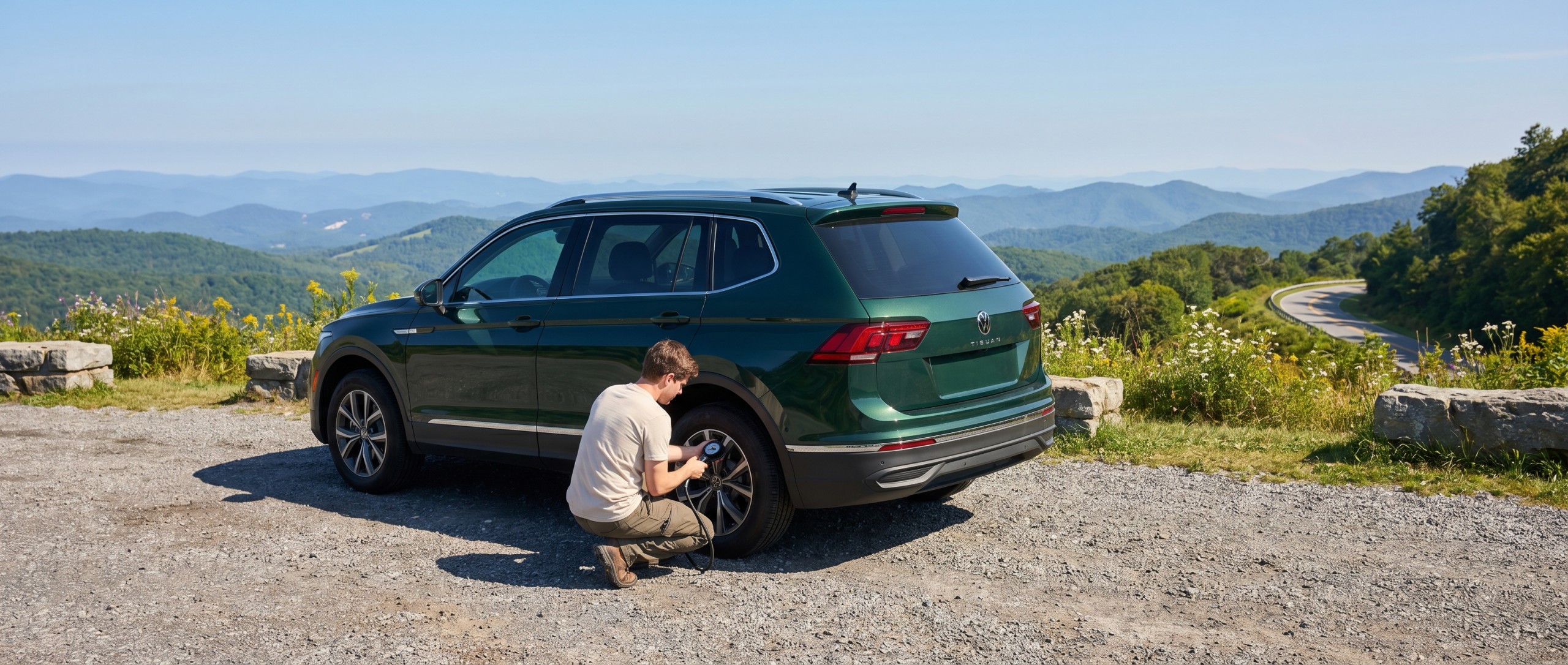
Your tires lose approximately one PSI of pressure for every 10-degree temperature increase, and Spartanburg’s summer heat can push pavement temperatures well above 140°F. Summer tire check tips for Volkswagen drivers in Spartanburg, SC help you maintain optimal performance and safety during the hottest months when Interstate 85 and Highway 29 see their heaviest traffic. Understanding how South Carolina’s humid summers affect your VW’s tires – from the daily commute to Greenville to weekend trips up to the Blue Ridge Parkway – ensures you’re prepared for whatever the season brings.
Why Summer Heat Demands Special Attention for Your VW’s Tires
Spartanburg’s average summer temperature of 88°F creates unique challenges for tire maintenance that many drivers overlook until problems arise. The combination of scorching asphalt, high humidity, and frequent afternoon thunderstorms creates a perfect storm of conditions that accelerate tire wear. Your Tiguan or Atlas might handle beautifully on cool mornings, but by afternoon, underinflated tires can compromise everything from fuel efficiency to emergency braking performance.
The science behind tire pressure changes is straightforward but often misunderstood. As temperatures rise, the air inside your tires expands, potentially leading to overinflation if you filled them during a cool morning. Conversely, if you set pressure during peak heat, morning drives might leave you underinflated. This constant fluctuation is why checking tire pressure at consistent times becomes crucial during South Carolina summers.
Essential Summer Tire Inspection Checklist for Spartanburg Drivers
Regular tire inspections become even more critical when temperatures soar above 90°F for weeks at a time. Here’s your comprehensive inspection routine:
Weekly Visual Inspection Points:- Check tread depth using the penny test
- Look for uneven wear patterns indicating alignment issues
- Inspect sidewalls for cracks, bulges, or damage
- Verify valve stems aren’t cracked or leaking
- Remove debris from tread grooves
| Inspection Item | Frequency | Warning Signs | Action Needed |
|---|---|---|---|
| Tire Pressure | Weekly | Below manufacturer spec | Add air when tires are cool |
| Tread Depth | Monthly | Less than 4/32″ | Consider replacement |
| Sidewall Condition | Weekly | Cracks or bulges | Immediate inspection needed |
| Wear Patterns | Monthly | Uneven wear | Check alignment |
| Valve Stems | Monthly | Cracks or damage | Replace promptly |
The morning hours before 10 AM provide the most accurate pressure readings, especially important for Spartanburg residents who park outdoors. Your Jetta GLI or Golf GTI™ might require different pressure specifications than larger models, so always consult the driver’s door jamb sticker rather than the tire sidewall maximum.
Uneven wear patterns tell important stories about your vehicle’s health. Edge wear suggests underinflation, while center wear indicates overinflation. Cupping or scalloping points to suspension issues that need attention before they compromise safety.
How Local Roads and Weather Impact Your Volkswagen’s Tires
Spartanburg County’s mix of urban streets, rural highways, and the occasional unpaved road creates diverse challenges for tire longevity. The frequent summer thunderstorms that roll through the Upstate region wash oils to the road surface, creating slick conditions that demand maximum tire performance.
Common Spartanburg Road Hazards:- Construction debris on I-585 expansion areas
- Potholes from winter damage on city streets
- Gravel from rural roads near Cowpens National Battlefield
- Standing water in low areas during afternoon storms
- Hot tar repairs that can stick to tire treads
The route from downtown Spartanburg to BMW Manufacturing frequently sees heavy truck traffic, accelerating road wear that translates to rougher surfaces for your tires. Weekend trips to popular destinations require different considerations – the winding roads up to Campbell’s Covered Bridge or out to Croft State Park demand tires with responsive handling and reliable grip.
Temperature fluctuations between Spartanburg’s valley location and higher elevations near the North Carolina border can mean 10-15 degree differences. This affects tire pressure significantly, especially noticeable when driving your Atlas Cross Sport™ loaded with camping gear for a weekend at Table Rock State Park.
Maximizing Tire Life Through Proper Summer Maintenance
Strategic maintenance during summer months can extend your Volkswagen’s tire life by thousands of miles while ensuring optimal safety and performance. The key lies in consistency and understanding how seasonal factors affect tire wear.
Summer Tire Rotation Schedule:- Every 5,000-7,500 miles for most VW models
- More frequently if you notice uneven wear
- Always follow your specific model’s pattern
- Document rotations for warranty compliance
Proper tire rotation becomes even more critical during summer when heat accelerates wear patterns. Front tires on your front-wheel-drive Taos or Jetta work harder during acceleration and steering, wearing faster than rear tires. Regular rotation ensures even wear distribution and maximizes the lifespan of your entire set.
Browse our new inventory to see the latest Volkswagen models with advanced tire pressure monitoring systems that take the guesswork out of maintenance.
| Maintenance Task | Summer Frequency | Why It Matters | DIY or Professional |
|---|---|---|---|
| Pressure Check | Weekly | Heat causes fluctuation | DIY |
| Rotation | Every 5,000 miles | Prevents uneven wear | Professional recommended |
| Balance | Every 10,000 miles | Reduces vibration | Professional required |
| Alignment | Annually or as needed | Ensures even wear | Professional required |
Alignment issues become more apparent during summer driving when you’re covering more miles. If your ID.Buzz™ pulls to one side on Highway 221 toward Chesnee, or if you notice the steering wheel isn’t centered when driving straight, alignment service can prevent premature tire replacement.
Recognizing When Your VW Needs New Summer Tires
South Carolina summers can reveal tire issues that cooler weather might mask, making vigilance essential for safety and performance. Understanding the signs of tire failure helps you act before small problems become dangerous situations on busy roads around Spartanburg Regional Medical Center or during rush hour on I-85.
The legal minimum tread depth is 2/32″, but waiting until tires reach this point compromises safety, especially during summer thunderstorms. Most tire professionals recommend replacement at 4/32″ for optimal wet weather performance – critical when afternoon storms can drop an inch of rain in 30 minutes.
Clear Replacement Indicators:- Tread wear indicators (wear bars) become flush with tire surface
- Sidewall damage including cuts, bulges, or severe cracking
- Vibration that persists after balancing
- Age exceeding six years regardless of tread depth
- Multiple puncture repairs in one tire
Your Tiguan might still have decent-looking tread, but if the tires are approaching their sixth birthday, the rubber compounds have likely hardened, reducing grip in both wet and dry conditions. This aging process accelerates in hot climates, making the manufacture date (found on the tire sidewall) as important as tread depth.
Check out our pre-owned inventory for certified vehicles with recently replaced tires that meet Volkswagen’s strict standards.
Common Questions About Summer Tire Care in Spartanburg, SC
How often should I check my Volkswagen’s tire pressure during Spartanburg summers?
Check your Volkswagen’s tire pressure weekly during summer months, preferably in the morning before driving when tires are cool. Spartanburg’s temperature swings between cool mornings and 90°F+ afternoons can cause pressure variations of 3-4 PSI, affecting fuel economy and handling. The TPMS in newer VW models provides alerts, but manual checks ensure optimal performance.
What’s the best tire pressure for my VW when driving to the mountains from Spartanburg?
Maintain the manufacturer-recommended pressure listed on your driver’s door jamb, typically 32-36 PSI depending on your Volkswagen model. The elevation change from Spartanburg to destinations like Caesar’s Head State Park affects pressure minimally. Avoid the temptation to overinflate for highway driving, as proper pressure ensures the best contact patch for safety.
Do I need different tires for Spartanburg’s hot summers compared to our mild winters?
Most Spartanburg Volkswagen drivers can use all-season tires year-round given our moderate winters with average lows around 35°F. Premium all-season tires perform well in summer heat and occasional winter weather. However, if you frequently drive to ski resorts in North Carolina, consider dedicated winter tires for those trips rather than compromising summer performance.
Where can I dispose of old tires in Spartanburg County?
Spartanburg County operates several recycling centers that accept tires, including locations on Highway 150 and Foster Street. Many tire retailers also offer disposal services when purchasing new tires. Proper disposal prevents environmental damage and follows South Carolina regulations. Never leave old tires in vacant lots or on roadsides.
How does Spartanburg’s humidity affect my Volkswagen’s tire pressure monitoring system?
Spartanburg’s average 70% summer humidity doesn’t directly affect your VW’s TPMS sensors, but rapid weather changes can trigger false warnings. Morning fog followed by afternoon heat creates pressure fluctuations that might activate alerts. If your TPMS light appears during weather transitions, manually verify pressure before assuming sensor failure.
What tire brands does Volkswagen recommend for Spartanburg driving conditions?
Volkswagen approves several tire brands that perform well in South Carolina’s climate, including Continental, Bridgestone, and Pirelli. Original equipment tires are specifically chosen for each model’s handling characteristics. Your Jetta GLI requires different performance specifications than an Atlas, so consult your owner’s manual or service advisor for model-specific recommendations.
Your Partner for Summer Tire Care and Beyond
Proper summer tire maintenance keeps your Volkswagen performing safely through Spartanburg’s hottest months and extends the life of your investment. From weekly pressure checks to recognizing replacement indicators, staying proactive prevents roadside emergencies and ensures confident driving whether you’re navigating downtown traffic or exploring the scenic routes around Lake Bowen. Regular professional inspections complement your DIY checks, catching issues that might escape notice until they compromise safety or performance. The team at Steve White Volkswagen Spartanburg understands local driving conditions and can recommend the ideal tire solutions for your specific VW model and driving patterns.
Connect with us

