

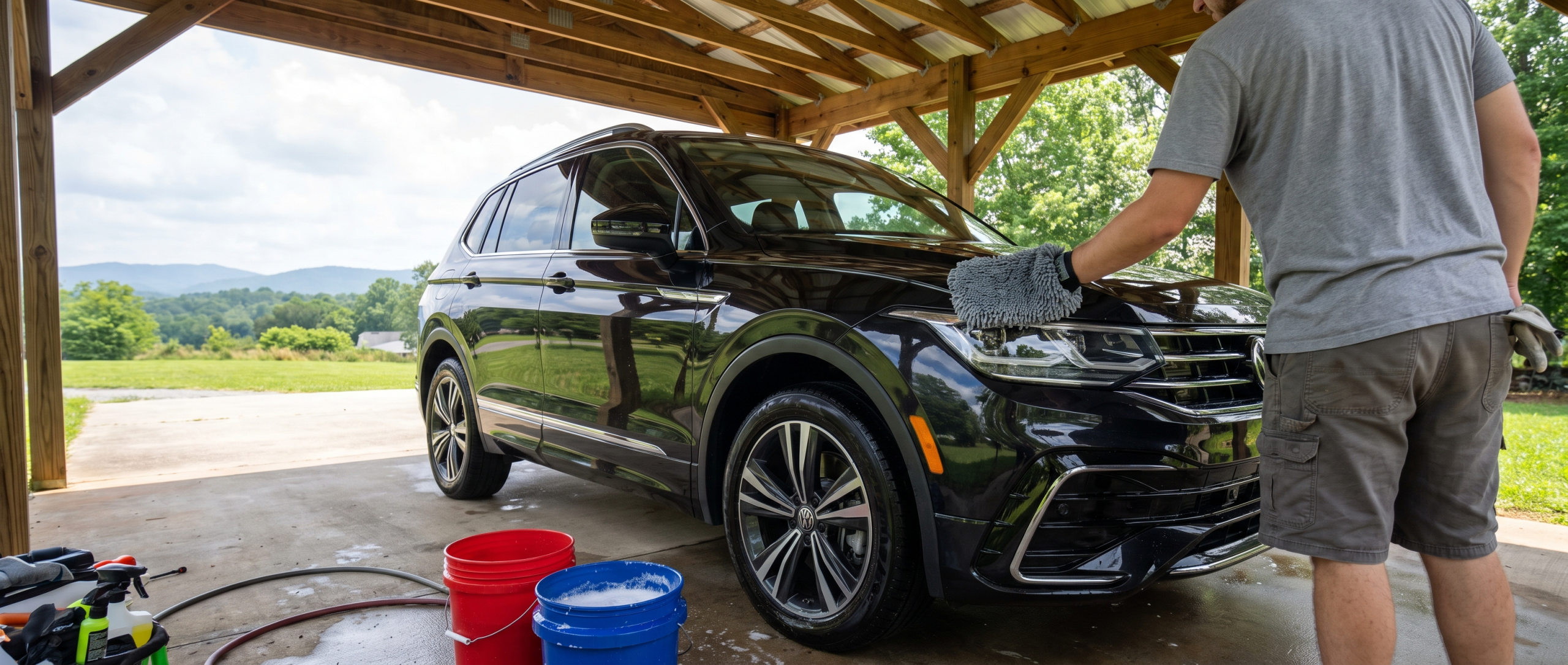
Spartanburg’s July heat can turn a well-meaning driveway wash into the very thing that damages your paint. The fix is timing and technique.
Tiguan owners, Atlas owners, and Jetta commuters (plus anyone else parked under the Upstate SC sun) all face the same combination. Average July highs reach 91 degrees F, relative humidity sits around 68%, and afternoon pop-up thunderstorms soak a car then evaporate before you think to dry it. That triple threat is what this checklist is built around.
What Goes on the Summer Wash Checklist?
Work through these ten items in order, top to bottom, and you’ll protect the clear coat rather than scuff it; skipping the first two steps is what sets up the water spots and surface residue that show up on otherwise clean cars in our service bay. The order matters.
The 10-Point Volkswagen Summer Wash Checklist
- Choose your time window. Wash before 9 a.m. or after 7 p.m. Surface temps above roughly 77 degrees F speed up soap evaporation and bake mineral deposits into the clear coat before you can rinse them off.
- Pre-rinse from top to bottom. Knock the loose dirt, pollen, and brake dust off before any mitt touches the paint. Skip this and you’ll grind that debris straight into the clear coat.
- Set up two buckets. One holds your pH-neutral car shampoo solution. The other holds clean rinse water only. Rinse the mitt in the clean bucket between panels, and grit guards in both buckets trap what comes off.
- Wash panel by panel, top down. Roof and glass first, rocker panels and bumpers last. Use straight, overlapping passes with a microfiber mitt. Circular motions leave circular swirl marks.
- Rinse each panel before the soap dries. In Spartanburg’s summer heat, soapy water left on a hot panel for even a couple of minutes leaves residue that fights off a second rinse.
- Remove bird droppings and sap immediately. These bond to hot paint faster than anything else out there. A damp microfiber cloth and a little detailer spray handles fresh spots. Wait a day or more in 90 degrees F heat and you’ll risk etching the clear coat permanently.
- Dry with a large microfiber towel using blotting motions. Don’t drag. Don’t reach for a terry cloth or chamois. Blot and lift. Water spots come from mineral deposits left by evaporation, and they’re a lot harder to remove once the afternoon sun bakes them on.
- Clean the wheels separately. Brake dust is corrosive and acidic. Use a dedicated pH-neutral wheel cleaner and a soft brush. Never reuse the paint mitt on the wheels.
- Apply a paint sealant or wax after washing. Synthetic paint sealants generally hold up three to six months in sustained summer heat. Traditional carnauba wax lasts closer to four to six weeks. Either one protects the clear coat from UV breakdown and makes the next rinse easier.
- Apply UV protectant to rubber trim and plastic. Black trim and door seals dry out and fade faster in sustained heat. A trim protectant with UV inhibitors takes about two minutes and adds real longevity.
Why the Upstate SC Summer Makes Each Item Non-Negotiable
Every item on that list earns its spot because of Upstate summer physics, and the reasons break into three groups (heat, pollen, and storm water), so once you see what each one does to the paint, the checklist stops feeling fussy and starts feeling obvious.
Jetta drivers commuting the I-85 corridor and families loading an Atlas for Croft State Park are dealing with the same physics. Spartanburg’s July average high reaches 91 degrees F. The metal surface of your hood or roof routinely hits 140 to 160 degrees F by midday. Wash water and shampoo hit that surface and flash-evaporate, leaving behind the minerals and soap compounds that create the water spots you’ll see even after a thorough wash. That’s items 1 and 5.
The pollen and sap window is a separate problem. Spartanburg’s proximity to the Blue Ridge foothills brings heavy tree pollen in spring and into early summer, and pine sap can coat a car overnight near any stand of pines. Pollen left on hot, humid paint starts bonding chemically within hours, especially when dew or afternoon humidity keeps it damp against the surface. That’s why item 6 says immediately and not “soon.”
The afternoon thunderstorm cycle is the trickiest part. A quick storm looks like a free rinse. It isn’t. Storm runoff picks up road oil, pollen, and atmospheric pollutants as it falls, then sits on a hot surface and bakes as the car heats back up in post-storm sun. If you can’t dry the car within roughly 30 minutes of a summer storm, a quick pass with a microfiber and detailer spray is worth doing.
| Checklist Item | Why It Matters in Spartanburg’s Summer |
|---|---|
| Wash before 9 a.m. or after 7 p.m. | Surface temps above 77 degrees F cause soap to evaporate and etch before rinsing |
| Two-bucket method with grit guards | Keeps abrasive dirt in the rinse bucket, not back on the paint |
| pH-neutral car shampoo only | Dish soap strips wax and ceramic coatings, leaving the clear coat exposed |
| Panel-by-panel rinsing | Prevents soap from drying on hot metal between wash and rinse passes |
| Immediate sap and dropping removal | High heat accelerates etching; fresh spots lift cleanly, day-old ones may not |
| Separate wheel tools | Brake dust is acidic; reusing the paint mitt transfers corrosive particles |
| Microfiber blot-dry (no drag) | Dragging traps remaining grit and creates fine scratches in the clear coat |
| Paint sealant every 3 to 6 months | Synthetic sealants outlast summer wax (4 to 6 weeks) under sustained UV and heat |
| UV trim protectant | Black plastic and rubber oxidize and fade in sustained 90 degrees F+ exposure |
| Post-storm detailer spray | Storm runoff deposits road oil and pollen; evaporation bakes it onto hot paint |
Schedule a Detail or Service Appointment
Your Print-and-Go Recap
Tape this recap to the garage wall or keep it on your phone, because the timing and the two-bucket setup are the parts that’re easy to skip when you’re already sweating in the driveway, and they’re the two that matter most for the paint.
Before you start: Is it before 9 a.m. or after 7 p.m.? Is the car in shade, or at least out of direct midday sun? Are both buckets set up with grit guards?
Washing: Pre-rinse from the roof down. Wash panel by panel with straight passes. Rinse each panel before you move on. Wheels get their own tools, always. Bring it to our service team if it’s been more than a season since a full detail.
Drying and protection: Blot dry right away with microfiber. Check for sap, bird droppings, or bug residue and spot-treat now. Apply sealant or wax if it’s been more than a few months. Hit the trim and rubber with UV protectant.
After a storm: Don’t assume the rain did the work. Wipe down with a microfiber and detailer spray within 30 minutes if you can.
One tradeoff worth naming up front. This checklist takes real time. A two-bucket hand wash done right runs 45 to 60 minutes. Drive-through washes are faster, but the spinning brushes in older-style tunnels are how a lot of swirl marks get into paint. A touchless wash is a solid middle ground for maintenance washes between full hand-wash sessions, especially during the weeks when Spartanburg’s afternoon heat makes driveway timing tough.
Frequently Asked Questions
What time of day is best for washing a Volkswagen in Spartanburg’s summer?
Early morning, before 9 a.m., is the best window. The car’s surface is coolest then, which keeps soap and rinse water from evaporating before you can remove them. That flash evaporation is what leaves water spots and soap residue baked into the clear coat. Late evening after 7 p.m. works as a second choice, as long as you dry the car completely before overnight humidity settles on the surface.
Is it okay to use dish soap to wash my car?
It isn’t a good idea. Dish soaps are built to cut grease aggressively, and they do the same thing to the wax or paint sealant on your clear coat, stripping the protective layer right off. A pH-neutral car-specific shampoo cleans well without breaking down the protection you need through the summer months. It’s a simple switch, and it protects a real investment.

