

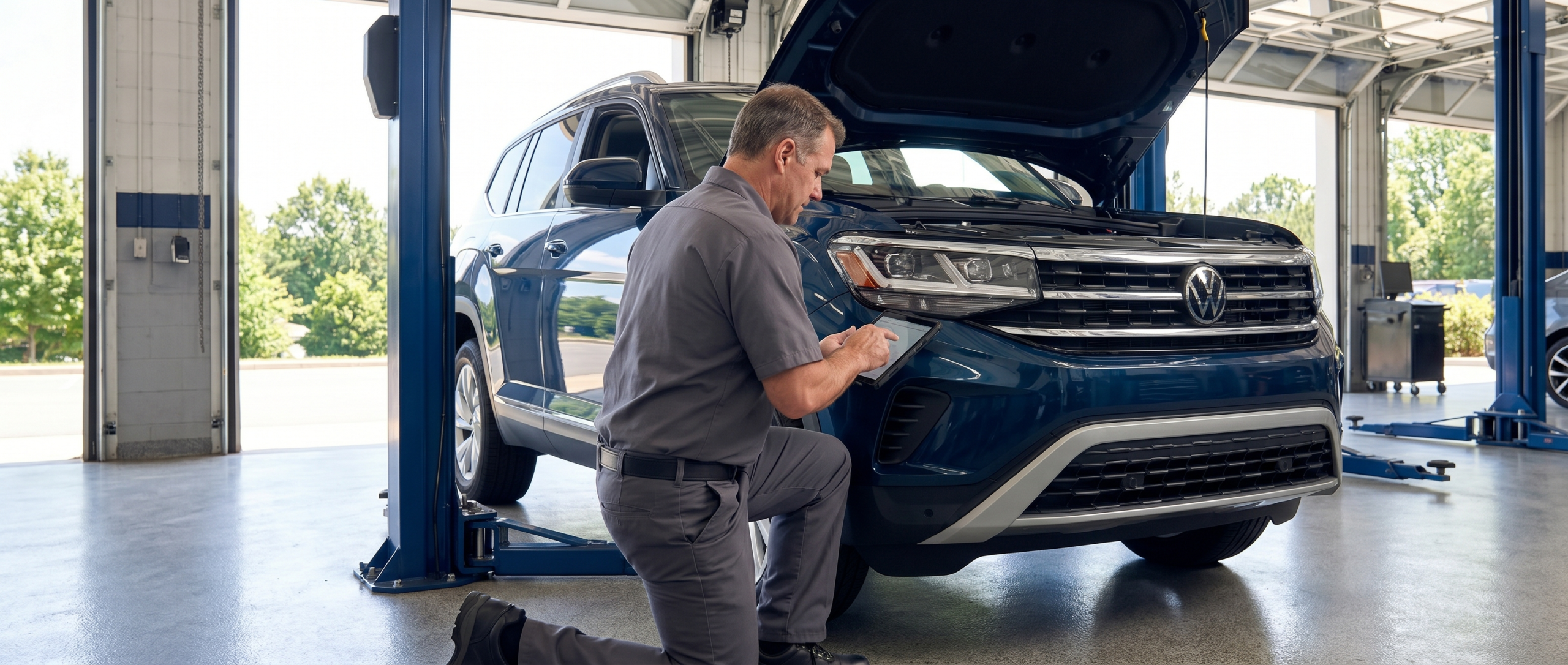
Optimizing your Volkswagen service intervals in Spartanburg is the most effective way to protect your vehicle from the unique stresses of Upstate driving. While your owner’s manual provides a generic baseline, it rarely accounts for the grueling reality of South Carolina’s humidity and stop-and-go congestion.
Most drivers think “miles driven” is the only metric that matters. In reality, sitting in a dead halt at the I-85 and I-26 interchange is just as demanding on your engine as a cross-country road trip.
We want to help you move from maintenance guesswork to total confidence. By adjusting your schedule for local conditions, you ensure your Tiguan or Jetta remains as reliable as the day you drove it off the lot.
The Upstate Driver: Which Category Are You?
Every driver in the Spartanburg area falls into a specific usage category that dictates their service needs. Understanding where you fit helps prevent the “Check Engine” light from becoming a permanent fixture on your dash.
- The I-85 Grinder: You commute daily between Spartanburg and Greenville or Anderson. Your VW spends significant time idling in heat, which breaks down oil viscosity faster than highway cruising.
- The Local Connector: You primarily drive in Boiling Springs or Duncan. Your trips are short, often ending before the engine reaches full operating temperature.
- The Weekend Explorer: You use your Atlas for soccer tournaments at Spartanburg Day School and trips to the Blue Ridge. You rack up miles quickly and need a focus on tire rotations.
If you are currently evaluating your next vehicle’s maintenance needs, you can view new inventory to see the latest service-friendly features from Volkswagen.
Matching Your Spartanburg Routine to Service Logic
The following framework helps you identify the ideal service cadence based on how you actually navigate the Upstate.
| If You’re This Buyer | Consider This | Why It Fits |
|---|---|---|
| I-85 Daily Commuter | 5,000-Mile Oil Cycle | Counteracts “heat soak” from heavy idling. |
| Short-Trip Parent | Annual Fluid Flush | Prevents moisture buildup in vital systems. |
| High-Mileage Pro | 10,000-Mile Interval | Works if miles are mostly steady highway cruising. |
This logic ensures that your vehicle’s lifespan is maximized while maintaining peak performance. For those looking for a pre-owned vehicle with a documented history of this care, feel free to view used inventory.
Real-World Stress: Why Spartanburg Roads Are Different
It’s not just about the miles; it’s about the environment. If you’ve ever sat on Asheville Highway in July, you’ve felt the South Carolina heat soak. Your VW feels it too.
When you’re stuck behind a tractor-trailer on Hwy 29, your cooling system is working overtime without the benefit of natural airflow. Engine hours often matter more than odometer readings in these scenarios. We’ve observed that local idling patterns can degrade synthetic oil 20% faster than the national average.
The “creep and stop” nature of Westgate Mall traffic also places a specific burden on your brake pads. By the time you reach 30,000 miles, a Spartanburg VW often shows more pad wear than a car driven in rural areas. Choosing a proactive schedule ensures you aren’t surprised by a grinding sound on your way to an important meeting.
Overcoming Ownership Anxiety Through Proactive Care
It is natural to feel a sense of friction when that “Service Due” light appears earlier than you expected. You might wonder if you’re over-maintaining or if the dealership is being over-cautious.
Think of it this way: the standard manual is written for “ideal” conditions that rarely exist between Greer and Spartanburg. Adjusting your care plan now prevents the “Year Three” anxiety of major component failure.
By the time you reach 60,000 miles, a well-maintained VW will have a significantly higher resale value and a much smoother transmission feel. For more information on our specific local recommendations, you can learn more about us and our commitment to Upstate drivers. This isn’t just about repairs; it’s about predictable, stress-free ownership.
Common Questions About Volkswagen Service Intervals Spartanburg
How often should I change my oil for a Volkswagen service interval in Spartanburg?
For drivers frequently stuck in Spartanburg traffic on I-85 or Hwy 29, we recommend an oil change every 5,000 to 7,500 miles. While the manual may suggest 10,000 miles, the extreme heat and idling in the Upstate accelerate oil breakdown.
Does the South Carolina heat affect my Volkswagen service intervals?
Yes, the high humidity and summer temperatures in Spartanburg stress your cooling system and battery. We recommend a comprehensive fluid check and battery test every spring to ensure your VW can handle the intense Piedmont heat without overheating.
How often should I check my brakes in Spartanburg stop-and-go traffic?
We suggest a brake inspection every 10,000 miles for Spartanburg drivers. The constant stop-and-go traffic near Westgate Mall and the I-26 interchange leads to faster brake pad wear compared to steady highway driving.
Why is my VW service light coming on early in Spartanburg?
Your Volkswagen uses sensors to monitor driving habits. Frequent short trips in Boiling Springs or idling in downtown Spartanburg traffic can trigger the service light sooner because the computer detects “severe” operating conditions.
Drive With Confidence Across the Upstate
Mastering your Volkswagen service intervals in Spartanburg is the key to a worry-free commute. When you account for local heat and traffic, you aren’t just following a schedule—you are protecting your investment. If you prioritize proactive maintenance, your VW will reward you with years of smooth performance.
For personalized advice or to book your next check-up, you can schedule service or contact us to speak with a local expert today.

