

Volkswagen Taos vs. Mazda CX-30: Which Compact SUV Fits the Upstate SC Commuter Better?
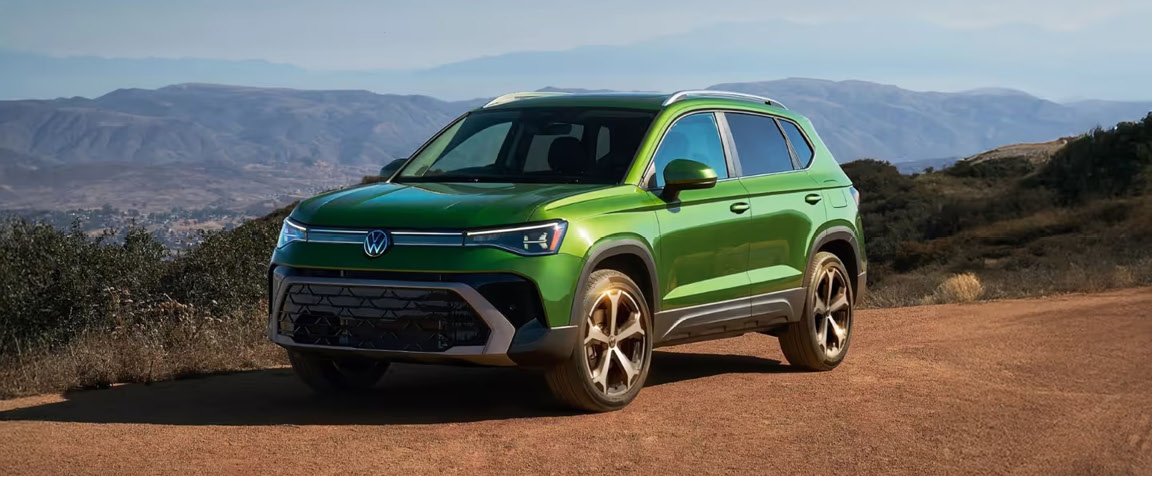
Volkswagen Taos vs. Mazda CX-30: Which Compact SUV Fits the Upstate SC Commuter Better?
The 2026 Volkswagen Taos and 2026 Mazda CX-30 compete in the same compact SUV segment, but they make very different trade-offs. The Taos delivers significantly more cargo space, better highway fuel economy, and more comprehensive standard driver assistance technology. The CX-30 delivers sharper driving dynamics, available turbocharged performance, and stronger crash test safety ratings. Which one wins depends entirely on how you actually use your vehicle every day.
If you have narrowed your shortlist to these two, you are in a good position. Both are well-built compact SUVs with real substance behind the badge. But they are built for different buyers, and the wrong choice becomes obvious within about 60 days of ownership. This guide gives you the framework to get that decision right before you sign anything.
Steve White Volkswagen Spartanburg serves daily commuters across Spartanburg, Greer, Boiling Springs, Duncan, and Gaffney, and we see these two on the same shortlist every week.
Cargo Space: The Number That Changes Your Weekly Routine
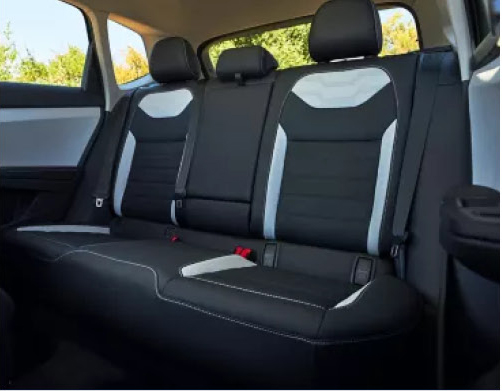
The Volkswagen Taos offers 27.9 cubic feet behind the rear seats, 38% more than the CX-30's 20.2 cubic feet. This is the comparison most buyers underestimate until they live with the car for a month. According to Volkswagen, the 2026 Taos delivers 27.9 cubic feet of cargo behind the rear seats and 65.9 cubic feet maximum with the seats folded. According to Mazda, the 2026 CX-30 offers 20.2 cubic feet behind the rear seats and 45.2 cubic feet maximum.
| Cargo Measurement | 2026 Volkswagen Taos | 2026 Mazda CX-30 |
|---|---|---|
| Behind Rear Seats | 27.9 cu ft | 20.2 cu ft |
| Max (Seats Folded) | 65.9 cu ft | 45.2 cu ft |
The 7.7-cubic-foot gap behind the rear seats equals approximately one full-size checked bag. On a Costco run to Greenville, that is the difference between one trip and two. At Croft State Park, it is the camping gear, the cooler, and the two daypacks, versus choosing two of the three.
For the Spartanburg commuter who drives Monday through Friday and then actually uses the vehicle on weekends, cargo space is not a spec. It is a decision you make every Saturday morning.
Cargo tells you what fits. Fuel economy tells you what it costs to run the vehicle that carries it.



Fuel Economy: The Highway Gap That Adds Up Monthly
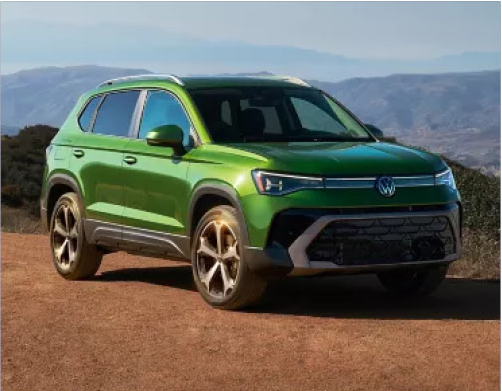
Taos FWD returns an EPA-estimated 28 city / 36 highway. CX-30 non-turbo AWD returns 24 city / 31 highway, a 5-mpg gap on the route most Upstate SC commuters drive every day.
According to Volkswagen, the 2026 Taos with front-wheel drive returns an EPA-estimated 28 miles per gallon city and 36 highway. According to Mazda, the 2026 CX-30 with its standard naturally aspirated engine and standard all-wheel drive returns 24 city, 31 highway, and 27 combined.
That is a 5-mpg gap on the highway number that matters most.
For a Spartanburg commuter running I-85 between Exit 78 and the Greenville County line five days a week, that figure is the one that shows up at the pump. At 30 highway miles per day over 50 working weeks, the 5-mpg difference means roughly 750 additional miles of range per tank-fill cycle over a full year of commuting. It is not abstract, it compounds every time you stop for fuel.
The CX-30's available turbo engine drops efficiency further to approximately 22 city and 30 highway per EPA estimates. That is the trade-off for the performance capability covered in the next section.
The commute itself is about getting there. What the cabin does for you during that commute brings in the next comparison.
Standard Features: What Comes Without Upgrading
Volkswagen includes wireless CarPlay and the full IQ.DRIVE suite, including Travel Assist and Emergency Assist, on every Taos trim. The CX-30 reserves wireless connectivity for higher configurations.
According to Volkswagen, every 2026 Taos includes wireless Apple CarPlay and Android Auto as standard. According to Mazda, the 2026 CX-30 base (2.5 S) includes wired CarPlay only, wireless connectivity starts at the Select Sport trim.
Both vehicles carry comprehensive safety suites. The CX-30's i-Activsense includes forward collision warning, automatic emergency braking, blind spot monitoring, and adaptive cruise control with stop-and-go, all standard. The Volkswagen IQ.DRIVE suite covers the same ground and adds two systems the CX-30 does not include at any trim level:
- Travel Assist: Combines adaptive cruise control with active lane centering simultaneously. Requires hands on the wheel at all times. Reduces I-85 commute fatigue measurably on longer stretches toward Greenville.
- Emergency Assist: Detects when the driver becomes entirely unresponsive, brings the vehicle to a controlled stop, activates hazard lights, and contacts emergency services.
The Taos wireless charging, 8-speed DSG transmission, and standard digital cockpit display round out a technology package that arrives complete from the base trim forward, without asking the buyer to step up in configuration to reach it.
Both vehicles offer real tech. Where they diverge is in how much they ask you to pay before the good stuff arrives, and whether the driving experience itself is something you want to engage with or something you simply want to complete.
Driving Dynamics: Where the CX-30 Has a Real Advantage
The CX-30 is lighter, more communicative in steering, and available with a 250-horsepower turbo. If the commute is something you want to enjoy rather than survive, this matters.
The Mazda CX-30 is more fun to drive than the Volkswagen Taos. That is the honest answer, and it deserves to be stated clearly rather than buried in qualifications.
The CX-30 weighs less, sits lower, and delivers sharper, more communicative steering. Mazda's G-Vectoring Control Plus makes subtle torque adjustments on corner entry that give the car a precision most compact SUVs cannot replicate. On Highway 29 through Boiling Springs or the back roads near Cowpens National Battlefield, the CX-30 responds like a driver's car in a way the Taos does not attempt to match.
The available turbo engine amplifies that advantage. According to Mazda, the 2.5-liter turbocharged engine produces 250 horsepower and 320 pound-feet of torque on 93-octane premium fuel, or 227 horsepower and 310 pound-feet on regular 87-octane. Edmunds tested the Turbo Aire Edition at 6.4 seconds to 60 mph, genuinely quick for the class.
One nuance worth noting: the CX-30 uses a 6-speed automatic across all trims. The Volkswagen Taos uses an 8-speed DSG dual-clutch automatic. The Taos transmission shifts faster and more decisively in everyday driving, an asset the buyer who cares about gear response will notice even if the CX-30 has the handling edge in corners.
The honest framing: if you look forward to the drive, the CX-30 is the more emotionally satisfying vehicle. If you look forward to arriving with what you packed and spending less at the pump, the Taos is the more practical one.
Driving character is one dimension of how confident you feel in a vehicle. The next dimension is how it performs if something goes wrong.
Safety Ratings: The CX-30's Clearest Objective Win
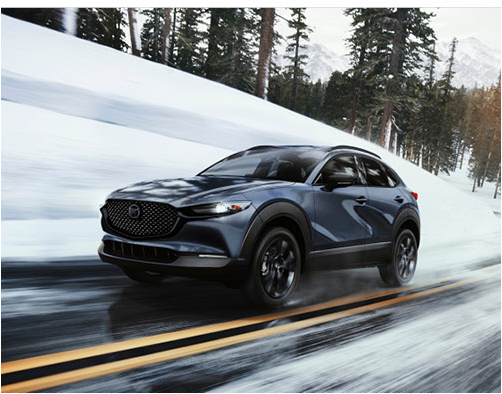
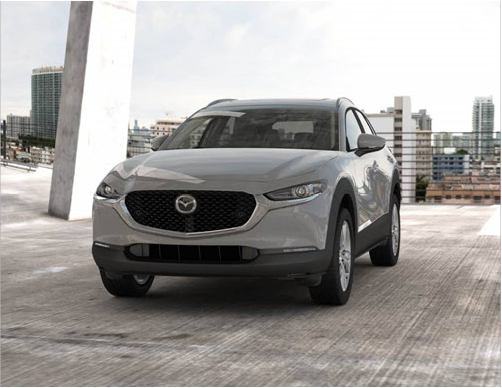
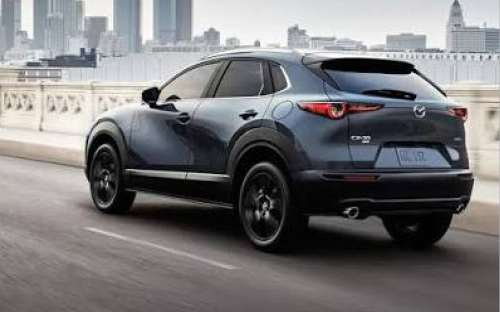
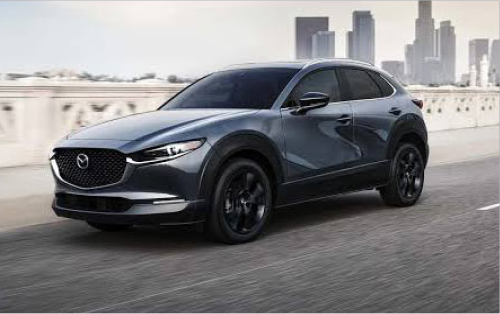
The 2026 Mazda CX-30 holds an IIHS Top Safety Pick+ and a 5-star overall NHTSA safety rating. This is the comparison's most significant factual advantage for Mazda and it deserves straightforward treatment.
According to the Insurance Institute for Highway Safety, the 2026 Mazda CX-30 earned a Top Safety Pick+ designation, the IIHS's highest honor. According to the National Highway Traffic Safety Administration, the 2026 CX-30 received a 5-star overall safety rating with five stars in both frontal and side crash tests.
The Volkswagen Taos does not currently hold an IIHS Top Safety Pick designation. Both vehicles carry comprehensive active safety suites that help prevent collisions from occurring in the first place, and real-world safety outcomes reflect both a vehicle's passive crash structure and its ability to avoid the crash entirely. The Taos's IQ.DRIVE suite, including Travel Assist and Emergency Assist, adds genuine preventive capability the CX-30 does not match.
For the safety-first buyer who treats independent crash test ratings as a non-negotiable, the CX-30 is the more defensible choice. Both SUVs are well-engineered, daily-use vehicles. One carries independent verification at the highest tier from both major crash testing organizations. That is the honest answer.
With safety ratings established on both sides, the last objective comparison is one of the most practically important: what the vehicle asks you to decide about traction.
AWD: One Comes Standard, One Asks You to Choose
The CX-30 includes i-Activ AWD on every trim. The Volkswagen Taos offers 4MOTION AWD as an available upgrade, standard on the SEL trim. According to Mazda, every 2026 CX-30 configuration, across all eight trims, includes i-Activ AWD as standard equipment. The system monitors 27 variables continuously to distribute torque before wheel slip occurs.
According to Volkswagen, the 2026 Taos includes front-wheel drive as standard with 4MOTION all-wheel drive available across most configurations and standard on the SEL trim. For the Upstate SC context: Spartanburg and the surrounding region see heavy, consistent rainfall year-round and occasional ice in January and February, but meaningful snow accumulation is uncommon. Taos FWD with IQ.DRIVE's traction management handles the region's typical wet-road conditions well. The CX-30 simply removes the decision entirely by including AWD from the base trim forward, which has value regardless of weather frequency.
For drivers who run the Cherokee Foothills Scenic Highway in fall or make regular trips to Asheville, the standard AWD confidence the CX-30 provides without any configuration upgrade is a genuine advantage.
Which Compact SUV Fits Your Actual Life in Spartanburg?
The Taos is built for cargo, efficiency, and daily commuter technology. The CX-30 is built for driving dynamics, safety ratings, and standard AWD. Neither is the wrong answer, they are answers to different questions.
| Choose the Volkswagen Taos If... | Choose the Mazda CX-30 If... |
|---|---|
| You need cargo space for errands, outdoor gear, and weekend trips | Cargo space is not a weekly decision factor |
| Highway fuel economy matters on the I-85 daily commute | You will upgrade to the turbo and accept lower MPG |
| Standard wireless CarPlay and IQ.DRIVE (Travel Assist + Emergency Assist) are important | IIHS TSP+ and NHTSA 5-star ratings are non-negotiable |
| You want semi-autonomous highway driving from the base trim | Standard AWD on every configuration is the deciding factor |
| The commute is about getting there efficiently | The commute is something you want to look forward to |
The Taos is built around the Spartanburg commuter who hauls gear to Croft State Park on Saturday, carries two weeks of groceries on Sunday, and runs I-85 five days a week without thinking about the next fuel stop. The CX-30 is built around the driver who reads car reviews for fun and has opinions about steering ratios.
Both exist for a reason. The right one is the one that describes your week.
Visit Steve White Volkswagen Spartanburg at 2671 Reidville Rd, Spartanburg to drive the Taos on your actual commute route. Check our new Volkswagen specials before you arrive to see what is currently in stock.
Call our team at 864-585-2492 to check 2026 Taos availability or schedule a test drive this week.
Frequently Asked Questions
Yes, significantly more. According to Volkswagen, the 2026 Taos offers 27.9 cubic feet of cargo behind the rear seats and up to 65.9 cubic feet with the seats folded. According to Mazda, the 2026 CX-30 offers 20.2 cubic feet behind the rear seats and 45.2 cubic feet maximum. The Taos delivers approximately 38% more cargo space behind the rear seats, a meaningful difference for Spartanburg commuters who use the vehicle for weekend trips, errands, and outdoor activities at places like Croft State Natural Area.
Yes on highway fuel economy. According to Volkswagen, the 2026 Taos with front-wheel drive returns an EPA-estimated 28 city and 36 highway MPG. According to Mazda, the 2026 CX-30 with its standard naturally aspirated engine and standard AWD returns 24 city, 31 highway, and 27 combined MPG. That is a 5-mpg highway advantage for the Taos, meaningful for I-85 commuters on the Spartanburg-Greenville corridor. The CX-30 Turbo drops efficiency further to approximately 22 city and 30 highway.
Yes. The 2026 Mazda CX-30 holds an IIHS Top Safety Pick+ designation, the IIHS's highest honor, and a 5-star overall safety rating from the National Highway Traffic Safety Administration, with five stars in frontal and side crash tests. The Volkswagen Taos does not currently hold an IIHS Top Safety Pick designation. Both vehicles include comprehensive standard active safety technology. For buyers who prioritize independent crash test ratings, the CX-30 holds a clear objective advantage.
The 2026 Volkswagen Taos comes with front-wheel drive as standard and offers 4MOTION all-wheel drive as an available option, standard on the SEL trim. The 2026 Mazda CX-30 includes Mazda's i-Activ AWD as standard on every trim without exception. For Upstate SC drivers in Spartanburg and Boiling Springs where heavy rain is common, both systems provide traction confidence; the CX-30 simply includes AWD without requiring an upgrade.
The 2026 Volkswagen Taos is larger in cargo capacity. It offers 27.9 cubic feet behind the rear seats versus 20.2 in the CX-30, and 65.9 cubic feet maximum versus 45.2. The Taos is also slightly longer overall at 175.8 inches versus the CX-30's 173 inches. The CX-30 has a lower, more coupe-like roofline that affects rear headroom but contributes to its sportier handling character.
For most Spartanburg area commuters, the 2026 Volkswagen Taos offers more practical daily advantages: significantly more cargo space, better highway fuel economy on the I-85 corridor, standard wireless CarPlay, and the full IQ.DRIVE suite including Travel Assist and Emergency Assist. The 2026 Mazda CX-30 is the better choice for drivers who prioritize sharper driving dynamics, available turbocharged performance, standard AWD on every trim, and top-tier IIHS Top Safety Pick+ and NHTSA 5-star safety ratings. The right choice depends on which set of priorities matches your actual daily use.