

What Does IQ.DRIVE Actually Do? A Plain-English Breakdown for Spartanburg Drivers
What Does IQ.DRIVE Actually Do? A Plain-English Breakdown for Spartanburg Drivers
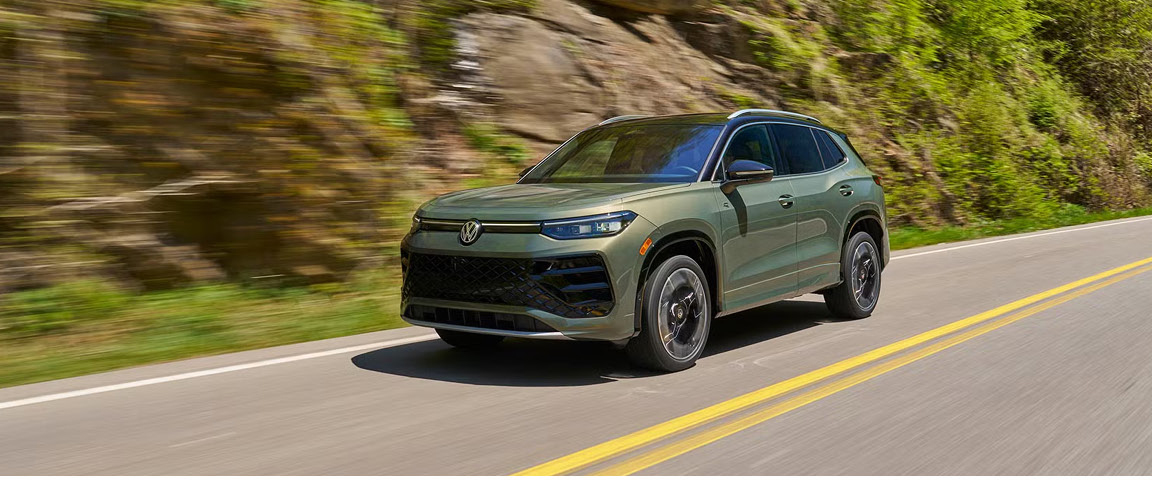
IQ.DRIVE is Volkswagen's standard driver assistance package, included on every trim of the 2026 Tiguan and Atlas. It combines forward collision warning, automatic emergency braking, lane-keeping assist, adaptive cruise control, blind spot monitoring, Travel Assist, Emergency Assist, and park distance control into one cohesive suite, all active from the moment you leave the lot, regardless of which trim you chose.
That last part matters. You do not pay extra for it. You do not have to select a package. Every 2026 Volkswagen Tiguan and Atlas that leaves our lot already has it running.
Most buyers see IQ.DRIVE on the window sticker and nod. They know it is the safety package. But they have questions: what does each piece actually do? When does it activate? Is Travel Assist the same as self-driving? What happens if the driver becomes incapacitated? This guide answers all of it in the language of a daily Spartanburg commute, not an engineering manual. Steve White Volkswagen Spartanburg serves drivers across Spartanburg, Boiling Springs, Greer, Duncan, and Gaffney, and we see these questions come up at every test drive.
Front Assist: The System Watching the Road Ahead of You
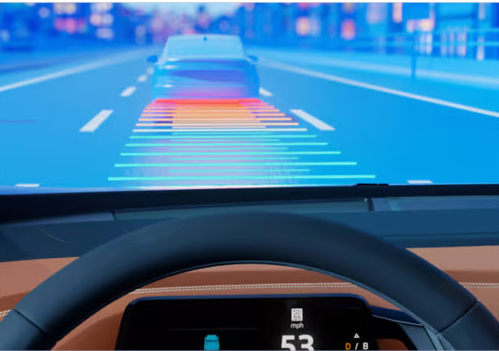
Forward collision warning plus automatic emergency braking, including detection for pedestrians and cyclists.
Here is the scenario. You are doing 35 mph on Pine Street in Spartanburg. The car in front of you stops abruptly to let a school bus pass. You have about a second of attention left on your phone screen. Front Assist is already watching the road ahead of you with a forward-facing radar sensor and camera.
It works in three stages:
- It detects a potential collision and alerts the driver with visual and audio warnings.
- If you do not respond, it prepares the brakes for maximum stopping power and applies light pre-braking pressure.
- If you still do not react, it applies full automatic emergency braking to reduce or prevent the collision.
What makes this more than a basic collision warning is the pedestrian and cyclist detection layer. According to Volkswagen, Front Assist can identify people crossing the road, not just vehicles. On John B. White Sr. Blvd near the bypass, where foot traffic mixes with vehicle traffic at peak hours, that distinction matters.
Front Assist is active at low and high speeds. Nothing to set up. It is simply on. The system that watches ahead of you pairs with a system that keeps you positioned correctly within your lane.
Lane Assist: The Gentle Correction Before You Leave Your Lane
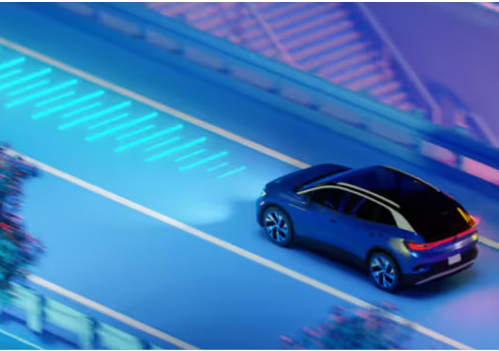
A camera-based system that detects lane markings and steers the vehicle back if you drift without signaling.
Lane Assist does not take over the steering wheel. It makes a correction, a firm, noticeable nudge, when the vehicle begins to drift over a lane marking without a turn signal active. According to Volkswagen, the system activates above 35 mph on roads with visible lane markings, which covers virtually every mile of I-85 and I-26 through Upstate SC.
The practical scenario: a late evening on I-85 between Spartanburg and Gaffney. Mile 12 of a 40-minute return commute, 9:30 p.m., fatigue setting in. The drift begins slowly, a few inches toward the left lane marker. Lane Assist detects the deviation through a forward-facing camera, and before the tire crosses the line, the steering corrects itself with a brief counter-steer input. Subtle enough that a fully alert driver rarely notices it. Substantial enough that a fatigued one does.
Important: Lane Assist is a supplemental safety system, not a replacement for driver attention. It is designed to catch moments of inattention, not to navigate on behalf of the driver.
Active Blind Spot Monitor and Rear Traffic Alert: The Eyes You Cannot Have
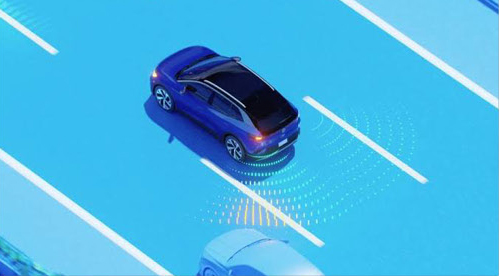
Visual warning in the side mirrors when a vehicle enters your blind zone, plus cross-traffic detection when backing up.
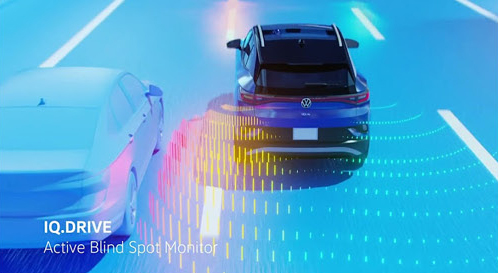
Every lane change on I-85 in stop-and-go traffic carries some uncertainty. The Active Blind Spot Monitor places an amber indicator light in the mirror housing on the side where a vehicle is present. It does not beep. It does not intervene. It shows you, clearly, that a vehicle is there before you start moving over. If you signal while the warning is active, it adds an audio alert.
This is not the same as looking over your shoulder; it covers the zone the mirror and your neck physically cannot reach.
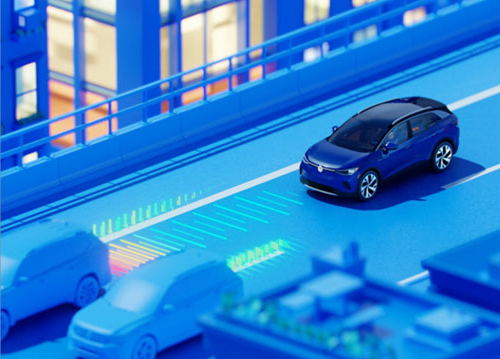
Rear Traffic Alert is a different but related feature. It activates when the vehicle is in reverse. If a car, bicycle, or person crosses behind you at a parking lot intersection, the system warns the driver with audio and visual cues and in some situations can apply automatic braking.
The specific scenario this was designed for: backing out of a space at the Publix on Highway 9 in Boiling Springs where cross-traffic comes from both directions without much warning.
The suite also includes Exit Warning, which detects approaching vehicles or cyclists when a door is about to be opened, an alert before the door swings into traffic.
Travel Assist: The Most Misunderstood Feature in IQ.DRIVE
It is not self-driving. It is the combination of adaptive cruise control and active lane centering working simultaneously, and it requires hands on the steering wheel at all times.
Travel Assist is a Level 2 driver assistance system. That means it handles two tasks at once: maintaining your speed and following distance from the car ahead, and keeping the vehicle centered in the lane.
According to Volkswagen's official documentation, Travel Assist operates at speeds up to 95 mph. The driver's hands must remain on the steering wheel at all times while it is active. This is not optional guidance. It is a system requirement.
What it does is reduce the moment-to-moment cognitive load of highway driving. On a 40-minute commute down I-26 toward Columbia, Travel Assist handles the subtle adjustments that would otherwise stack up over the drive: the slight curve in the road, the car that slows ahead of you, the need to ease back as traffic patterns shift. The driver remains in control and in charge. Travel Assist handles the micro-adjustments in the background.
This is different from regular cruise control in one critical way: it does not disengage when the car ahead slows below your set speed. It follows traffic. It can bring the vehicle to a full stop and then resume automatically when traffic clears.
Drivers who use Travel Assist on I-85 during the Spartanburg-to-Greenville corridor at rush hour consistently describe it as the feature they did not know they needed until the first long commute home.
Pro Tip:
Request a Travel Assist demonstration during your test drive at 2671 Reidville Rd, Spartanburg. It takes one highway on-ramp to understand what it does and five minutes on I-85 to understand why it matters.

Emergency Assist: The Feature No One Expects to Need
If the driver becomes completely unresponsive while Lane Assist or Travel Assist is active, the vehicle brings itself to a controlled stop and contacts assistance. This is one of the most distinctive features in the IQ.DRIVE suite, and the one least discussed at the dealership level. Most buyers learn about it here, not at the window sticker.
Emergency Assist activates under a specific and serious circumstance: Travel Assist or Lane Assist is active, and the system detects that the driver has become entirely unresponsive. Not distracted. Not momentarily hands-free. Unresponsive, as in a medical event, sudden loss of consciousness, or incapacitation.
Here is what happens, according to Volkswagen:
- The system issues audio and visual alerts to prompt any response from the driver.
- If no response is detected, the vehicle begins reducing speed gradually.
- The vehicle steers itself to a controlled stop within the lane or toward the shoulder.
- Hazard lights activate automatically.
- The system contacts emergency assistance through the vehicle's connected services.
A feature like this is uncommon in the compact and midsize SUV segment. It is standard in every 2026 Volkswagen Tiguan and Atlas. The reason it is not discussed more often is that it covers a situation no one wants to think about, which is exactly when it earns its place in the vehicle. From what happens in a crisis inside the cabin, the next system covers the everyday challenge of tight spaces outside it.
Adaptive Cruise Control With Stop-and-Go: For the I-85 Crawl
Radar-based speed management that follows the car ahead, adjusts automatically in traffic, and can bring the vehicle to a complete stop.
Anyone who runs I-85 between Exit 77 near Spartanburg and the Greenville County line on a weekday morning between 7 and 8:30 a.m. knows what stop-and-go traffic actually feels like. Vehicles crawl to under 5 mph, stop completely, then move again, repeatedly, across 10 to 15 miles. Without driver assistance, that requires constant accelerator and brake input for the entire stretch.
Adaptive Cruise Control with Stop-and-Go handles that sequence without you touching either pedal.
Standard cruise control works at a fixed speed. Adaptive Cruise Control works with traffic. Using front-facing radar, it detects the vehicle ahead and maintains a following distance you set. When that vehicle slows, your vehicle slows. When traffic speeds back up, your vehicle accelerates to the set speed. Stop-and-Go capability allows the system to bring the vehicle to a complete stop, not just slow significantly, and then resume automatically when traffic moves.
The following distance is driver-adjustable across three settings, so the system adapts to your preference rather than imposing a preset.
Park Distance Control and Area View: Tight Spaces in Spartanburg
Front and rear ultrasonic sensors standard on every trim, overhead Area View camera available on upper trims.
Parking in downtown Spartanburg's Morgan Square area or the multilevel structure at Westgate involves clearances that feel smaller on every return visit.
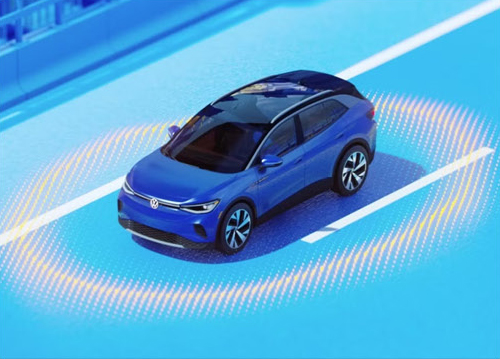
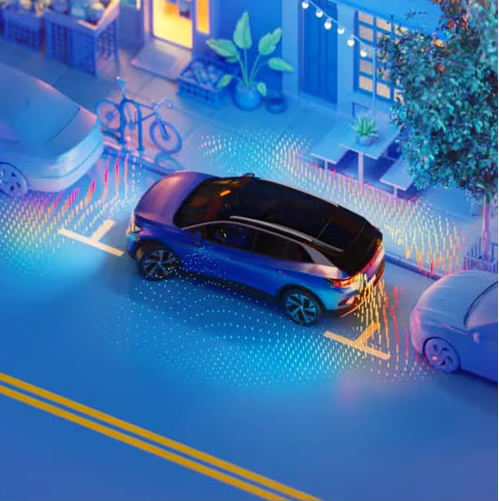
Park Distance Control uses ultrasonic sensors in the front and rear bumpers to measure proximity to objects the mirrors and rearview camera cannot fully capture. It produces audio tones that shorten as distance decreases. Standard on every 2026 Volkswagen Tiguan and Atlas trim, from base to top.
Upper trims, SE R-Line Black and above on the Tiguan, add the Area View system, a four-camera setup that generates an overhead bird's-eye view of the vehicle on the infotainment screen. What was previously a guessing game becomes something you can see from directly above.
Pro Tip:
If you have had a windshield replacement or any front-end repair on your Volkswagen, the IQ.DRIVE sensors require professional recalibration. A sensor that is even slightly misaligned will underperform. Schedule service with a certified Volkswagen technician to ensure the full suite is operating as designed.
Why Standard on Every Trim Is the Detail That Changes the Purchase Decision
Most brands put their full driver assistance suite behind a package upgrade or a higher trim. Volkswagen includes IQ.DRIVE from the base model forward.
When a manufacturer lists a safety feature as "available" or "optional," that means the base-model buyer does not have it. They paid for a new vehicle and drove home without automatic emergency braking, Travel Assist, or Emergency Assist, because those features were reserved for a higher tier.
Every 2026 Volkswagen Tiguan and Atlas, from the base SE to the SEL R-Line Turbo, leaves the lot with the full IQ.DRIVE suite already active. The driver who chose the base trim has the same Emergency Assist, Travel Assist, and lane-centering capability as the driver who selected the top configuration.
For context: Honda Sensing is also standard on the CR-V and covers forward collision warning, adaptive cruise, and lane assist. It does not include a feature equivalent to Travel Assist's semi-autonomous combination or Emergency Assist's driver incapacitation response at any trim level.
The 2025 Volkswagen Tiguan earned a 5-star overall safety rating from the National Highway Traffic Safety Administration, the highest possible score. The 2026 model is built on the same fundamental safety structure.
Check our current new Volkswagen specials to see which Tiguan and Atlas configurations are available in Spartanburg today.
Frequently Asked Questions
IQ.DRIVE is Volkswagen's standard driver assistance suite included on 2024 and newer Volkswagen models with automatic transmissions. It combines Front Assist with forward collision warning and automatic emergency braking, Lane Assist, Active Blind Spot Monitor, Rear Traffic Alert, Adaptive Cruise Control with stop-and-go capability, Travel Assist, Emergency Assist, and Park Distance Control into one integrated system. According to Volkswagen, all features work through a combination of front and rear radar, forward-facing cameras, and ultrasonic sensors.
Yes. According to Volkswagen, IQ.DRIVE comes standard on every trim of the 2026 Volkswagen Tiguan, including the base S trim. This includes Forward Collision Warning with Automatic Emergency Braking, Active Blind Spot Monitor, Rear Traffic Alert, Lane Assist, Travel Assist, Emergency Assist, Adaptive Cruise Control with stop-and-go, and Park Distance Control. No package upgrade is required. Upper trims add features like the Area View overhead camera, Park Assist Plus, and a head-up display.
Adaptive Cruise Control maintains your set speed and following distance from the car ahead, including stop-and-go capability in traffic. Travel Assist combines Adaptive Cruise Control with active lane centering, allowing both systems to work simultaneously. According to Volkswagen, Travel Assist operates up to 95 mph and the driver must keep hands on the steering wheel at all times. It is a Level 2 driver assistance system that reduces highway commute fatigue but does not replace driver control.
Yes. According to Volkswagen, the 2026 Tiguan includes Front Assist as part of its standard IQ.DRIVE suite on every trim. Front Assist combines Forward Collision Warning with Automatic Emergency Braking. It can detect vehicles, pedestrians, and cyclists ahead and will alert the driver, pre-load the brakes, and apply full automatic braking if the driver does not respond to an impending collision.
Emergency Assist is an IQ.DRIVE feature that detects when a driver becomes completely unresponsive while Lane Assist or Travel Assist is active. According to Volkswagen, the system first issues audio and visual alerts. If no response is detected, it gradually reduces speed, steers the vehicle to a controlled stop, activates hazard lights, and contacts emergency assistance through the vehicle's connected services. Emergency Assist is standard on every 2026 Volkswagen Tiguan and Atlas.
Yes. According to Volkswagen, IQ.DRIVE is standard on all 2026 Atlas trims. Every configuration, from the SE through the SEL R-Line Turbo, includes the full IQ.DRIVE suite: Front Assist with pedestrian detection, Active Blind Spot Monitor, Rear Traffic Alert, Lane Assist, Travel Assist, Emergency Assist, Adaptive Cruise Control with stop-and-go, and Park Distance Control.
The 2025 Volkswagen Tiguan earned a 5-star overall safety rating from the National Highway Traffic Safety Administration, the highest possible score. The 2026 model is built on the same fundamental safety structure. In addition to its structural safety, every 2026 Tiguan includes the full IQ.DRIVE driver assistance suite as standard equipment, along with 10 airbags including a driver knee airbag, front center airbag, and rear side-impact airbags.
Every new 2026 Tiguan and Atlas at Steve White Volkswagen Spartanburg comes with IQ.DRIVE standard. Come in for a test drive and ask our team to walk through each system in person, we can demonstrate Travel Assist on I-85 and show you how Emergency Assist works before you ever sit across from a finance manager. Serving Spartanburg, Greer, Boiling Springs, Duncan, and Gaffney.