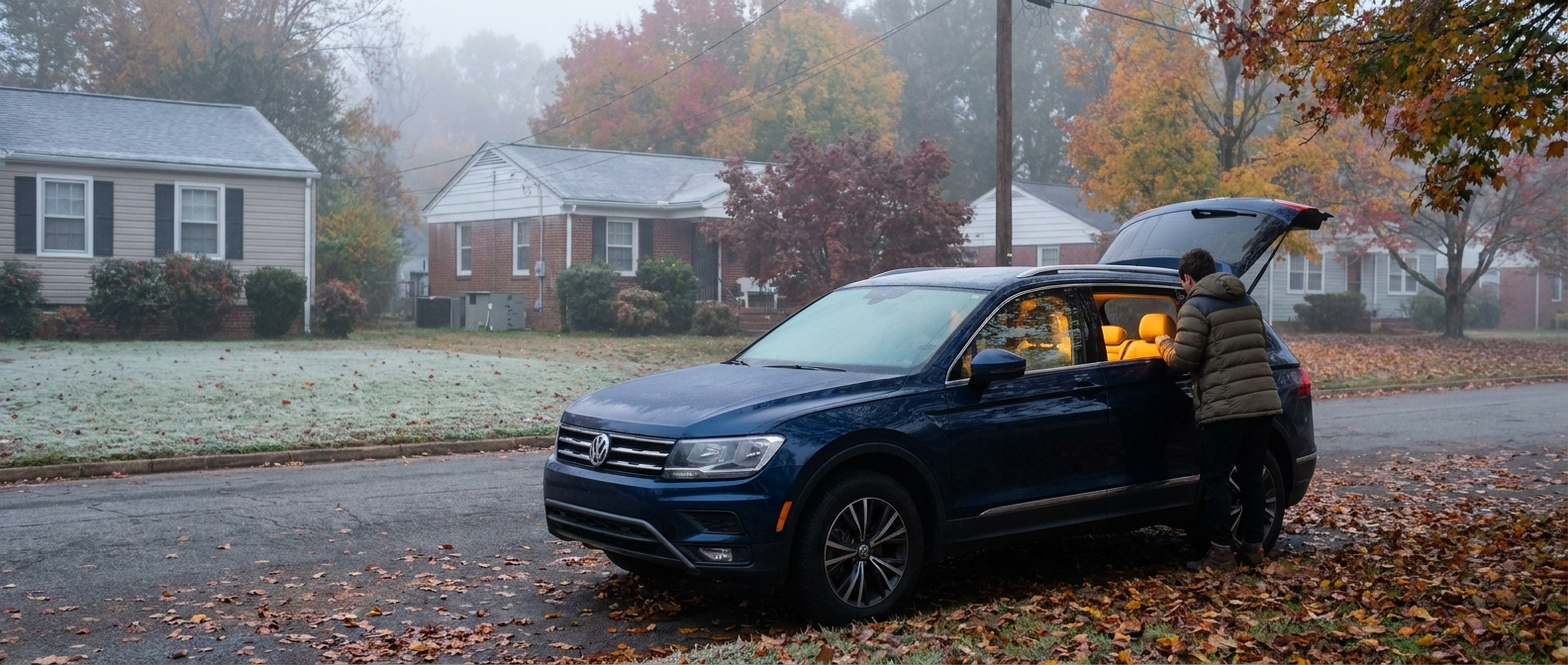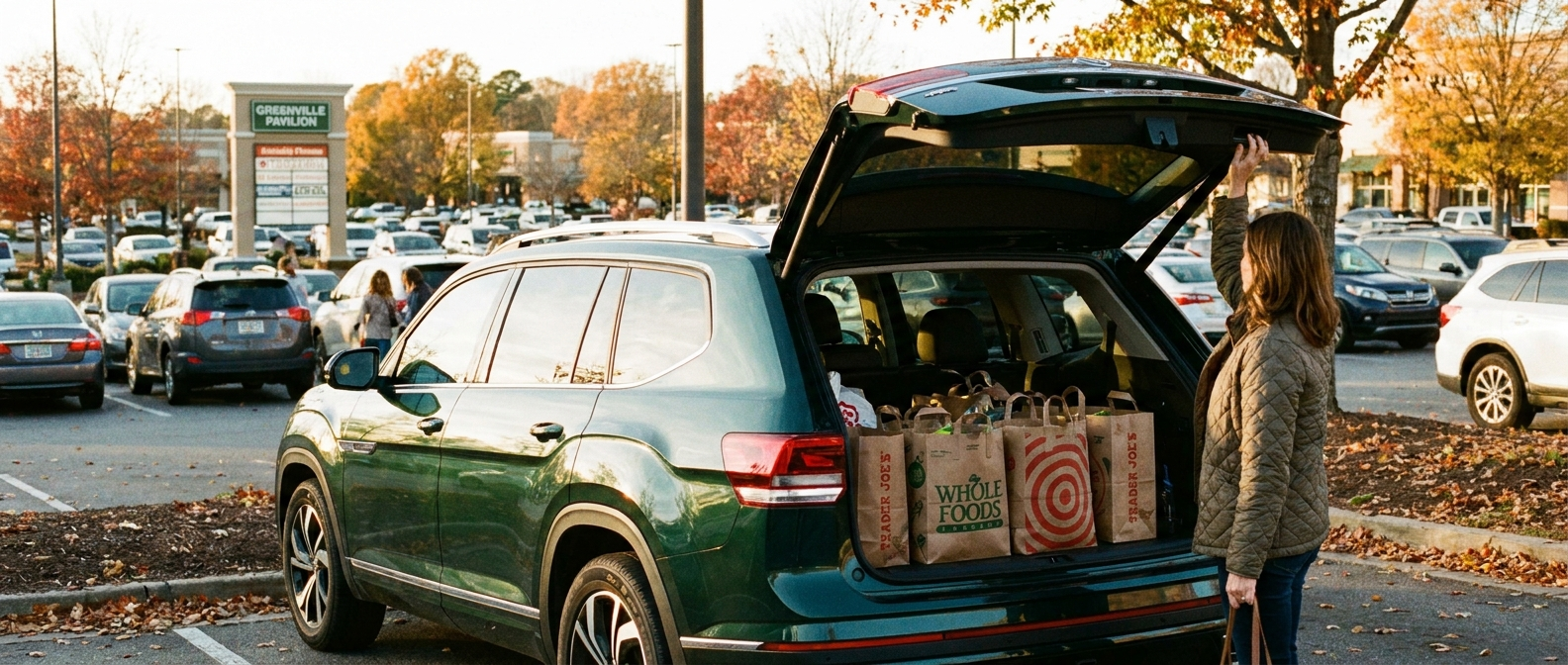

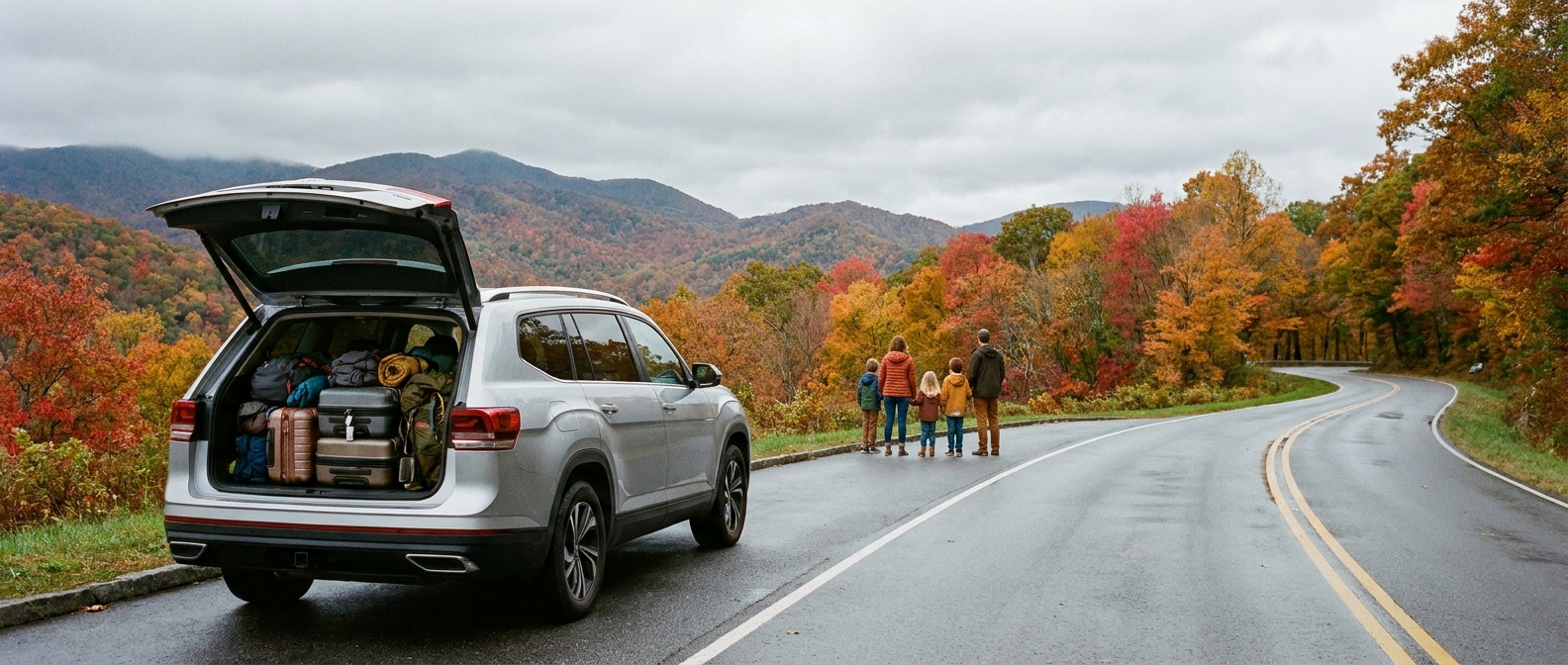
The 2026 Volkswagen Atlas isn't just a large SUV. It's built to answer a very specific problem that Upstate SC families run into every November and December. How do you move seven people, a week's worth of luggage, and a car seat or two down I-85 toward Atlanta or up toward Charlotte without it becoming the most stressful part of the holiday?
The short answer is that the Atlas was engineered with exactly that scenario in mind. Three rows that adults actually fit in. A cargo area that doesn't make you play Tetris while standing in the rain. And a standard driver-assistance suite that takes real load off the driver during stop-and-go traffic. We'll break down the specific problems drivers hit on this corridor and show you how each one maps to a measurable Atlas feature.
What's Actually Going On? The Three Problems That Break Holiday Drives on I-85
Three specific failures break holiday drives on this corridor, and none of them is the mysterious stress people tend to blame it on, because they trace to traffic density, seating geometry, and November weather, and each one maps to something you can measure on the Atlas rather than endure. We'll take them one at a time.
I-85 through Upstate South Carolina runs 106 miles and connects Greenville and Spartanburg to both Atlanta and Charlotte. It's one of the most heavily traveled freight and passenger corridors in the Southeast. Traffic density near Greenville exceeds 100,000 vehicles per day according to the South Carolina Department of Transportation. During Thanksgiving and Christmas holiday windows, passenger volumes surge on top of the normal freight flow, so you're adding holiday traffic to a corridor that's already full.
So you're looking at a predictable set of problems. Not vague stress. Specific, diagnosable failures.
| Problem the holiday driver faces | Root cause | How the 2026 Atlas addresses it |
|---|---|---|
| Luggage won't fit with all seats occupied | Third rows in many midsize SUVs leave almost no usable cargo space when seated | The cargo space of the Atlas carries 20.6 cu ft behind the third row with all seats up. Enough for four large bags |
| Driver is exhausted before arrival | Stop-and-go I-85 traffic demands constant brake/accelerate input for hours | IQ.DRIVE's Travel Assist manages speed and steering in traffic, reducing physical driver load |
| Seven people can't sit comfortably for 3-plus hours | Cramped third rows force early stops and complaints; many SUV third rows measure under 30 inches of legroom | The third row of the Atlas delivers 33.7 inches of legroom. Genuinely usable for adults on longer hauls |
| November rain makes AWD feel necessary | Upstate SC November weather brings steady rainfall and occasional early-season cold snaps on elevated highway sections | Available 4MOTION all-wheel drive keeps power distributed without driver input |
The Cargo Problem: It's Worse Than You Think When the Third Row Is Up
The cargo number that actually matters is the one behind the third row with everyone seated, and plenty of three-row SUVs quietly skip past it in favor of the big maximum figure, the one that only exists after you fold the rear seats flat and give up the seats you needed. Keep your eye on the figure with all rows occupied.
The 2026 Atlas carries 20.6 cubic feet of cargo behind its third row with all seats upright, according to the published specifications of Volkswagen. The number is meaningful. Four large-format suitcases in the range of 3.5 cubic feet each fit within that envelope, with room left for soft bags and a backpack or two. The space isn't unlimited. If you're hauling for seven people with seven full-size rolling bags, something goes on laps. Fair tradeoff. But for the typical Spartanburg-to-Charlotte family visit with four or five bags and a few overnight totes, the cargo area handles it without rearranging the seating plan.
Fold the third row and the Atlas opens to 55.5 cubic feet. Fold both rear rows and you reach 96.6 cubic feet. Those numbers become relevant when you're the parent loading up after three days at the in-laws and somehow the bags have multiplied.
Browse current Atlas inventory to check which trims are available now on our lot on Reidville Road.
The 50/50 split-folding third row also means you can carry a long, flat item (think a folded stroller, a boxed gift, a flat-pack something someone couldn't resist buying) alongside two seated passengers in the third row. In a smaller SUV you'd be choosing between the two. Here you don't.
The Driver Fatigue Problem: I-85 Stop-and-Go Is Its Own Kind of Exhausting
Schedule a service appointment before a long holiday run, and also pay attention to the drive itself, because stop-and-go fatigue is where the Atlas earns its keep in a way that's harder to see on a spec sheet than cargo volume is. The payoff shows up in how you feel at the destination.
The I-85 stretch between Anderson, Greenville, and Spartanburg can condense a 45-minute drive into a two-hour crawl on the Wednesday before Thanksgiving. The fatigue doesn't come from highway speed but from the opposite, constant micro-adjustments, brake-hold, creep-forward. An hour of that wears on you. Three hours is a different experience entirely.
IQ.DRIVE is standard on every 2026 Atlas trim, no upgrade required. The suite includes adaptive cruise control, Travel Assist (which actively steers, accelerates, and brakes in stop-and-go conditions), and lane assist. Travel Assist in particular changes the character of a congested I-85 run. The driver stays attentive and in control. The system isn't autonomous driving, but the physical work of holding speed and lane position through slow traffic drops by a real margin.
The Atlas Cross Sport carries the same IQ.DRIVE suite if a two-row layout fits your family better.
Drivers come back from holiday trips and describe the difference as "arriving ready to actually be present for dinner instead of needing to decompress in a parking lot." The mechanism is simple. Less repetitive physical input over three hours leaves a driver less depleted at the destination.
AWD Uncertainty: When to Spec 4MOTION for a November I-85 Run
The AWD call comes down to condition, not reflex, and we'll give you the straight tradeoff rather than a blanket yes, because Upstate weather and your own driving pattern decide whether 4MOTION earns its place on a loaded Atlas, and for plenty of daytime Spartanburg routes the front-drive setup already covers you. Let's walk the real variables.
Upstate South Carolina in November and December sees sustained rainfall, occasional wind events, and, on elevated sections of I-85 near the Cherokee County line north of Spartanburg, the possibility of early-season cold that can create slick patches before road crews are positioned. The Upstate isn't a snow-belt climate. But wet pavement on a loaded, seven-passenger SUV is a legitimate traction consideration, especially during late-night holiday return trips when traffic thins and speeds rise.
The 2026 Atlas is available with 4MOTION all-wheel drive on SE and above trims. The EPA rates 4MOTION Atlas models at 20 city / 26 highway for SE and SE with Technology trim levels. The highway figure comes in one mpg under the FWD number. Over a 200-mile Atlanta-to-Spartanburg run, that difference in fuel economy is small, and you won't notice it at the pump.
So which setup do you need? If your holiday driving is mostly daytime Upstate SC routes on familiar roads, the FWD Atlas handles it competently with good all-season tires in proper condition. If you're regularly making late-night return runs or venturing into the Georgia foothills where elevation and temperature drop more sharply, 4MOTION is worth a serious look.
The engine behind both configurations is the same turbocharged 2.0-liter four-cylinder producing 269 horsepower and 273 lb-ft of torque, paired to an eight-speed automatic. The EPA rates the FWD Atlas at 20 city / 27 highway / 23 combined, which works out to an approximate 428-mile range on a full tank. You'll find a Spartanburg-to-Atlanta return trip without a fuel stop is realistic.
See Current Volkswagen Atlas Offers
DIY Prep vs. Seeing Our Service Team Before the Holiday Run
Some of this prep you can knock out yourself in the driveway, and some of it rewards a professional eye before a loaded holiday run, so splitting it the right way saves you time at the counter and keeps the drive from becoming a roadside problem you didn't need. Here's where the line falls.
You can handle yourself:
- Tire pressure check. Load an Atlas to seven passengers and a full cargo area and the recommended inflation may differ from your daily-driver baseline. Check the door-jamb placard for loaded recommendations.
- Fluid levels (washer fluid especially. November road spray on I-85 can drain a reservoir quickly).
- Wiper blade condition. A worn blade turns a wet-pavement I-85 run into a visibility problem rather than a minor annoyance.
- Confirm your infotainment is paired to your phone before you leave the driveway. Fumbling with Bluetooth during I-85 merge traffic is avoidable.
Where our service team adds value:
- Brake inspection. A fully loaded seven-passenger Atlas weighs meaningfully more than the same vehicle with one occupant, and braking distances increase in step.
- Tire tread measurement. Our technicians can give you an actual depth number rather than a visual guess.
- Battery and charging system check, especially on vehicles approaching three years. Cold morning starts after a multi-day trip sitting in a guest-house driveway are where an aging battery reveals itself.
- 4MOTION system verification if you're unfamiliar with the AWD's behavior under load. The system operates on its own, but confirming it's functioning correctly before a loaded highway run is straightforward for us.
We're on Reidville Road in Spartanburg. The service team runs pre-trip inspections, and booking a slot before the holiday window is faster than booking one after the corridor traffic starts building.
Frequently Asked Questions
Does the 2026 Volkswagen Atlas comfortably seat adults in all three rows on a long highway drive?
Yes, with some qualification. The 2026 Atlas measures 33.7 inches of legroom in the third row, which is enough for most adults on runs in the two-to-three-hour range. For reference, that's comparable to the second-row legroom in several compact SUVs. An adult over six feet tall will feel the ceiling more than the floor space, particularly on trims with a sunroof. For holiday I-85 runs between Spartanburg, Greenville, and Charlotte or Atlanta, the third row works for adults without making them contort for the whole drive. For a six-plus-hour run with the same passengers, plan a real stop.
Is the 4MOTION all-wheel drive system worth adding for Upstate SC holiday driving?
For most daytime holiday driving on I-85 in Spartanburg and Greenville, FWD with quality all-season tires in good condition handles the typical November wet-pavement conditions capably. The case for 4MOTION strengthens if you're making overnight return runs, driving into the Georgia or North Carolina foothills where temperature and elevation drop more sharply, or if you regularly load all three rows and the cargo area. The fuel economy difference between FWD and 4MOTION SE trim is one mile per gallon on the highway, per EPA estimates. A small real-world cost for the added traction confidence on a heavily loaded family vehicle.