
Blog

Getting More from Every Trim: Volkswagen Value Near WestGate This October

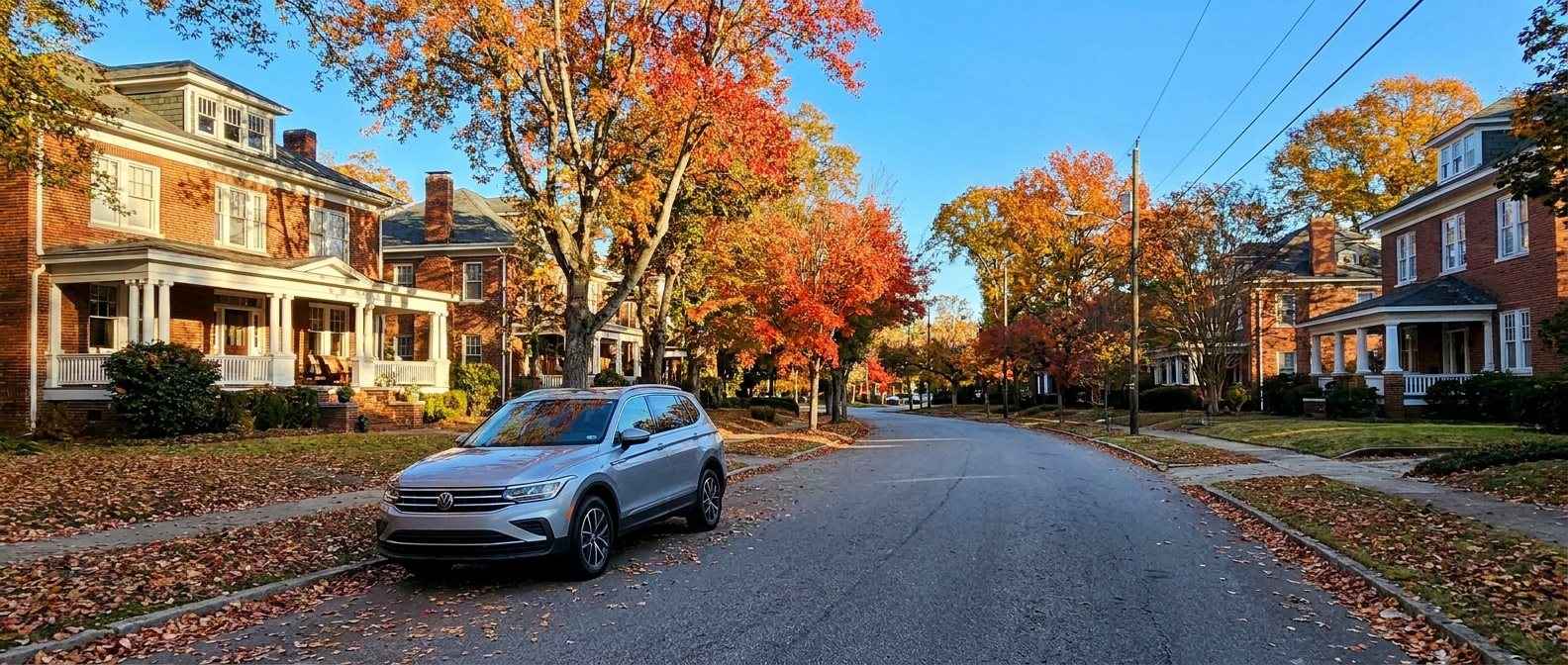
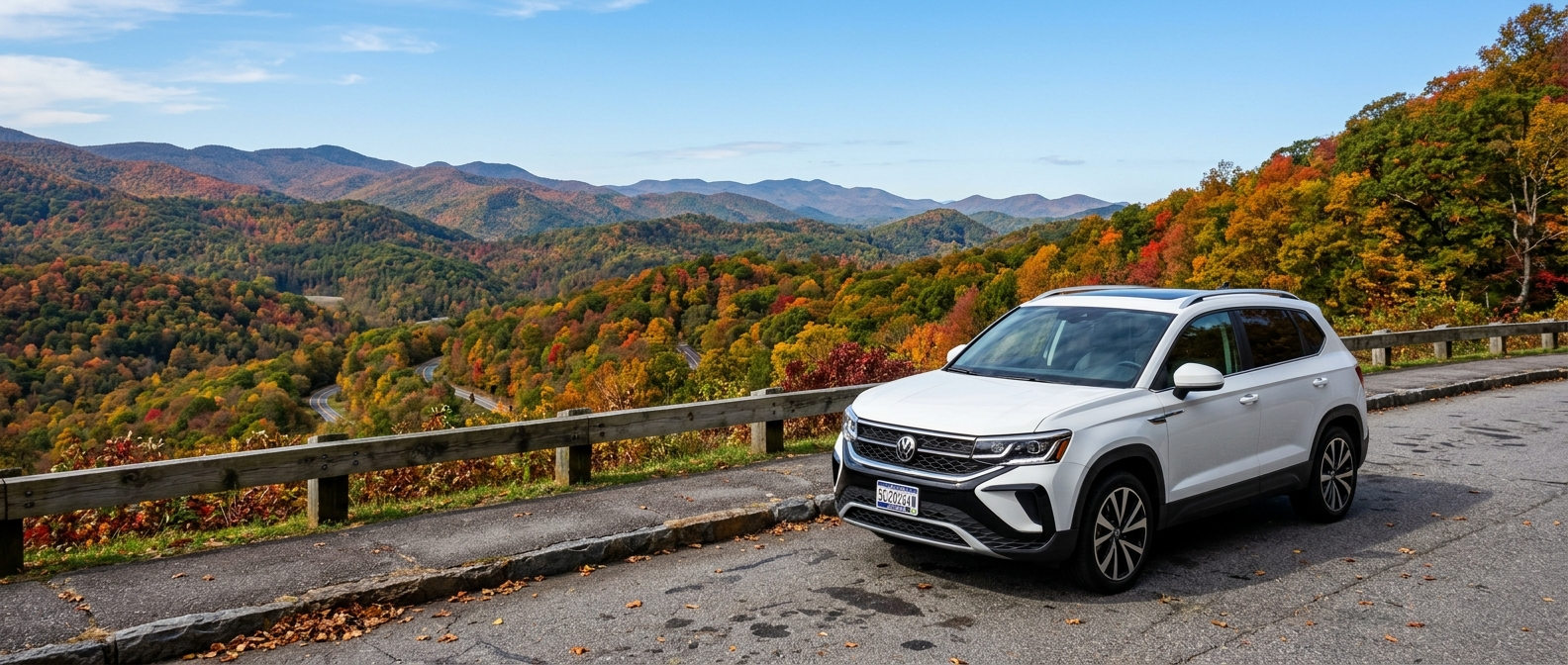
2026 Volkswagen Tiguan parked near WestGate Spartanburg SC in October with fall foliage

The right Volkswagen for drivers near WestGate isn't the one with the longest spec list. The one that fits is the one whose feature tier matches your real driving life.

The 2026 Volkswagen lineup spans a wide range of capability. On one end, the EPA rates the Jetta at 29 city / 40 highway mpg from a 1.5-liter turbocharged four-cylinder. On the other end, the Tiguan SEL R-Line Turbo pushes 268 horsepower through the same EA888 engine family that Volkswagen has been refining for years. Those aren't just different vehicles. They stand for different decisions about what you're paying for and what you'll actually use on Reidville Road, I-85, and the morning run between Spartanburg and Greenville.

Getting your money's worth means weighing those tradeoffs plainly. That's what this guide is for.

The 2026 Tiguan is where most Upstate SC buyers land, and we'll start there, but the table below puts the whole lineup in front of you first.

What Do You Actually Get at Each Tier?

Strip away the marketing language and the Volkswagen lineup breaks into clear tiers based on what you gain at each step up.

TierModelWhat You Actually GetWho It's For
Efficiency-first sedanJetta (S / Sport / SE / SEL)EPA-rated 29/40 mpg city/hwy; 1.5L turbo, 158 hp; 8-in touchscreen standard; rear-seat pretensioners added for 2026I-85 and I-26 commuters who want German cabin quality at compact-car running costs
Entry SUV, real efficiencyTaos FWDEPA-rated 28/36 mpg city/hwy; 1.5L turbo, 174 hp; compact footprint; 4Motion AWD optional (25/33 mpg)First-SUV buyers who want the raised ride and cargo flexibility without the fuel bill of a larger crossover
Compact SUV sweet spotTiguan S / SEEPA-rated 26/34 mpg city/hwy; 2.0L turbo, 201 hp; optional third row; IQ.DRIVE driver assistance standard at SEGrowing families or couples who need seven-seat flexibility and want adaptive cruise, lane centering, and emergency braking standard
Compact SUV performanceTiguan SEL R-Line Turbo268 hp via EA888 evo5 2.0L turbo; 4Motion AWD standard; sport suspension; 22/29 mpg city/hwyDrivers who want the Tiguan footprint but want to feel the engine every time they merge
Three-row family SUVAtlas (SE / SEL)EPA-rated 20/27 mpg city/hwy; 269 hp; up to 96.8 cu ft cargo; 4Motion AWD availableFamilies who need genuine seven-seat capacity and want the wide, airy Volkswagen cabin with room for gear and passengers
Hot hatch daily driverGolf GTI (S / SE / Autobahn)EPA-rated 24/32/27 mpg city/hwy/combined; 241 hp, 273 lb-ft torque; 7-speed DSG; standard limited-slip differentialEnthusiast drivers who want 241 horsepower and still 32 mpg on the highway

That lays out the framework. The step up only earns its keep where you'll actually feel it.

What decides your tier near WestGate? For most drivers it comes down to one practical question, whether you're mostly driving solo or regularly hauling people and cargo.

Matching Trim to Your Actual Upstate SC Routes

October in Spartanburg means shorter days, the occasional cold start, and football-traffic Saturday evenings that can turn a 10-minute drive into a 30-minute one. Stop-and-go like that separates a cabin you want to be in from one you're just tolerating.

The 2026 Jetta earns its place for commuters in a very specific way. That EPA estimate of 29 city / 40 highway doesn't come from a stripped econobox. It pairs a proper 1.5-liter turbocharged four-cylinder with an 8-speed automatic, and a key 2026 update standardized that rating across all trim levels, including the SE, which adds the sunroof most buyers want. The tradeoff is simple enough. A Jetta is a sedan. If your weekends involve loading gear for a day at Croft State Park or the Blue Ridge foothills, the trunk will eventually frustrate you. But if your life is mostly the I-26 corridor back and forth five days a week, nothing else in the Volkswagen lineup costs less to run per mile.

The 2026 Atlas sits at the opposite end of the value equation. Three rows and up to 96.8 cubic feet of maximum cargo space mean it effectively replaces a minivan for Upstate SC families. The 269-horsepower 2.0-liter turbo keeps it from feeling sluggish despite the size. The fuel reality is 20 city / 27 highway on the FWD trim, and that's the cost of hauling seven people, not a flaw. For a family making the I-85 run to Charlotte or the I-26 stretch toward the coast with everyone aboard, the interior space earns that trade.

On the Tiguan trim ladder: Stepping from the base S to the SE adds more real content than the step looks like on paper. IQ.DRIVE driver assistance (adaptive cruise with stop-and-go, lane centering, emergency braking) becomes standard at the SE. For anyone running the I-85 corridor between Spartanburg and Greenville in stop-and-go traffic, that suite pays for itself in reduced fatigue well before the first oil change.
Next step: If you've narrowed it down to two models but aren't sure which trim to drive, our team on Reidville Road can put you in both back-to-back. An hour answers what a table can't.

The Smart Choice Depends on One Honest Tradeoff

The Taos is the most underestimated value in this Volkswagen lineup, and its fuel economy is exactly why. Its 28/36 EPA rating on the FWD version makes it the most fuel-efficient gas-powered SUV Volkswagen sells, and the compact footprint parks near WestGate without a second thought. The 4Motion AWD version drops to 25/33 mpg and adds real traction confidence for wet weather on SC Highway 11 and the foothills routes. Worth naming plainly, 4Motion costs you roughly 3 mpg combined. Whether that's worth it depends on how often you actually drive those routes in rain.

The Golf GTI is the enthusiast answer, and it offers the most performance per dollar in the lineup. The EPA rates the 2026 Golf GTI at 24 city / 32 highway on 241 horsepower and 273 lb-ft of torque. A standard electronically controlled limited-slip differential gives it steering feel that no crossover in this price range can match. The downside is real. You get 19.9 cubic feet of cargo space with the rear seats up. A GTI isn't a family hauler. But for a driver who wants a Volkswagen that genuinely rewards the curves on SC Highway 11 on Saturday without destroying the fuel budget Monday morning, nothing else in the lineup does that job as well.

Our take from standing on this lot is simple. Most buyers who come in focused on the Tiguan leave in the Tiguan. It's the right size for Upstate SC life. What's left to decide is which Tiguan, the SE with IQ.DRIVE for the commuter, or the SEL R-Line Turbo for the driver who wants 268 horsepower and means it. Side by side, those two feel like completely different vehicles.

See October Offers at Steve White Volkswagen Spartanburg

October is a good time to look at the Volkswagen lineup in Spartanburg. The weather finally cooperates for a real test drive, and the lot is active across all models. Whatever your driving life looks like, a daily commute on I-85, weekend runs toward the foothills, or hauling the whole family, there's a trim in this lineup that earns its keep for exactly that. We're on Reidville Road in Spartanburg. We'd rather show you than tell you.

Frequently Asked Questions

Which 2026 Volkswagen gets the best fuel economy for a Spartanburg commuter?

The 2026 Jetta leads the lineup. The EPA rates it at 29 city / 40 highway mpg across all trim levels using a 1.5-liter turbocharged four-cylinder, and that rating is consistent whether you choose the base S or the SEL with the sunroof. For drivers spending most of their miles on I-85 or I-26, that 40 mpg highway figure is the practical headline. The Taos FWD is the closest SUV alternative at 28/36 mpg, a reasonable choice if you need the elevated ride height and additional cargo space of a crossover but don't want to give up much efficiency.

Is it worth stepping up from the base Tiguan to a higher trim for Upstate SC driving?

For most Upstate SC buyers, yes. Specifically because of IQ.DRIVE driver assistance. On the 2026 Tiguan, adaptive cruise control with stop-and-go and lane-centering assistance become standard at the SE trim. For anyone who regularly drives I-85 between Spartanburg and Greenville in congested traffic, that suite meaningfully reduces fatigue on the commute. If what you're after is outright power, the SEL R-Line Turbo takes output from 201 to 268 horsepower via the EA888 evo5 engine, though the EPA rating shifts from 26/34 to 22/29 mpg on its standard 4Motion AWD configuration. Both are legitimate answers. They just serve different priorities.

Steve White Volkswagen Spartanburg

2671 Reidville Rd, Spartanburg, SC 29301

(864) 585-2492

Recommended Posts

Which Volkswagen Fits Your Holiday Shopping Without Going Full-Size SUV?

Which Volkswagen Fits Your Holiday Shopping Without Going Full-Size SUV?

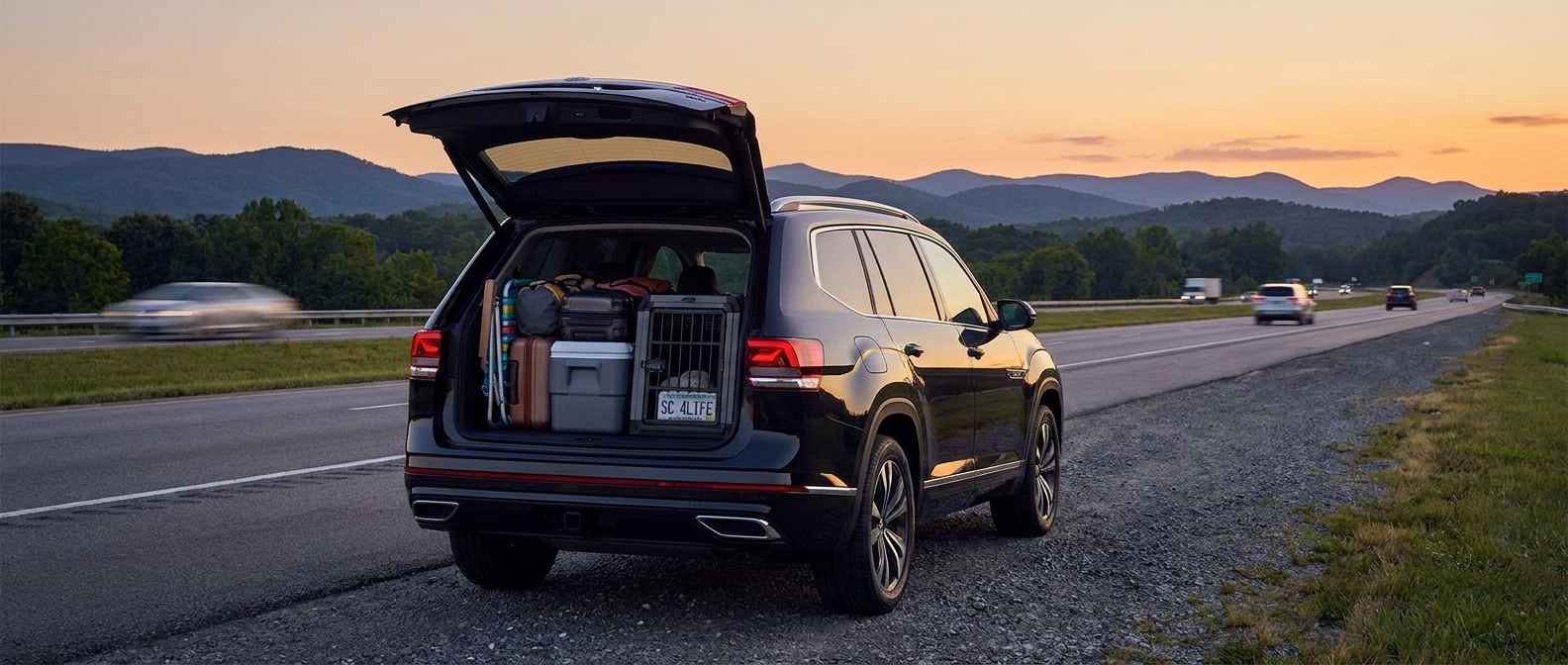
The 2026 Volkswagen Atlas Cross Sport is our pick for most holiday shopping runs. It carries 40.3 cubic feet of cargo behind a full row of passengers, the most of any two-row Volkswagen, and it parks like a compact SUV, not a school bus. If you're running solo or watching the budget, the Tiguan and Taos both earn a real look. Which Volkswagen gives you the most usable cargo room when everyone's along for the ride? The Atlas Cross Sport wins this one with 40.3 cubic feet behind a full row of seats, though what counts here isn't just raw max volume so much as the space you've still got when nobody's been folded away to make room for the groceries. Model Cargo (Seats Up) Cargo (Seats Folded) Rows Key Detail 2026 Volkswagen Taos 27.9 cu ft (FWD) 65.9 cu ft (FWD) 2 Best fuel economy at 31 mpg combined (FWD, EPA) 2026 Volkswagen Tiguan 33.8 cu ft 69.8 cu ft 2 Underfloor storage compartment for concealing bags 2026 Volkswagen Atlas Cross Sport 40.3 cu ft 77.6 cu ft 2 Largest two-row cargo footprint in the lineup 2026 Volkswagen Atlas 20.6 cu ft (behind row 3) 55.5 cu ft (row 3 down) 3 Third row is the tradeoff; 7-passenger capacity 40.3 cubic feet in the Atlas Cross Sport is the figure that matters most if you're picking up family from the airport and swinging by Haywood Mall in Greenville on the way home. All five seats stay occupied, and you still have more trunk room than the Tiguan gives you after folding a seat. The Atlas three-row is a different animal. Great if seven people are coming for Thanksgiving, but that 20.6 cubic feet behind the third row squeezes tighter than you'd expect from a vehicle this size. The squeeze is real. The Tiguan has one trick that's easy to overlook. Volkswagen tucks an underfloor storage compartment beneath the cargo floor, and that's where the bags with the tags still on them go. Keep gifts out of sight without folding a seat or cramming anything behind your head. Explore the 2026 Volkswagen Tiguan Does the Atlas Cross Sport actually park well enough for mall lots and holiday traffic? Yes for open lots, with a caveat for the tight ones. The Cross Sport fits most mall decks around here just fine, though at 195.5 inches it runs longer than the Tiguan, and we'd rather you hear that tradeoff from us than meet it nose-first in a cramped downtown space. The Atlas Cross Sport measures 195.5 inches in length, about ten and a half inches longer than the Tiguan. In an open-air lot on Reidville Road or the sprawling decks at Westgate City Center, that difference is a non-issue. Pull into a tight downtown garage or a compact space and you'll feel it. What the Cross Sport trades in garage friendliness, it gives back everywhere else. Rear legroom sits at 40.4 inches, so passengers in back stay comfortable on longer runs up I-85. Bags slide in. The low cargo floor sits low enough that you're loading things in instead of hoisting them over a sill, and the 60/40 split rear seat lets you carry a passenger and a large item at once when you need to. Browse the full Volkswagen Atlas lineup if you're seriously weighing the three-row. Just go in knowing the cargo math changes. That third row is real estate, and when it's up you're working with 20.6 cubic feet behind it. Our team's read on it. When customers have a compact-SUV budget but need midsize cargo, the Atlas Cross Sport is the one we show first. Its footprint runs bigger than the Tiguan, but the cargo numbers part ways in a real way. 40.3 versus 33.8 cubic feet with passengers aboard. The gap isn't abstract on a loading dock. The Atlas Cross Sport carries 40.3 cubic feet of cargo with all five seats in use. 6.5 cubic feet more than the Tiguan in the same configuration, per Volkswagen specifications. View Current Holiday Offers Is the Taos worth considering if cargo isn't your top priority? Yes, as long as you're not hauling a full car plus a holiday load every week. The Taos handles a solo driver or a couple with room to spare, and its fuel economy leads the lineup, though it tightens up fast once four or five people climb in with cargo of their own. The 2026 Volkswagen Taos carries 27.9 cubic feet behind its rear seats in FWD configuration, a solid number for a subcompact SUV, and it folds to 65.9 cubic feet when you're after maximum room. The EPA rates the FWD Taos at 28 city / 36 highway / 31 combined mpg. Over a season of errand runs between Spartanburg, Greenville, and Anderson, that economy adds up. Watch the ceiling, though. If you're regularly carrying four or five people plus a holiday load, the Taos turns into a game of Tetris. For a solo driver or a couple it's excellent. With the whole family in and a Costco run behind you, it's a tighter call. The Tiguan is the step between them. At 33.8 cubic feet behind the second row, it handles the daily school-and-errand schedule better than the Taos, the underfloor compartment adds a hidden layer of organization, and it's meaningfully more compact on the road than the Atlas Cross Sport. Call that the case for it, in plain terms. FAQ Which 2026 Volkswagen has the most cargo space behind the rear seats without folding them? The 2026 Volkswagen Atlas Cross Sport, with 40.3 cubic feet of cargo space behind the second row with all passengers seated. The Tiguan offers 33.8 cubic feet in the same configuration, and the Taos offers 27.9 cubic feet in FWD trim. The three-row Atlas, by comparison, provides 20.6 cubic feet behind its third row when all seven seats are occupied. Does the Volkswagen Tiguan have any special cargo storage features? Yes. The 2026 Volkswagen Tiguan includes an underfloor cargo storage compartment beneath the main cargo floor. It's a practical feature for keeping valuables or gift bags concealed and organized without folding the rear seat. Is the Volkswagen Atlas Cross Sport or the Atlas better for holiday shopping with passengers? For shoppers who want to carry a full passenger load and still have genuine cargo room, the Atlas Cross Sport is typically the better fit. Its 40.3 cubic feet behind the second row (with five seats occupied) outpaces the Atlas, which only offers 20.6 cubic feet behind its third row. If you regularly need seven seats and cargo together, the Atlas is the right call, but understand you're trading trunk room for the extra row. *By the Steve White Volkswagen Spartanburg Team | November 2026* Get What Your Current Vehicle Is Worth Steve White Volkswagen Spartanburg 2671 Reidville Rd, Spartanburg, SC 29301 (864) 585-2492

Volkswagen Taos vs. Kia Seltos: The Spartanburg Buyer's Guide

Volkswagen Taos vs. Kia Seltos: The Spartanburg Buyer's Guide

In this article Head-to-Head: 2026 Volkswagen Taos vs. 2026 Kia Seltos The Taos Gives You Turbo Power Without Making You Pay for It Twice The Cargo Edge Is Real, and the Rear Seat Is a Detail Nobody Tells You About Three Practical Reasons the Taos Makes Sense in Spartanburg The Taos Is the Right Call for Most Upstate SC Drivers For most Spartanburg drivers, the 2026 Volkswagen Taos is the stronger call. It delivers turbocharged power at every trim level and more cargo room. The Seltos is a genuinely good SUV, and we'll say exactly where it wins. But if you're commuting the I-85 corridor or heading up SC Highway 11 into the Blue Ridge foothills on a weekend, the Taos is built for how you actually drive Upstate. Head-to-Head: 2026 Volkswagen Taos vs. 2026 Kia Seltos Rank Pick Best For Standout Spec 1 2026 Volkswagen Taos Drivers who want turbo power at every trim and more cargo room EPA-rated 28/36/31 mpg FWD; 174 hp standard across all trims 2 2026 Kia Seltos (SX) Drivers who want maximum power and are willing to pay for the top trim 190 hp turbocharged 1.6L on SX only; AWD standard on that trim 3 2026 Kia Seltos (LX/S/EX) Budget-first buyers who prioritize front legroom and don't need extra power 147 hp naturally aspirated; 41.4 in of front legroom vs. 40.1 in of front legroom on the Taos The Taos Gives You Turbo Power Without Making You Pay for It Twice Both of these SUVs can be had with turbo power, but only the Taos hands it to you at every trim, while the Seltos tucks its turbo at the top of the lineup where you also have to take all-wheel drive to get it. The base Seltos engine is a naturally aspirated 2.0-liter making 147 horsepower, not a turbo. That's 27 horsepower less than the Taos delivers at its lowest trim. You have to climb all the way to the SX trim (the top of the Seltos lineup, AWD-only) to get the 1.6-liter turbocharged engine that produces 190 horsepower. Getting there costs a real premium over an already-equipped Taos S. The 2026 Taos runs a 1.5-liter turbocharged four-cylinder producing 174 horsepower and 184 lb-ft of torque in every single trim. One engine. No choosing-your-way-up-the-ladder to get the powertrain you really want. On the SC Highway 11 grades heading toward the Cherokee Foothills, that torque figure is what you feel, and the 8-speed automatic keeps it in the right gear without the hunting you get from a CVT. See current Taos inventory at Steve White Volkswagen Spartanburg The base Seltos engine pairs with a continuously variable transmission, which is fine for pure city commuting. On the I-85 stretches between Spartanburg and Greenville, though, the 8-speed automatic of the Taos and its low-end torque feel noticeably more composed. You feel it on the long hauls. The Cargo Edge Is Real, and the Rear Seat Is a Detail Nobody Tells You About On paper the cargo numbers look close, but a closer read gives the Taos the edge in both configurations, and the gap is the kind of thing you notice on a real loading job instead of a spec chart. The 2026 Taos offers 27.9 cubic feet behind the rear seat versus 26.6 for the Seltos. Fold the seats and that gap becomes 65.9 cubic feet in the Taos against 62.8 in the Seltos. Call it one more large duffel bag, every single trip. What almost nobody mentions in the standard comparison is the Taos rear seat, which slides and reclines. A feature that stays rare in this class, and taller rear passengers get real legroom adjustment out of it. The Seltos rear seat doesn't offer that. So if you've got anyone over six feet who rides in the back regularly, the Taos interior flexibility is a genuine everyday difference, not a spec-sheet footnote. The Seltos does win on front legroom. It offers 41.4 inches versus 40.1 in the Taos. Shorter drivers won't notice that gap at all. But if the driver is tall, it's worth sitting in both before deciding. View Current Volkswagen Specials Buying caution: The Seltos's turbo engine sounds appealing on paper, but it's exclusive to the SX trim and comes with AWD as standard. If you don't need AWD, there's no way to get that 190-hp engine without it. Factor that in when you're comparing what you actually want to spend versus what the Seltos lineup requires. Three Practical Reasons the Taos Makes Sense in Spartanburg The Taos delivers turbocharged performance at every trim level. Blind spot monitoring is standard on every 2026 Taos trim. On the Seltos, it's an add-on on lower trims. The cargo liftover height of the Taos is 27 inches versus 29.4 inches on the Seltos, which makes loading heavier gear a little less awkward on a Saturday morning headed to Croft State Park. The Taos Is the Right Call for Most Upstate SC Drivers For most Upstate drivers the Taos is the right call, though the Seltos earns a fair look if front legroom or a lower base-trim spend sits at the top of your list, and we'll say so plainly. We've put Spartanburg buyers in both of these SUVs, and the conversation usually resolves itself pretty quickly. The Seltos is a solid, well-featured compact SUV. We won't pretend otherwise. But the Taos earns its place on the powertrain, the cargo room, the rear-seat flexibility, and overall value. If your household has a taller rear-seat passenger, hauls weekend gear regularly, or wants consistent turbocharged performance without having to spec into the top trim, the 2026 Volkswagen Taos is the cleaner choice. If you need more front legroom or want to minimize the upfront spend on the base trim, give the Seltos a fair look. We'd call that an honest trade. What we can do is put you in both on the same afternoon at Steve White Volkswagen Spartanburg on Reidville Road and let the drive make the decision. Value Your Trade-In Steve White Volkswagen Spartanburg 2671 Reidville Rd, Spartanburg, SC 29301 (864) 585-2492 In this article Head-to-Head: 2026 Volkswagen Taos vs. 2026 Kia Seltos The Taos Gives You Turbo Power Without Making You Pay for It Twice The Cargo Edge Is Real, and the Rear Seat Is a Detail Nobody Tells You About Three Practical Reasons the Taos Makes Sense in Spartanburg The Taos Is the Right Call for Most Upstate SC Drivers For most Spartanburg drivers, the 2026 Volkswagen Taos is the stronger call. It delivers turbocharged power at every trim level and more cargo room. The Seltos is a genuinely good SUV, and we'll say exactly where it wins. But if you're commuting the I-85 corridor or heading up SC Highway 11 into the Blue Ridge foothills on a weekend, the Taos is built for how you actually drive Upstate. Head-to-Head: 2026 Volkswagen Taos vs. 2026 Kia Seltos Rank Pick Best For Standout Spec 1 2026 Volkswagen Taos Drivers who want turbo power at every trim and more cargo room EPA-rated 28/36/31 mpg FWD; 174 hp standard across all trims 2 2026 Kia Seltos (SX) Drivers who want maximum power and are willing to pay for the top trim 190 hp turbocharged 1.6L on SX only; AWD standard on that trim 3 2026 Kia Seltos (LX/S/EX) Budget-first buyers who prioritize front legroom and don't need extra power 147 hp naturally aspirated; 41.4 in of front legroom vs. 40.1 in of front legroom on the Taos The Taos Gives You Turbo Power Without Making You Pay for It Twice Both of these SUVs can be had with turbo power, but only the Taos hands it to you at every trim, while the Seltos tucks its turbo at the top of the lineup where you also have to take all-wheel drive to get it. The base Seltos engine is a naturally aspirated 2.0-liter making 147 horsepower, not a turbo. That's 27 horsepower less than the Taos delivers at its lowest trim. You have to climb all the way to the SX trim (the top of the Seltos lineup, AWD-only) to get the 1.6-liter turbocharged engine that produces 190 horsepower. Getting there costs a real premium over an already-equipped Taos S. The 2026 Taos runs a 1.5-liter turbocharged four-cylinder producing 174 horsepower and 184 lb-ft of torque in every single trim. One engine. No choosing-your-way-up-the-ladder to get the powertrain you really want. On the SC Highway 11 grades heading toward the Cherokee Foothills, that torque figure is what you feel, and the 8-speed automatic keeps it in the right gear without the hunting you get from a CVT. See current Taos inventory at Steve White Volkswagen Spartanburg The base Seltos engine pairs with a continuously variable transmission, which is fine for pure city commuting. On the I-85 stretches between Spartanburg and Greenville, though, the 8-speed automatic of the Taos and its low-end torque feel noticeably more composed. You feel it on the long hauls. The Cargo Edge Is Real, and the Rear Seat Is a Detail Nobody Tells You About On paper the cargo numbers look close, but a closer read gives the Taos the edge in both configurations, and the gap is the kind of thing you notice on a real loading job instead of a spec chart. The 2026 Taos offers 27.9 cubic feet behind the rear seat versus 26.6 for the Seltos. Fold the seats and that gap becomes 65.9 cubic feet in the Taos against 62.8 in the Seltos. Call it one more large duffel bag, every single trip. What almost nobody mentions in the standard comparison is the Taos rear seat, which slides and reclines. A feature that stays rare in this class, and taller rear passengers get real legroom adjustment out of it. The Seltos rear seat doesn't offer that. So if you've got anyone over six feet who rides in the back regularly, the Taos interior flexibility is a genuine everyday difference, not a spec-sheet footnote. The Seltos does win on front legroom. It offers 41.4 inches versus 40.1 in the Taos. Shorter drivers won't notice that gap at all. But if the driver is tall, it's worth sitting in both before deciding. View Current Volkswagen Specials Buying caution: The Seltos's turbo engine sounds appealing on paper, but it's exclusive to the SX trim and comes with AWD as standard. If you don't need AWD, there's no way to get that 190-hp engine without it. Factor that in when you're comparing what you actually want to spend versus what the Seltos lineup requires. Three Practical Reasons the Taos Makes Sense in Spartanburg The Taos delivers turbocharged performance at every trim level. Blind spot monitoring is standard on every 2026 Taos trim. On the Seltos, it's an add-on on lower trims. The cargo liftover height of the Taos is 27 inches versus 29.4 inches on the Seltos, which makes loading heavier gear a little less awkward on a Saturday morning headed to Croft State Park. The Taos Is the Right Call for Most Upstate SC Drivers For most Upstate drivers the Taos is the right call, though the Seltos earns a fair look if front legroom or a lower base-trim spend sits at the top of your list, and we'll say so plainly. We've put Spartanburg buyers in both of these SUVs, and the conversation usually resolves itself pretty quickly. The Seltos is a solid, well-featured compact SUV. We won't pretend otherwise. But the Taos earns its place on the powertrain, the cargo room, the rear-seat flexibility, and overall value. If your household has a taller rear-seat passenger, hauls weekend gear regularly, or wants consistent turbocharged performance without having to spec into the top trim, the 2026 Volkswagen Taos is the cleaner choice. If you need more front legroom or want to minimize the upfront spend on the base trim, give the Seltos a fair look. We'd call that an honest trade. What we can do is put you in both on the same afternoon at Steve White Volkswagen Spartanburg on Reidville Road and let the drive make the decision. Value Your Trade-In Steve White Volkswagen Spartanburg 2671 Reidville Rd, Spartanburg, SC 29301 (864) 585-2492

Volkswagen Atlas and Tiguan by Model Year: Family Picks for the Spartanburg-Charlotte Run

Volkswagen Atlas and Tiguan by Model Year: Family Picks for the Spartanburg-Charlotte Run

In this article Which model years are the sweet spot for the Atlas? Which model years should you watch out for? Pros and cons: Atlas vs. Tiguan for Spartanburg-to-Charlotte families Which year fits which buyer? The Spartanburg-to-Charlotte run on I-85 is about 73 miles, which sounds easy enough on paper. Do it with two kids, a dog, and a weekend's worth of gear every other Friday, though, and you start caring a lot about which model year you're actually sitting in. Both the Atlas and the Tiguan turn up constantly on used lots around Upstate SC. They're German-engineered, they're family-sized, at least one of them always was, and used examples can look compelling on price. The right year makes a real difference, though. Some years carry open NHTSA recalls. One generation of the Tiguan had a third row, and the current one doesn't. And the Atlas went through a full redesign that changed everything about how it drives. Our team at Steve White Volkswagen Spartanburg walks families through exactly this. We do it whether they're deciding between model years on the used market or weighing used against new. The short version Sweet spot for the Atlas: 2024-2026. The 2024 redesign brought a sharper chassis, standard 269-hp turbo-four, and 20.6 cu ft behind the third row. The 2026 is the current model year on our lot. Sweet spot for the Tiguan: 2026 (new generation, two-row only) or 2020-2023 if you need a used five-to-seven-seat option and are open to the older body. Years to watch on the Atlas: 2018-2019. NHTSA recall 26V590000 covers steering rack bolts that may corrode and fracture on those model years. Confirm any open recalls are resolved before you buy. Years to watch on the Tiguan: 2018 (same steering bolt recall as the Atlas, NHTSA 26V590000) and 2025 (BCM software reset, NHTSA 26V587, now being remedied). Big Tiguan fact families miss: The third row of the Tiguan was discontinued with the latest redesign. If you need seven seats for I-85 runs to Charlotte, the Atlas is your Volkswagen. Browse our used Volkswagen inventory in Spartanburg Which model years are the sweet spot for the Atlas? Target the 2024 through 2026 Atlas if you want the model at its best. The 2024 redesign rebuilt the chassis and cabin from the ground up, though a 2020-2023 example still makes a solid daily driver when the price is right and the recall history checks out clean. You feel the jump right away. The redesign shows up in how the cabin sits and how the chassis handles the slight grade changes on I-85 north of Spartanburg. Before 2024, the Atlas used a 235-hp version of the 2.0L turbo. Volkswagen lists the current 2026 Atlas at 269 horsepower and 273 lb-ft of torque, a meaningful step up in passing power when you're carrying a full load on the highway. Cargo is the other headline. With all three rows up, the 2026 Atlas holds 20.6 cubic feet behind the third row. Fold that row flat and you get 55.5. Clear both rear rows entirely and you're at 96.6 cubic feet. Enough room for a family of five with a genuine road trip's worth of luggage. Model year range Key change Sweet spot or watch? Why it matters for your Charlotte run 2018-2019 First generation Watch Open NHTSA steering-bolt recall (26V590000); verify resolved before purchase 2020-2023 First gen, refreshed safety tech Decent 235 hp, older infotainment; solid if recall-cleared and priced right 2024-2025 Full redesign Sweet spot 269 hp, new chassis, vastly improved rear legroom, modern driver-assist suite 2026 Current model year Sweet spot Same platform as 2024-2025 with current production quality; two active but minor recalls being remedied The 2020-2023 cars make fine daily drivers, but once you've sat in a 2024 or newer Atlas on a 73-mile highway stretch, the older one feels like a previous era. No knock on it, just where the development jump happened to land. Which model years should you watch out for? Watch the 2018-2019 Atlas and the 2018 Tiguan most closely. Those are the years tied to an open NHTSA steering-bolt recall, though a confirmed repair clears the concern completely and puts any of them back in play as a fair used buy for the I-85 corridor. NHTSA recall 26V590000 covers 208,724 vehicles across the 2018-2019 Volkswagen Atlas and 2018 Volkswagen Tiguan (plus 2019 through 2021 Audi Q3 models). Per NHTSA, a bolt that attaches the steering rack to the subframe can corrode and fracture, which can cause a loss of steering control. Owner notification letters went out in November 2026. Check the VIN before you commit, every time. None of that is a reason to panic about every used Atlas or Tiguan on the lot, but it's a reason to run the VIN through the NHTSA recall database before you finalize any purchase. The fix is a dealer remedy, free of charge (your service advisor can pull the status in minutes). You want to confirm it's actually been done, since the recall existing on paper isn't the same as the repair being finished. We can run that check for any vehicle here. 2025 Tiguan heads-up: The 2025 Tiguan carries a separate NHTSA action (recall 26V587) for a body control module software reset that can stall the engine or disable the rearview camera. Owners were being notified in November 2026 and dealers are updating the BCM software at no cost. A software patch, not a hardware problem. Worth knowing, worth confirming. See the 2026 Volkswagen Atlas inventory at Steve White Volkswagen Spartanburg For the Atlas specifically, 2026 production also carries two recalls. One covers incorrect wheel bolts (NHTSA, resolved at the dealer with a free part replacement), and the other a rearview camera software glitch. Both are straightforward dealer fixes. Neither should be a dealbreaker if you're buying new, since we handle open recalls as part of delivery. Explore the 2026 Volkswagen Tiguan at Steve White Volkswagen Spartanburg The years we'd be most cautious about on the used market, absent confirmed remediation, are the 2018-2019 Atlas and the 2018 Tiguan. That steering-bolt recall isn't something you want sitting open on a vehicle headed for regular I-85 highway miles between Spartanburg and Charlotte. Pros and cons: Atlas vs. Tiguan for Spartanburg-to-Charlotte families Pros Cons Atlas: Three rows, 7-seat capacity. Real adults fit in row 2 with 33.7 inches of legroom Atlas: Larger footprint means more fuel on the I-85 run; EPA rates the 2026 4MOTION variant at 20 city / 27 highway Atlas: 5,000-lb tow rating (Volkswagen, 2026 spec) means it can handle a trailer for Upstate weekend trips Atlas: 2018-2019 years carry an open steering-bolt recall; older years also ran a less powerful 235-hp engine Tiguan: EPA rates the 2026 FWD Tiguan S at 26 city / 34 highway, which is noticeably better for a family that commutes this corridor frequently Tiguan: The 2026 redesign eliminated the third row entirely; a family of six has no Tiguan option in the current generation Tiguan: Tighter overall dimensions make it easier to manage in Charlotte parking structures or drop-offs near Upstate schools Tiguan: 2025 models carry an open BCM software recall; confirm it's been remedied on any used example Both: 4MOTION all-wheel drive is available on both for Upstate SC winters, when ice patches are possible on I-85 near the state line Both: 4MOTION variants carry a fuel economy penalty of roughly 4-5 mpg compared to the FWD versions Which year fits which buyer? Your choice really comes down to two numbers, how many seats you need and how often you run to Charlotte. Once you settle those two, the right model year tends to pick itself, whether you end up leaning toward the three-row Atlas or the more efficient Tiguan. The family of five or more doing this corridor regularly. The Atlas is the only Volkswagen that works here; target 2024 or newer. You get the current 269-hp engine, roomier second-row (grandparents in seats 4-5), and full driver-assist suite as standard. The 2020-2023 Atlas works at a lower entry point; confirm steering-bolt recall is cleared on any pre-2020 example. The family of four that runs Charlotte frequently. The 2026 Tiguan at 26 city / 34 highway (EPA, FWD S trim) makes the math work better over a year of trips. It runs a sharper, more efficient package than the Atlas. The tradeoff is cargo. The 2026 Tiguan holds 33.8 cubic feet behind the rear seats, which is generous for a compact SUV but noticeably less than the Atlas at 55.5 (second row folded). If your Charlotte trip involves luggage for three nights plus sports gear, test that cargo area in person before you decide. The family that wants a used Tiguan with a third row. For that, you're looking back to 2017-2023, when the longer-wheelbase Tiguan came with an optional third row. They're legitimate options on the used market. Just know that the 2018 is the recall year for the steering-bolt campaign, and the third-row seat in that generation was designed for smaller passengers, not adults on a 73-mile highway stretch. The buyer who wants new and wants to be done thinking about recalls. Both the 2026 Atlas and 2026 Tiguan are current-production vehicles, and any open recalls are handled as part of delivery. We'll check every open NHTSA item before a vehicle leaves our lot on Reidville Road. See What Your Current Vehicle Is Worth The plain summary runs like this. If your family fills all three rows, there's no Tiguan solution in 2026, and there wasn't in 2025 either. The Atlas is the answer, and the 2024-or-newer version is the generation worth having. If you're four people and fuel economy on a regular Charlotte commute is a priority, the current Tiguan is a genuinely efficient and refined option. Two different vehicles solving two different problems. Neither one is the wrong answer for the wrong family. Frequently Asked Questions Does the 2026 Volkswagen Tiguan have a third row of seats? No. Volkswagen removed the optional third row from the Tiguan with the latest redesign. The 2026 Tiguan seats five passengers across two rows and offers 33.8 cubic feet of cargo space behind the rear seats, expanding to 69.8 cubic feet with the second row folded. If your family needs seven seats for trips between Spartanburg and Charlotte, the 2026 Volkswagen Atlas is the right Volkswagen to look at. Which Atlas model years should I avoid on the used market near Spartanburg? The 2018 and 2019 Volkswagen Atlas model years are the ones to verify carefully before buying. NHTSA recall 26V590000 (issued 2026) covers both years for a steering rack bolt that can corrode and fracture, with owner notifications sent in November 2026. The fix is a free dealer repair, but you'll want confirmation that the remedy has been completed on any specific vehicle before you purchase. Run the 17-digit VIN at nhtsa.gov/recalls, or bring the vehicle to us and we'll check it. Is the 2024-or-newer Atlas a significant upgrade over the 2020-2023 model for highway family trips? Yes, meaningfully so. Volkswagen redesigned the Atlas for 2024, raising the turbocharged engine output from 235 to 269 horsepower and improving the chassis tuning. For families making regular runs on I-85 between Spartanburg and Charlotte, the additional power shows up in highway passing and in how the vehicle handles the grade changes north of Spartanburg. Third-row legroom is also roomier in the current generation, which matters when you're hauling the full family. Get Pre-Approved for Financing Steve White Volkswagen Spartanburg 2671 Reidville Rd, Spartanburg, SC 29301 (864) 585-2492