
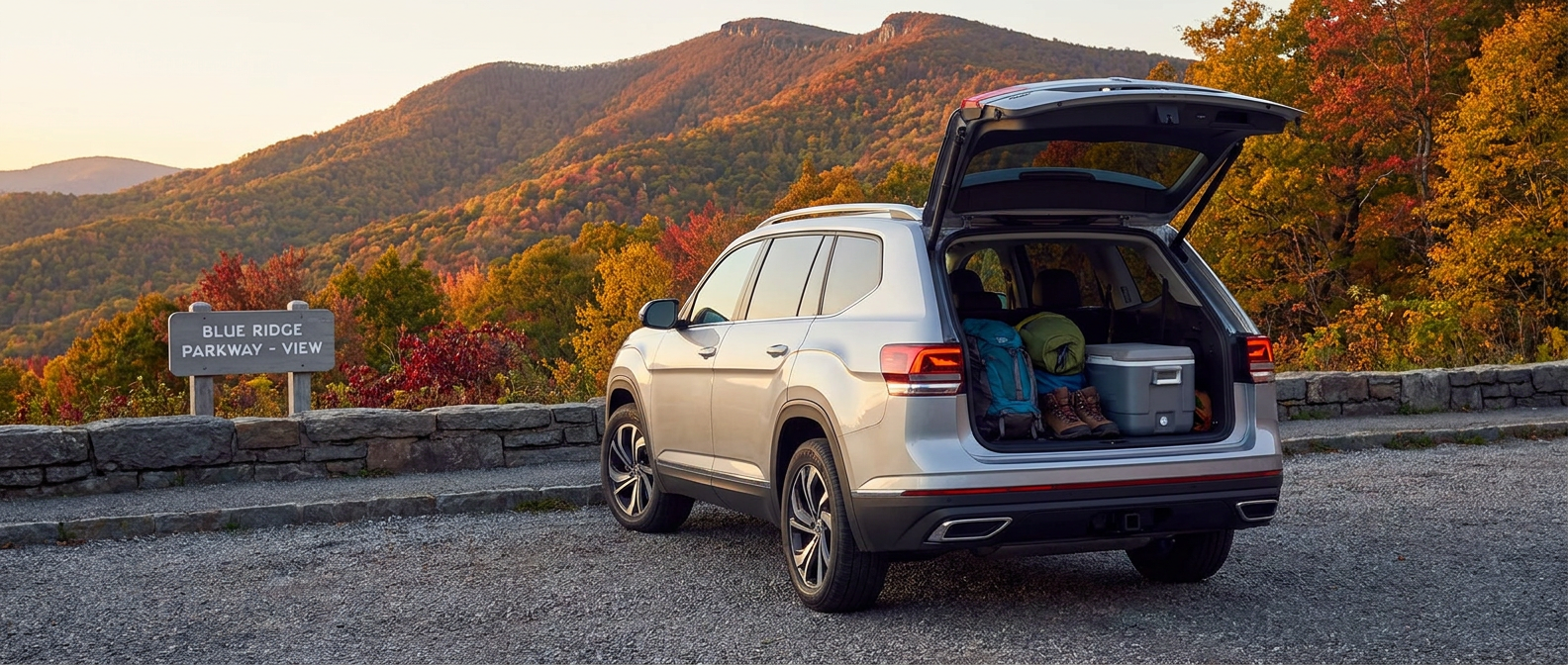
From Spartanburg to the southern end of the Blue Ridge Parkway, the drive runs about two hours if you push it, closer to three when you stop for the views along SC Highway 11. You're not pushing it. You've got hiking boots in a bag, a cooler, two sleeping bags, and that one person in your group who "packs light" and somehow needs the most space. The question isn't whether you want to go. It's whether your gear actually fits, and which Volkswagen makes the trip genuinely easy instead of a Tetris session at the trailhead.
The gear fits, so let's settle that up front. The 2026 Atlas gives you the most room by a wide margin. The 2026 Atlas Cross Sport splits the difference when it's two couples and nobody wants a third row. And the Tiguan is the right call when it's just two of you with lighter loads. Here's how the three stack up.
Will It Fit? The 2026 Volkswagen Cargo and Payload Table
Volkswagen publishes cargo volume in three real-use configurations for every SUV in the lineup, so the fit question has a clear answer before you load a thing, and the table below lines up the verified 2026 specs side by side so you can see where your gear actually lands and not where a brochure wants it to. Read it against the gear you haul.
| Load Scenario | 2026 Atlas | 2026 Atlas Cross Sport | 2026 Tiguan |
|---|---|---|---|
| All rear seats occupied | 20.6 cu ft (behind 3rd row) | 40.3 cu ft (behind 2nd row) | 33.8 cu ft (behind 2nd row) |
| One rear row folded | 55.5 cu ft (3rd flat, 2nd up) | 77.6 cu ft (2nd flat) | 69.8 cu ft (2nd flat) |
| All rear seats flat | 96.6 cu ft | 77.6 cu ft | 69.8 cu ft |
| Max towing (when equipped) | 5,000 lbs | 5,000 lbs | 1,500 to 1,800 lbs |
| EPA fuel economy, FWD | 20 city / 27 hwy / 23 combined | 20 city / 27 hwy / 23 combined | 23 city / 30 hwy |
| 45-qt cooler plus 4 daypacks? | Yes, 3rd row up | Yes, easily | Yes, tight |
*Sources: Volkswagen (cargo volume); fueleconomy.gov (EPA mpg); NHTSA vehicle data (towing/payload).*
A few things sit outside the table, starting with the third row. The Atlas has one, and that's the constraint that catches drivers off-guard. With all seven seats occupied, you're working with just 20.6 cubic feet behind the third row. A standard large soft-sided cooler runs 22 to 26 inches long, so it fits, barely, and the sleeping bags will need to ride on top of it. The Atlas Cross Sport skips the third row entirely, which is why it opens up 40.3 cubic feet of cargo space behind the second row even with everyone aboard. For four adults who refuse to repack at every overlook, that's the smarter body style.
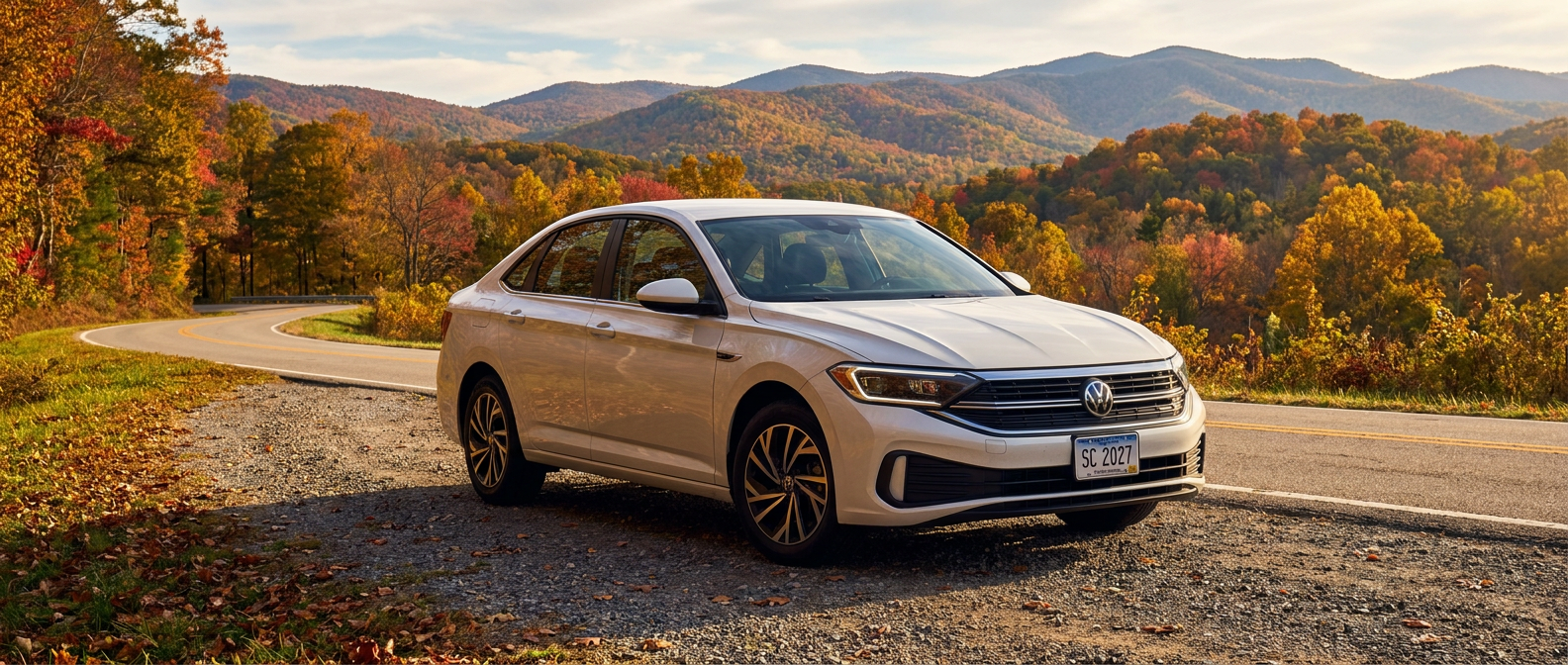
The Tiguan sits in a different category, lighter and more fuel-efficient and a real pleasure through the winding sections of SC Highway 11. The tradeoff is real, with 33.8 cubic feet behind the rear seats running tight for a full weekend setup and towing capped at 1,500 to 1,800 pounds, enough for a bike rack or small cargo trailer but not a camper.
How to Load for the Run Up SC Highway 11
Load the heaviest gear low and against the seatback before anything else, because this route earns real elevation on the way up, and you'll want that weight settled well before the grades hit the higher stretches, since all three of these SUVs still climb it fine once you pack them with the slope in mind. SC Highway 11, the Cherokee Foothills National Scenic Highway, runs roughly 120 miles along the southern edge of the Blue Ridge Mountains from the Georgia state line toward Gaffney. From Spartanburg, you'll pick it up heading northwest. The road climbs from around 1,000 feet to 3,500 feet in elevation over some seven-mile stretches before you reach the Parkway near Cherokee, North Carolina. The Blue Ridge Parkway itself holds a 45-mph speed limit end to end and peaks at 6,047 feet at its highest point. That grade change is why packing order matters, and The 2026 Tiguan takes the curves with the most agility of the three. All three SUVs manage the elevation without drama when you load them sensibly.
For this particular route, here's how our team thinks about packing (the elevation does most of the deciding).
- Put the heaviest items flat on the load floor first. Coolers and hard-case bags go against the seatback or cargo wall. Both the Atlas and the Atlas Cross Sport give you a nearly level load floor when the rear seats fold flat, so this part is easy. In the Tiguan, the 60/40 split rear bench folds the same way.
- Soft bags fill the gaps. Compression sacks are the Tiguan driver's best friend. In the Atlas or Atlas Cross Sport, soft duffels can go loose. Either way, pack them after the rigid items are set.
- Keep one daypack per person reachable from the second row. You'll stop at overlooks before you reach camp, and nobody wants to unload the full cargo bay for a wind jacket and a trail snack.
- Confirm your towing trim before you commit. The Atlas towing package is standard on SE with Technology trim and above, per Volkswagen. Base SE models are rated at 2,000 pounds without the hitch package. If you're pulling a pop-up or a small utility trailer, that distinction matters before you buy.
- Fill up before you leave Spartanburg. Stations along SC 11 are spaced out. The EPA rates both the 2026 Atlas FWD and the Atlas Cross Sport FWD at 20 city / 27 highway / 23 combined miles per gallon. Expect real-world highway numbers to run a few mpg below that rating on sustained mountain grades with a full load.
Job Done: Matching the Right Volkswagen to the Trip
For this trip the right Volkswagen usually comes down to two questions, how many people you're carrying and whether you need to tow, and once you have those answers the cargo numbers settle it, though only the three-row Atlas covers a full back seat and real cargo at the same time. If you're running three adults or kids in the back seat and still need meaningful cargo room, the Atlas gives you 55.5 cubic feet with the third row flat and the second row up, the only vehicle in this lineup that handles both without compromise. If it's two couples with full weekend packs, the Atlas Cross Sport opens 40.3 cubic feet behind the second row with everyone seated, and that beats the Atlas and its 20.6 cubic feet in the same full-seating configuration. That's not a close call. And if fuel economy and a tighter footprint are the priority, the Tiguan earns 23 city / 30 highway in FWD form and makes SC 11 plain fun to drive.
We carry all three body styles. Take a look at what's currently available on our lot if you want to see trim configurations before you come in. Or come in and let us walk you through the load floor. Some things are clearer when you're standing behind the liftgate.