

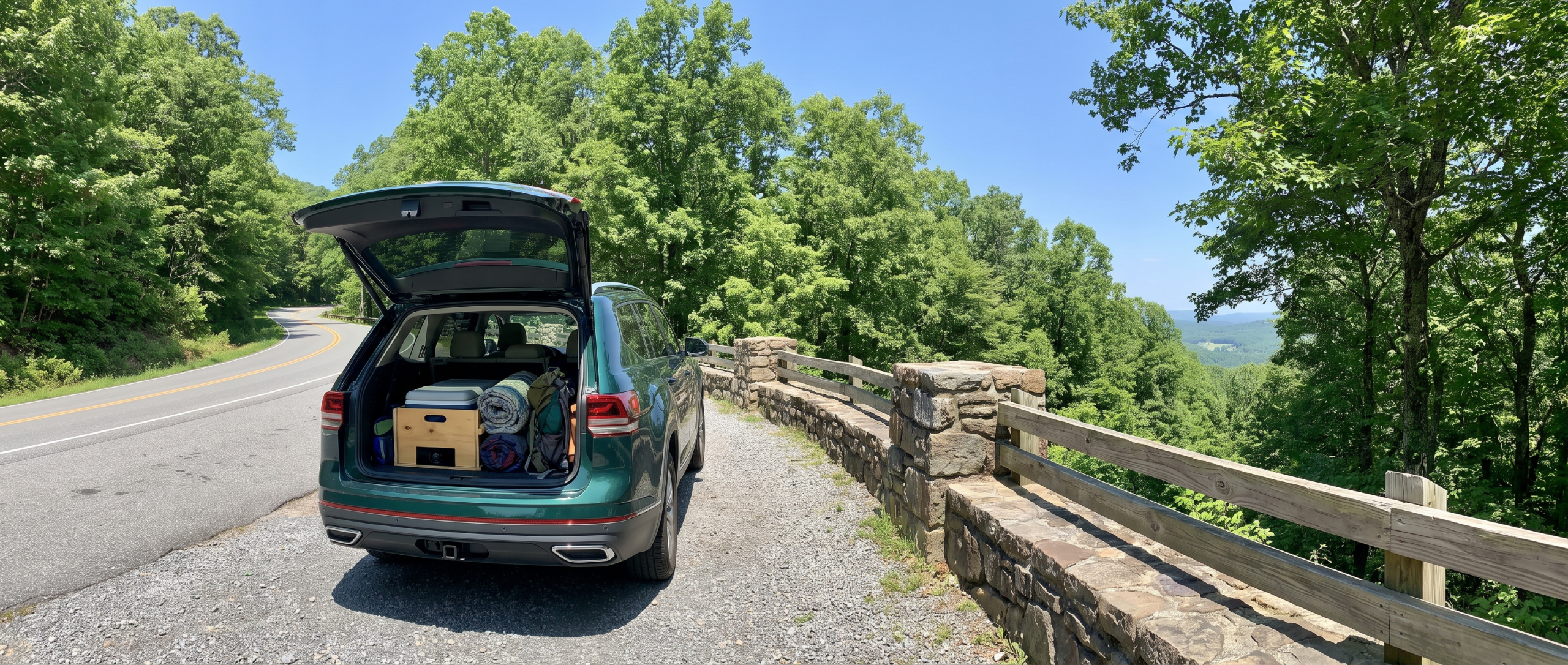
SC Highway 11 — the Cherokee Foothills National Scenic Byway — runs 120 miles through Upstate South Carolina from the Georgia line near Lake Hartwell all the way to Gaffney, passing peach orchards, state parks, and views of the Blue Ridge foothills that most I-85 drivers never see. It is one of the most naturally rich drives in the Southeast, and it starts practically in your backyard. The setup that determines how well the trip goes, though, happens before you back out of the driveway. Volkswagen’s current lineup — from the three-row Atlas to the redesigned Tiguan to the electric ID. Buzz — gives Upstate drivers real cargo flexibility, a capable climate system, and standard driver assistance features that make a summer day trip feel genuinely effortless. This guide walks you through the full pre-trip setup, so the first thing you encounter on SC 11 is a mountain view, not a scramble for sunscreen at the bottom of the luggage pile.
What You Need Before You Start
A successful setup is mostly a planning task, not a gear-acquisition task. Before you touch the liftgate, have these items confirmed or in hand.
| Item | Why It Matters for a Spartanburg Summer Trip |
|---|---|
| Final headcount and seat configuration | Determines whether row 2 or row 3 folds; sets the cargo floor height on the Atlas |
| Full tank of fuel | Atlas FWD EPA-estimated 27 mpg highway means roughly 500 miles on a full tank; SC 11 is 120 miles with limited gas options mid-route |
| Cabin air filter status | Upstate SC summer pollen and humidity load the filter quickly; a clogged filter strains the Climatronic system |
| Tire pressure (cold) | Summer heat increases tire pressure roughly 1 psi per 10 degrees F; check cold before loading |
| Travel Assist on or confirmed | Atlas and Tiguan standard IQ.DRIVE suite includes Travel Assist for highway segments; confirm it is enabled in the driver profile |
| Cargo anchors and tie-down loops located | Atlas cargo floor has integrated tie-down hooks; know where they are before loading heavy items |
| Phone mount or dashboard navigation ready | SC 11 has limited cell coverage in stretches; download the offline map before departure |
Setting Up Your VW Cargo Zone in Five Steps
This is the step that most drivers skip until they are already in the parking lot at the trailhead, surrounded by bags that will not close. Do this at home, on a flat surface, before the cooler goes in.
Step 1: Decide your configuration and lock in the seats.
The number of passengers traveling determines everything that follows. In the Atlas, leaving the third row up gives you substantial cargo space — enough for a soft cooler, two medium duffels, and a day-pack. Fold the third row flat and that expands significantly, the practical sweet spot for a family of four with full luggage. If you are traveling as a couple or hauling gear for a multi-day trip, folding both rear rows opens extensive load floor space. The Atlas third row uses a 50/50 split fold, so you can keep one rear seat up for a passenger or a dog while the other half stays flat. Make this call first and do not change it mid-pack.
In the 2025 Tiguan, the two-row layout is already decided for you: substantial space behind the rear seats for a weekend trip with all five seats occupied, or expandable space with the 60/40-split rear row folded. The Tiguan’s cargo floor sits notably flat when the rear seats fold, which matters when sliding in a hard-shell luggage case or a long bike bag.
Step 2: Place the heaviest items at the floor, forward of the axle line.
Coolers, tool kits, and full water jugs go in first, centered low, and pushed as far forward in the cargo zone as the configuration allows. This keeps the vehicle’s handling balance stable on SC 11’s curves and prevents the cargo from shifting forward under hard braking — an issue that becomes uncomfortable at highway speeds on the I-85 approach to the byway.
Step 3: Build vertically in the soft-goods zone.
Once the heavy anchor items are down, stack soft bags and pillows vertically against the cargo side walls. Packing cubes or compression bags compress clothing efficiently and let you stack without losing stability. Leave the center lane clear from liftgate to seatback so rear visibility stays unobstructed and so any item grabbed on the road is accessible without a full unpack.
Step 4: Set the Climatronic climate system for summer conditions.
In Upstate SC in late June, interior cabin temperature after parking in direct sun can spike well above 110 degrees F within minutes. Before departure — or immediately on startup — set the three-zone Climatronic (Atlas) or the dual-zone climate system (Tiguan) to max cooling for the first five minutes, then dial back to a sustainable setting once the cabin reaches a comfortable temperature. Crucially, set rear zone controls separately for any passengers in row 2 or row 3; the Atlas Climatronic three-zone system lets each zone run independently so the driver is not overcooling to compensate for a warm back seat. For ID. Buzz drivers: the cabin pre-conditioning feature allows you to cool the vehicle from a companion app while still plugged in, preserving range before you even start the drive.
Step 5: Run through the IQ.DRIVE settings in the vehicle menu.
The Atlas, Tiguan, and ID. Buzz all carry Volkswagen’s IQ.DRIVE suite as standard equipment. Before leaving, confirm Travel Assist is active (it combines adaptive cruise control with lane-keeping assist for highway segments), check that Front Assist collision warning sensitivity is set to your preference, and verify the Emergency Assist feature is enabled. On the SC 11 corridor itself, the byway has significant stretches of two-lane road with limited visibility on curves — you will be in a primarily driver-engaged mode, not highway assist mode — but the I-85 segments connecting Spartanburg to the byway are exactly the scenario Travel Assist is designed for.
Your Road-Trip Checklist Before Pulling Out of the Driveway
Print this or save it to your phone. Run through it the evening before, not morning-of.
- [ ] Seat configuration locked in (third row up, half-fold, or fully flat)
- [ ] Heaviest items loaded first, tied down with cargo anchors
- [ ] Soft goods packed vertically, center lane clear to liftgate
- [ ] Climatronic rear zones set independently; or ID. Buzz pre-conditioned via app
- [ ] Full fuel tank confirmed
- [ ] Tire pressure checked cold before loading
- [ ] IQ.DRIVE Travel Assist confirmed active in driver profile
- [ ] Offline map of SC Highway 11 downloaded (cell coverage is patchy mid-route)
- [ ] Cabin air filter checked — summer pollen in Upstate SC clogs filters fast
- [ ] Emergency roadside kit accessible (not buried under the cooler)
- [ ] Sunscreen and water in the front cabin, not the cargo zone
- [ ] Tie-down hooks used for any heavy item in the load
Book a pre-trip service check at Steve White VW
A Quick Recap Before You Head Out
The setup process above takes about 20 minutes the first time and closer to five on return trips once it becomes habit. The core sequence is always the same: configuration before packing, heavy items anchored first, climate set proactively, and IQ.DRIVE confirmed. That sequence applies whether you are loading the Atlas for a full family run down SC 11 toward Table Rock or fitting the Tiguan for a solo overnight. The Cherokee Foothills Scenic Byway is a genuinely distinctive drive — it has been featured in publications including National Geographic and Southern Living — and the vehicles in the VW lineup are well-suited to the way Spartanburg and Upstate SC drivers actually use them: real cargo room, capable standard tech, and a European road manner that holds together on a two-lane with elevation changes. All that said, none of it matters if the cooler is blocking the rearview mirror on exit from Reidville Road.

The Atlas earns the top spot for Spartanburg families heading to Greenville-Spartanburg International Airport this summer — and the reason is specific. GSP’s curbside operates as an active-loading-and-unloading zone only, which means fast, efficient bag transfer matters more than you might expect. The Atlas delivers 20.6 cubic feet of accessible cargo room behind its third row and a low, square load floor that lets you pull suitcases without climbing in. Pair that with the 26-mile I-85 corridor drive from Reidville Road and the Upstate SC summer heat, and you have a real use case, not a generic ranking.
Every pick below is evaluated against the same four airport-run criteria: cargo access, passenger space, I-85 highway efficiency, and summer cabin comfort for the whole family.
How These Four VW Models Compare for the GSP Run
| Rank | Model | Best For | Cargo (seats up) | Combined MPG (EPA est.) |
|---|---|---|---|---|
| 1 | Atlas | Big families, 7 seats | 20.6 cu ft | 23 mpg (FWD) |
| 2 | Tiguan | Couples, small families | 26.5 cu ft | 29 mpg (FWD S) |
| 3 | Taos | Solo or duo with carry-ons | 27.9 cu ft | 31 mpg (FWD) |
| 4 | Jetta | Light packers, 2-hour I-85 cruisers | n/a (sedan) | ~35 mpg (hwy est.) |
The Atlas: Three Rows and a Cargo Floor That Loads Fast
When the whole family travels — grandparents, car seats, checked bags, and a stroller — the Atlas is the one VW that handles all of it without compromising anyone’s legroom. Volkswagen built the 2026 Atlas with 20.6 cubic feet of cargo space behind the third row and up to 96.6 cubic feet when both rear rows are folded. The third row’s 50/50 split and the second row’s 60/40 design mean you can carry five adults and still load two rolling suitcases behind the third row without the gate-check shuffle.
The EPA rates the 2026 Atlas FWD at 20 city / 27 highway / 23 combined. Over the 26-mile I-85 run from Spartanburg, the 18.6-gallon tank barely registers the trip. Standard Climatronic three-zone automatic climate control is a genuine asset in an Upstate SC July — the driver can hold 68 degrees up front while rear-seat passengers hold their own zone, so nobody is fighting the vents on the way home from a 6 a.m. international connection.
The Atlas’s low, square cargo opening and standard roof rails are load-bearing advantages at curbside. You are not hoisting bags over a high lip or sliding them through a narrow aperture.
The Tiguan and Taos make sense for smaller parties — see their sections below.
The Tiguan: The Compact Choice With Surprising Cargo
Two adults and a summer’s worth of carry-on luggage fill the Tiguan’s cabin without reaching its limits. The 2026 Tiguan redesign (third generation, launched for 2025) dropped the old optional third row and redirected that space into a deeper, more usable two-row layout — the result is 26.5 cubic feet behind the rear seats, more loadable volume than the Atlas despite being a full class smaller. Wide-opening rear doors and 60/40-split folding rear seats add to the practical picture.
That 34-highway figure runs smoothly on I-85 between Spartanburg and the airport. Heated front seats and available panoramic sunroof round out the summer-travel comfort story. For a couple or a family of three checking one bag each, the Tiguan covers the trip without the bulk of a full three-row hauler.
The Taos: When You’re Traveling Light and Watching Fuel
A weekend trip for two, a couple of carry-on rollers, and 26 miles of Interstate — that is the Taos scenario. The 2026 Volkswagen Taos earns an EPA-estimated 28 city / 36 highway / 31 combined with FWD, the highest combined figure of any gas-powered SUV in the VW lineup. It runs on regular 87-octane fuel, which matters at the pump when summer gas prices climb. The 13.2-gallon tank and 36-mpg highway rating give you an estimated 475-mile highway range without a stop.
Cargo behind the rear seats measures 27.9 cubic feet in FWD models — deceptively large for a subcompact SUV and enough room for two checked-bag-sized rollers. Rear legroom measures 37.9 inches, so a taller teenager in the back seat does not spend the I-85 run knees-to-chin.
The one honest limitation: the Taos carries five and handles luggage for five only when you fold the rear seat flat. For a family of five with bags, the Atlas is the more honest choice.
- The Atlas three-zone climate system holds separate temperatures for front and rear passengers
- The Tiguan’s wide rear doors help with child seat installation and removal in tight airport lanes
- The Taos FWD holds an estimated 475-mile highway range on a single tank of regular fuel
- The Jetta’s sedan trunk keeps bags secure in covered storage — useful in GSP’s surface lots
The Jetta: The Efficient Two-Hour Cruiser for Light Packers
Not every GSP trip requires an SUV. A couple flying carry-on only, a solo driver dropping off a family member, or a professional traveler with one rolling bag — those are Jetta scenarios. The 2026 Volkswagen Jetta is a German-tuned compact sedan with a trunk that keeps luggage out of sight in economy and valet parking, a composed highway ride on I-85, and fuel efficiency that makes the round trip cost very little at the pump.
The Jetta’s 1.5-liter turbocharged engine sends power through an 8-speed automatic and delivers strong highway cruising range. Its highway fuel economy figure exceeds most compact sedans in the class — making the Spartanburg-to-GSP-and-back run genuinely inexpensive on gas. Adaptive cruise control comes standard on upper trims, which makes the 26-mile highway leg feel relaxed in summer traffic.
The Jetta fits the driver who values the German refinement of a sedan and simply does not need three rows of seats for a two-person summer trip.
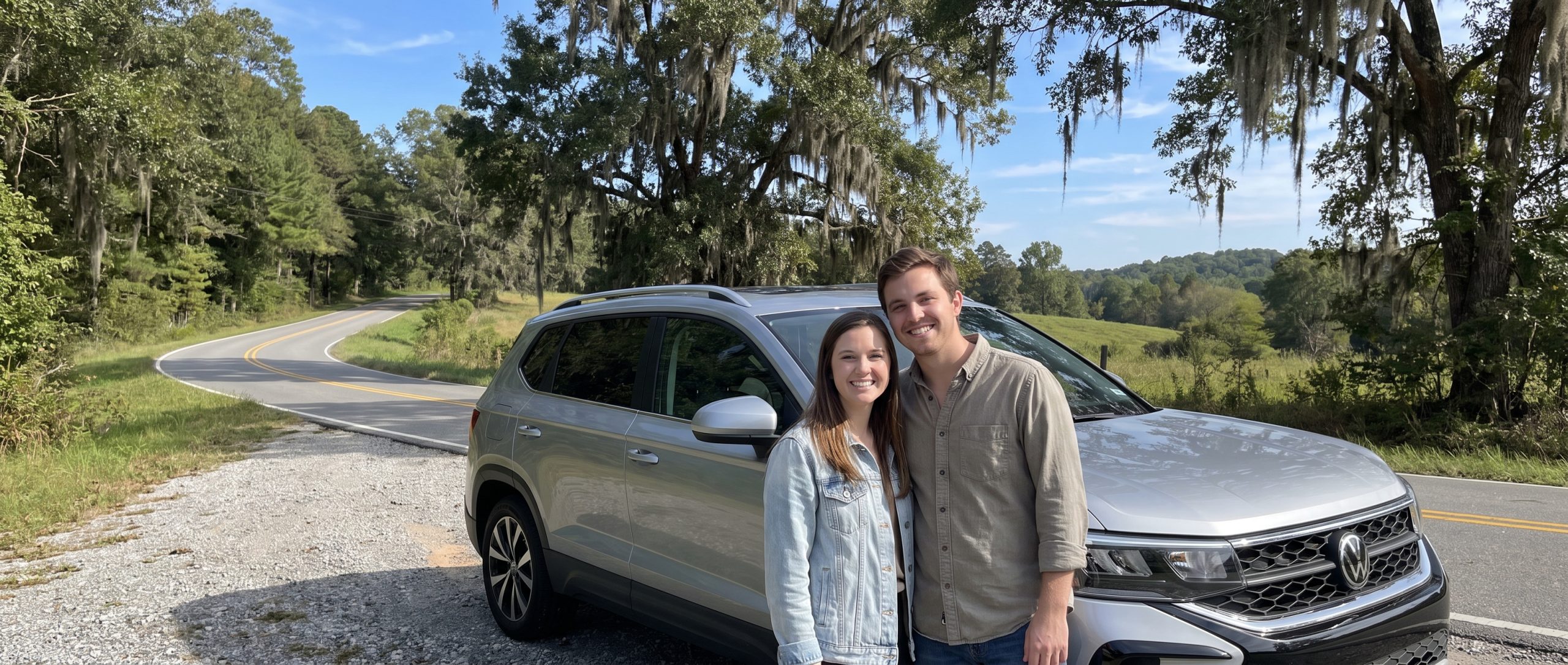
Buying your first SUV is one of those decisions that feels bigger than it probably is – but that doesn’t mean it’s simple. The Volkswagen® Taos has become one of the more quietly compelling options for first-time SUV buyers in Spartanburg, SC, and there are real, practical reasons why. This guide breaks down exactly what makes the Taos a smart starting point, from its manageable size and fuel economy to the features that actually matter for everyday life in Spartanburg County.
The Taos Hits a Size That First-Time SUV Buyers Actually Want
Most people stepping up from a sedan or hatchback don’t want to immediately wrestle with a full-size SUV. The Taos occupies a compact footprint that feels approachable from day one – short enough to fit comfortably in most parking garages and tight city spots, but tall enough to give you the elevated seating position that draws people to SUVs in the first place.
For anyone navigating downtown Spartanburg, the Westgate Mall area, or the parking situations near Wofford College on a regular basis, that balance matters more than most people expect. A 178-inch overall length keeps the Taos nimble without feeling cramped inside.
Interior space tells a different story than the exterior dimensions suggest. Rear passengers get genuine legroom, and the cargo area behind the second row offers enough space for grocery runs, gym bags, and weekend trip luggage without requiring creative packing strategies.
Fuel Economy That Makes Sense for Spartanburg County Commutes
Spartanburg County stretches across a wide area, and whether you’re commuting along I-85 toward Greenville or heading up Highway 176 toward Inman or Landrum, you’re covering real miles every week. Fuel costs matter.
The Taos™ delivers EPA-estimated fuel economy of up to 28 mpg in the city and 36 mpg on the highway with the front-wheel-drive configuration – numbers that hold up well against most compact SUV competitors. For a first-time SUV buyer who might have driven a smaller sedan before, the Taos keeps the efficiency close to what they’re used to.
Here’s what that looks like in practical terms for Spartanburg County drivers:
- Daily commuting on I-85 or I-26: The highway rating means longer stretches between fill-ups
- Errand driving around Spartanburg: City efficiency doesn’t fall off a cliff the way it does in larger SUVs
- Weekend drives to Croft State Park or the Upstate trails: Combined efficiency stays strong on mixed-road trips
- Occasional longer hauls to Charlotte or Columbia: Highway capability carries you comfortably
If fuel economy is near the top of your priority list – and for a first-time buyer, it often is – the Taos makes a strong case without having to work hard at it.
Safety Ratings That Give First-Time Buyers Real Confidence
One of the biggest anxieties around buying a first SUV is safety. The Taos addresses this with a solid set of standard driver assistance features that come on every trim, not just the upper levels.
Standard safety features across Taos trims include:
- Forward collision warning with automatic emergency braking
- Blind spot monitoring
- Rear traffic alert
- Lane keeping assist
- Adaptive cruise control
For someone who hasn’t driven an SUV before, these systems work as a confidence layer. Blind spot monitoring is especially useful during the early adjustment period when the slightly wider body of an SUV feels unfamiliar in highway lane changes.
The Taos also earned a Top Safety Pick designation from the IIHS, which carries real weight when you’re making a first major vehicle purchase and want the reassurance of an independent rating.
How the Taos Compares to Other VW Options for New SUV Buyers
Volkswagen’s lineup gives buyers real choices, and it’s worth understanding where the Taos sits before committing. The table below maps out how the Taos compares to its siblings for a first-time SUV buyer’s priorities.
| Model | Best For | Seating | Starting Footprint | Key Advantage for New Buyers |
|---|---|---|---|---|
| Taos | First-time SUV buyer, solo or couple | 5 | Compact | Easy to drive, strong efficiency, lower entry point |
| Tiguan | Growing families, more cargo need | 5-7 | Midsize | Third-row option, more interior space |
| Atlas Cross Sport | Buyers wanting a larger two-row SUV | 5 | Full-size | Bold presence, more power options |
| Atlas | Large families, max passenger and cargo | 7-8 | Full-size | Maximum space and versatility |
For most people buying their first SUV in Spartanburg County, the Tiguan™ is the next step up if they want more room and plan to expand a family soon. But if you’re starting out and want a vehicle that’s genuinely easy to own and operate without feeling like you’re managing something oversized, the Taos is the right fit.
What Spartanburg County Roads and Weather Ask of a Compact SUV
South Carolina’s Upstate region has its own set of driving demands that are worth factoring into any SUV purchase. Spartanburg County sees mild winters compared to more northern states, but the area does experience ice events and the occasional winter storm that catches drivers off guard.
The Taos is available with 4MOTION® all-wheel drive, which gives Spartanburg County buyers a practical option for those winter mornings on roads like Highway 221 or the back routes near Cowpens that can ice over quickly. It’s not a heavy off-road vehicle – and it was never meant to be – but AWD capability covers the conditions that Upstate South Carolina actually throws at drivers.
Summer heat and humidity are the bigger seasonal factor here. Spartanburg summers are long and warm, and the Taos manages cabin cooling well with a well-designed climate system that handles South Carolina heat without struggling. For families spending time at Lake Bowen or making the trip toward Glendale Shoals Memorial Park on summer weekends, that comfort holds up across longer drives.
Trim Levels: Finding the Right Taos Without Overcomplicating It
One of the quiet advantages of the Taos for first-time buyers is that its trim structure doesn’t require an advanced degree to figure out. There are three main trims, and each one builds logically on the last.
Taos S – The base trim that already includes:
- 8-inch touchscreen with wireless Apple CarPlay and Android Auto
- Forward collision warning with automatic emergency braking
- Blind spot monitoring
- Adaptive cruise control
- 17-inch wheels
Taos SE – Adds meaningful comfort and tech upgrades:
- 10-inch touchscreen
- Heated front seats
- Keyless entry with push-button start
- 18-inch wheels
Taos SEL – The fully loaded experience:
- Navigation
- Panoramic sunroof
- Leather-wrapped seating surfaces
- Upgraded driver assistance features
For a first-time buyer, the S trim is genuinely complete – it isn’t a stripped-down entry point that leaves you wanting more. Browse our new inventory to see current Taos availability across all three trims and find which configuration matches your priorities.
Common Questions About the Volkswagen Taos for First-Time Buyers in Spartanburg, SC
Is the Volkswagen Taos a good first SUV for someone in Spartanburg, SC?
The Volkswagen Taos is a strong choice for first-time SUV buyers in Spartanburg, SC because it offers a manageable size, strong fuel economy, and a full suite of standard safety features without the overwhelming scale of a midsize or full-size SUV. Its compact footprint handles Spartanburg County roads, parking situations, and daily commutes comfortably.
How does the Taos handle South Carolina winters and ice?
The Taos is available with 4MOTION all-wheel drive, which is well-suited to the occasional winter ice events and mixed-condition roads that Spartanburg County experiences. For a region that rarely sees heavy snow but does deal with ice on back roads and bridges, AWD provides the traction confidence most Upstate SC drivers need.
How fuel-efficient is the Volkswagen Taos for Spartanburg County commuters?
The front-wheel-drive Taos earns EPA-estimated ratings of up to 28 mpg city and 36 mpg highway, making it one of the more efficient compact SUV options for drivers commuting on I-85, I-26, or Highway 176 in the Spartanburg area. These numbers hold up well for both in-town errands and longer drives toward Greenville or Cherokee County.
How does the VW Taos compare to the Tiguan for a first-time SUV buyer?
The Taos is smaller and more efficient, making it easier to manage for someone new to SUV ownership. The Tiguan offers more interior space and an optional third row, which becomes more important for growing families. If you’re buying solo or as a couple without immediate family expansion plans, the Taos is typically the better fit. If you need room to grow, the Tiguan is worth a close look.
Does the base Taos S trim include good standard technology?
Yes – the Taos S comes standard with an 8-inch touchscreen, wireless Apple CarPlay and Android Auto, adaptive cruise control, blind spot monitoring, and automatic emergency braking. For a base trim, the feature list is genuinely useful rather than just checking a box, which matters for first-time buyers who don’t want to stretch to upper trims for basic functionality.
Where can I test drive the Volkswagen Taos near Spartanburg, SC?
The Taos is available for test drives at Steve White Volkswagen, serving buyers throughout Spartanburg County including residents coming from Boiling Springs, Duncan, and the Cherokee County area. A test drive is the clearest way to confirm whether the Taos size, visibility, and driving feel match what you’re looking for as a first-time SUV buyer.
The Taos Makes Your First SUV Decision a Straightforward One
For first-time SUV buyers in Spartanburg County, the Volkswagen Taos delivers something that’s genuinely hard to find: a vehicle that doesn’t require you to compromise much of anything. You get efficient fuel economy, solid safety ratings, a manageable size, and enough cabin comfort to make every drive – whether it’s a weekday commute or a Saturday trip to Croft State Park – feel worthwhile. The team at Steve White Volkswagen knows Spartanburg County roads and can help you find the Taos configuration that fits your life from day one.
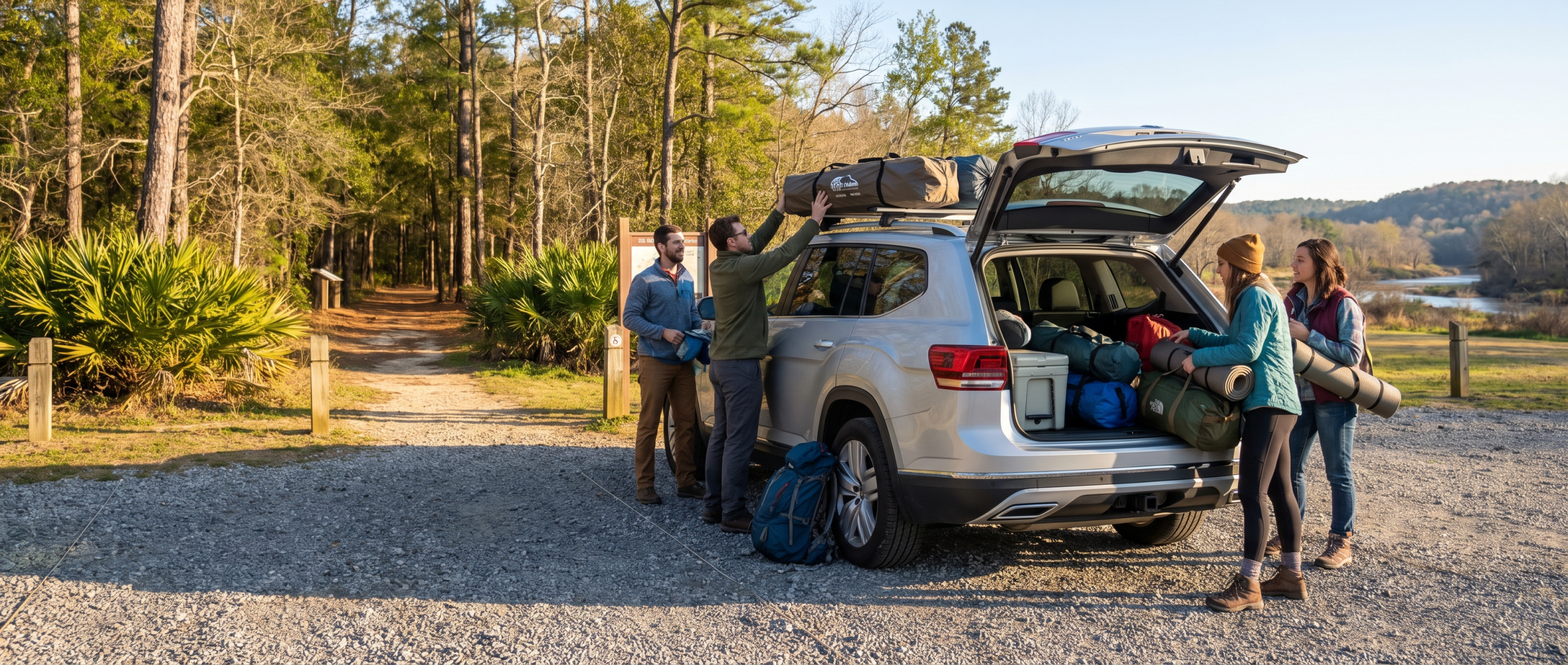
Spartanburg, SC sits within an hour’s drive of some of the most rewarding weekend destinations in the Southeast – and if you’re the type who doesn’t stay home when Friday hits, your vehicle needs to keep up. The best Volkswagen® models for Spartanburg drivers who spend weekends on the go are the ones that balance comfort on I-85 with enough cargo room, passenger space, or driver engagement to make the destination feel worth the trip. This guide breaks down exactly which VW fits which kind of weekend, so you stop guessing and start going.
Why Your Weekend Driving Style Matters More Than You Think
The gap between a vehicle that tolerates weekend trips and one that enhances them is bigger than most people realize. A tight cabin turns a 45-minute drive to Lake Bowen into a test of patience. A sluggish engine makes the winding roads near Croft State Natural Area feel more stressful than enjoyable.
Spartanburg drivers aren’t all doing the same thing on weekends. Some are hauling kayaks toward the Broad River. Some are loading up strollers and snacks for Hatcher Garden. Others are hitting the highway toward Greenville for a full Saturday of errands and exploration. Your vehicle should match that rhythm, not fight it.
Here’s the reality: the wrong vehicle makes every weekend feel like a compromise. The right one disappears into the background, letting you focus on the experience instead of the logistics.
Matching the Right Volkswagen to Your Weekend Personality
Spartanburg weekend life varies as much as the terrain itself, so the best starting point is being honest about how you actually spend your time off.
| Weekend Style | Best VW Match | Why It Works |
|---|---|---|
| Family day trips with kids and gear | Atlas | Third-row seating, 97.8 cu ft cargo with seats down |
| Couple’s getaway or trail runs | Tiguan | Compact enough to park anywhere, spacious enough for two |
| Solo adventures and spirited drives | Golf GTI | Performance-tuned for roads that reward driver engagement |
| Road trips with a crew of friends | Atlas Cross Sport | Sportier profile with room for up to five comfortably |
| Weekend errands and casual drives | Jetta | Efficient, comfortable, and easy to manage in any situation |
| Eco-conscious weekend exploring | ID. Buzz | Zero-emission retro-cool with modern family-friendly range |
The table above isn’t just a guide – it’s a starting point. Most Spartanburg drivers fall into one or two of these categories, and knowing which one you are makes it much easier to shop with confidence.
The Atlas and Tiguan: Built for Families Who Explore Together
The Volkswagen Atlas™ is one of the most practical three-row SUVs on the market for families who actually use all that space. With seating for up to seven and 96.8 cubic feet of cargo room with the rear seats folded, it handles a full weekend load without breaking a sweat.
Think about what a Saturday trip to Croft State Natural Area looks like with kids in tow: bikes, a cooler, a bag of snacks, a change of clothes for everyone, and a dog who insists on coming. The Atlas absorbs all of it.
The Tiguan serves a slightly different crowd – families or couples who want serious utility without the full footprint of a three-row SUV. It carries five comfortably, offers a refined interior, and handles the kind of back-and-forth driving between Spartanburg and Greenville, SC that adds up over a weekend.
Both models are available with 4MOTION® All-Wheel Drive, which matters when you’re navigating gravel pull-offs near Glendale Shoals or heading toward the foothills after a wet week.
The Golf GTI and Jetta GLI: For Drivers Who Actually Like Driving
Not every Spartanburg weekend calls for hauling cargo. Some weekends are just about the drive itself.
The Golf GTI™ has earned a reputation that spans decades for a simple reason: it makes ordinary roads feel more interesting. With a 2.0-liter turbocharged engine producing 241 horsepower in the GTI S, it’s genuinely quick without being impractical. The cabin is thoughtfully laid out, the ride quality handles highway miles well, and it parks like a much smaller car.
The Jetta GLI takes that same performance philosophy and applies it to a sedan format. If you spend weekends driving between Spartanburg and Charlotte, NC – whether for a concert, a visit, or just a change of scenery – the GLI rewards you on every stretch of open highway. It shares the GTI’s turbocharged engine and sport-tuned suspension, packaged into a sleeker body.
Here’s what both of these models offer that bigger SUVs simply can’t:
- A more engaging steering feel on curved roads
- Lower center of gravity for sharper handling
- Fuel efficiency that makes longer drives less painful
- A driver’s seat that feels designed for someone who cares about the experience
The Taos and ID. Buzz: Two Different Kinds of Weekend Freedom
The Volkswagen Taos™ often gets overlooked in conversations about weekend vehicles, and that’s a mistake. It sits between the Jetta and the Tiguan in the VW lineup – smaller than most expect, but surprisingly capable. For Spartanburg drivers who spend weekends navigating crowded parking at Hatcher Garden and Woodland Preserve or weaving through the pedestrian-heavy areas near downtown Spartanburg, the Taos is easier to manage than a full-size SUV.
It’s front-wheel drive standard, with available 4MOTION AWD, and it offers enough cargo space for a weekend’s worth of gear without the bulk that makes urban driving tedious.
The ID. Buzz, on the other hand, is a different kind of statement. VW’s modern reimagining of the classic Microbus runs entirely on electricity and seats up to seven people, depending on configuration. It’s a long-range weekend vehicle for drivers who’ve already made the switch to electric or are seriously considering it.
A few things worth knowing about the ID. Buzz:
- It offers up to 234 miles of EPA-estimated range on a full charge
- DC fast charging can add meaningful range in roughly 30 minutes
- The interior is one of the most open and airy in any VW model
- It carries the kind of visual character that turns heads on any road trip
If your weekends include regular highway pulls toward Greenville, SC or longer trips toward Asheville, NC, the ID. Buzz can handle the distance with planning.
What Spartanburg Roads Actually Demand from a Weekend Vehicle
Driving in and around Spartanburg, SC isn’t one-dimensional. You’re not just dealing with a flat suburban grid. You have I-85 and I-26 for efficient highway travel, but weekends often pull you off those corridors entirely.
The roads leading toward Lake Bowen or into Cherokee County mix smooth pavement with rougher stretches. Some of the most appealing weekend destinations near Spartanburg involve terrain that rewards ground clearance, AWD capability, or both. At the same time, you’re still parking in structured lots, navigating shopping areas near the Westgate Mall corridor, and handling the ordinary stuff of daily life on Saturday morning.
This is exactly why the VW lineup works well here. Each model is tuned for real-world driving, not just proving grounds. A few things Spartanburg drivers consistently deal with:
- Highway merging and passing: Turbocharged engines across the VW lineup deliver responsive acceleration when you need it
- Wet roads in fall and spring: Spartanburg averages around 50 inches of rain annually, making AWD options worth considering
- Mixed terrain on weekend routes: Ground clearance on the Atlas, Tiguan, and Taos handles more than just pavement
Check out our new inventory to see which trim levels and configurations are currently available for the models that fit your weekend style.
Common Questions About Volkswagen Weekend Vehicles in Spartanburg, SC
Which Volkswagen model is best for families doing weekend trips near Spartanburg, SC?
The Volkswagen Atlas is the strongest choice for Spartanburg families who regularly pack up for weekend trips. It offers seating for up to seven, substantial cargo space, and available AWD for the varied terrain around the Upstate SC region. The Tiguan is a solid second choice for smaller families who want similar utility in a more compact package.
Is the Volkswagen Golf GTI practical enough for everyday use in Spartanburg?
Yes – the Golf GTI is fully practical as a daily driver and weekend car in Spartanburg, SC. It fits four adults comfortably, handles highway miles on I-85 without fatigue, and offers a hatchback cargo area that’s more useful than it looks. It’s one of the few performance-oriented vehicles that doesn’t ask you to sacrifice anything for the driving experience.
How does the Volkswagen ID. Buzz hold up on longer drives from Spartanburg?
The ID. Buzz delivers up to 234 miles of EPA-estimated range, which covers most weekend drives from Spartanburg, SC to destinations like Asheville, NC or Charleston, SC with charging planned along the way. For shorter regional trips, range is rarely a concern. Fast-charging capability makes longer trips manageable on the current charging infrastructure.
What Volkswagen SUV handles wet roads and fall weather in the Spartanburg area?
Any Volkswagen SUV equipped with 4MOTION All-Wheel Drive handles wet roads well in the Spartanburg, SC area. The Atlas, Tiguan, and Taos all offer AWD as an available option. Given Spartanburg’s average annual rainfall and occasional mountain-adjacent weather patterns, AWD is worth considering if your weekends regularly take you off main corridors.
Is the Volkswagen Taos big enough for serious weekend use?
The Taos is genuinely capable for weekend use involving two to four people and moderate gear. It offers 65.9 cubic feet of cargo space with the rear seats folded, which covers bikes, a cooler, and day-trip gear without issue. Where it has limits is on longer trips with a full family – for those situations, the Tiguan or Atlas will serve you better.
Which Volkswagen is right for Spartanburg drivers who split weekends between the city and the mountains?
The Volkswagen Tiguan strikes the most practical balance for Spartanburg, SC drivers who split their weekends between urban areas and the foothills. It’s compact enough for easy city parking, offers available AWD for elevation changes, and provides enough interior room for comfort on drives toward the Blue Ridge Escarpment or into the Upstate’s rural corridors.
Find Your Weekend Vehicle at Steve White Volkswagen Spartanburg
The right Volkswagen makes weekends in Spartanburg noticeably better – not because it transforms the experience, but because it stops being a factor at all. You focus on the destination, the company, and the moment. The vehicle just handles everything else. Whether you’re drawn to the Atlas for family capability, the GTI for driver satisfaction, or the ID. Buzz for something genuinely different, there’s a VW on this list that fits how you actually live your weekends. The team at Steve White Volkswagen Spartanburg is here to help you find it, test it, and drive it home.
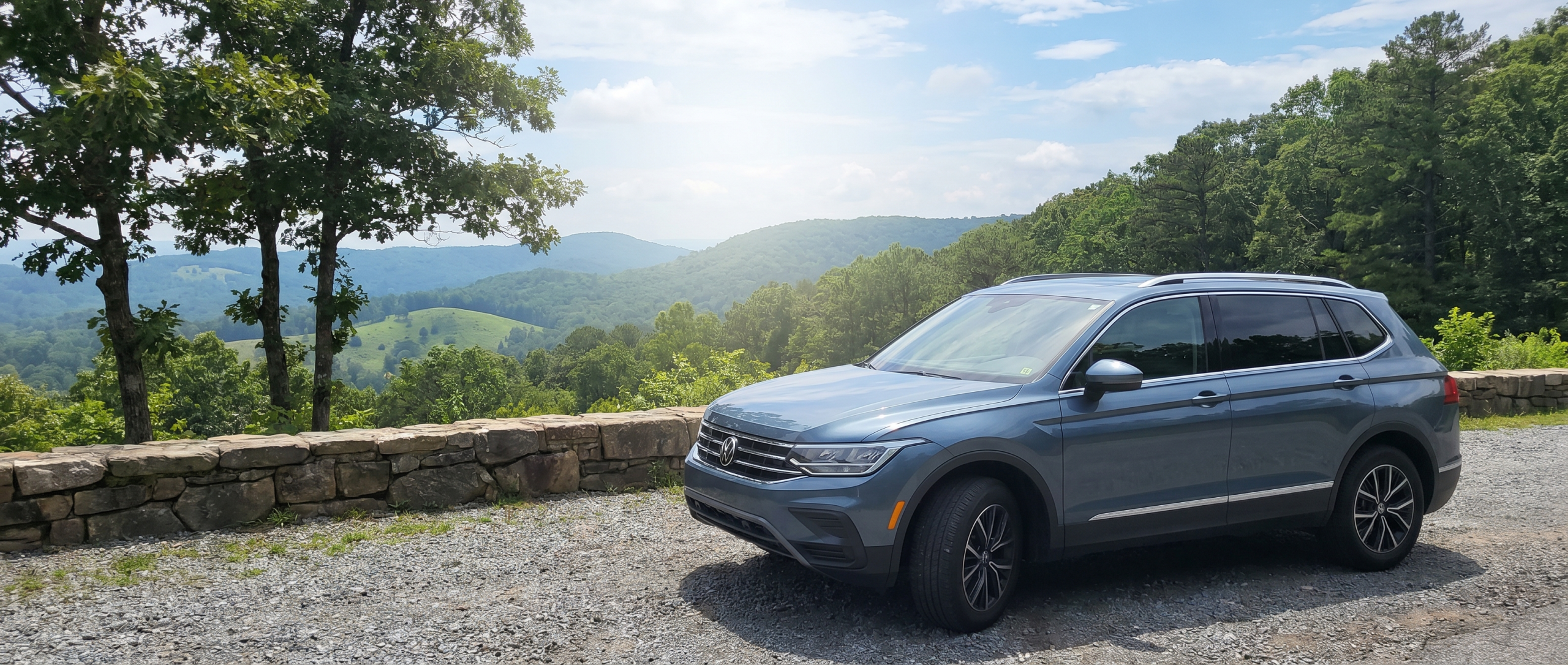
Spartanburg, SC summers are no joke – triple-digit heat indexes, stop-and-go traffic on I-85, and back-to-back weekend trips to Lake Bowen or Croft State Natural Area put real stress on your Volkswagen® in ways that cooler months simply don’t. Fluid levels that stay perfectly stable in March can drop or degrade noticeably by July. If you drive a Tiguan, Jetta, or Atlas and haven’t checked your fluids since spring, this guide will walk you through exactly what to monitor, how often to check it, and why the Upstate South Carolina climate makes summer the most demanding season your VW faces all year.
Why Spartanburg’s Summer Heat Hits Your VW’s Fluids Harder Than You Think
Heat is the single biggest accelerant of fluid degradation in any vehicle, and Spartanburg’s July and August averages routinely push past 90°F with humidity levels that make it feel even hotter. At those temperatures, fluids don’t just sit in their reservoirs – they evaporate, oxidize, and break down faster than manufacturer intervals were originally designed for. The result is reduced protection at exactly the moment your engine, transmission, and brakes are working hardest.
This isn’t a scare tactic. It’s straightforward chemistry: higher temperatures mean higher molecular activity, which means faster breakdown. A coolant system that’s 18 months old and still “within interval” might perform fine in Charlotte in October but struggle on a slow crawl through downtown Spartanburg in August with the AC running full blast.
The Fluids You Need to Check and How Often During Summer
There are six fluids that deserve your attention during summer months. Some need to be checked weekly. Others are monthly checks. Knowing which is which saves you time and prevents unnecessary anxiety.
Here’s a practical summer fluid schedule for Volkswagen owners in the Spartanburg area:
| Fluid | Check Frequency (Summer) | What You’re Looking For |
|---|---|---|
| Engine Coolant | Every 2 weeks | Level between MIN and MAX; color should not be murky or brown |
| Engine Oil | Weekly | Level on dipstick; look for discoloration or milky texture |
| Brake Fluid | Monthly | Level near MAX; dark or murky fluid signals contamination |
| Power Steering Fluid | Monthly | Level within range; foam or discoloration is a warning sign |
| Windshield Washer Fluid | Weekly | Fill freely – summer bugs and road grime deplete this fast |
| Transmission Fluid | Every 3 months or at service | Color should be pink or red; dark or burnt smell means attention needed |
Most of these checks take less than five minutes in your driveway. The windshield washer fluid is the easiest and most overlooked – summer in Spartanburg means insects, pollen, and afternoon thunderstorm residue on your windshield constantly.
Engine Coolant: The Fluid That Matters Most Between June and September
Your Volkswagen’s cooling system is carrying the heaviest load of its annual cycle right now, and coolant is the reason your engine doesn’t turn into an expensive paperweight. In a Jetta GLI™ or Golf GTI™ pushing through summer performance driving, the cooling system is doing serious work managing heat generated by a turbocharged engine in sustained high-temperature ambient conditions.
Check the coolant reservoir – not the radiator cap directly – every two weeks during summer. The reservoir is translucent on most VW models, so you can see the level without opening anything. What you’re looking for:
- Level sitting between the MIN and MAX markings on the reservoir
- Fluid that appears clean and has its original color (typically green, blue, or pink depending on your model year)
- No oily film on the surface, which could indicate a head gasket issue
- No visible particles or sediment at the bottom of the reservoir
If the level is consistently dropping between checks, that’s not normal evaporation – it’s a sign of a leak or internal issue that needs a technician’s evaluation before it becomes something worse.
Engine Oil in Summer: How Heat Changes Everything
Oil viscosity – its thickness and flow characteristics – is directly affected by temperature. Volkswagen specifies particular oil grades for a reason, and in Spartanburg’s summer heat, using the wrong weight or running slightly low can accelerate wear in ways that don’t show up immediately but shorten engine life over time.
For summer driving, check your oil level once a week if you’re putting on regular miles. If you’re doing longer hauls – heading to BMW Performance Center nearby or loading up the Atlas Cross Sport™ for a family trip down to the coast – check it before you leave and again when you return.
When you pull the dipstick, you’re checking two things:
- Level – The oil should sit between the two markers. Low is bad. Overfull is also a problem and can cause foaming.
- Condition – Fresh oil is amber to light brown. Very dark oil isn’t automatically a crisis, but oil that looks milky or has a gritty texture warrants immediate service attention.
Volkswagen recommends full synthetic oil for most current models, and synthetic holds up better under heat stress than conventional. If you’re not sure what’s in your engine right now, that’s worth a quick call to your service team.
Brake Fluid and Why Spartanburg Hills Make It a Summer Priority
Brake fluid is hygroscopic – it absorbs moisture from the air over time. That moisture absorption lowers the fluid’s boiling point, and when brake fluid boils under hard use, you can experience brake fade: reduced stopping power at the exact moment you need it most.
The terrain around Spartanburg isn’t flat. Residents heading toward Croft State Natural Area, navigating the grades near Converse University, or coming down from the Upstate’s foothills know that brakes work harder here than they would on flatter terrain. Add summer heat from the road surface radiating into your brake components, and brake fluid condition becomes a legitimate safety consideration.
Check brake fluid monthly during summer. The reservoir is typically located near the firewall on the driver’s side. Look for:
- Fluid level close to the MAX line (low fluid can indicate worn brake pads as well as fluid loss)
- Clear to light yellow color – dark brown or black fluid has absorbed too much moisture and contamination
- No gritty particles visible
If your brake fluid is dark and it’s been more than two years since it was last flushed, summer is a reasonable time to have that service done.
Quick-Check Summer Fluid Routine for VW Owners
Building a short fluid inspection habit takes about five minutes and can prevent a much longer, much more expensive conversation later. Here’s a practical routine that works whether you drive a Taos™ on a daily Spartanburg commute or an ID. Buzz™ on weekend adventures.
Before you leave on any drive longer than 30 minutes:
- ✓ Glance at your coolant reservoir through the hood or check the gauge
- ✓ Confirm oil level with dipstick if it’s been more than a week
- ✓ Top off washer fluid if it’s below half
Once a month during summer:
- ✓ Brake fluid level and color check
- ✓ Power steering fluid if your model has a hydraulic system
- ✓ Visual scan under the vehicle after parking – any fresh spots on the driveway are worth investigating
At every service visit:
- ✓ Ask your technician to check transmission fluid condition
- ✓ Request a cooling system pressure test if your coolant level has been inconsistent
Taking time to schedule service before a fluid problem becomes a component failure is always the smarter move financially and practically.
Common Questions About VW Fluid Checks in Spartanburg, SC
How often should I check my Volkswagen’s coolant level during Spartanburg summers?
Check your Volkswagen’s coolant level every two weeks during summer months in Spartanburg, SC. The combination of sustained high temperatures and frequent AC use puts significant demand on the cooling system. If your level drops between checks without an obvious cause, have the system inspected – ongoing coolant loss is not normal and points to a leak or internal issue.
Does Spartanburg’s heat affect how often I should change my VW’s engine oil?
Yes, extreme heat accelerates oil oxidation and breakdown, which is why Volkswagen recommends checking oil level weekly during summer driving conditions in areas like Spartanburg, SC. While your oil change interval itself may not change dramatically if you use full synthetic, running even slightly low on oil in summer heat creates more wear than the same situation would in cooler weather. When in doubt, check it.
What does milky or foamy engine oil mean in a Volkswagen?
Milky or foamy engine oil in a Volkswagen typically indicates coolant is mixing with the oil, which can signal a head gasket issue or a cracked component. This is not a fluid-top-off situation – stop driving and have the vehicle inspected by a qualified technician as soon as possible. Continuing to drive with compromised oil can cause serious, expensive engine damage.
Should I check brake fluid more often during Spartanburg summers?
Monthly brake fluid checks are reasonable for Spartanburg, SC drivers during summer, especially if you frequently navigate hilly terrain around Croft State Natural Area or drive routes with sustained downhill grades. Brake fluid that has absorbed moisture has a lower boiling point and can contribute to brake fade under heat stress. If the fluid looks dark brown or has been more than two years since it was last flushed, a service appointment makes sense.
Can I use any coolant in my Volkswagen, or does it need a specific type?
Volkswagen vehicles require a specific coolant formulation – typically G12, G13, or G14 depending on your model year – and mixing incompatible coolant types can cause chemical reactions that reduce cooling efficiency and leave deposits in your system. Always verify the correct coolant specification in your owner’s manual or ask your service team before adding anything to the reservoir.
Where can I get my Volkswagen’s fluids checked near Spartanburg, SC?
Any authorized Volkswagen service center in the Spartanburg, SC area can perform a full fluid inspection, which typically includes coolant, oil, brake fluid, transmission fluid, and power steering fluid. Having all fluids checked in a single service visit is more efficient and ensures that a trained technician is evaluating condition – not just level.
Keep Your VW Summer-Ready Before the Heat Wins
Spartanburg summers test every vehicle, but a Volkswagen that’s properly maintained handles the heat well. Staying on top of fluid levels and condition is the lowest-cost, highest-return habit you can build as a VW owner – and it takes less time per month than a single trip to the car wash. The team at Steve White Volkswagen Spartanburg is ready to help with a full summer fluid inspection, whether you’ve noticed something off or simply want the peace of mind before another long, hot Upstate South Carolina season gets underway. It’s time to schedule service and make sure every fluid in your VW is where it needs to be.
Best Volkswagen Vehicles for Visiting Hatcher Garden With the Family in Spartanburg, SC
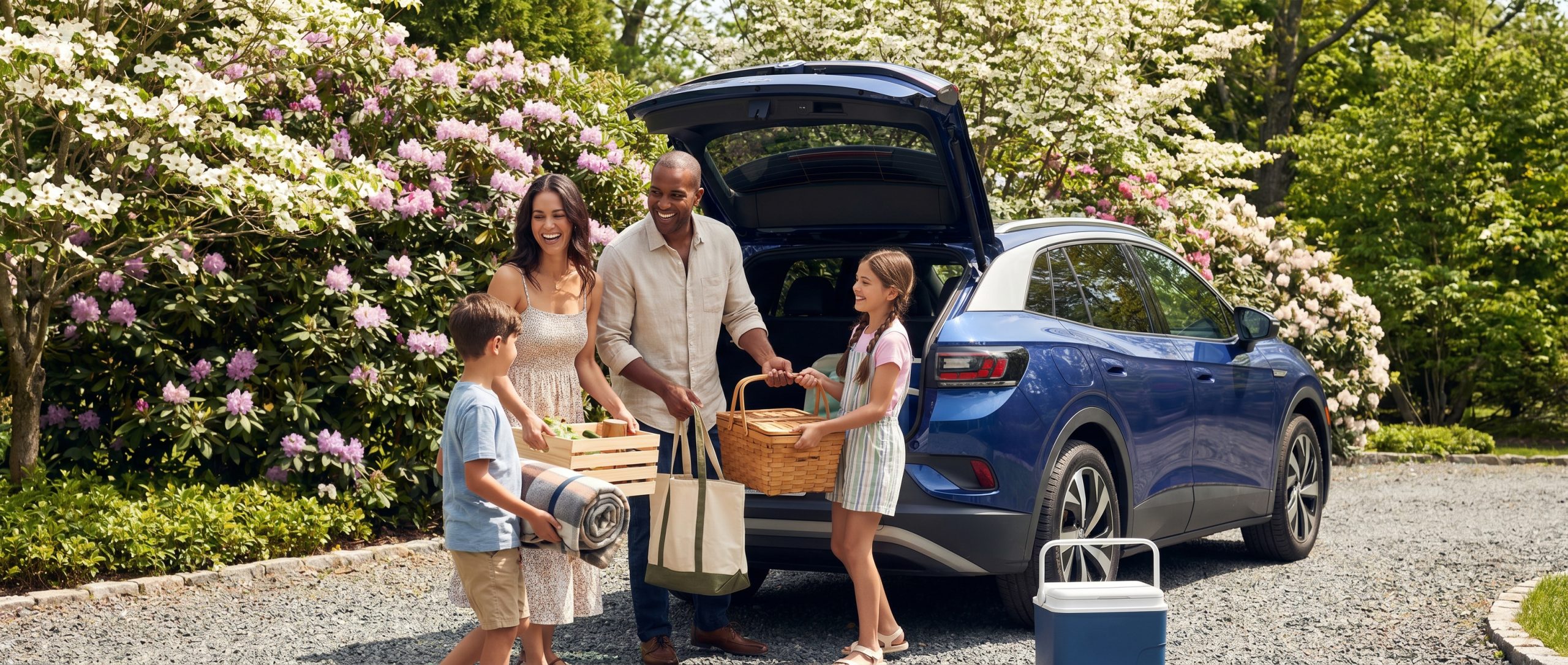
Hatcher Garden and Woodland Preserve is one of Spartanburg, SC’s most beloved family destinations – 10 acres of walking trails, butterfly gardens, koi ponds, and shade trees that make for a perfect afternoon away from screens. Getting there is easy. Getting there comfortably with kids, strollers, snack bags, and maybe a folding chair or two? That’s where your vehicle choice starts to matter more than you’d expect. This guide breaks down which Volkswagen models handle a family outing to Hatcher Garden the best, so you can spend less time rearranging cargo and more time watching your kids chase butterflies.
Why Your Vehicle Setup Matters More Than You Think at Hatcher Garden
Hatcher Garden sits right in the heart of Spartanburg off Cumulus Drive, and while parking is manageable, you’re going to be loading and unloading in a compact lot with other families doing the same thing. Space efficiency matters here – not just inside the cabin, but in how easily your doors open, how low your cargo floor sits, and whether your kids can climb in and out without a step stool.
The garden’s trails are well-maintained and mostly flat, which means the real challenge isn’t the terrain – it’s everything you’re hauling to enjoy it. A typical family day at Hatcher Garden involves:
- A stroller or wagon for younger kids
- A cooler or snack bag
- Sunscreen, bug spray, and a change of clothes
- Camera gear or a backpack
- Folding chairs or a blanket for the picnic areas
That’s a surprising amount of gear for a half-day trip. The right vehicle handles all of it without turning loading up into a project.
The Atlas: The Most Capable Family Hauler for a Full Day Out
The Volkswagen Atlas™ is built for exactly the kind of day Hatcher Garden demands from a family. With up to 96.8 cubic feet of cargo space when both rear rows are folded, you’re working with serious room – enough for a double stroller, a full-sized cooler, and everyone’s bags without a game of Tetris in the parking lot.
What sets the Atlas apart for a garden visit isn’t just cargo volume. It’s the thoughtful layout of the interior.
- Third-row seating handles up to seven passengers, which is a genuine advantage for larger families or when grandparents are joining the trip
- Power liftgate means you can pop the hatch with your hands full of bags and a kid on your hip
- Fold-flat second and third rows create a flat loading floor that makes sliding a stroller in and out much smoother
The Atlas also rides with enough ground clearance to handle Spartanburg’s occasional post-rain parking conditions without hesitation. If your family regularly makes the drive from Boiling Springs, SC or Duncan, SC for weekend outings around town, the Atlas gives you the flexibility to go wherever the day takes you without worrying about whether everything will fit.
Atlas Cross Sport vs. Tiguan: Two Strong Options for Smaller Families
Not every family needs three rows and 97 cubic feet. If your crew is two adults and one or two kids, the Volkswagen Atlas Cross Sport™ and the Volkswagen Tiguan™ both make a compelling case for the Hatcher Garden run.
| Model | Seating | Cargo Behind 2nd Row | Best For |
|---|---|---|---|
| Atlas Cross Sport | 5 | 40.3 cu. ft. | Couples with 1-2 kids, style-conscious families |
| Tiguan | 7 (optional) | 37.6 cu. ft. | Smaller families who want versatility |
| Atlas | 7 | 55.5 cu. ft. | Larger families, lots of gear |
The Atlas Cross Sport gives you most of the Atlas’s footprint in a sleeker two-row profile. You lose the third row, but you gain a lower roofline and a sportier silhouette that many buyers prefer. Cargo access is clean and the rear seats recline, which younger kids appreciate on the return drive home when they inevitably fall asleep.
The Tiguan is the more compact option, but don’t underestimate it. Its available panoramic sunroof is something kids genuinely love during the drive to Hatcher Garden – pointing out landmarks and watching the Upstate South Carolina sky opens up the whole experience before you even park. With the optional third row, the Tiguan stretches to seat seven, making it a flexible pick for growing families.
The ID. Buzz: A Family-Friendly Option Worth Considering
The Volkswagen ID. Buzz™ has quickly become one of the more talked-about vehicles in the VW lineup, and for good reason. Families visiting Hatcher Garden who want to make the trip feel like an event will appreciate what the ID. Buzz brings to the table.
It seats up to seven passengers, runs entirely on electric power, and delivers a genuinely cheerful driving experience. The sliding rear doors are a practical win in tight parking situations – no worrying about kids flinging doors open into neighboring vehicles. Interior space is notable for the footprint, and the flat floor created by the electric architecture means legroom feels more generous than the dimensions suggest.
A few honest considerations for Spartanburg families thinking about the ID. Buzz:
- Strengths
- Sliding rear doors are ideal for crowded parking areas
- Zero tailpipe emissions make it a fitting choice for trips to a nature preserve
- Spacious, open interior that kids and adults enjoy equally
- Available DC fast charging makes longer Upstate SC trips practical
- Considerations
- Higher price point than the rest of the VW lineup
- Charging infrastructure in Spartanburg is growing but not as dense as larger metro areas
- Not available with a third row in current U.S. spec
For families who charge at home and primarily drive around Spartanburg and the surrounding Upstate region, the ID. Buzz handles the daily and weekend routine without compromise.
Taos and Jetta: Right-Sized Options for Smaller Outings
Not every garden visit is a production. Sometimes it’s just you and one kid, or a couple without the full gear load. For those trips, the Volkswagen Taos™ and the Volkswagen Jetta™ both make the Hatcher Garden run comfortably.
The Taos is a compact SUV that sits between the Tiguan and a traditional sedan. It’s easy to park, gets solid fuel economy, and still offers 28.1 cubic feet of cargo space behind the rear seats – plenty for a stroller and a backpack. Families in Inman, SC or Lyman, SC who make regular drives into Spartanburg for weekend activities will appreciate the Taos’s balance of efficiency and practicality.
The Jetta is worth mentioning for couples or parents of older kids who’ve moved past the stroller phase. With 14.1 cubic feet of trunk space and sharp handling on Spartanburg’s surface streets, the Jetta gets you to Hatcher Garden without burning extra fuel or hunting for a larger parking space.
Here’s a practical guide to matching your trip size to the right vehicle:
- Solo driver or couple: Jetta handles it cleanly
- 1-2 kids with moderate gear: Taos or Tiguan
- 2-3 kids with full gear load: Atlas Cross Sport or Tiguan with third row
- Large family or multiple families: Atlas or ID. Buzz
What to Pack and How VW Cargo Layouts Help
A well-planned family day at Hatcher Garden means having what you need without overpacking. Volkswagen’s cargo systems are designed around real family use – not just raw volume numbers.
- ✓ Stroller or carrier for young children
- ✓ Reusable water bottles (the garden has limited amenities)
- ✓ Snacks and a small cooler
- ✓ Sunscreen and a hat for each family member
- ✓ Bug spray (especially in spring and summer)
- ✓ Camera or fully charged phone
- ✓ Blanket or portable chairs for the open lawn area
- ✓ Change of clothes for younger kids
All Atlas, Atlas Cross Sport, and Tiguan models feature 60/40 split-folding rear seats, which means you can keep one or two passengers seated while still expanding cargo access. The cargo tie-down hooks keep bags from sliding during the drive over, which matters when your cooler contents are at stake.
Browse our new inventory to see which of these configurations is currently available at the Spartanburg lot.
Common Questions About Volkswagen Vehicles for Family Visits in Spartanburg, SC
Which Volkswagen SUV has the most cargo space for a family trip in Spartanburg, SC?
The Volkswagen Atlas offers the most cargo space in the VW lineup, with up to 96.8 cubic feet of total cargo volume when both rear rows are folded. For a family visit to Hatcher Garden or any full-day Spartanburg outing, the Atlas handles strollers, coolers, and gear bags without requiring you to choose what to leave behind.
Is the Volkswagen Tiguan large enough for a family of four visiting Hatcher Garden?
The Tiguan is a practical choice for most families of four in Spartanburg, SC. With up to 37.6 cubic feet of cargo space behind the rear seats and an available third-row option, it comfortably handles two adults and two kids along with a reasonable gear load for a garden visit or afternoon outing.
What makes the Volkswagen Atlas Cross Sport different from the full Atlas?
The Atlas Cross Sport uses a two-row, five-passenger configuration instead of the Atlas’s three-row, seven-passenger layout. It trades the third-row seating for a sleeker roofline and slightly more cargo accessibility behind the second row. For smaller families in Spartanburg, SC who don’t need the extra row, the Cross Sport is a well-regarded alternative.
Does Volkswagen offer all-wheel drive on SUVs for Upstate South Carolina driving conditions?
Yes, 4MOTION all-wheel drive is available on the Atlas, Atlas Cross Sport, and Tiguan. While Spartanburg’s terrain is generally mild, Upstate South Carolina does see ice events in winter and wet road conditions through spring, making all-wheel drive a practical choice for year-round confidence on area roads and highways.
Is the Volkswagen ID. Buzz practical for families in Spartanburg, SC?
The ID. Buzz works well for Spartanburg families who charge at home and drive primarily within the Upstate SC region. Its sliding rear doors, flat interior floor, and spacious cabin make it family-friendly in daily use. Families who regularly travel beyond the region should plan their charging stops, as fast-charging infrastructure is still expanding across South Carolina.
Which Volkswagen model works best for a quick trip to Hatcher Garden with just one or two kids?
For a shorter trip with light gear, the Volkswagen Taos is a practical and efficient choice. Its compact footprint makes parking easy in Hatcher Garden’s lot, and 28.1 cubic feet of cargo space handles a stroller and a day bag without issue. The Jetta is another solid option if the kids are older and strollers are no longer part of the equation.
Planning Your Next Family Visit to Hatcher Garden Starts Here
Hatcher Garden is one of Spartanburg’s genuinely special places – free to visit, easy to enjoy, and built for exactly the kind of slow, exploratory afternoon that families remember. Having the right vehicle makes it easier to get out the door, arrive relaxed, and actually enjoy the trails instead of managing gear. Whether you need the room of an Atlas or the simplicity of a Taos, there’s a Volkswagen in the lineup that fits your family’s rhythm. The team at Steve White Volkswagen Spartanburg is here to help you find the right match before your next trip to the garden.
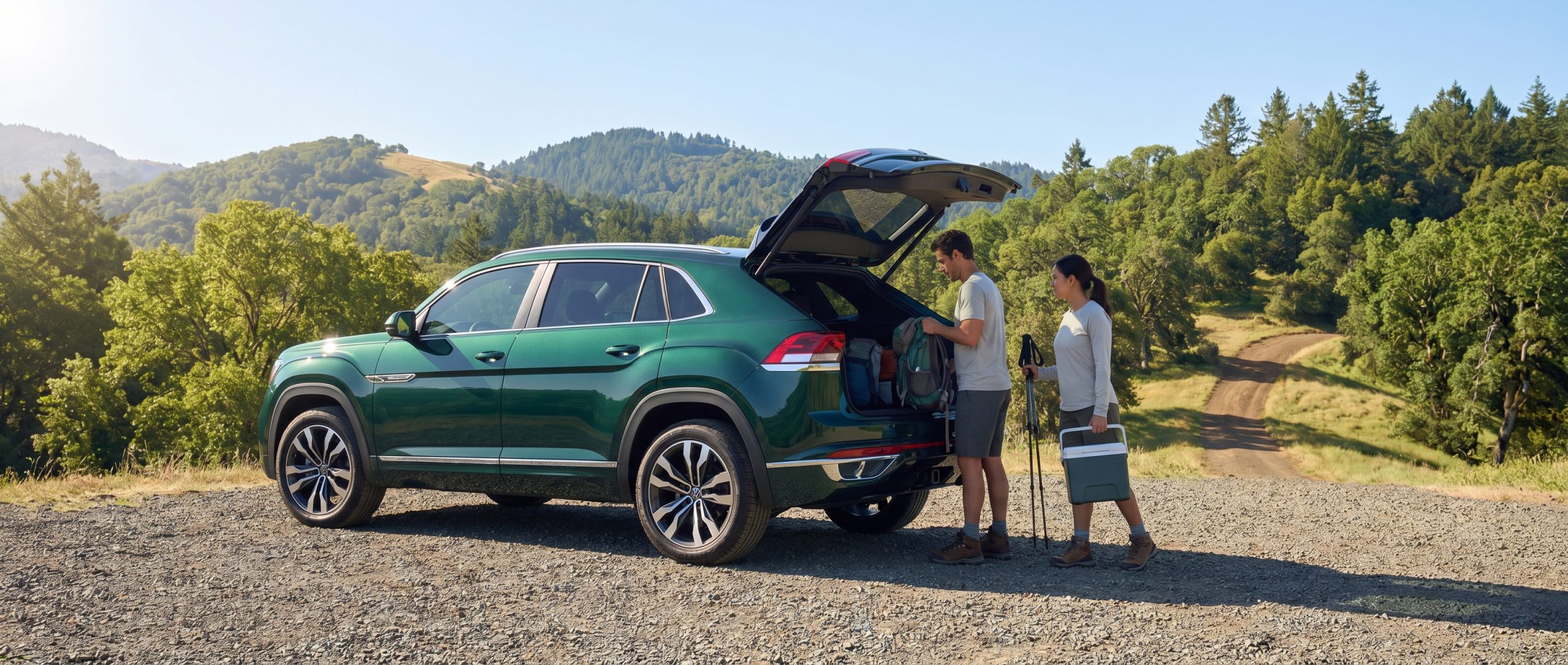
Spartanburg, SC has a way of filling up weekends fast – and if your vehicle can’t keep up with that rhythm, you’ll feel it. The Volkswagen® Atlas Cross Sport was designed for exactly this kind of lifestyle: a midsize two-row SUV that handles a Friday afternoon grocery run just as confidently as a Saturday morning out at Lake Bowen or a trail loop through Croft State Park. If you’ve been trying to figure out whether this vehicle actually suits the way you live around here, this guide breaks it down honestly.
What Makes the Atlas Cross Sport Different from Other Midsize SUVs
The Atlas Cross Sport offers a two-row layout that prioritizes cargo flexibility and a sportier roofline without sacrificing the interior comfort that makes longer drives worth taking. Where three-row SUVs often trade usable space for a cramped third row, the Cross Sport converts that rear section into a cargo area that actually holds gear. The result is a vehicle that feels thoughtfully sized – not too large for parking at Converse University or downtown Spartanburg, but not so compact that you’re strapping your mountain bikes to the roof every weekend.
Its 4MOTION® all-wheel drive system responds automatically to changing road conditions, which matters more than people expect when Upstate South Carolina gets an unexpected afternoon rainstorm or when you’re navigating the gravel parking areas around state park trailheads.
How Spartanburg, SC Weekends Actually Test a Vehicle
The variety of terrain and activity around Spartanburg, SC is genuinely underappreciated – and it puts vehicles through a wider range of conditions than most buyers think about at the time of purchase.
A typical weekend might look like this:
- Saturday morning: Loading kayaks or paddleboards for a day on Lake Bowen or Lake Blalock
- Saturday afternoon: Running into Spartanburg proper for lunch near Morgan Square before catching a Swamp Rabbits game or a show at Spartanburg Memorial Auditorium
- Sunday morning: Heading out to Croft State Park for a trail ride or a run along its equestrian paths
- Sunday afternoon: Hauling back mulch from a home improvement run on I-85 before the week starts again
That range – lake access, urban stops, park trails, and highway hauling – is exactly where a vehicle like the Atlas Cross Sport earns its keep. The cargo floor sits lower than you’d expect given the vehicle’s height, making loading and unloading kayaks, bikes, and coolers less of a back problem.
Pairing the Right VW Model to Your Weekend Routine
Not every Spartanburg lifestyle looks the same, and Volkswagen’s current lineup offers more flexibility than most people realize. Here’s a straightforward look at how different VW models align with different weekend priorities:
| Weekend Priority | Recommended VW Model | Why It Fits |
|---|---|---|
| Adventure hauling, trails, and lake days | Atlas Cross Sport | Two-row cargo flexibility, AWD, higher ground clearance |
| Full family trips with three rows needed | Atlas | Standard three-row layout, maximum passenger capacity |
| Spirited driving on back roads and mountain routes | Golf GTI | Turbocharged performance, precise handling, fun factor |
| Efficient weekday-to-weekend transitions | Taos | Compact footprint, fuel efficiency, AWD available |
| City parking + weekend day trips | Tiguan | Versatile sizing, comfortable for both uses |
If your weekends lean heavily toward longer hauls – say, a run up to Greenville, SC for a Greenville Drive game or a trip down to Columbia, SC for a family visit – the Cross Sport’s 40+ cubic feet of cargo space behind the second row gives you enough room to pack properly without playing Tetris with luggage.
The Cargo and Comfort Story Nobody Talks About Enough
Here’s something worth paying attention to: the Atlas Cross Sport has 40.3 cubic feet of cargo space behind the second row, expanding to 77.8 cubic feet with the seats folded. Those aren’t marketing numbers – those are EPA-reported figures that translate directly to whether your weekend gear fits or doesn’t.
For Spartanburg-area residents who use weekends to actually do things – not just watch them from the couch – that cargo story matters.
What fits in the back of an Atlas Cross Sport with the seats up:
- A full set of paddleboards (with roof assist from crossbars)
- Two adult bikes with front wheels removed
- A large camping cooler plus two backpacks
- A weekend’s worth of luggage for four adults
What fits with the rear seats folded flat:
- Furniture runs from local shops without renting a truck
- Full landscaping loads on single trips
- Large sports equipment like kayaks or canoes loaded from the rear hatch
The interior itself doesn’t feel like a sacrifice for all that practicality. The available panoramic sunroof makes the drive through the Cherokee Foothills Scenic Highway on SC-11 noticeably more enjoyable, and the IQ.DRIVE driver assistance suite includes adaptive cruise control and lane-keeping assist for the longer highway stretches.
Why Spartanburg Roads Specifically Suit the Cross Sport’s Driving Dynamics
The roads around Spartanburg, SC are more varied than most cities of similar size. You have the straight, fast stretches of I-85 and I-26 for commuting and day trips. But you also have the curves of SC-11 heading north toward Chesnee, the tighter roads around Croft State Park, and the stop-and-go rhythm of downtown Spartanburg itself.
The Atlas Cross Sport handles this mix well because it was built as a genuine driver’s SUV rather than a tall wagon with a sporty badge. The turbocharged 2.0-liter four-cylinder engine produces 269 horsepower, with available 276 hp when properly equipped, and the eight-speed automatic transmission keeps power delivery smooth whether you’re accelerating onto I-85 or pulling out of the Westgate Mall parking lot on a Saturday afternoon.
Drivers coming in from surrounding areas like Boiling Springs, SC or Gaffney, SC along I-85 will find the adaptive cruise control especially useful for those longer corridor drives – it maintains a set following distance automatically, reducing fatigue on repeated commutes and weekend trips.
The Cross Sport’s ride quality sits on the comfortable end of sporty – it absorbs the patchy pavement you’ll find on older stretches of county roads without bouncing the passengers around, while still feeling composed through curves in a way that a traditional tall SUV simply doesn’t.
Common Questions About the Volkswagen Atlas Cross Sport in Spartanburg, SC
How does the Volkswagen Atlas Cross Sport handle South Carolina’s summer heat and afternoon storms?
The Atlas Cross Sport handles Upstate South Carolina’s heat and humidity well. Its 4MOTION AWD system with Active Control can be set to different modes for wet surfaces, helping manage traction on rain-slicked roads during the region’s frequent afternoon thunderstorms. The standard climate control system with available three-zone temperature management keeps cabin comfort consistent even during peak summer temperatures in Spartanburg, SC.
Is the Atlas Cross Sport a good fit for families in Spartanburg, SC who don’t need a third row?
Yes, the Atlas Cross Sport is a strong choice for families of two to four in Spartanburg, SC who prioritize cargo flexibility over a third row. Most families with two children find the two-row layout more practical day-to-day, since the extra cargo space replaces a cramped seating row that rarely gets used. The 40.3 cubic feet of cargo space behind the second row comfortably handles gear for active family weekends around the area.
How does the Atlas Cross Sport compare to the standard Volkswagen Atlas for Spartanburg weekend use?
The Atlas Cross Sport has a sportier roofline, a shorter overall length, and significantly more cargo room than its three-row sibling when passengers occupy the vehicle. For buyers who don’t need that third row – and most around Spartanburg, SC don’t – the Cross Sport offers a better balance of driving enjoyment and weekend practicality. Buyers who regularly transport six or more people should look at the standard Atlas instead.
Does the Volkswagen Atlas Cross Sport have good safety ratings?
The Volkswagen Atlas Cross Sport has earned strong safety ratings from both the IIHS and NHTSA. The available IQ.DRIVE suite includes Front Assist (forward collision warning with automatic braking), Blind Spot Monitor, Lane Assist, and Rear Traffic Alert – features that are genuinely useful on the busy interchange at I-85 and I-26 in Spartanburg, SC.
What VW model is better for someone in Spartanburg who wants performance AND weekend utility?
If driving feel is as important as cargo space, the Golf GTI deserves a serious look alongside the Atlas Cross Sport. The GTI is significantly smaller and less cargo-capable, but its turbocharged engine and chassis tuning deliver a driving experience the Cross Sport can’t match on back roads. For buyers who want the utility of an SUV with a noticeable performance character, the Atlas Cross Sport with its 2.0T engine is the practical answer. Buyers who prioritize the drive itself over cargo should test the GTI.
Where can I test drive a Volkswagen Atlas Cross Sport near Spartanburg, SC?
Steve White Volkswagen Spartanburg is located in the Spartanburg, SC area and carries Atlas Cross Sport inventory across multiple trims and configurations. The team there can walk you through the differences between trim levels and set up a test drive that takes you through the actual roads you’ll be driving – not just a parking lot loop.
The Weekend SUV Spartanburg Actually Needs
Spartanburg, SC is the kind of place where weekends fill up with real plans – lake mornings, trail afternoons, and everything in between. The Atlas Cross Sport isn’t a vehicle that asks you to compromise between looking good and being useful. It handles both without making the choice feel like a trade-off. Browse our new inventory to find the Atlas Cross Sport configuration that fits your routine, and when you’re ready to put it through its paces on the roads you actually drive, the team at Steve White Volkswagen Spartanburg is ready to make that happen.
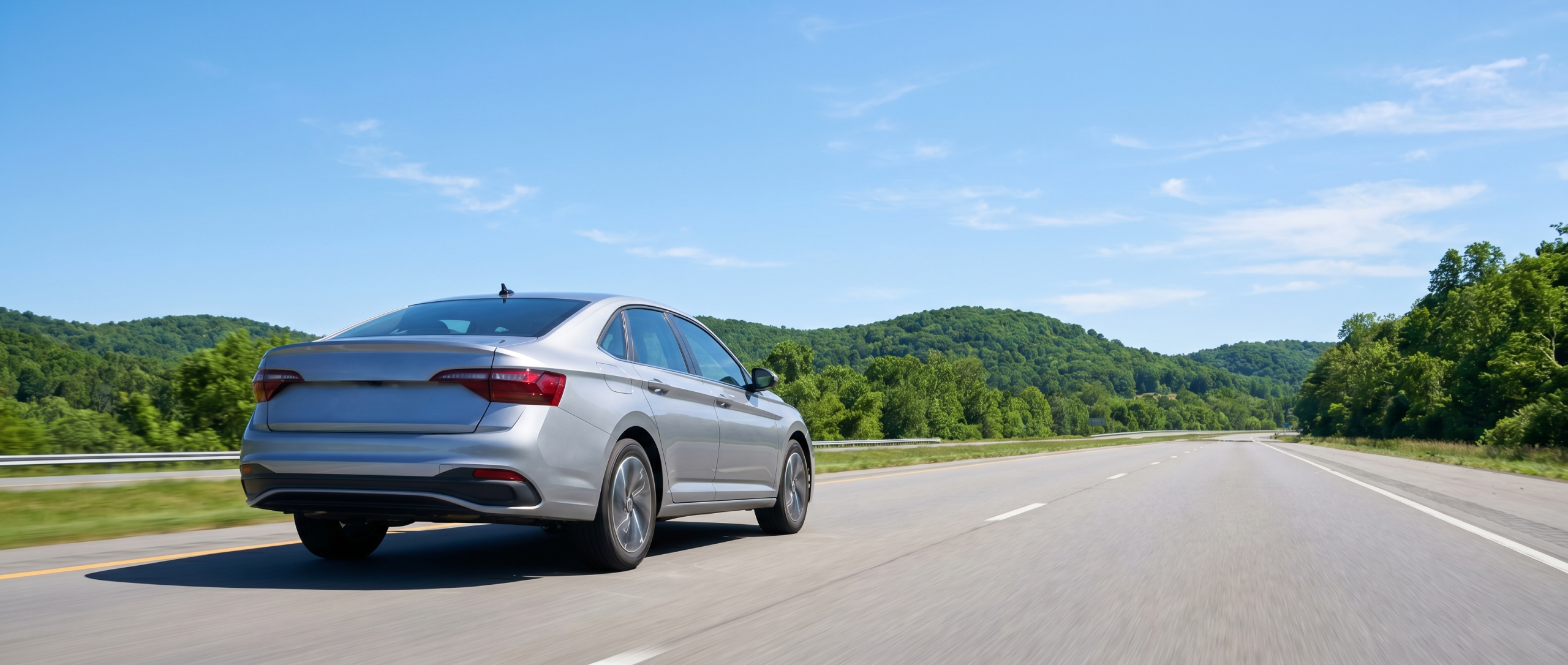
Drivers logging serious miles on I-26 between Spartanburg and Columbia – or pushing further toward Charleston – know that the car matters as much as the route. The Volkswagen® Jetta and Jetta GLI were built for exactly this kind of driving: relaxed highway cruising, real fuel economy, and enough interior comfort to make a 200-mile round trip feel manageable rather than exhausting. If you’re one of the thousands of Upstate South Carolina commuters who spend serious time on that stretch of highway, here’s a straight look at which VW models hold up best for long-distance driving from Spartanburg, SC.
Why I-26 Demands More from Your Daily Driver
I-26 through Spartanburg County is no Sunday cruise. The stretch running southwest toward Columbia covers nearly 100 miles of mixed highway driving – open lanes where traffic flows freely, construction zones that require sudden slowdowns, and the kind of sustained 70-75 mph cruising that separates fuel-efficient cars from thirsty ones.
Spartanburg sees hot, humid summers and mild but occasionally wet winters, which means your car’s climate control, tire performance, and engine efficiency are all working harder than drivers in more temperate climates might expect. Add the regular runs many residents make toward Greenville to the west or Gaffney to the northeast, and you have a commuting profile that calls for a vehicle with real highway composure.
What makes a car well-suited for this kind of driving?
- Fuel economy at highway speeds – not just the EPA estimate, but real-world performance above 65 mph
- Seat comfort and lumbar support for trips lasting 60 minutes or more
- Road noise isolation that keeps conversation and audio clear without fatigue
- Driver assistance features like adaptive cruise control for stop-and-go stretches
- Consistent engine performance at elevation changes and sustained speeds
The Volkswagen lineup is built around exactly these priorities – which is why so many Upstate drivers gravitate toward it.
The Jetta: Spartanburg’s Most Practical Highway Companion
The Volkswagen Jetta™ earns its reputation quietly, which is exactly the point. On I-26, you want a car that does its job without demanding your attention.
The Jetta is rated at up to 38 MPG on the highway by the EPA – one of the stronger numbers in its class for a non-hybrid compact sedan. That translates directly into fewer fuel stops on the Spartanburg-to-Columbia corridor and lower monthly fuel costs for drivers who cover 1,500 or more miles per month.
The Jetta’s interior is notably quiet at highway speeds. Volkswagen engineers focused on sound deadening materials throughout the cabin, which means road and wind noise stay in the background during long stretches on I-26. The front seats offer solid bolstering and available lumbar adjustment – something you’ll genuinely appreciate after 90 minutes of driving.
Where the Jetta makes the most sense:
- Daily commuters driving 60+ miles round trip from Spartanburg toward Columbia or Greenville
- Drivers who want strong fuel economy without sacrificing sedan comfort
- Anyone who needs a dependable, low-drama highway car that won’t require frequent service
- Single drivers or couples who don’t need SUV cargo capacity
For long miles on I-26, the Jetta S and SE trims offer the essentials at a reasonable entry point, while the SEL adds features like adaptive cruise control – genuinely useful when traffic stacks up around the Columbia interchange. Browse our new inventory if you’d like to see current Jetta trims in stock at our Spartanburg location.
The Jetta GLI: When the Drive Should Feel Like Something
Not every Spartanburg driver is looking to simply survive the commute – some want to enjoy it. The Jetta GLI™ is the performance-oriented version of the base Jetta, and the difference on I-26 is noticeable from the first on-ramp.
The GLI is powered by a turbocharged 2.0-liter four-cylinder engine producing 228 horsepower, paired to either a six-speed manual or a seven-speed DSG automatic transmission. That power delivery makes merging onto I-26 from the various Spartanburg entry points feel effortless, and the sport-tuned suspension keeps the car planted and confident through the minor curves and grade changes along the Upstate corridor.
| Feature | Jetta (Base) | Jetta GLI |
|---|---|---|
| Engine | 1.5L Turbo, 158 hp | 2.0L Turbo, 228 hp |
| Transmission Options | 6-speed auto | 6-speed manual or 7-speed DSG |
| EPA Highway MPG | Up to 38 MPG | Up to 36 MPG |
| Adaptive Chassis | Standard | Available sport-tuned |
| Driving Character | Relaxed, efficient | Responsive, engaged |
| Best For | Long-haul commuters | Enthusiasts who commute |
The GLI does give up a few MPG compared to the standard Jetta – the trade-off for 70 additional horsepower – but drivers who use DSG and maintain steady highway speeds report real-world numbers close to the EPA estimate. For commuters who cover 80-plus miles a day and want those miles to feel engaging rather than draining, that trade-off often makes complete sense.
The Golf GTI: A Different Kind of Long-Distance Machine
The Golf GTI™ fits a specific driver well: someone who wants the performance personality of the GLI but prefers a hatchback body style. For Spartanburg residents who use I-26 regularly but also navigate tighter parking near Wofford College, the University of South Carolina Upstate, or the shopping corridors along East Main Street, the GTI’s compact footprint is genuinely practical.
Powered by the same 2.0-liter turbocharged engine as the GLI, the GTI delivers 241 horsepower in the Autobahn trim and 228 horsepower in the S and SE trims. The hatchback body adds cargo flexibility that sedans can’t match – fold the rear seats and you have real hauling capacity for weekend trips to Croft State Park or longer road trips to the coast.
Where the Golf GTI stands out on highway routes:
- Progressive steering that feels natural at 75 mph and responsive in slower traffic
- Available DCC adaptive dampers (Autobahn trim) that adjust suspension in real time to road conditions
- Rear hatch access for loading gear without the trunk depth limitations of a sedan
- Upscale interior fit with heated front seats and a 10-inch infotainment display standard across trims
The GTI S starts the trim lineup and already includes enough driver-focused content to make I-26 runs genuinely enjoyable. For drivers who split their time between highway miles and city use around Spartanburg, the GTI’s versatility is hard to argue against.
Matching the Right Model to Your Driving Reality
The right VW for long I-26 miles depends on who you are and what your drive actually looks like. Here’s a straightforward guide.
| Driver Profile | Recommended Model | Primary Reason |
|---|---|---|
| High-mileage daily commuter | Jetta SE or SEL | Best fuel economy, adaptive cruise available |
| Performance-focused commuter | Jetta GLI | 228 hp, engaging drive, solid real-world MPG |
| Commuter who also hauls gear | Golf GTI | Hatchback versatility, same performance platform |
| Budget-conscious long-haul driver | Jetta S | Solid base specs, highway-focused efficiency |
| Enthusiast who wants manual option | Jetta GLI (6-speed) | Only VW compact sedan with manual transmission |
One thing all of these models share: Volkswagen’s build quality translates well to high-mileage ownership. These aren’t cars that feel worn out at 80,000 miles. With regular maintenance, they hold together and hold up in ways that matter to drivers putting genuine miles on them.
What to Know Before You Buy for a High-Mileage Lifestyle
Buying any vehicle for high-mileage use changes your shopping priorities. Here’s what Spartanburg drivers specifically should think through before committing to a VW sedan.
1. Trim-level features that matter most for highway driving:
Look at trims that include adaptive cruise control with stop-and-go capability. On long stretches of I-26 between Spartanburg and Columbia, this feature reduces fatigue significantly on congested travel days.
2. Seat comfort is underrated:
Test the seats for at least 20 minutes, not 5. Spartanburg-area commuters covering 80+ miles daily will feel every design decision in those seats by month three.
3. Plan your service schedule early:
High-mileage drivers on Volkswagen’s turbocharged engines benefit from sticking closely to VW’s recommended oil change intervals – typically 10,000 miles or annually. The turbocharged engines in the Jetta, GLI, and GTI reward consistent maintenance.
4. Factor in tire longevity:
Performance tires on the GLI and GTI wear faster than the standard Jetta’s all-season setup. For drivers putting 20,000+ miles per year on their car, the annual tire cost is a real consideration.
5. Consider the warranty:
Volkswagen’s coverage matters when you’re planning for high-mileage use. Understand what the New Vehicle Limited Warranty includes before you buy, and ask about extended coverage options.
Common Questions About VW Sedans for I-26 Driving in Spartanburg, SC
Which Volkswagen sedan gets the best highway fuel economy for Spartanburg commuters?
The Volkswagen Jetta leads the lineup with an EPA highway rating of up to 38 MPG, making it the strongest choice for Spartanburg commuters covering long distances on I-26. The Jetta GLI follows at up to 36 MPG highway – a modest difference given the significant power increase. For drivers prioritizing fuel cost over driving engagement, the standard Jetta SE or SEL is the clear choice.
Is the Jetta GLI practical for a long daily commute from Spartanburg to Columbia?
Yes – the Jetta GLI handles long-distance commuting well, with a comfortable highway ride and strong turbocharged performance that makes sustained 70+ mph cruising easy. The DSG automatic transmission is the better choice for commuters over the manual, as it delivers efficiency without the fatigue of manual driving over 90+ miles. GLI drivers who commute daily report the performance character makes the drive feel shorter.
How does the Golf GTI compare to the Jetta GLI on I-26 at highway speeds?
The Golf GTI and Jetta GLI share the same 2.0-liter turbocharged engine platform and deliver comparable highway performance on I-26. The primary differences are body style – hatchback versus sedan – and that the GTI Autobahn trim produces 241 horsepower. The GTI also rides slightly shorter, which some drivers find more agile in traffic, while the GLI has a longer wheelbase that contributes to a more planted feel at sustained highway speeds.
What Volkswagen features help most on long I-26 drives from Spartanburg?
Adaptive cruise control with stop-and-go capability is the most useful feature for I-26 driving from Spartanburg, particularly on congested travel days toward Columbia. Lane assist, front assist with emergency braking, and driver fatigue monitoring are available across upper Jetta and GLI trims. The 10-inch infotainment screen with wireless CarPlay also makes navigation and audio management simpler during extended drives.
Where can I test drive a Jetta or GTI in Spartanburg, SC before buying?
Steve White Volkswagen is the local Volkswagen dealership serving the Spartanburg area, with the Jetta, Jetta GLI, and Golf GTI available for test drives. Taking each car on I-26 for at least 15 minutes during your test drive – not just neighborhood streets – gives you a much more accurate sense of how the car will feel on your actual commute.
Does the Volkswagen Jetta hold up well for high-mileage ownership in South Carolina?
The Jetta has a solid track record for high-mileage durability when maintained according to VW’s recommended service schedule. South Carolina’s warm, humid climate puts additional demand on cooling systems and tires, so consistent maintenance matters. Drivers covering 20,000+ miles annually on Upstate SC highways typically report that the Jetta holds its driving feel and reliability well into the 100,000-mile range with proper care.
Making Your I-26 Miles Work for You, Not Against You
Long highway miles don’t have to be a grind. The right car makes the difference between a commute that drains you and one you barely notice – and Volkswagen’s compact sedan lineup is purpose-built for drivers who cover real distance regularly. Whether the Jetta’s fuel economy is the priority, the GLI’s performance makes the drive enjoyable, or the Golf GTI’s versatility fits how you use your car on and off the highway, there’s a model in the lineup that fits your Spartanburg commute specifically.
The team at Steve White Volkswagen knows I-26 the same way you do – and they can help you match the right car to the miles you actually drive.
Why the Volkswagen Tiguan Is the Right Choice for Summer Travel to Asheville and Hendersonville from Spartanburg, SC
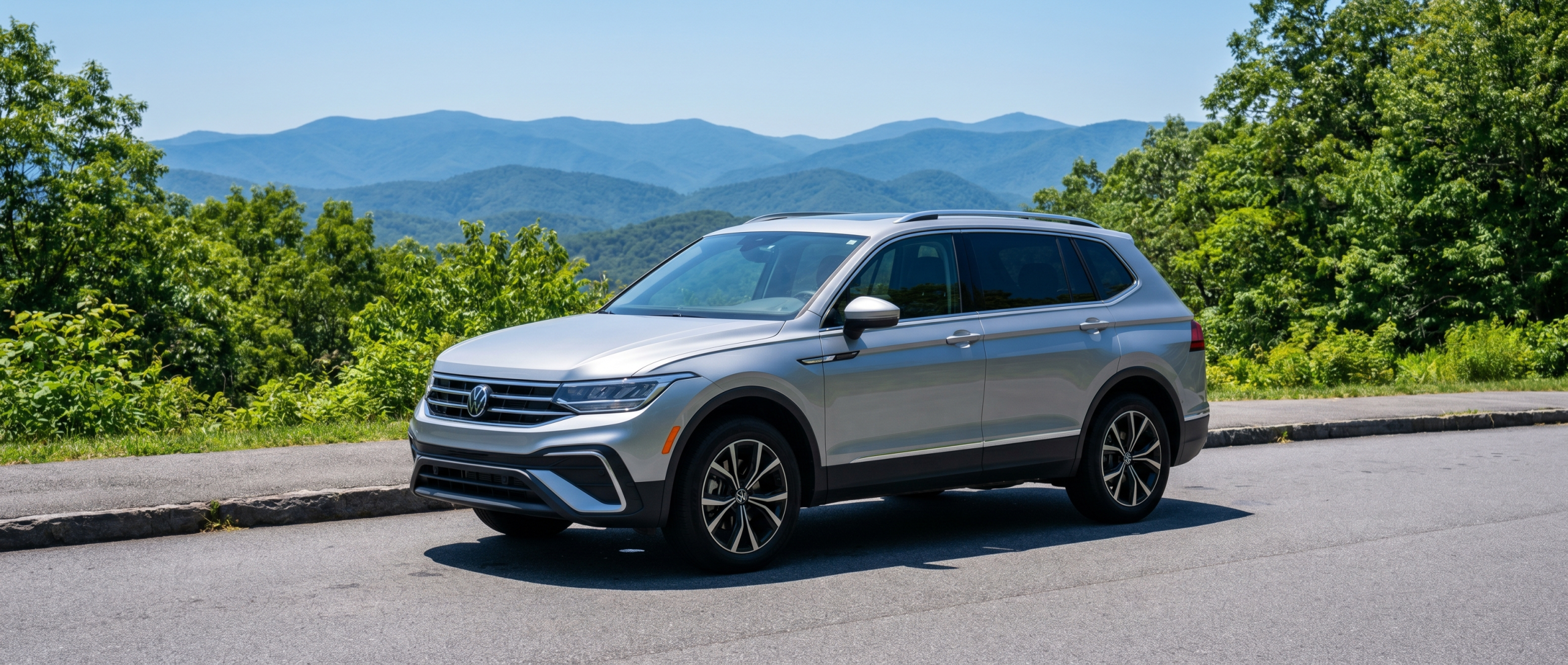
The drive from Spartanburg, SC to Asheville, NC takes less than an hour, but the terrain changes fast. Once you leave the Upstate and start climbing into the Blue Ridge, you want a vehicle that handles elevation shifts, mountain curves, and a fully loaded cargo area without making you work for it. The Volkswagen® Tiguan fits that drive in a way that goes beyond cargo space and fuel economy – it’s built for exactly the kind of summer road trip that South Carolina families and weekend travelers have been making for years.
What the Spartanburg to Asheville Drive Actually Demands from a Vehicle
That stretch of I-26 West out of Spartanburg, SC is deceptively easy at first – flat interstate, light traffic, straightforward. Then the elevation rises, and everything changes. By the time you reach the Saluda Grade, one of the steepest mainline railroad grades in the eastern United States, your vehicle is managing sustained climbs that stress underpowered engines and test transmission calibration.
The Tiguan handles this with a turbocharged 2.0-liter inline-4 that produces 184 horsepower and 221 lb-ft of torque – enough to pull a fully packed family vehicle up the grade without the throttle-to-the-floor drama you’d get from a smaller crossover. The 8-speed automatic transmission manages gear selection smoothly on both ascent and descent, which matters just as much coming back down when engine braking becomes part of the equation.
For drivers heading out from neighborhoods near Milliken & Company’s campus or from the Westgate Mall corridor, the on-ramp to I-26 is familiar territory. But the mountain section rewards preparation, and the Tiguan’s AWD system – available as 4MOTION on select trims – provides meaningful confidence on stretches where summer afternoon thunderstorms can leave wet pavement without warning.
Cargo Space and Passenger Comfort for Real Summer Trips
Packing for Asheville or Hendersonville is not like packing for a beach weekend. You are dealing with hiking shoes, rain layers, a cooler, possibly a stroller, and whatever impulse purchases happen at the River Arts District on the way home. Space matters.
The Tiguan gives you 37.6 cubic feet of cargo space behind the second row – and if you’re traveling with fewer passengers, folding those rear seats opens up 73.5 cubic feet total. For context, that’s enough room to pack for four people on a three-day mountain trip and still have space for a set of camping chairs.
What separates the Tiguan from similar-sized crossovers is the optional third-row seating. Families who need that extra bench for grandparents, a teenager’s friend, or an unexpected carpool have it available. It’s not a full-size third row, but for shorter trips like the Spartanburg to Hendersonville run – about 90 minutes through some genuinely pretty highway scenery – it works well.
Here’s a quick look at how the Tiguan stacks up for summer travel needs:
| Travel Need | Tiguan Capability |
|---|---|
| Mountain grade climbing | 221 lb-ft torque, 8-speed auto |
| Wet road confidence | 4MOTION AWD (select trims) |
| Cargo for 4 people | 37.6 cu ft behind row 2 |
| Extra passengers | Optional 7-passenger third row |
| Long-drive comfort | Available heated/ventilated front seats |
| Driver assistance on highway | Available Travel Assist with ACC |
How the Tiguan Handles Hendersonville’s Smaller Roads and Parking Reality
Asheville gets most of the attention, but Hendersonville, NC deserves its own mention – and it presents a different kind of driving challenge. The downtown area along Main Street has tighter parallel parking, narrower side streets that lead up into residential hills, and no shortage of charm that makes you want to slow down and look around.
The Tiguan’s footprint is manageable without feeling cramped. At just over 185 inches in length, it threads through downtown Hendersonville without the anxiety that comes with a full-size SUV. Rear parking sensors and an available rearview camera with active guidelines make street parking easier when you’re loading up after a stop at the Saturday morning Farmers Market or after exploring Jump Off Rock.
The drive from Hendersonville back toward Spartanburg, SC on US-25 South through Flat Rock and Tuxedo is one of those routes that rewards a vehicle with good sight lines and composed handling. The Tiguan’s elevated seating position gives the driver a clear view through turns, and the suspension strikes the right balance between absorbing rough state road pavement and staying controlled in curves.
- Visibility: High seating position with minimal blind spot anxiety
- Parking: Compact enough for downtown Hendersonville’s tighter spots
- Road quality: Suspension handles older state route surfaces without beating passengers
- Range: EPA-estimated 27 MPG highway means fewer stops between Spartanburg and the mountains
Summer-Specific Features That Make the Tiguan Stand Out
Summer travel in the Carolinas means heat, afternoon thunderstorms, and long stretches on the road. The Tiguan has a few specific features that make warm-weather travel noticeably more comfortable.
The available panoramic sunroof is popular for mountain drives where the view is part of the experience – you can tilt it open for fresh air without the wind blast of a fully open window at highway speed. On the return trip from Asheville with the kids in the back, that matters more than it sounds.
Climate control is handled by a dual-zone automatic system, which lets the driver set their own temperature while keeping passengers comfortable independently. If you’ve ever driven with a 10-year-old who is always cold and a teenager who is always hot, you already understand why this feature earns its keep on a summer road trip.
The Tiguan’s infotainment system includes wireless Apple CarPlay and Android Auto on current models, so navigation to the French Broad River Greenway or to a specific trailhead outside Hendersonville doesn’t require mounting a phone or downloading anything ahead of time. Plug in, set the destination, and go.
Comparing the Tiguan to Other VW Models for This Type of Trip
The Volkswagen lineup gives Spartanburg drivers several good options, but not every model fits the Asheville run the same way. Here’s how the Tiguan compares to two closely related options:
| Model | Best For | Mountain Trip Trade-Offs |
|---|---|---|
| Tiguan | Families, loaded gear, 5-7 passengers | The natural fit – balanced cargo, AWD option, comfortable highway cruiser |
| Taos | Smaller families, tighter budgets, city focus | Less cargo room, smaller engine, no third-row option |
| Atlas | Large families, maximum cargo, extended trips | More capable but larger footprint; trickier in downtown Hendersonville |
The Taos™ is a capable crossover and a smart choice for many Spartanburg drivers, but it gives up cargo room and passenger flexibility when the whole family wants to come along for a weekend in the mountains. The Atlas™ goes the other direction – more room, more power, but more vehicle to manage on narrow mountain roads and tight downtown streets.
For the specific use case of a Spartanburg family driving to Asheville or Hendersonville for a summer weekend, the Tiguan lands in the right spot.
Common Questions About the Volkswagen Tiguan for Summer Travel in Spartanburg, SC
Is the Volkswagen Tiguan a good vehicle for driving from Spartanburg, SC to Asheville?
The Tiguan is genuinely well-suited for the Spartanburg to Asheville drive. Its turbocharged engine handles the Saluda Grade climb comfortably, the available 4MOTION AWD adds confidence on wet mountain roads, and the cargo area handles gear for a full weekend trip. The EPA highway estimate of 27 MPG also keeps fuel costs reasonable on a drive that runs roughly 60-70 miles each way.
Does the VW Tiguan have enough cargo space for a mountain weekend trip?
Yes – the Tiguan offers 37.6 cubic feet of cargo space behind the second row, which expands to 73.5 cubic feet with the rear seats folded. For a family of four packing for two to three days in Asheville or Hendersonville, that’s enough room for luggage, hiking gear, and the cooler without stacking bags on passengers.
How does the Tiguan handle mountain roads and elevation changes in NC?
The Tiguan handles mountain driving well thanks to 221 lb-ft of torque and an 8-speed automatic transmission that manages both climbing and downhill engine braking effectively. The available 4MOTION all-wheel drive adds stability on wet or uneven pavement. Drivers familiar with I-26 through the Blue Ridge will notice the difference compared to underpowered crossovers on sustained grades.
Is the VW Tiguan available with AWD for summer road trips from Spartanburg, SC?
Yes, the Tiguan is available with Volkswagen’s 4MOTION all-wheel drive on select trims. For summer mountain travel, AWD is particularly useful during the frequent afternoon thunderstorms that move through the Blue Ridge, which can leave wet and occasionally slippery road surfaces even in July and August.
How does the Tiguan compare to the VW Taos for mountain travel?
The Tiguan has more cargo space, an optional third row, and a larger engine with more torque than the Taos, making it the stronger choice for longer mountain trips with full passenger and gear loads. The Taos is a solid option for lighter use and city driving, but families heading from Spartanburg to the mountains with kids, gear, and a cooler will generally prefer the Tiguan’s additional room and capability.
Where can I find a Volkswagen Tiguan near Spartanburg, SC?
Steve White Volkswagen Spartanburg carries the Tiguan in current model year configurations. Visiting the dealership gives you the opportunity to see cargo space in person, test the seating position, and ask specific questions about trim differences that matter for mountain travel. Explore our new inventory to see which Tiguan configurations and trims are currently available.
Making the Most of Your Summer Drives from Spartanburg
The stretch between Spartanburg, SC and the North Carolina mountains is one of the better driving corridors in the Southeast – short enough to do in a day, interesting enough to justify a weekend, and scenic enough that the drive itself is part of the experience. The Volkswagen Tiguan fits that route with cargo capacity for real trips, enough power to handle the grades without complaint, and enough comfort to keep everyone in the vehicle reasonably happy by the time you arrive.
Whether you’re heading to Asheville for a weekend or spending a Saturday at the Hendersonville Farmers Market and Jump Off Rock, having the right vehicle makes the trip genuinely easier. The team at Steve White Volkswagen Spartanburg knows the routes you’re driving and the demands those roads put on your vehicle – stop in and see how the Tiguan feels in person before your next mountain weekend.
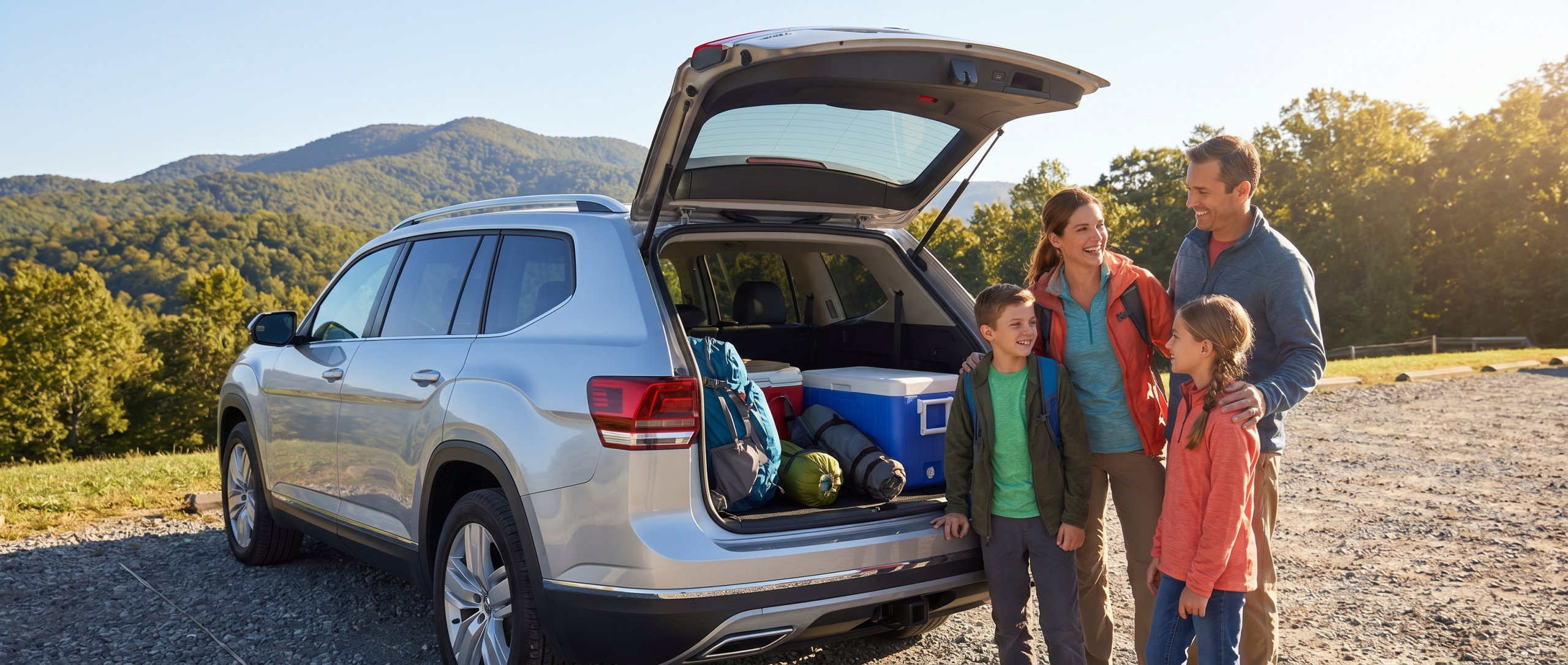
Active families in the Spartanburg, SC area are not short on places to go – and they need a vehicle that can actually keep up. From weekend trips to Table Rock State Park and afternoon soccer pickups in Greer, SC to hauling gear out toward the lakes near Duncan, SC, the best Volkswagen® models for active families balance space, safety, and daily usability without making you feel like you’re driving a tank. This guide breaks down which VW fits which kind of family life, so you leave with a clear answer instead of more questions.
Why Spartanburg-Area Families Keep Coming Back to Volkswagen
Volkswagen has built a reputation for engineering that quietly outperforms its price point, and that matters when you are stretching a budget across car seats, sports equipment, and school tuition. The brand’s lineup includes eight models worth considering for families, ranging from the three-row Atlas to the all-electric ID. Buzz – and each one was designed with a specific kind of driver in mind.
What draws Upstate South Carolina families to VW specifically is a combination of German engineering standards and practical cabin design. The interiors tend to feel more polished than the sticker price suggests, and the safety technology across the lineup is genuinely thorough, not just a marketing checklist.
The real question is not whether a VW works for families. It’s which VW works for your family.
Matching the Right VW to Your Family’s Actual Life
Every family looks different on paper. The family coaching travel baseball out of Greer, SC needs something different than the couple in Lyman, SC who has two toddlers and a dog but wants to keep fuel costs reasonable. Here is a straightforward way to think about it:
| Family Type | Best Fit | Why It Works |
|---|---|---|
| Large family, 3+ kids, max cargo | Atlas | Three-row seating, up to 96.8 cu ft cargo |
| Two adults + 2 kids, weekend adventures | Tiguan | Compact footprint, smart cargo, available AWD |
| Urban family, shorter trips, eco priority | ID. Buzz | All-electric, sliding doors, flexible interior |
| Couple with one child, spirited driving | Atlas Cross Sport | Two-row sporty profile, larger cargo floor |
| Family on a practical budget, daily commute | Taos | Fuel-efficient, easy to park, right-sized |
This table is a starting point, not a verdict. Your drive patterns, family size, and how you spend weekends around Spartanburg should be the deciding factors.
The Atlas: Built for Families Who Do Not Want to Compromise
The Volkswagen Atlas™ is one of the most capable family haulers in the mainstream SUV segment, and its size actually makes sense for the roads connecting Spartanburg, Greer, and Duncan. It seats up to seven passengers across three rows, and the third row has enough legroom to be genuinely usable for adults – not just a spot to fold kids into for short trips.
Cargo space behind the third row starts at 20.6 cubic feet and expands to 96.8 cubic feet with the rear rows folded. If you have ever tried to fit a double stroller, a week’s worth of groceries, and a bag of baseball equipment in the same trip, you already understand why that number matters.
The Atlas also offers 4MOTION® All-Wheel Drive on higher trims, which becomes relevant when the family heads west toward the Blue Ridge foothills or takes a detour on unpaved park roads near Croft State Park.
What makes the Atlas worth considering:
- Available 3-row seating for families of 5-7
- Standard second-row reclining seats on most trims
- Available digital cockpit with 12-inch display
- Built-in 3-zone climate control on higher trims
- Towing capacity up to 5,000 lbs on properly equipped models
If your family runs on a full schedule and needs cargo space to prove it, browsing our new inventory for available Atlas configurations is a natural next step.
The Tiguan: The Right Size for Most Spartanburg Families
The Volkswagen Tiguan™ is the model that tends to surprise people the most during a test drive. It looks compact from the outside, but the interior manages to feel genuinely spacious – especially in the second row, where VW engineers stretched the wheelbase compared to earlier generations.
For families in Greer, SC navigating school pickup lines, youth soccer parking lots, and weekend runs to Hollywild Animal Park, the Tiguan’s smaller footprint is an actual advantage. It parks like a compact but carries like a midsize.
The Tiguan’s available third row is worth a mention with a small caveat: it fits kids comfortably and occasional adult passengers for shorter trips, but it is not the Atlas. Families who routinely need seven adult-sized seats should look at the Atlas first.
Where the Tiguan earns consistent praise is in everyday usability. Families do not want to think about their car; they want it to work. The Tiguan is engineered to disappear into the routine.
The ID. Buzz: A Genuinely Different Option for Modern Families
The Volkswagen ID. Buzz™ is not trying to be the Atlas. It is something different, and for the right family, it is the most appealing vehicle on this list. Inspired by the original VW Microbus, the ID. Buzz brings sliding rear doors, a spacious flat-floor cabin, and full electric power to a package that no one else in the market is offering right now.
For families in Lyman, SC or Duncan, SC who do most of their driving within the metro Spartanburg corridor – school, errands, sporting events, weekend trips – the all-electric powertrain makes real daily sense. The ID. Buzz offers impressive electric range, and charging infrastructure across the Upstate SC region has grown considerably.
The sliding doors alone change the school dropoff experience. In tight parking lots or narrow garage spaces, not having to worry about a swinging door hitting the car next to you is a practical win families appreciate immediately.
The ID. Buzz stands out for families who:
- Drive primarily within a predictable daily radius
- Want to reduce fuel costs over time
- Have young children who benefit from sliding door access
- Prioritize a vehicle that draws a different kind of attention
It is not the right call for families who regularly make long-distance trips without planned charging stops, but for Upstate SC daily life, it checks more boxes than most people expect.
What About the Taos, Jetta, and Atlas Cross Sport?
Not every active family needs three rows and maximum cargo. Some families are streamlined – one or two kids, a manageable schedule, and a preference for something that drives with a bit more personality.
The Volkswagen Taos™ is worth serious consideration for families who want a fuel-efficient crossover without the bulk of a full-size SUV. Its 1.5-liter turbocharged engine delivers solid performance, and the interior is well-organized for families carrying daily essentials rather than expedition gear.
The Volkswagen Atlas Cross Sport™ occupies an interesting middle ground. It is built on the same Atlas platform but loses the third row in favor of a more sloped roofline and a larger cargo floor behind the second row. For families of four who want the Atlas’s presence and capability without paying for seats they never use, it is a strong alternative.
The Volkswagen Jetta™ and Jetta GLI™ are less obvious family picks, but they fit a specific kind of family well: the family where one parent does a long daily commute on I-85 or I-26 and needs a comfortable, fuel-efficient sedan that handles like it has something to prove. The Jetta GLI, with its sport-tuned suspension and more powerful engine, is particularly well-suited to the stretches of highway connecting Spartanburg to Greenville and Charlotte.
How Spartanburg-Area Roads and Lifestyle Should Shape Your Decision
The Upstate South Carolina region has a distinct driving character that should factor into any vehicle decision. You are not in flat coastal terrain. The area around Greer, Duncan, and Lyman includes rolling hills, frequent highway merges, and roads that vary from well-maintained suburban corridors to narrower rural routes heading toward the Blue Ridge foothills.
Here is what that means in practical terms:
- All-wheel drive matters more than you might think. Ice and snow events are infrequent but not rare in Upstate SC winters, and the elevation around Spartanburg means conditions can change quickly. Any VW with 4MOTION AWD is worth considering if you drive regularly between Spartanburg and the higher-elevation communities to the north.
- Cargo space is a real differentiator. Families heading to Croft State Park, Tyger River access points, or trails along the Palmetto Trail need genuine cargo room, not just optimistic marketing measurements. The Atlas and Tiguan both deliver.
- Fuel costs are a long-term consideration. The I-85/I-26 corridor sees heavy daily traffic, and families driving 30-50 miles per day will feel the difference between the Taos’s fuel efficiency and a larger, less efficient SUV over time.
- Technology keeps up with your pace. Features like VW’s Car-Net app connectivity, available wireless charging, and driver assistance systems are not luxuries for busy families – they are tools that make the day-to-day manageable.
Common Questions About the Best Volkswagen Models for Active Families in Spartanburg, SC
Which Volkswagen model is the best fit for a large family in Greer, SC?
The Atlas is the most practical choice for larger families in Greer, SC, offering three-row seating for up to seven passengers and up to 96.8 cubic feet of cargo space. Families who routinely carry sports equipment, strollers, or gear for outdoor activities will find the Atlas handles those demands without requiring a full-size truck or minivan.
Is the Volkswagen Tiguan big enough for a family of five in Spartanburg, SC?
The Tiguan seats up to seven with its available third row, making it workable for a family of five in Spartanburg, SC. The second row is genuinely comfortable, and the cargo area is practical for daily family use. Families who frequently need all seven seats should also compare it to the Atlas, which offers more third-row legroom.
How does the Volkswagen ID. Buzz work for families in Duncan or Lyman, SC?
The ID. Buzz works well for families in Duncan, SC and Lyman, SC who drive primarily within the Spartanburg metro area and want to eliminate regular fuel stops. Its all-electric powertrain, sliding rear doors, and flexible interior make it a standout option for daily family life, though families planning frequent long-distance road trips should evaluate charging infrastructure along their common routes.
Does Volkswagen offer all-wheel drive on family SUVs in Upstate South Carolina?
Yes, the Atlas, Tiguan, Taos, and Atlas Cross Sport are all available with Volkswagen’s 4MOTION All-Wheel Drive system. For families in the Upstate SC region who encounter occasional winter weather or drive toward the Blue Ridge foothills regularly, the available AWD adds meaningful confidence on slick or uneven road surfaces.
What is the difference between the Atlas and Atlas Cross Sport for families?
The Atlas offers three rows of seating and is designed for maximum passenger capacity, while the Atlas Cross Sport is a two-row model with a sportier exterior profile and a larger, more accessible cargo floor. Families of four who prioritize cargo access and driving character over third-row seating often prefer the Cross Sport, while larger families tend to choose the standard Atlas.
Which Volkswagen is most fuel-efficient for families doing long Spartanburg commutes?
The Taos delivers strong fuel efficiency among Volkswagen’s family-oriented models, making it a practical choice for parents commuting regularly along I-85 or I-26. For families who want to eliminate fuel costs entirely, the ID. Buzz all-electric model is worth a serious look, particularly for those whose daily driving stays within a predictable range.
Finding the Right VW for Your Family Starts Here
Active families in Greer, Duncan, and Lyman, SC do not need to compromise between space, capability, and driving enjoyment – the current Volkswagen lineup was built with exactly that balance in mind. Whether the Atlas’s three-row utility or the ID. Buzz’s all-electric practicality fits your household better, the right answer comes from sitting in the vehicle and putting it through your actual routine. The team at Steve White Volkswagen Spartanburg knows the local roads, the local lifestyle, and the full VW lineup well enough to match you to the right model without the guesswork.

